PreschoolKindergartenFirst Grade

Q, X, Y Without Tears: How to Teach "Tricky Letters" Gently

Mar 25, 2026
Q, X, Y Without Tears: How to Teach "Tricky Letters" Gently

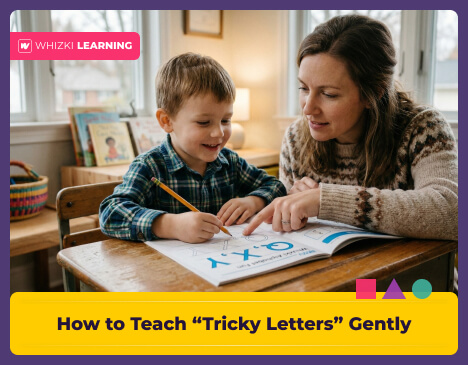
During my years teaching early literacy, I have watched countless children breeze through the alphabet until they hit the letters Q, X, and Y. These three 'tricky letters' consistently cause tears at the kitchen table because they refuse to follow standard phonetic rules. The letter Q never travels alone, the letter X rarely starts a child-friendly word, and the letter Y constantly changes its identity from a consonant to a vowel. Experienced kindergarten teachers recognize that traditional flashcard memorization fails completely here, leaving young readers feeling confused and defeated.

Fortunately, parents can eliminate this handwriting anxiety by using targeted, multi-sensory teaching strategies. The Orton-Gillingham literacy approach provides simple, highly visual narratives to explain these specific spelling exceptions to young children. This practical guide breaks down exactly how to teach the letters Q, X, and Y using gentle, tactile methods. By prioritizing hands-on learning over confusing digital apps, parents can help their early readers master the alphabet's biggest rule-breakers with complete confidence.

The 'Q and U' Partnership

The letter Q is incredibly unique in the English language because the letter Q practically never appears without the letter U right beside it. Early childhood educators successfully teach this concept by describing Q and U as best friends who hold hands in every word (like 'queen', 'quick', and 'quack'). When a child understands this visual partnership, the child stops trying to sound out the Q in isolation. Together, the 'QU' partnership makes the distinct /kw/ sound.

To practice this rule, parents should have the child physically trace the letters Q and U together as a single unit. Utilizing comprehensive tracing resources, such as our dedicated Letter Q learning hub, ensures the child builds the correct muscle memory. The child must learn that writing the letter Q automatically triggers the writing of the letter U.

The Ending Sound of Letter X

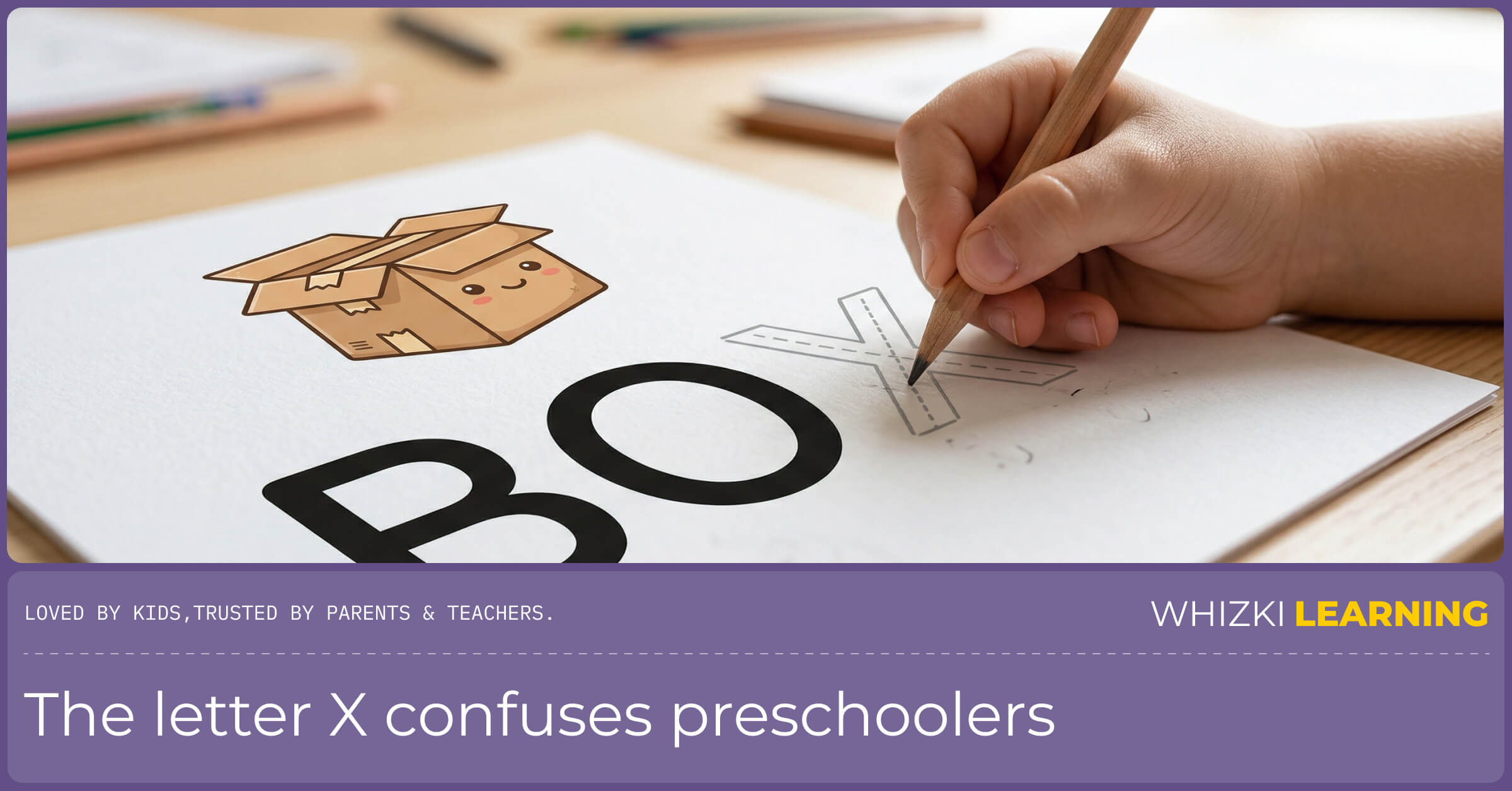
The letter X confuses preschoolers because alphabet books traditionally teach the letter using the word 'xylophone', which incorrectly produces a /z/ sound. Speech-language pathologists stress that parents must teach the letter X by focusing exclusively on its ending sound in simple CVC (consonant-vowel-consonant) words. The letter X makes a sharp /ks/ sound, perfectly mimicking the mechanical click of a camera.

Parents should introduce the letter X using familiar, concrete words like 'box', 'fox', and 'mix'. When practicing this sharp /ks/ sound, parents can access the Letter X learning hub for targeted printables. The child learns to identify the letter X as a finishing sound, completely avoiding the confusion of Greek-origin words like xylophone.

A parent pointing to the letter X at the end of the word 'BOX' while a child listens attentively to the /ks/ sound.

The Sneaky Identity of Letter Y

The letter Y presents the biggest cognitive challenge because the letter Y acts as a consonant at the beginning of words but transforms into a vowel at the end of words. Literacy specialists call this the 'Sneaky Y' rule. At the start of a word like 'yellow' or 'yarn', the letter Y makes its standard /y/ consonant sound. This initial sound is the most important concept for early preschoolers to master first.

Once the child reads fluently, parents can introduce the vowel disguise. At the end of short words (like 'my' or 'fly'), the letter Y steals the sound of a long 'I'. At the end of longer words (like 'baby' or 'happy'), the letter Y steals the sound of a long 'E'. Parents can find excellent, structured tracing exercises for the initial consonant sound in the Letter Y learning hub. Mastering the basic consonant sound first prevents early reading burnout.

Practicing Tricky Letters with Whizki Workbooks

Overcoming the confusion of tricky letters requires high-quality, focused handwriting repetition. Whizki printed kindergarten workbooks feature dedicated phonics sections printed on premium 120gsm paper, which provides optimal tactile friction for developing hand muscles. This specific thick paper design stops the pencil from sliding wildly, allowing the child to confidently trace difficult diagonal letters like X and Y. Whizki screen-free workbooks deliver the exact structured, analog environment a child needs to conquer spelling exceptions without experiencing sensory overload.

Consistency Cures Confusion

Teaching the tricky letters Q, X, and Y does not require a linguistic degree or hours of frustrating drills. By using simple educator-approved narratives like the 'Q and U' friendship, parents can easily explain these spelling anomalies to a young child. Combining these gentle vocal rules with structured, screen-free handwriting practice guarantees that early readers will tackle these letters with joy rather than tears.

Count the Critters! Preschool Number Fun Worksheet Cover BackgroundCount the Critters! Preschool Number FunSpark big number adventures for little learners with the Whizki Learning Preschool Counting Worksheet. Children count cute objects, match numbers, and grow math confidence in minutes. Whizki Learning makes early math feel like play, not pressure.
Count & Play Safari: Numbers to 20 with Whizki Learning Worksheet Cover BackgroundCount & Play Safari: Numbers to 20 with Whizki LearningCounting to 20 turns into an adventure with Whizki Learning. Help a 6-year-old child spot, count, and write numbers using friendly objects and clear visuals. Whizki Learning makes early math feel playful and achievable.
Animal Counting Adventure with Whizki Learning Worksheet Cover BackgroundAnimal Counting Adventure with Whizki LearningSpark big number fun with Whizki Learning. Young mathematicians will count adorable animals, toys, and fruit while building real confidence with early numbers. Whizki Learning makes first math practice feel like playtime.

Frequently asked questions

Why do alphabet books teach 'X is for Xylophone'?

Alphabet publishers historically use the word 'xylophone' because the English language lacks common, child-friendly vocabulary words that begin with the letter X. Linguistic research confirms that only a tiny fraction of English words begin with the letter X, making initial-sound examples incredibly rare. Teaching the /z/ sound for a starting X completely confuses early readers who are just learning foundational phonics. An exception applies only when a child specifically asks about the musical instrument out of genuine curiosity. In that particular case, parents should briefly explain that 'xylophone' is a rule-breaker word from the Greek language. Otherwise, parents must strictly teach the letter X using ending sounds like 'box' and 'fox' to ensure phonetic mastery.

At what stage of reading should I introduce the letters Q, X, and Y?

Parents should introduce the letters Q, X, and Y only after the child confidently masters high-frequency consonants like M, S, and T. The Orton-Gillingham literacy progression intentionally delays introducing tricky letters until the final stages of alphabet instruction. This strategic delay allows the young reader to build robust word-blending skills using common letters before encountering complex spelling exceptions. A clear exception exists if the child's first name or last name contains the letter Q, X, or Y. Children demonstrate exceptional motivation when learning the letters in their own names, overriding normal developmental sequences. In these personalized scenarios, parents should teach the tricky letter immediately to capitalize on the child's intrinsic curiosity.

How do I fix the common confusion between writing the letters Y and W?

Parents can fix the confusion between the letters Y and W by utilizing large, gross motor tracing activities rather than constant verbal corrections. Pediatric occupational therapists note that young children confuse Y and W simply because the letters share similar diagonal strokes and visual symmetry. Creating a physical sensory bin where the child traces a giant letter Y in sand builds the distinct tactile muscle memory needed to separate the two symbols neurologically. If the child continues to confuse the letters Y and W after several weeks of daily tactile practice, the child might be experiencing visual tracking fatigue. Parents must reduce the length of handwriting sessions to prevent overwhelming the child's visual cortex. Consistent, two-minute daily reviews using a printed workbook will eventually overwrite the confusion without causing academic anxiety.

Limited Time Sale
Kids’ Workbooks!

Boost your child’s skills with our discounted workbooks. Engaging activities for preschool, kindergarten, and grade 1 - now at special sale prices!

June Summer Activities Kindergarten to 1st Grade Workbooks... Workbook Cover BackgroundJune Summer Activities Kindergarten to 1st Grade Workbooks, Math, Reading Comprehension, Brain Quests, Writing, Science, Social Studies Summer Activities for Kids Learning ActivitiesPrevent the summer slide with our fun Summer Activities Workbook for kids moving from Kindergarten to 1st Grade! This screen-free book is pa...

-27% $10.99

List Price: $14.99
Buy Now
Summer Brain Activities Workbook for Kindergarten and Pres... Workbook Cover BackgroundSummer Brain Activities Workbook for Kindergarten and Preschoolers: Fun Learning with Coloring, Logic Puzzles, Brain Quests and Social Studies - Activities for Preschoolers and Kindergarten)Keep young minds active with our Summer Brain Activities Workbook for Kindergarten and Preschoolers! This screen-free book is packed with ha...

-45% $10.99

List Price: $19.99
Buy Now
Preschool and Kindergarten Math Workbook Ages 3-7: Fun Edu... Workbook Cover BackgroundPreschool and Kindergarten Math Workbook Ages 3-7: Fun Educational Practice for Pre-K and Kindergarten: Numbers, Counting, Time, and More: Includes Activities to Boost Early Math SkillsMake math fun with our Preschool and Kindergarten Math Workbook for ages 3-7! This screen-free book is packed with hands-on activities to bo...

-40% $8.99

List Price: $14.99
Buy Now
Kindergarten Arbeitsbuch für Vorschulkinder ab 5 Jahre: Za... Workbook Cover BackgroundKindergarten Arbeitsbuch für Vorschulkinder ab 5 Jahre: Zahlen Schreiben Lernen, Konzentration und Feinmotorik fördern, Logik Rätselspaß, Malen und 20 Zahlen und Sonderzeichen (German Edition)Help your child learn German numbers with our Kindergarten Workbook for preschoolers! This screen-free book is packed with hands-on activiti...

-19% $12.44

List Price: $15.44
Buy Now

Join the Screen-Free Movement.

Get exclusive activities, expert tips, and inspiration for a more meaningful, offline family life.

At Whizki Learning, we believe in the magic of unplugged learning. It's a chance for kids to build real-world focus, develop their imagination, and strengthen fine motor skills away from distracting screens. We’re a team of parents and educators pouring our hearts into creating beautiful, screen-free workbooks that spark real curiosity and joy. Each one is proudly printed in the USA, because we know quality you can feel makes all the difference in a child's hands. 
Copyright © 2025 Whizki Learning. All rights reserved.