When letter work turns into a nightly argument, it usually is not the child, it is the plan, so keep it short and hands-on. This letter B word set gives you quick wins you can use at the table, on the floor, and in the bath.
Reviewed by Sarah Mitchell, M.S., CCC-SLP, Speech-Language Pathologist.
Start with letter B so kids can grab the sound
Letter B practice works best when the child already recognizes the letter shape, because early literacy guidance from the Orton-Gillingham approach favors small, clear steps. Use our letter B learning page to keep the shape-and-sound connection consistent for your child.
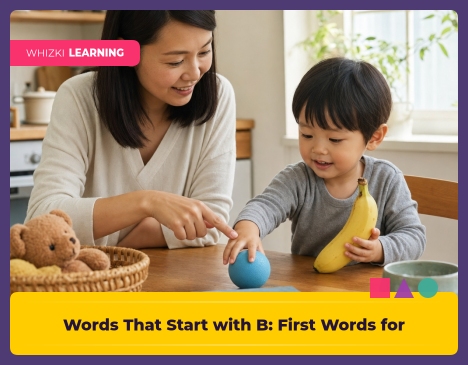
Letter B also helps when the child hears the sound while touching something real, which matches NAEYC guidance for learning through play and sensory input. Say the sound with the object in hand, then let the child repeat it while you point to the first letter.
Letter B work gets smoother when you keep your expectations tiny, like one word at a time, and you celebrate effort, not perfection. If you want more ready-to-use practice, check the alphabet learning hub for routines you can repeat all week.
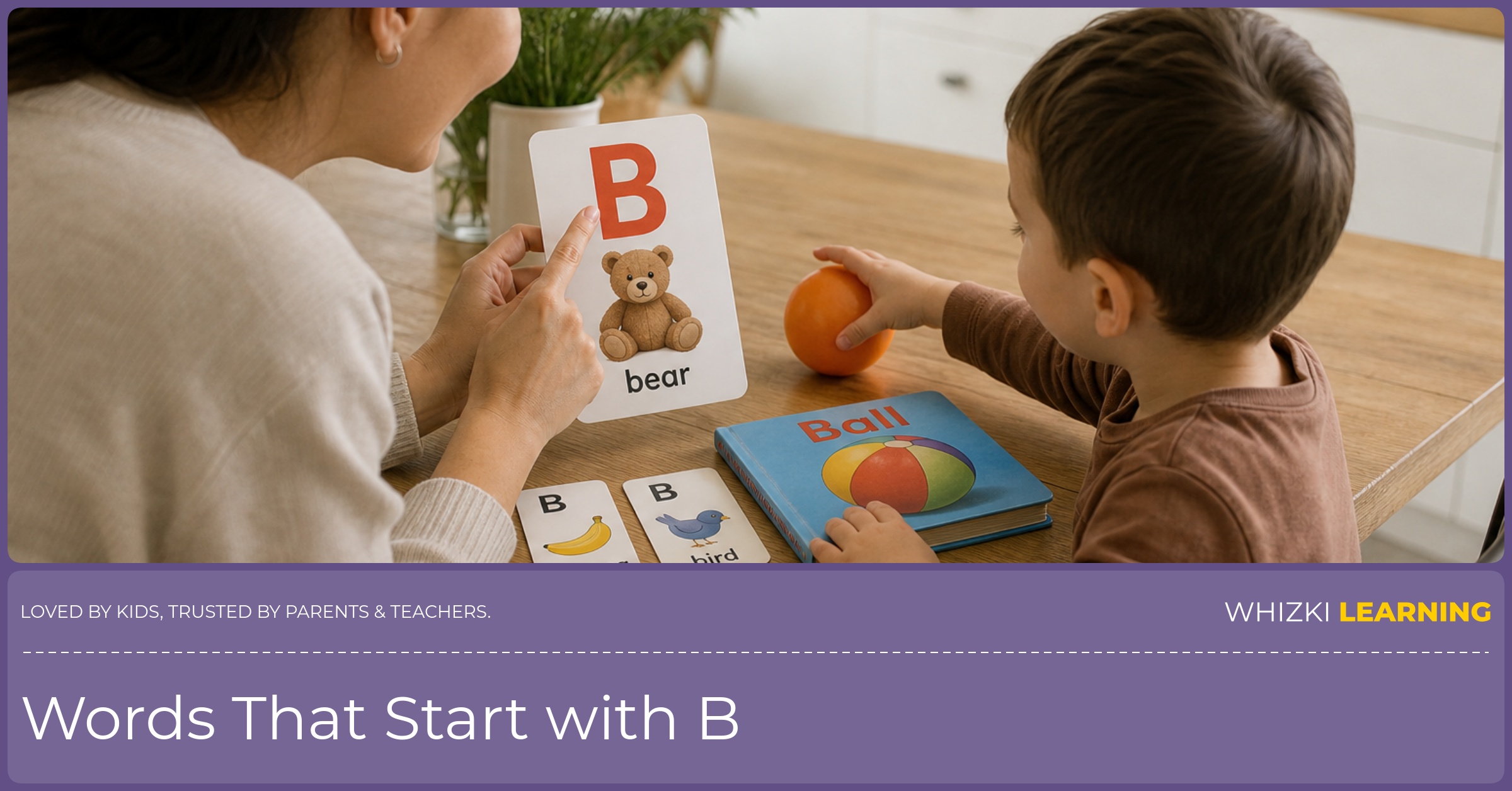
Everyday B words kids can touch
Everyday B words are a great fit for Reggio-inspired learning because children learn through materials, curiosity, and conversation. Pick 6 to 8 objects from your home and rotate them each day so the child stays interested.
Everyday B words also support speech-language practice by giving the child a clear target at the start of a word, which helps with sound awareness. Use our sight-words printables if you want a simple way to review the same words across days.
Everyday B words work best when you keep the routine predictable, like “touch it, say it, put it back.” Occupational-therapy basics often point to short, repeatable routines that help children stay regulated during learning time.
Everyday words
- ball
- bear
- banana
- book
- bath
- boat
- bed
- bird
Big words for curious kids
- barn
- bib
- bus
- booth
- bicycle
- butterfly
- button
Try this script for everyday B words, “I see the book. Your turn.” Then switch to a new object right after the child says it, so learning stays light and doable.
Action B words for speaking and pretending
Action B words help children connect language to movement, and that is a common recommendation in early literacy classrooms using guided practice. Keep the action short, then repeat it slowly so the child can hear the B sound at the start.
Action B words also fit NAEYC’s emphasis on play-based learning, because the child gets to act out meaning instead of memorizing from a worksheet. If your child likes pretend, use the action words during make-believe with dolls or stuffed animals.
Action B words become easier when you model first, then let the child lead, which matches speech-language therapy practice for turn-taking and imitation. For example, you act, the child copies, and then you both laugh and switch roles.
Everyday words
- bake
- bring
- blow
- build
- bounce
- bow
- brag
- break
Big words for curious kids
- balance
- benefit
- borrow
- both
- behave
- believe
Use this tip with action B words, “First I blow, then you blow.” When the child can do it twice, move on, because the goal is language practice, not endurance.
Want quick, kid-friendly practice you can repeat without extra prep? Whizki Learning has printable activities that support letter and word practice, and you can start with the our letter B learning page for more B-focused routines.
First names that start with B
First names are powerful because children already care about people, and Reggio-inspired teachers often use meaningful names from the child’s world. If your child has a friend, neighbor, or classmate with a B name, you will get instant engagement.
First names also support early reading by giving the child a familiar word pattern, which matches Orton-Gillingham style “known to new” teaching. Keep it casual, like “Ben is here,” and let the child point to the name card.
First names are especially helpful when you add a gentle conversation prompt, “Who is that?” That kind of back-and-forth aligns with speech-language practice for building functional communication.
Everyday words
- Ben
- Bob
- Brenda
- Bill
- Bea
- Bonnie
Big words for curious kids
- Barbara
- Bella
- Bryce
- Blake
- Brianna
- Brad
Try this tip with first names, “Ben, touch the ball.” When the child connects a name to an action, the word becomes useful, not just memorized.
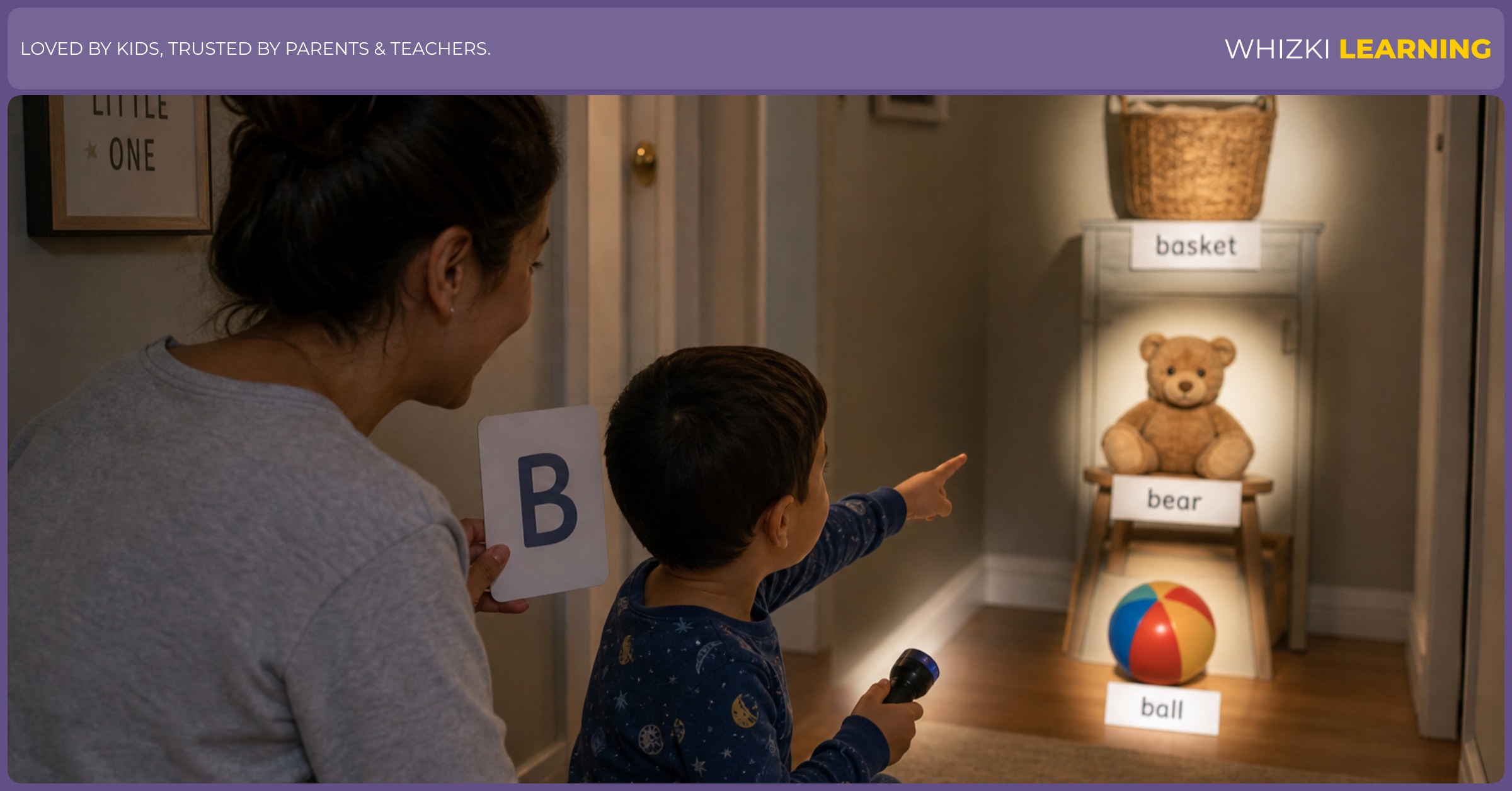
Spot the B word walking game
Spot the B word games work well because children learn best when attention is guided in a playful way, which fits NAEYC’s focus on engagement and active participation. Keep the rules simple and the walk short, like one room or one hallway.
Spot the B word also helps with sound awareness, because the child practices hearing the first sound in a real context. Speech-language practice often recommends modeling and immediate feedback, so you can say the word clearly and then ask for the child’s turn.
Spot the B word becomes even easier when the child has a small “word bank” on display, like a few picture cards. If you want to add describing words next, you can pair this activity with describing words starting with B so your child has more ways to talk.
How to play: Walk and look for something that starts with B, then do a quick “touch and say” with that object. If the child finds a non-B object, you can gently redirect, “Let’s look for a ball word,” and try again.
Bedtime flashlight variation: Turn off the main lights, use a flashlight, and shine it on one B item at a time, then name it together. The child can point to the object while you say the word, then the child repeats once, and you move on to the next spot.
A 3-minute review that actually sticks
A short review routine supports learning because it reduces pressure and keeps attention steady, which is a common strategy in occupational-therapy-informed classroom routines. Aim for 3 minutes, then stop while the child is still interested.
A 3-minute review routine also matches Orton-Gillingham “small steps” thinking, because repetition is helpful when it stays focused. Use the same order each time, like objects first, then actions, then names.
A 3-minute review routine works best when you add one choice, “Do you want the book or the ball?” Choice reduces power struggles and increases cooperation.
Try this script for your 3-minute review, “Touch it, say it, and put it away.” When the child finishes, you can end with one high-energy sentence, “Great B work,” and you are done.
If letter B practice is feeling bumpy, your next step is to lower the number of words and increase the amount of touching and talking. Choose 6 everyday B words for two days, add 2 action B words for one day, and keep the rest for later.