PreschoolKindergartenFirst Grade

40+ Adjectives Starting with B: Kindergarten Words for Feelings, Looks, and Personality

May 29, 2026
40+ Adjectives Starting with B: Kindergarten Words for Feelings, Looks, and Personality

Some days it feels like your child only speaks in grunts and “fine,” and you just want clearer feelings and descriptions. With a few kindergarten-ready B adjectives, you can help conversations slow down and get specific, using the same words you would in a classroom. Start with our letter B learning page at our letter B learning page and keep it simple at the kitchen table.

Reviewed by Sarah Mitchell, M.S., CCC-SLP, Speech-Language Pathologist.

Feelings adjectives for B days

In speech and language work, children learn best when adults model the feeling word and connect it to what the body is doing, like Orton-Gillingham style repetition and short practice moves. When your child says “I’m mad,” you can try offering a B feeling word without making it a test.

Pick one feeling word and use it during real moments, like when a sock won’t go on or when a turn is over. NAEYC guidance supports calm, responsive language that helps children name internal states, not just follow directions.

Everyday words

  • bored
  • baffled
  • blue
  • brave
  • bitter
  • blessed
  • bewildered
  • brooding

Big words for curious kids

  • belligerent
  • befuddled
  • boisterous
  • berserk
  • booming
  • bewitching

Kitchen-table script: “I see your face and your body looks bored or baffled. Which one fits best?” Occupational-therapy basics say feelings label first, then the next step, like a choice board or a short reset.
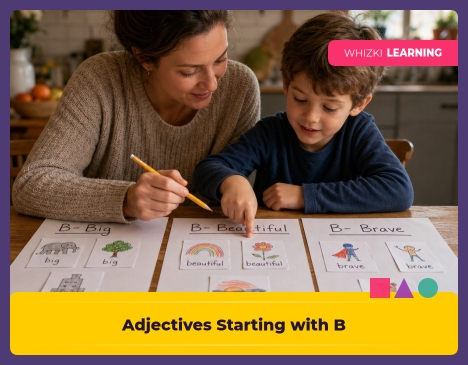
A parent and kindergarten child sit at a kitchen table with three paper piles labeled for feelings words starting with B, using fingers to point and a pencil to mark choices in warm natural light.

Look and size adjectives that click

Reggio-inspired observation helps children notice details, and Orton-Gillingham-informed practice helps adults repeat the same describing word across several days. Use these B adjectives when you look at toys, clothes, snacks, and pictures.

For kindergartners, “size” and “look” words become easier when you connect them to something you can touch, like a small block, a big blanket, or a blue cup. Speech-language pathology practice often uses modeling, then asking for a simple choice, not a long explanation.

Everyday words

  • big
  • bright
  • blue
  • black
  • blurry
  • bouncy
  • brown
  • brisk

Big words for curious kids

  • beaming
  • burly
  • bulky
  • broken
  • beautiful
  • breathtaking

Read-aloud tip: pause, point to the picture, and pick the describing word together. Try, “Is that picture bright or blurry?” Then let your child answer with the adjective only.
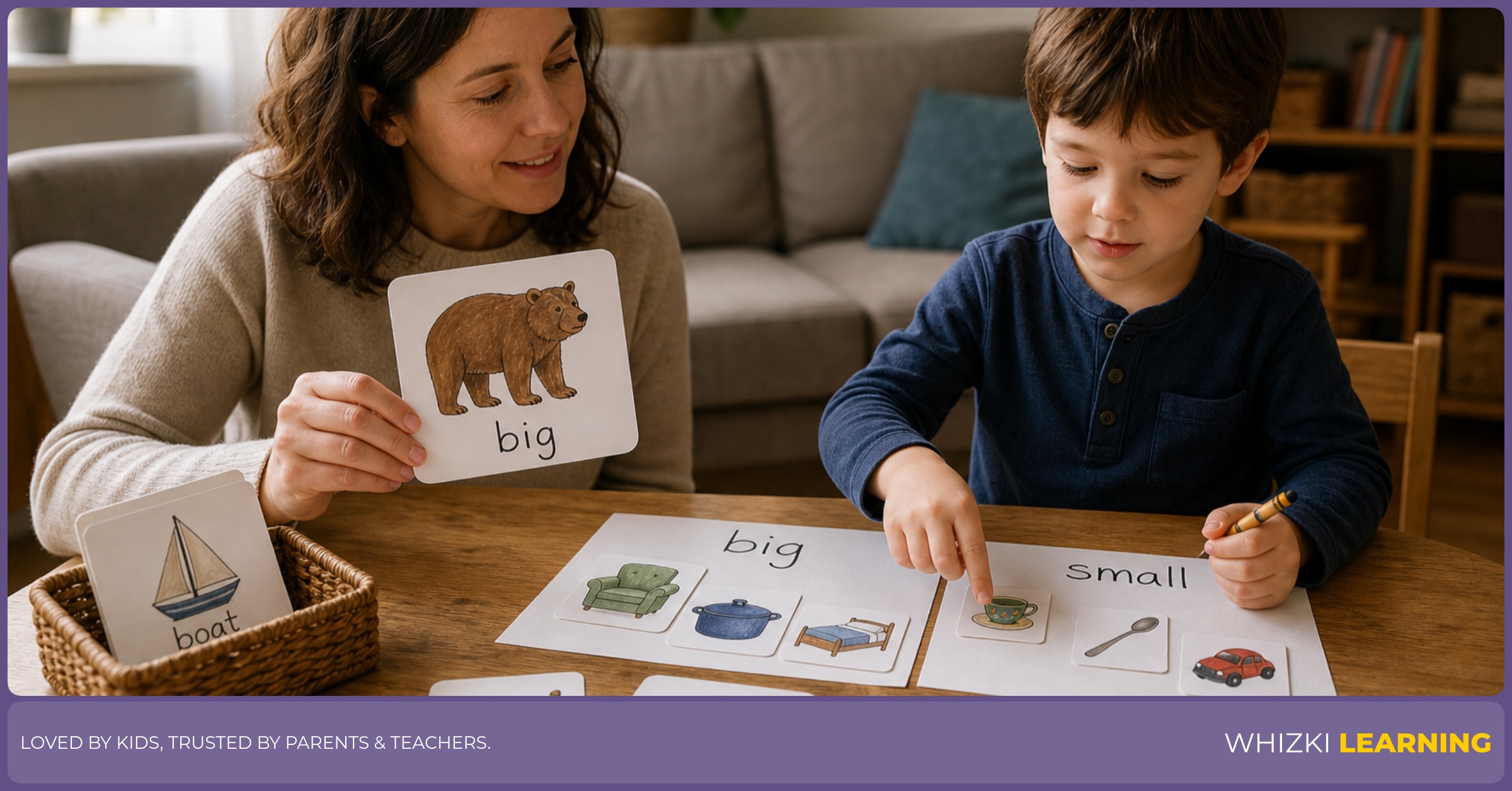
A calm home moment where a parent holds a picture card while a child sorts small and big items into two piles, pointing at the B adjectives with a gentle smile and warm indoor light.

Personality adjectives for how kids are

When adults use personality adjectives, children practice perspective-taking, and NAEYC supports respectful language that helps children describe behavior and character. Keep it concrete, like “That choice shows a brave try,” and use the word during everyday routines.

Use these B words for friend talk, teacher talk, and family talk, especially when you want a kinder way to say “you’re acting up.” The Orton-Gillingham approach values quick, consistent modeling, and the same adjectives work across settings.

Everyday words

  • brave
  • bossy
  • bouncy
  • blessed
  • boisterous
  • busy
  • brisk
  • benevolent

Big words for curious kids

  • baffled
  • believable
  • booming
  • balanced
  • beneficial
  • binding

One kitchen-table sorting activity: set up three piles with a simple label each, Feelings, Looks, and Personality. Pick 18 cards total, mix them, and ask your child to place each B word in the pile that matches the moment in a picture. For extra practice, add a sight-word moment with our sight-words printables while the piles are out.

Whizki Learning has printable practice that pairs letter-sound work with simple vocabulary practice, which is helpful when you want short sessions that actually get done. For a quick start, use the alphabet learning hub to keep the letter B practice moving alongside adjective practice.

When your child asks for “more words,” you can say yes without turning it into homework by keeping one routine: model the adjective, then ask for the adjective choice. If your family is already building sentence talk, pair this adjective set with nouns and verbs starting with B so your child can name the person and action too.

Next time you read together, pause and pick the describing word. “Is the character brave, bewildered, or blue?” Then celebrate the word, not the perfection, and trace the letter B from our letter B learning page with a slow finger before the book closes.

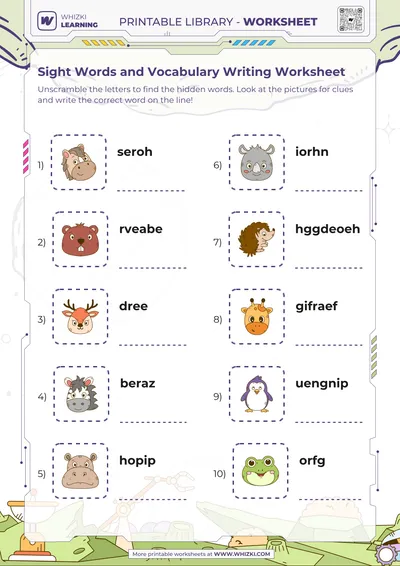
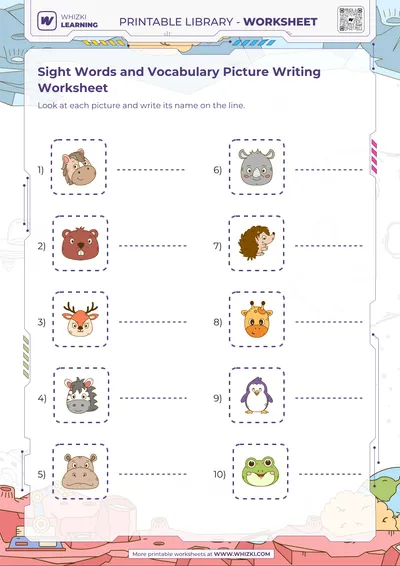
Sight Words and Vocabulary Picture Writing Worksheet Worksheet Cover BackgroundSight Words and Vocabulary Picture Writing WorksheetA printer-friendly sight words and vocabulary worksheet for Kindergarten learners around 5 years old. Use it for quick home practice, homeschool review, classroom centers, or a calm screen-free warm-up when your child needs focused word recognition.
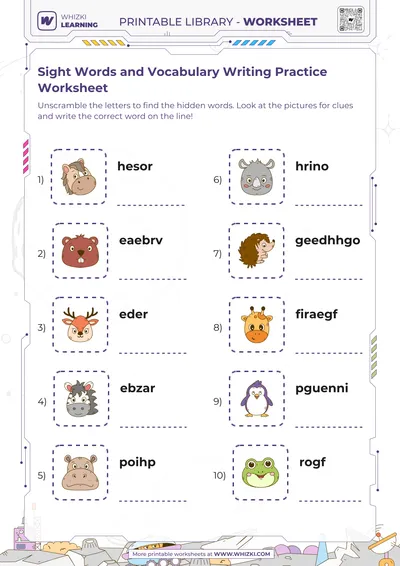
Sight Words and Vocabulary Writing Practice Worksheet Worksheet Cover BackgroundSight Words and Vocabulary Writing Practice WorksheetA printer-friendly sight words and vocabulary worksheet for 1st grade learners around 6 years old. Use it for quick home practice, homeschool review, classroom centers, or a calm screen-free warm-up when your child needs focused word recognition.
Sight Words and Vocabulary Writing Worksheet Worksheet Cover BackgroundSight Words and Vocabulary Writing WorksheetA printer-friendly sight words and vocabulary worksheet for 1st grade learners around 7+ years old. Use it for quick home practice, homeschool review, classroom centers, or a calm screen-free warm-up when your child needs focused word recognition.

Frequently asked questions

What if my child keeps choosing the wrong B adjective?

It is normal for children to mix up describing words at first. With repeated modeling and two-option choices, the right word becomes familiar, and you can try again during the next calm moment. If confusion stays strong or speech is hard to understand, ask a speech-language pathologist for guidance.

Why do adjective activities work better than worksheets for some kids?

Adjective practice works best when it is tied to real moments your child can see and touch. Adults model the word, children choose one word, and the brain gets repeated input in the context of meaning. If attention collapses quickly, shorten the session to 2 minutes and ask an occupational therapist for sensory supports.

How can I use these words during tough transitions?

Use the B adjective right before the transition, like “You feel <strong>blue</strong> and we are switching after one song.” The timing helps the feeling word connect to what happens next, which supports emotional regulation. If meltdowns are frequent and intense, talk with your child’s teacher and consider professional support.

When should I introduce “big words” from the lists?

Introduce big words when your child can already use at least one everyday describing word in conversation. Big words work well as occasional modeling, then choice, not long explanations. If your child refuses the word, switch back to a simpler one and try again later.

Where do I fit this into our day without extra stress?

Use the same three moments each day, like breakfast, bath, and bedtime book time. Consistency matters more than length, and a 2 to 5 minute routine keeps it doable. If your schedule changes often, pick just one anchor time and keep adjective practice there.

Limited Time Sale
Kids’ Workbooks!

Boost your child’s skills with our discounted workbooks. Engaging activities for preschool, kindergarten, and grade 1 - now at special sale prices!

June Summer Learning Workbook for Kindergarten to 1st Grad... Workbook Cover BackgroundJune Summer Learning Workbook for Kindergarten to 1st Grade: Math, Reading, Writing, Science, Brain QuestsA workbook for the slow weeks of June. Reading, math, writing, science, and brain quests for kids stepping from kindergarten into 1st grade.

-27% $10.99

List Price: $14.99
Buy Now
July Summer Learning Workbook for Kindergarten to 1st Grad... Workbook Cover BackgroundJuly Summer Learning Workbook for Kindergarten to 1st Grade: Alphabet Tracing, Math, Numbers, Preschool ActivitiesA July workbook for the middle of summer. Alphabet tracing, early math, number practice, and pencil work for kids moving from kindergarten i...

-27% $10.99

List Price: $14.99
Buy Now
August Summer Learning Workbook for Kindergarten to 1st Gr... Workbook Cover BackgroundAugust Summer Learning Workbook for Kindergarten to 1st Grade: Numbers Tracing, Alphabet, Writing, Science, Social StudiesAn August workbook for the last stretch of summer. Number tracing, alphabet review, writing, science, and gentle social studies for the week...

-27% $10.99

List Price: $14.99
Buy Now
Animal Coloring Adventures Workbook for Kids Ages 3-7: Fac... Workbook Cover BackgroundAnimal Coloring Adventures Workbook for Kids Ages 3-7: Facts, Mazes, Quizzes, and Coloring ActivitiesAn animal-themed coloring and brain-quest book for ages 3 to 7. Facts, mazes, and quizzes about jungle, ocean, and backyard animals.

-31% $8.99

List Price: $12.99
Buy Now

Join the Screen-Free Movement.

Get exclusive activities, expert tips, and inspiration for a more meaningful, offline family life.

Copyright © 2025 - 2026 Whizki Learning. All rights reserved.