Some days it feels like your child has only two words, “mad” and “fine,” and you are stuck guessing what they mean. You can make adjective talk easier with a small set of V words and a simple sorting routine at the kitchen table.
Reviewed by Sarah Mitchell, M.S., CCC-SLP, Speech-Language Pathologist.
Feelings V words for kinder conversations
In speech-language pathology practice, we build feelings vocabulary by giving kids a short word bank and lots of chances to use it in everyday talk. Try picking one feeling word for the day and using it during real moments, like after shoes come off or after a turn on the slide.
For early literacy and language growth, NAEYC guidance reminds us that playful repetition beats pressure. When your child can name a feeling, the next step, calming and problem-solving, gets easier.
Everyday words
- vexed
- vulnerable
- vivid
- vexing
- vengeful
- vivacious
Big words for curious kids
- venomous
- vehement
- vengeful
- vexatious
- vulnerable
- veridical
Kitchen-table tip: pause and pick the describing word. Say, “Your face looks vexed. Is that the word you want?” Then offer one choice, not five, so your child can succeed.
Looks and size V words kids can spot
Occupational-therapy basics for preschoolers include noticing visual details and using descriptive language during hands-on play. When kids compare objects, they practice “what do I see?” which is the foundation for adjective use.
Reggio-inspired observation helps here, because the adult follows the child’s attention. If your child points at something, the teacher or parent names the visual detail with a V word and keeps the moment going.
Everyday words
- vast
- visible
- vertical
- velvety
- violet
- vivid
- varied
Big words for curious kids
- voluminous
- venerable
- verdurous
- ventilated
- vaporous
- vermiculous
Read-aloud tip: pause and pick the describing word. While reading, stop after a picture detail and ask, “Do you want visible or vast?” The goal is quick choices, then back to the story.
Personality V words for “who are you?” talk
Orton-Gillingham style language teaching uses clear, repeatable word practice. For personality adjectives, keep the routine short, like “One word, one example, one try,” so your child can use the word without getting overwhelmed.
NAEYC guidance also supports social-emotional language, because kids learn self-talk through warm adult modeling. When your child hears personality words in kind, specific ways, the words become usable, not just memorized.
Everyday words
- vivid
- valiant
- vigilant
- versatile
- venturesome
- vocal
- virtuous
Big words for curious kids
- veracious
- visionary
- venerable
- vicarious
- voluntary
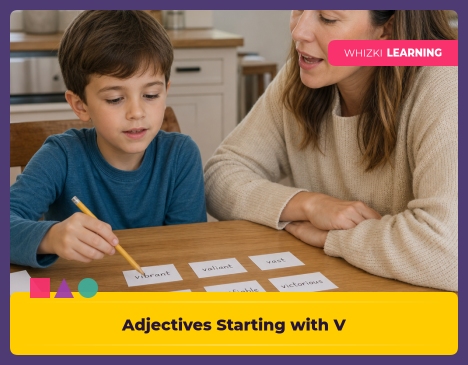
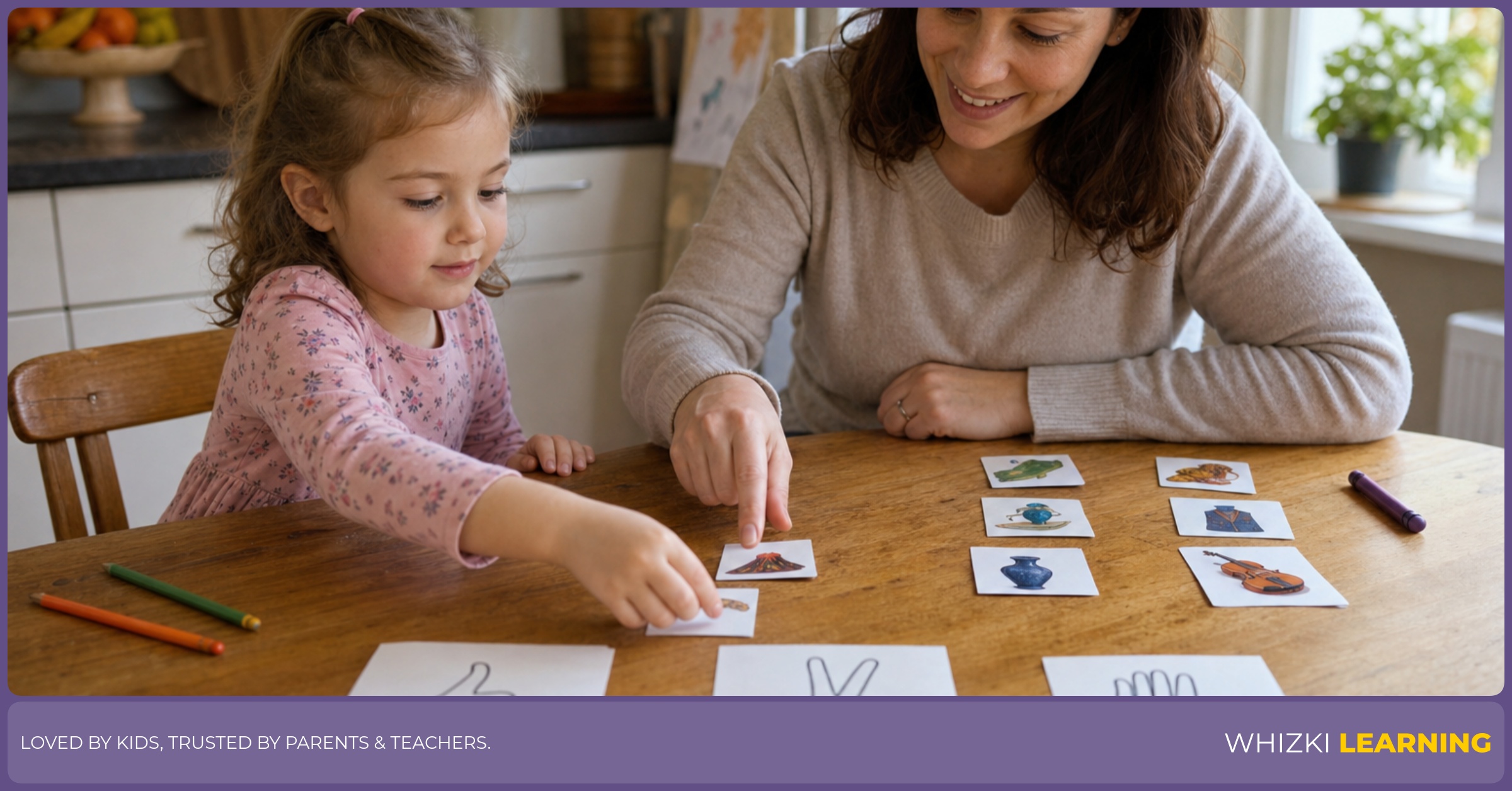
Try a 3-pile sorting activity with V adjective cards: one pile for feelings, one pile for looks, and one pile for personality. Say, “Put the word where it belongs,” then ask, “Which pile fits your day today?” For letter practice, pair the talk with our letter V learning page, and trace the V shape right after sorting.
Whizki Learning printable practice can help you keep adjective talk consistent, especially when you are busy. Pair your V sorting game with our sight-words printables so your child gets daily, low-pressure language reps.
If you want to keep the same practice going on paper, take a look at our alphabet tracing workbook for preschool and kindergarten.
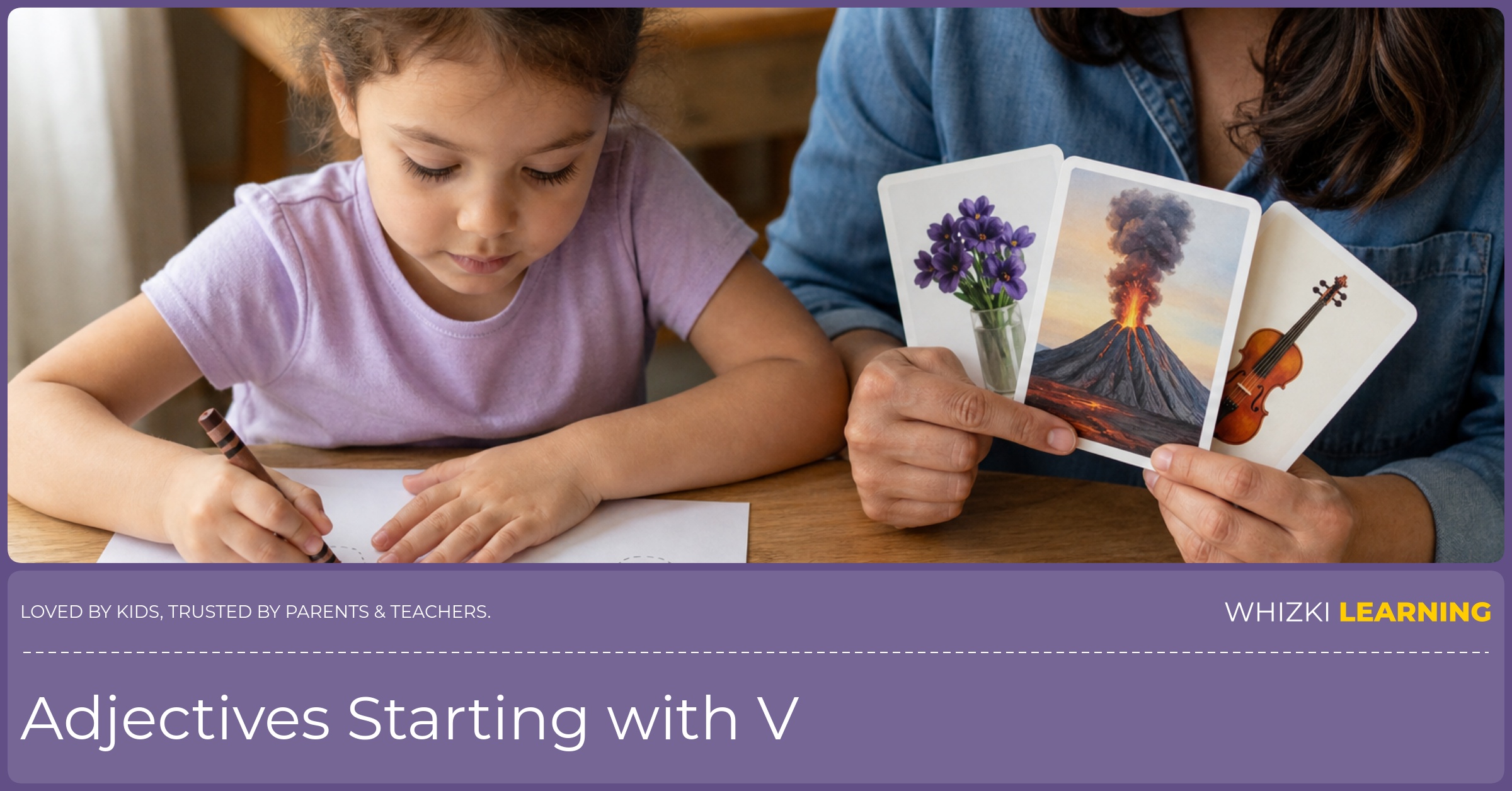
If your child is ready for more word variety, add a quick “V words for early readers” moment by browsing nouns and verbs starting with V for action and thing words. Then circle back to adjectives during play, using the alphabet learning hub when you want a simple daily plan.