
Some days it feels like kindergarten language is one more thing to juggle, right alongside snacks, shoes, and “why” questions. When you add a few U describing words to everyday talk, the words stick without turning life into a lesson. Our letter U learning page and printable practice help you keep it simple and steady.
Reviewed by Sarah Mitchell, M.S., CCC-SLP, Speech-Language Pathologist.
U adjectives for feelings
In the Orton-Gillingham approach, short, repeated language practice helps children connect sounds and meaning, and feeling words are a great place to start. When a child can name a feeling, the next step is choosing a helpful action. Use these U adjectives during real moments, like after a transition or during a game.
NAEYC guidance reminds us that children learn best through warm, responsive back-and-forth talk. Try to describe what you see, then invite your child to pick the matching feeling word. You are building emotional vocabulary, not testing it.
Everyday words
- unhappy
- upset
- uneasy
- unafraid
- unhurt
- unworrying
Big words for curious kids
- uncertain
- uncomfortable
- unsteady
- unmoved
- untroubled
- unruffled
Kitchen-table tip: hold up three picture cards or write the words on slips, then ask, “Which U feeling word fits right now?” After your child answers, pause and pick the describing word again in a full sentence, like, “You look uneasy,” so the word lands in context.
U adjectives for looks and size
Occupational-therapy basics often emphasize sensory language, because children notice details through their bodies and eyes. When you name what you see, you help the brain organize information. These U adjectives work well for describing size, shape, and appearance during cleanup, art, and pretend play.
Reggio-inspired observation is all about noticing and describing what is happening in the moment. Try describing the object first, then let your child do the describing. This keeps the focus on communication, not perfection.
Everyday words
- ugly
- unusual
- uneven
- unbroken
- uncluttered
- unpainted
Big words for curious kids
- unspoiled
- unblemished
- unbent
- unworn
Quick correction script you can use: “You mean unbroken,” then point to the toy or drawing. If your child keeps choosing the wrong word, slow down and offer two choices only, so the conversation stays kind and doable.
U adjectives for personality
Speech-language pathology practice often targets vocabulary growth through meaningful interaction, especially when adults model the word and give the child a turn. Personality adjectives are perfect for that, because children love talking about people in their world. Use these U adjectives for classmates, family members, and characters in stories.
Orton-Gillingham style repetition can be gentle here, too, by revisiting the same words across days. When a child hears a word in multiple settings, the word becomes part of their everyday speech.
Everyday words
- unselfish
- unfriendly
- unwilling
- unhelpful
- unlucky
- unsteady
Big words for curious kids
- unbothered
- unafraid
- untroubled
- unpretentious
- uncomplicated
- unwavering
Sorting activity at the kitchen table: make three piles labeled Feelings, Looks, and Personality, then place word slips in the piles together. After each placement, ask, “What word did you choose, and why?” This builds flexible thinking and descriptive language without turning the moment into a worksheet.
Whizki Learning has letter practice and word practice that pair well with adjective talk, especially when you want quick, screen-free routines. Start with our letter U learning page, then add a few adjective words during the same sitting. If you also want quick vocabulary repetition, use our sight-words printables to keep the routine moving.
If you want to keep the same practice going on paper, take a look at our alphabet tracing workbook for preschool and kindergarten.
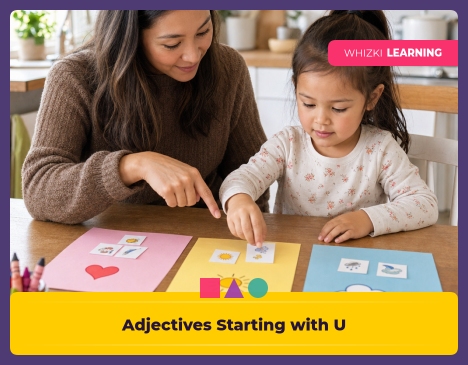
Practice the letter U shape with adjective talk
The alphabet learning hub works best when the letter practice is tied to something your child already wants to say, like describing a picture or a toy. Use the alphabet learning hub to keep letter practice consistent across the week. Then, connect the letter U to the describing words you are using at home.
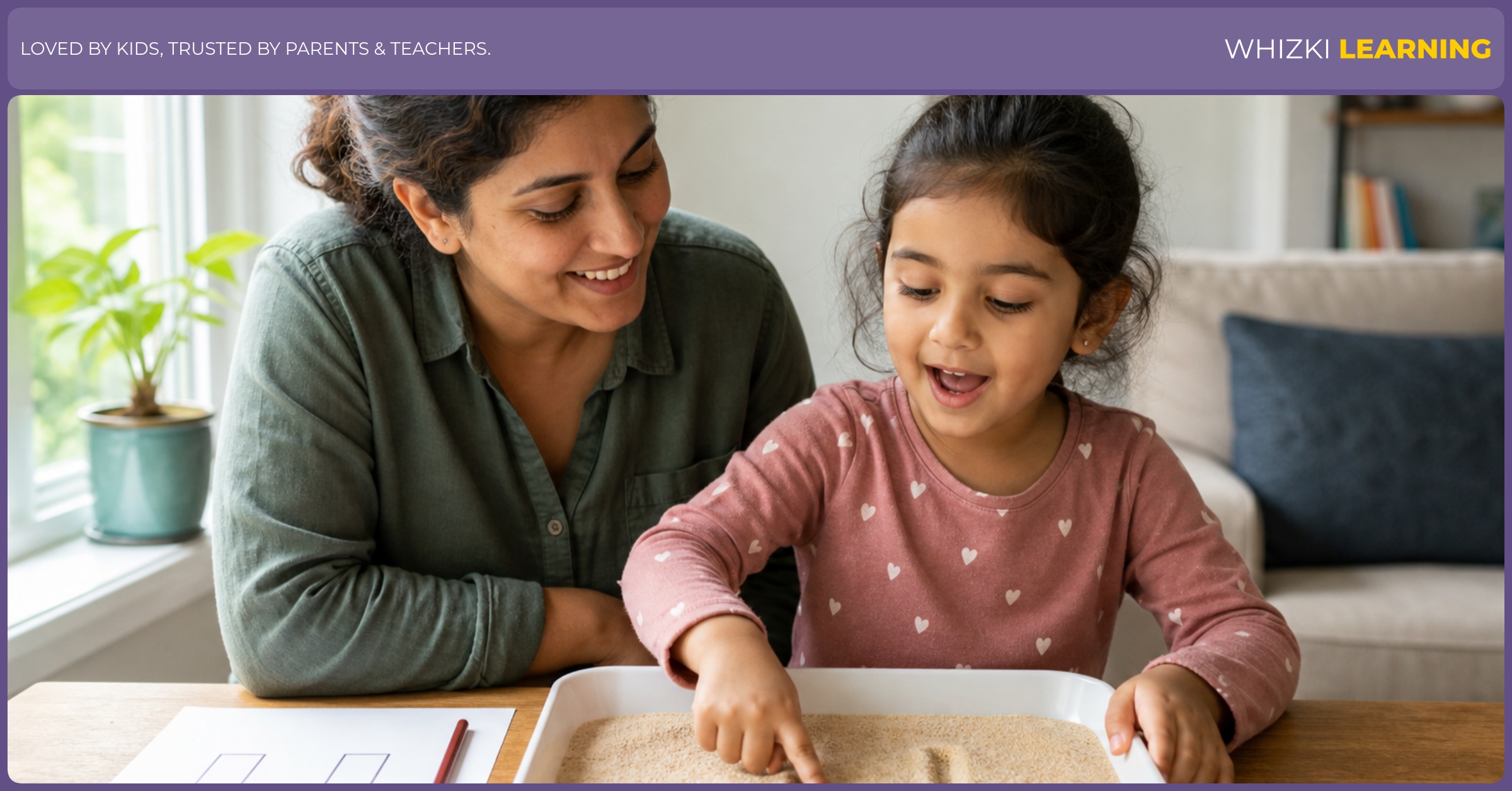
For letter formation, keep it physical and simple, like tracing the letter U with a finger in sand or on a tray of rice. Then your child picks one adjective and says it out loud before writing the letter again. This is a Reggio-style “make meaning with materials” moment.
Read-aloud tip: when a book describes a character, pause and pick the describing word together. Ask, “Which U word matches what you heard?” If the answer is not perfect, you can model it once and try again.
One more tie-in for early readers: point out the U sound in the adjective word, then practice the letter shape right after. This helps the letter feel connected to real speech, not just paper.
To keep the language routine balanced, add one quick turn for nouns and verbs too, so your child gets a full sentence picture. For more U words for early readers, visit nouns and verbs starting with U alongside these adjective words.
When you use U adjectives during everyday life, you are giving your child a tool for talking about feelings, noticing details, and describing people. Pick 3 to 5 words for the week, repeat them in real moments, and let your child do the choosing. That is how kindergarten-ready language grows, one calm conversation at a time.