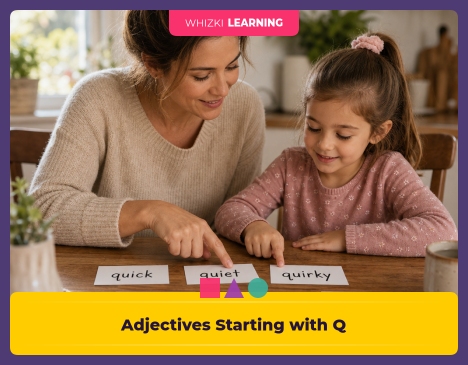
Some days it feels like kindergarten prep is a never-ending list, and your kid is still stuck on the same “no” or “not now.” When you use a few clear Q adjectives in real moments, the language sticks without turning into a worksheet battle. Our letter Q learning page helps you practice the sound and the letter shape while you talk.
Reviewed by Sarah Mitchell, M.S., CCC-SLP, Speech-Language Pathologist.
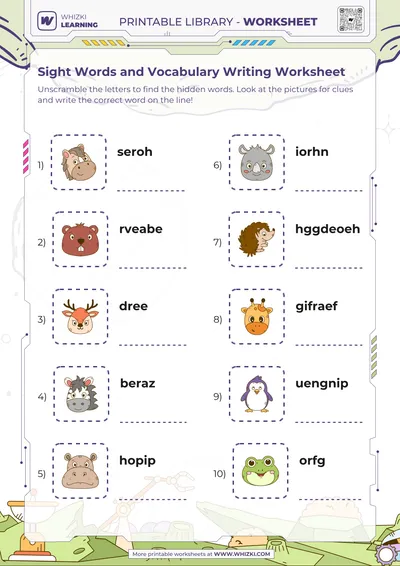
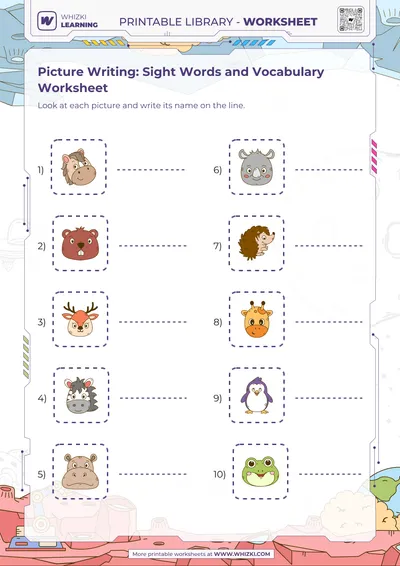
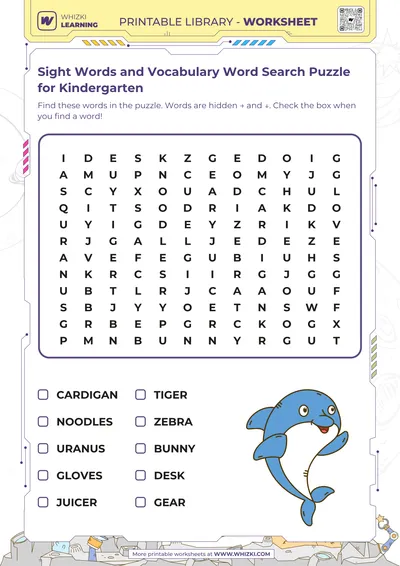
For extra practice, pair adjective talk with our sight-words printables, so your child hears and uses descriptive words in the same daily routine.
Feelings Q adjectives kids can say
Using Q feeling words in everyday moments matches how speech-language pathologists and early literacy specialists build vocabulary, one clear label at a time. When your preschooler can name a feeling, behavior gets easier to handle together.
Try picking one feeling word during transitions, like after shoes, before snack, or after cleanup. You are modeling calm self-talk, and you are giving the brain a simple “name it” step.
Everyday words
- quiet
- quivery
- quick
- quizzical
- querulous
- quaking
- quenchless
- quiescent
Big words for curious kids
- quenchable
- quarrelsome
- querier
- quarreling
- quivering
- quixotic
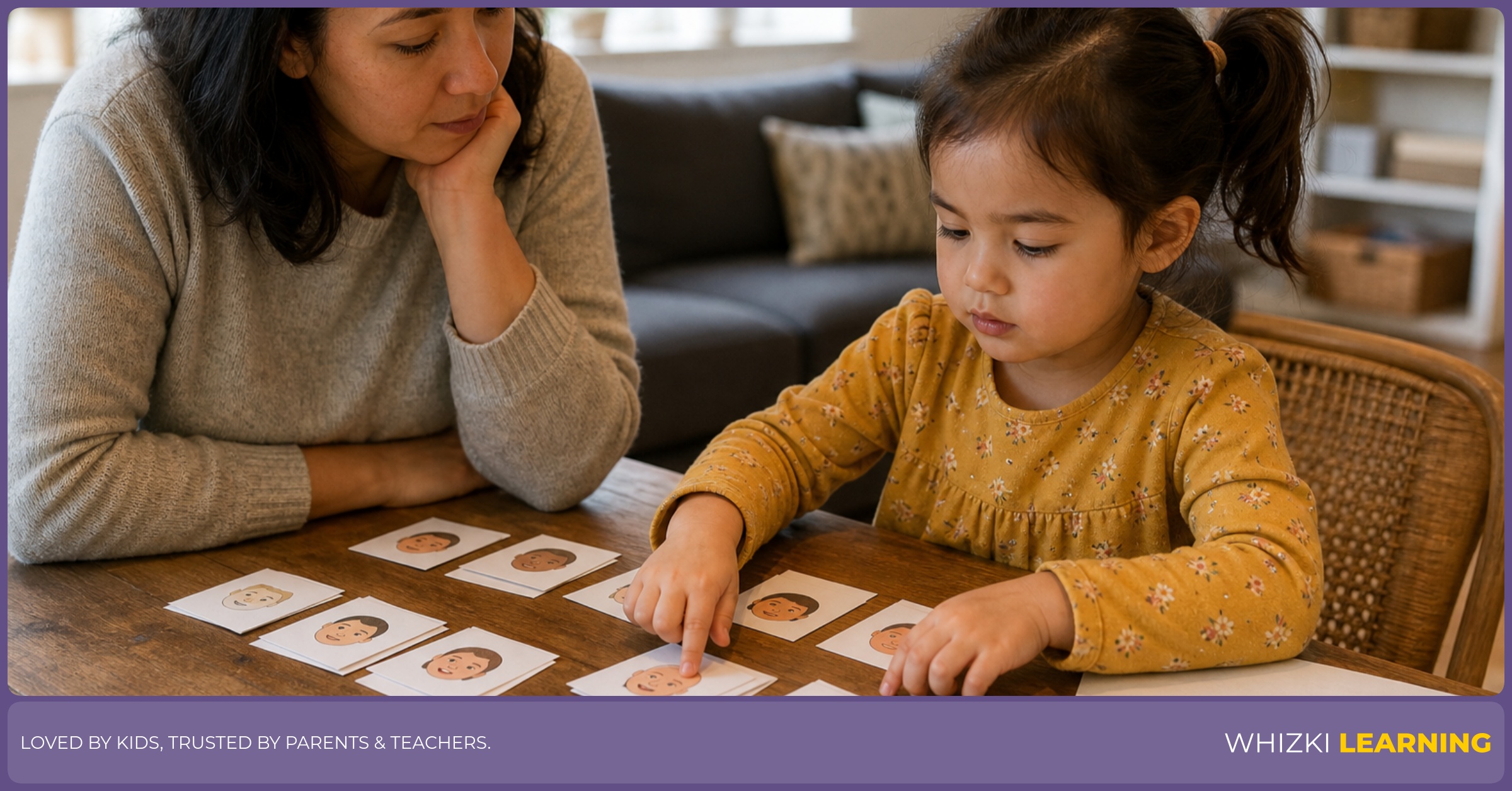
Kitchen-table script: “I see you look quizzical. Are you wondering, or are you worried?” Then pause and let your child choose another Q feeling word from the sorting piles.
Looks and size Q adjectives
Reggio-inspired observation helps here, you describe what you truly see, then you add one adjective. That keeps talk natural, and it supports early literacy vocabulary without turning play into a test.
When you use a Q look or size word while dressing, building, or cleaning up, your child learns that adjectives are useful, not just “school words.” Occupational-therapy basics also favor short, repeatable language during movement and routines.
Everyday words
- quick
- quaint
- quaky
- quartziferous
- quartzy
- quilled
- quilted
Big words for curious kids
- quadrangular
- quadrilateral
- quadripartite
- quincunxial
- quinquennial
Read-aloud tip: when a story shows a character’s look or size, pause and pick the describing word, “Is it quaint or quilted?” Let your child answer, then you repeat the sentence with the chosen word.

Personality Q adjectives
NAEYC guidance reminds us that children learn best through supportive back-and-forth talk. Personality adjectives work well when you describe choices, not labels, like “You are being quarrelsome right now, and we can try a calmer plan.”
Orton-Gillingham style practice is helpful even for young kids, because it uses consistent, clear language. You keep repeating the same word in the same “sentence frame,” so your child can join in quickly.
If your child resists, lower the pressure and offer two options. “Do you feel more quarrelsome or more quiescent?” is easier than asking for a perfect answer.
Everyday words
- quick
- quiet
- quirky
- quixotic
- querulous
- quarrelsome
- quarreling
- quizzical
Big words for curious kids
- quarrelsome
- questuary
- querulous
- quivering
- quenchless
- quixotic
One more step for the whole family: sort Q adjective cards into three piles at the kitchen table, feelings, looks, and personality. Then do one sentence per pile, “I feel quiet,” “It looks quaint,” “You are quirky.” For more Q words for early readers, see nouns and verbs starting with Q.
Whizki Learning printable practice can help your child keep the letter Q connection strong, especially when you pair adjective talk with quick letter-shape work. Add a short session from the alphabet learning hub, then come back to the Q adjective sorting game for one more round.
If you want to keep the same practice going on paper, take a look at our alphabet tracing workbook for preschool and kindergarten.
To tie everything to handwriting and letter recognition, practice the letter Q shape right after adjective talk. Our our letter Q learning page gives a kid-friendly way to trace and form the letter while you say a Q adjective out loud.
Closing script: “We just practiced quiet and the letter Q. Next time you see a Q word, you can point and say it, then pick a describing word for what you notice.”