Some days it feels like you are chasing the “right” words while your kid is chasing everything else. When you keep it simple, the letter U can become a friendly routine, not a battle, and you will get more chances to practice in real life. For our letter U learning page, visit our letter U learning page.
Reviewed by Sarah Mitchell, M.S., CCC-SLP, Speech-Language Pathologist.
Want a quick, hands-on way to practice letter U and early vocabulary? Check out the alphabet learning hub for printable activities you can use at the table or on the floor. Whizki Learning printables are designed for short, repeatable practice that fits busy family days.
U first words, why simple works
In the Orton-Gillingham approach, early literacy grows best with short, consistent sound and word practice, not long lessons. When you repeat a small set of U words across the day, your child gets more “tries” to notice the sound and feel confident using it.
In NAEYC guidance, vocabulary practice works best when it is embedded in everyday routines, like bath time, snack time, and cleanup. The word list below is built for that kind of real-life practice, with nouns your child can touch, verbs your child can do, and common names your child hears often.
If you want printable support, our sight-words printables can help you keep practice organized, visit our sight-words printables.
Everyday objects that start with U
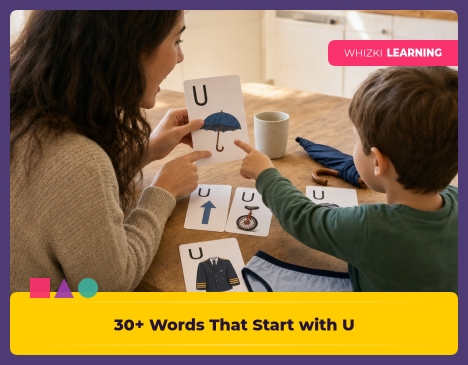
In Reggio-inspired observation, children learn language through what they can see and handle, so everyday objects are a great starting point. Occupational-therapy basics also remind us that hands-on input helps attention, so pick objects you can hold during practice.
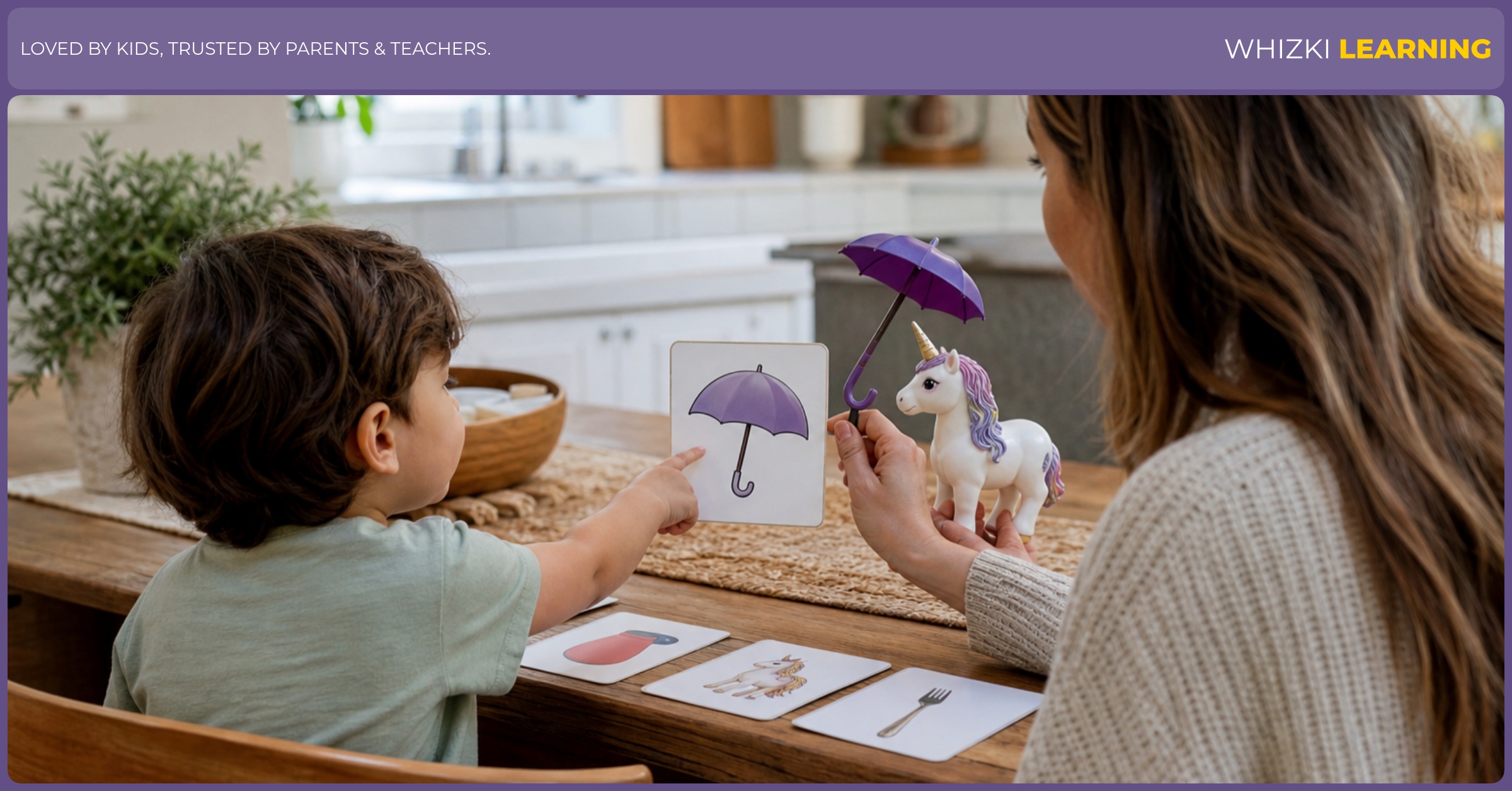
Try saying the U word once, then give your child a turn to touch it, point to it, or hand it to you. Keep it light, like you are playing a naming game, not testing.
Everyday words
- umbrella
- unicorn
- utensils
- unit
- up
- under
- urn
Big words for curious kids
- universe
- utopia
- utensil
Tip script for the kitchen: “I see a utensils. Can you point to it?” Then pause and let your child lead with a point, a grab, or a repeat.
Action words that start with U
Speech-language pathology practice often uses “model, prompt, and repeat” in a playful way, because children learn best when they can connect the word to the action. Action verbs also match how kids move, so the practice feels natural.
When you use verbs during play, you are giving your child a clear meaning, not just a sound. Try one verb at a time, then switch to a new one after your child has a couple of successful tries.
Everyday words
- use
- undo
- unroll
- unzip
- uplift
- upset
- urge
Big words for curious kids
- uncover
- understand
- unfold
- unite
Tip script for play: “Watch me, I will unroll.” Then hand your child the paper or ribbon and say, “Your turn, unroll.”
First names that start with U
In a classroom or home setting, common names are powerful because children hear them all day and attach them to real people. Reggio-style learning also supports using names in context, like when you talk about who is coming or who is helping.
Keep name practice short and social. Say the name, point to the person or picture, and let your child respond with a wave, a nod, or a repeat.
Everyday words
- Uma
- Uri
- Ulysses
- Uriah
- Ulrich
- Ursula
Big words for curious kids
- Uria
- Upton
- Ulyssa
Tip script for the hallway: “I hear Ursula.” Then ask, “Can you say it back?” If your child skips the sound, model it once more and move on.
Spot the U word walking game
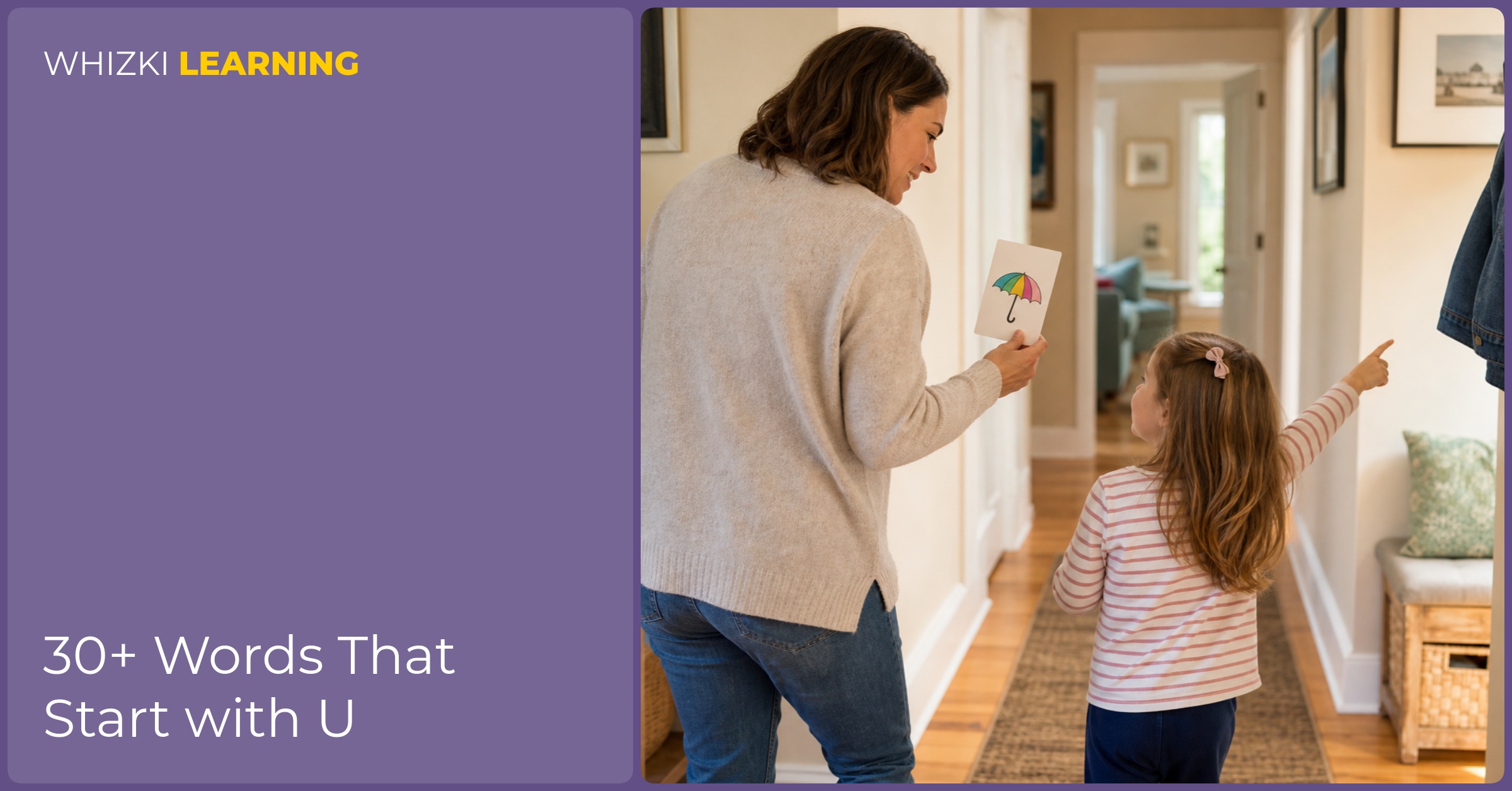
For early literacy, the simplest “game” is still structured practice, and NAEYC encourages playful repetition with real feedback. This walking game works best when you keep the goal small, like finding one U word per room.
Pick one U word from the lists, then walk together and look for it in your environment. If you do not have the exact object, use a substitute you can still touch, like a toy or a picture, and keep the focus on the sound.
Game script: “I am looking for a U word. When you see it, point and say it.” After your child points, celebrate the effort, then say the word clearly one time and move on to the next spot.
Flashlight bedtime variation for U words
For bedtime practice, speech-language pathology practice often recommends short, low-pressure turns, because children learn best when they feel safe and successful. The flashlight game also adds sensory input without turning the night into a lesson.
Turn off the main lights, grab a small flashlight, and choose 3 U words for the night. Shine the light on a book cover, a toy, or a picture, then ask your child to name the U word or point to it.
Bedtime script: “Flashlight finds a U word. Point and say it.” If your child is tired, you can do the naming and your child can just point, that still counts as practice.
If you want to build on U vocabulary with describing words, describing words starting with U live on the sibling page at describing words starting with U.
Pick one U word from the everyday objects list, one U verb from the action words list, and one U name for the week. When you repeat those choices across routines, the letter U becomes familiar, and your child gets steady practice without extra stress.
For the next step, choose a single time window, like after lunch or right before bath, and do two minutes of “say it, touch it, do it.” The alphabet learning hub can help you keep the momentum going with the next letter when you are ready, visit the alphabet learning hub.