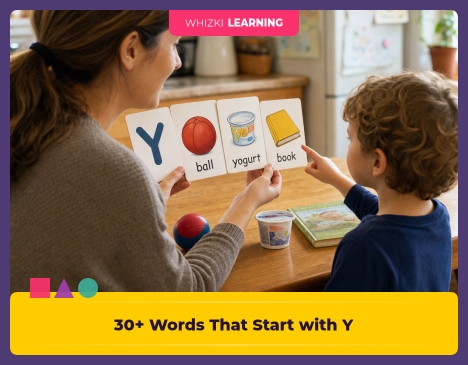
When you are trying to teach letter sounds at home, it can feel like your child is either bored or stuck on the same few words. Let’s keep it simple and hands-on with first Y words that match real preschool life, plus a quick game you can do in minutes. For more letter practice, use our letter Y learning page alongside these first words.
Reviewed by Sarah Mitchell, M.S., CCC-SLP, Speech-Language Pathologist.
Want extra practice without extra prep? Check our sight-words printables for quick, kid-friendly word exposure that pairs well with letter Y sound play. Whizki Learning materials make it easy to repeat the same words across the week.
First Y words that fit real life
In the Orton-Gillingham approach, we build early literacy by pairing a sound with a clear, concrete word. For letter Y, that means choosing words your child can see, touch, and use during daily routines, like the worksheet-style word practice you can find in our sight-words printables.
In NAEYC-aligned teaching, vocabulary grows best when adults talk with children during play, not just during drills. When you say the word once, then let your child point or act, the learning feels natural and doable.
If you are a teacher or homeschooler, keep the focus on one group at a time, like everyday objects first, then action words, then names. This matches a simple speech-language pathology practice idea, repetition with meaning, so the child can store the word without pressure.
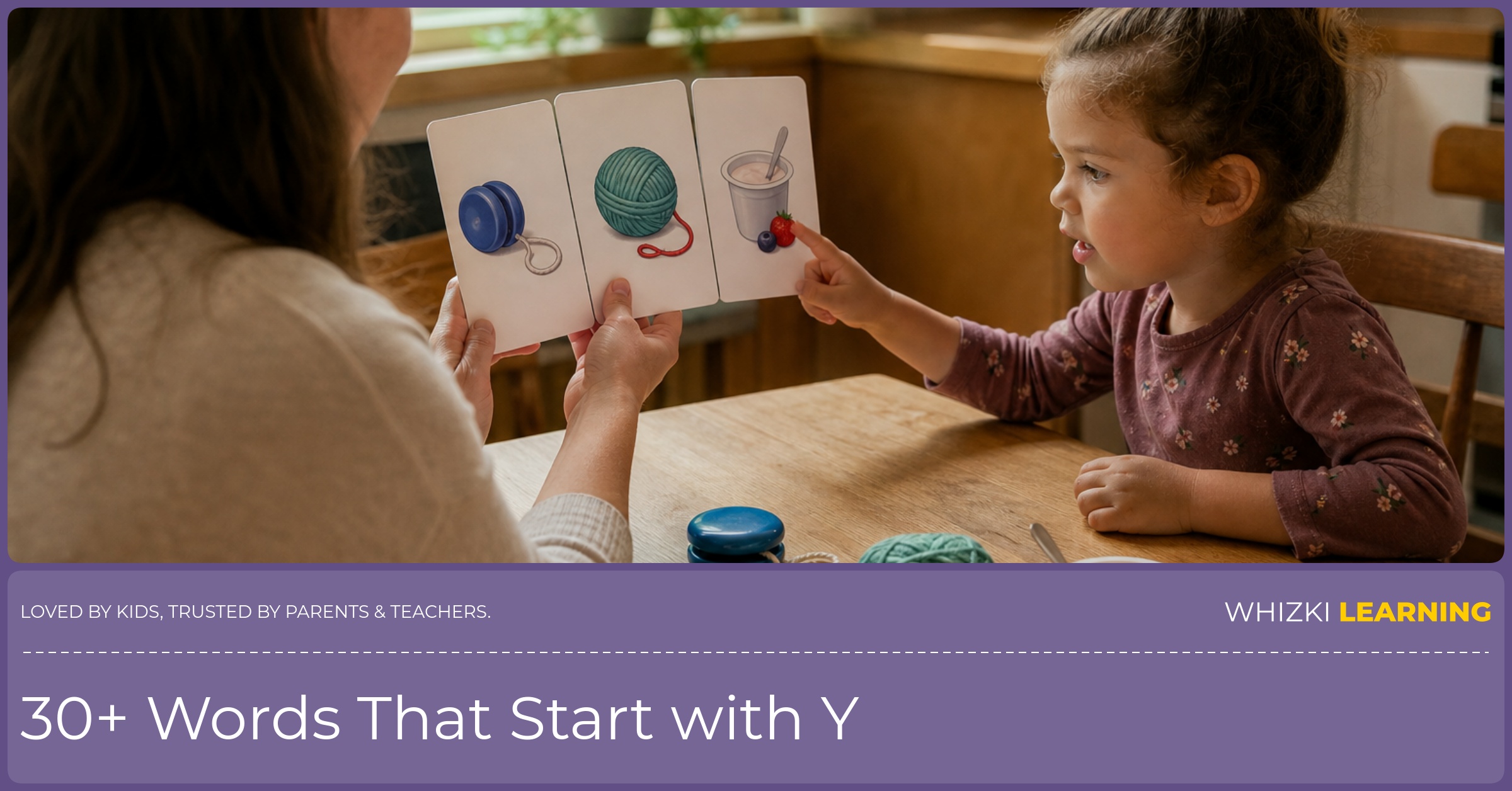
Everyday objects that start with Y
Reggio-inspired observation helps when you notice what your child already reaches for, then you label it with the letter sound. Occupational-therapy basics also remind us that learning sticks when the child’s hands are busy, so use objects your child can hold while you say the word.
Try this routine: pick one object, say the word slowly, then ask the child to point or hand it to you. Keep it to a few turns so it stays fun.
Everyday words
- yarn
- yogurt
- yard
- yolk
- yacht
- yardstick
- yawn
- yardage
- yule
Big words for curious kids
- yesteryear
- yonder
- yawning
- yachtage
- yogurtland
- yoke
- yarnball
Tip script: “I see a yacht. Your turn, find the yacht.” Then celebrate the pointing, even if the word comes out softly.
Action words that start with Y
In the Orton-Gillingham approach, action words work well because the child can do the word, not just repeat it. When you model the action and the child copies it, the meaning becomes clear right away.
For NAEYC guidance, keep the actions playful and short, like a mini movement break. This also supports attention, because the child is moving while learning.
Everyday words
- yell
- yip
- yodel
- yawned
Big words for curious kids
- yearn
- yest
- yodeling
- yammer
- yare
Tip script: “Watch me yearn.” Then pause and let the child choose, “Do you want to try it big or try it quiet?”
First names that start with Y
Speech-language pathology practice often uses names because they are high-interest and easy to connect to a real person. When a child hears a name in context, the word feels meaningful, not random.
For classroom and homeschool routines, use names during turn-taking, like “Your turn, Yara,” or “Say hi to Yusuf.” This fits a simple Reggio-style idea, learning through social interaction.
Everyday words
- Yara
- Yusuf
- Yvonne
- Yolanda
- Yasmin
- Yosef
- Yvette
Big words for curious kids
- Yuri
- Yehuda
- Yamileth
- Yazmin
- Yasiel
- Yolande
Quick connection: if your child is ready for more Y vocabulary, add “describing words starting with Y” next on the sibling page at describing words starting with Y.
Spot the Y word walking game
NAEYC encourages learning through everyday experiences, and a walking game turns letter practice into movement. For occupational-therapy basics, the child gets sensory input from walking while using language, which helps many kids stay regulated.
Bring a small list of 3 Y words from the sections above, then pause at home or in the neighborhood. Ask the child to spot something that matches your word, or to “show me” the word by pointing to a picture in a book.
For letter-shape practice, keep the sound connected to the symbol using the alphabet learning hub and our letter Y page.
Game script: “I’m looking for a yarn thing. Can you spot one?” If the answer is wrong, you model gently, “I see it, it’s a yarn,” then try the next word.
Flashlight bedtime variation
Bedtime can be a great time for short, low-pressure language practice, especially when the child is already settled. Reggio-inspired observation works here too, because the child gets to notice what is in the room and connect it to the word.
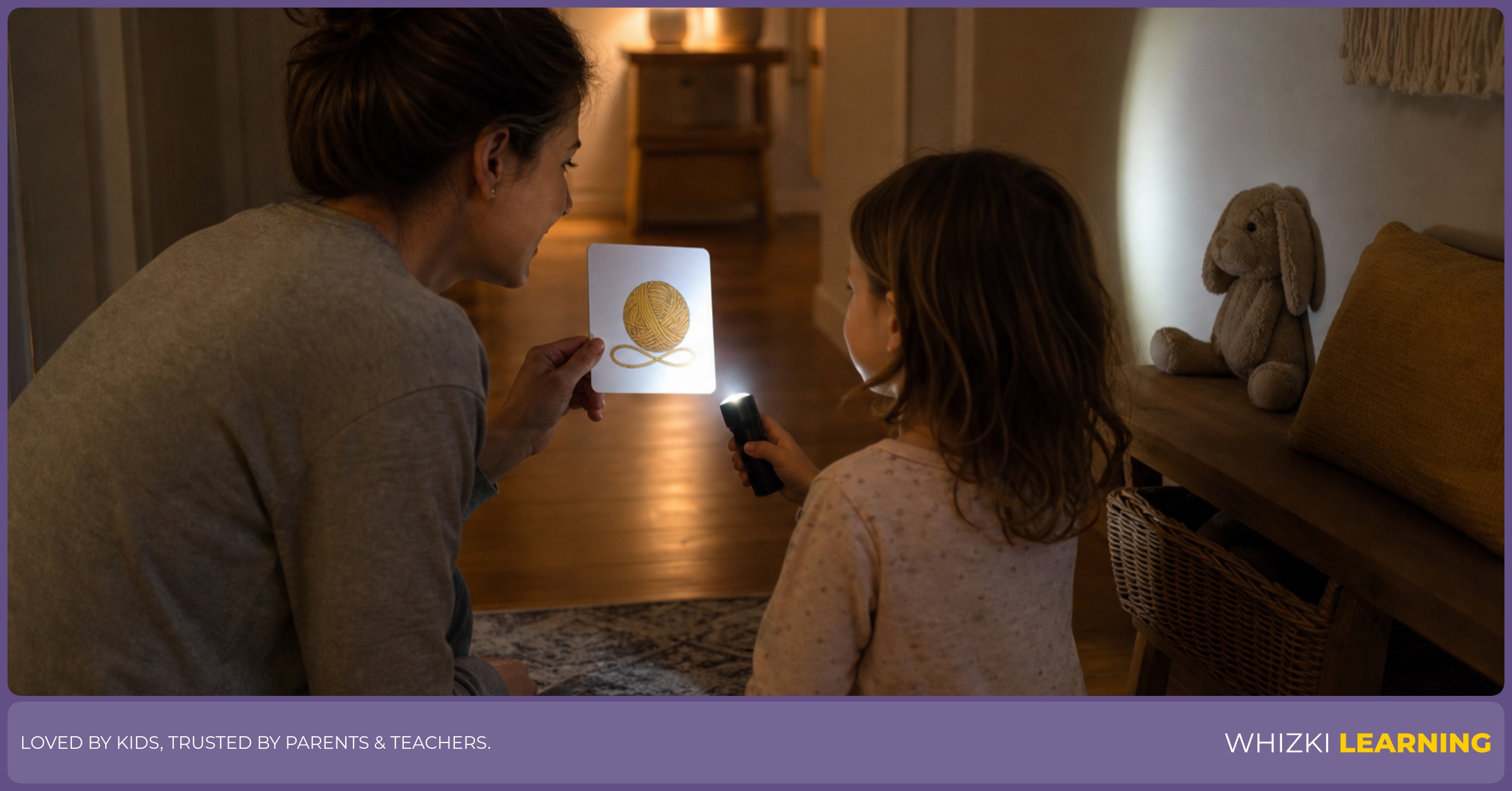
Use a flashlight for 2 minutes. You shine it on an object and say the Y word, then the child shines it back and says the word or points.
If your child resists, switch to pointing only, then you say the word. That still builds vocabulary, and it keeps the routine calm.
To keep progress steady, choose one Y word group per day, repeat it in two real moments, and stop while your child still wants more. If you want a full week plan, start with the letter Y practice on our letter Y learning page, then rotate through everyday objects, action words, and names.
One last parent tip: when your child says the word differently, you can still celebrate the attempt and model the correct Y word once. That’s how you build confidence and keep literacy practice feeling safe and normal.