PreschoolKindergartenFirst Grade

Words That Start with G: First Words for Kindergarten Readers

May 15, 2026
Words That Start with G: First Words for Kindergarten Readers

When you are trying to get one more “good try” out the door, vocabulary practice can feel like one more battle. Let’s make letter G words simple, hands-on, and doable in real life, with a quick game you can run in minutes.

Reviewed by Sarah Mitchell, M.S., CCC-SLP, Speech-Language Pathologist.

For letter-shape practice, use our letter G learning page so your child connects the sound to the look of the letter.

Everyday G words your child can touch

Using everyday nouns fits the Orton-Gillingham approach of clear, concrete input, especially when a child is still building a steady word bank. Pick a few objects, say the word once, then let your child handle it while you repeat the word softly.

Preschool and kindergarten guidance from NAEYC supports learning through play and real materials, not worksheets alone. When your child can point and touch, the word sticks more easily during calm routines.

Everyday words

  • ball
  • bear
  • banana
  • book
  • bath
  • boat
  • gate
  • glass
  • grass
  • gift

Big words for curious kids

  • garlic
  • giraffe
  • globe
  • goblet
  • guitar
  • gym
  • garage

Try this script during cleanup: “I see a book. Your turn, find a ball.” Occupational-therapy basics like “short, specific directions” help kids succeed without a long back-and-forth.

Action G words for what kids do

Action words are a great fit for speech-language practice because kids learn language best when the word matches a movement they can feel. The Orton-Gillingham style of linking sound to meaning works well when you act it out right in front of your child.

Reggio-inspired teaching reminds us that children learn through doing, not just listening. When the action word is tied to play, your child is more likely to try the word again.

Everyday words

  • bake
  • bring
  • blow
  • build
  • bounce
  • gather
  • glide
  • grab

Big words for curious kids

  • gargle
  • glisten
  • groom
  • gaze
  • grasp
  • gasp

Use a “say it, do it” routine: you say gasp, then you make a silly surprised face and take one pretend breath. If your child freezes, shorten the turn, and keep the game light and quick.

Common first names that start with G

First names help kids practice real-world language because names show up in stories, classrooms, and everyday conversations. Speech-language pathology practice often uses meaningful, familiar labels to support attention and participation.

When a child hears their own name or a friend’s name often, the brain has more chances to connect sound to meaning. That is why NAEYC encourages warm, social language in daily routines.

Everyday words

  • Gabe
  • Gina
  • Gus
  • Grace
  • George
  • Gwen

Big words for curious kids

  • Gabriel
  • Georgia
  • Giselle
  • Graham
  • Gordon

Try a “name tag” moment at the door: “Who is ready, Gus or Gina?” If your child does not want to play, offer a choice between two names and keep it moving.

Spot the G word walking game, plus bedtime flashlight

For a quick win, use a walking game that turns letter G into a scavenger hunt. This kind of active, sensory-friendly practice matches occupational-therapy heuristics like “movement supports attention” and keeps the routine from dragging.

When you add a bedtime flashlight variation, the game becomes a calm attention ritual. Reggio-inspired observation also reminds us to follow the child’s interest, so let the child choose which object gets “spotted.”

Walking game (2 to 5 minutes): Pick 3 G words from the lists, like gate, glass, and grass. As you walk, say the word, point, and ask, “Can you spot it?” Celebrate the pointing, not perfect pronunciation.

Bedtime flashlight variation (1 to 3 minutes): In the bedroom, shine the flashlight on safe, real items and name them with a G word, like book or ball. Keep the flashlight gentle, and let the child do the pointing while the adult says the word once.

If you want more practice with how words describe things, add describing words starting with G after your child knows the nouns and action words.

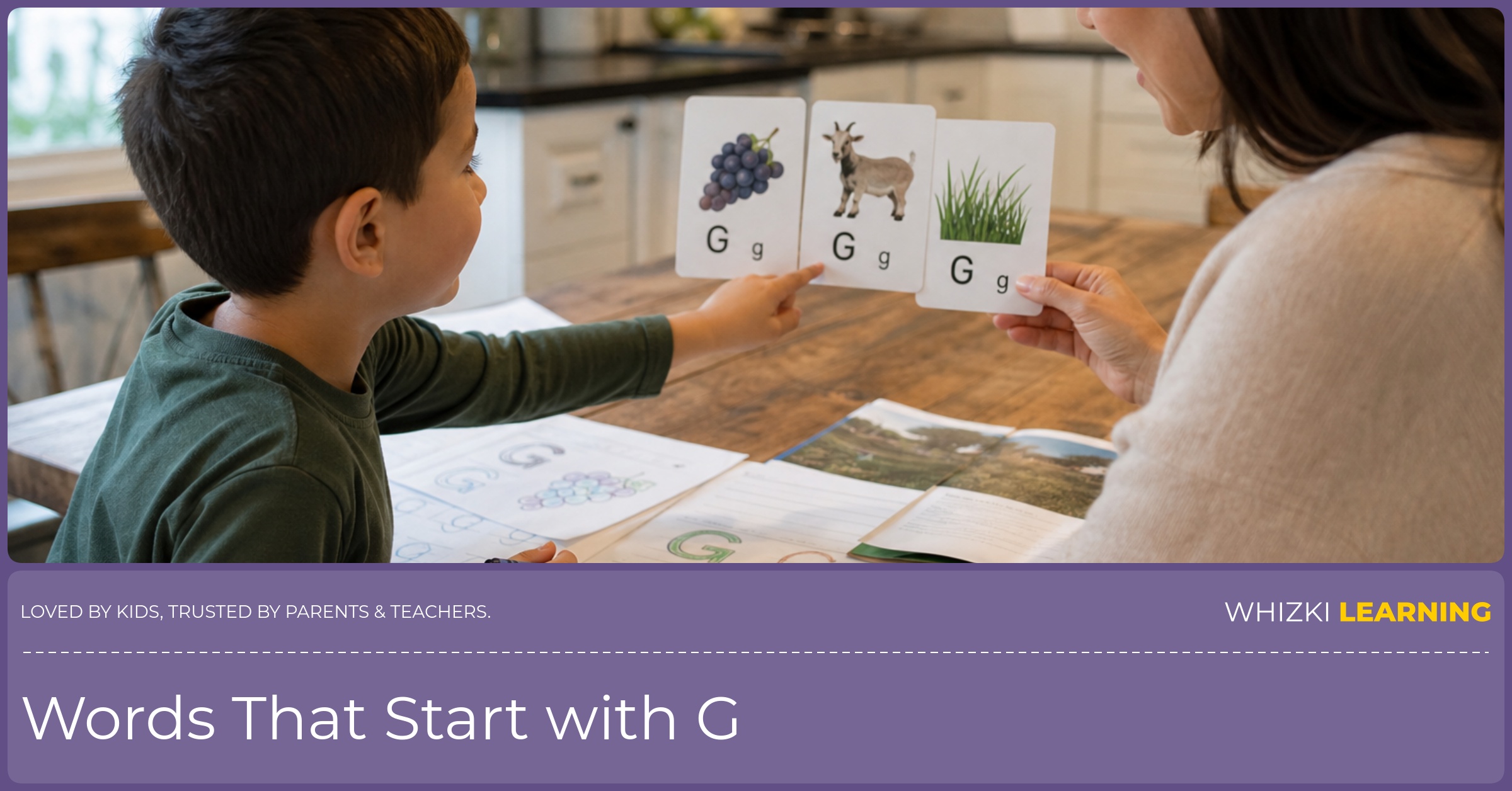
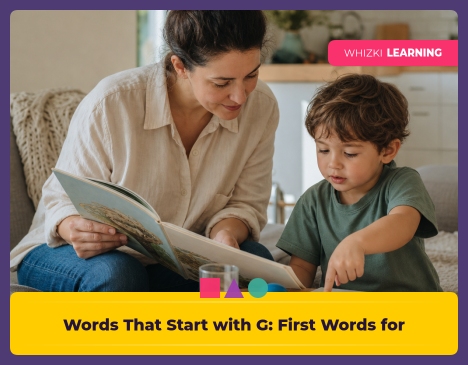
A parent and child at home calmly doing a screen-free letter G word hunt with a book and small household objects, warm natural light, hands-on pointing and gentle smiles.

Whizki Learning has printable practice that supports early vocabulary and letter awareness, so parents can keep sessions short and consistent. Pair a quick routine with our sight-words printables to reinforce the words your child is already using at home.

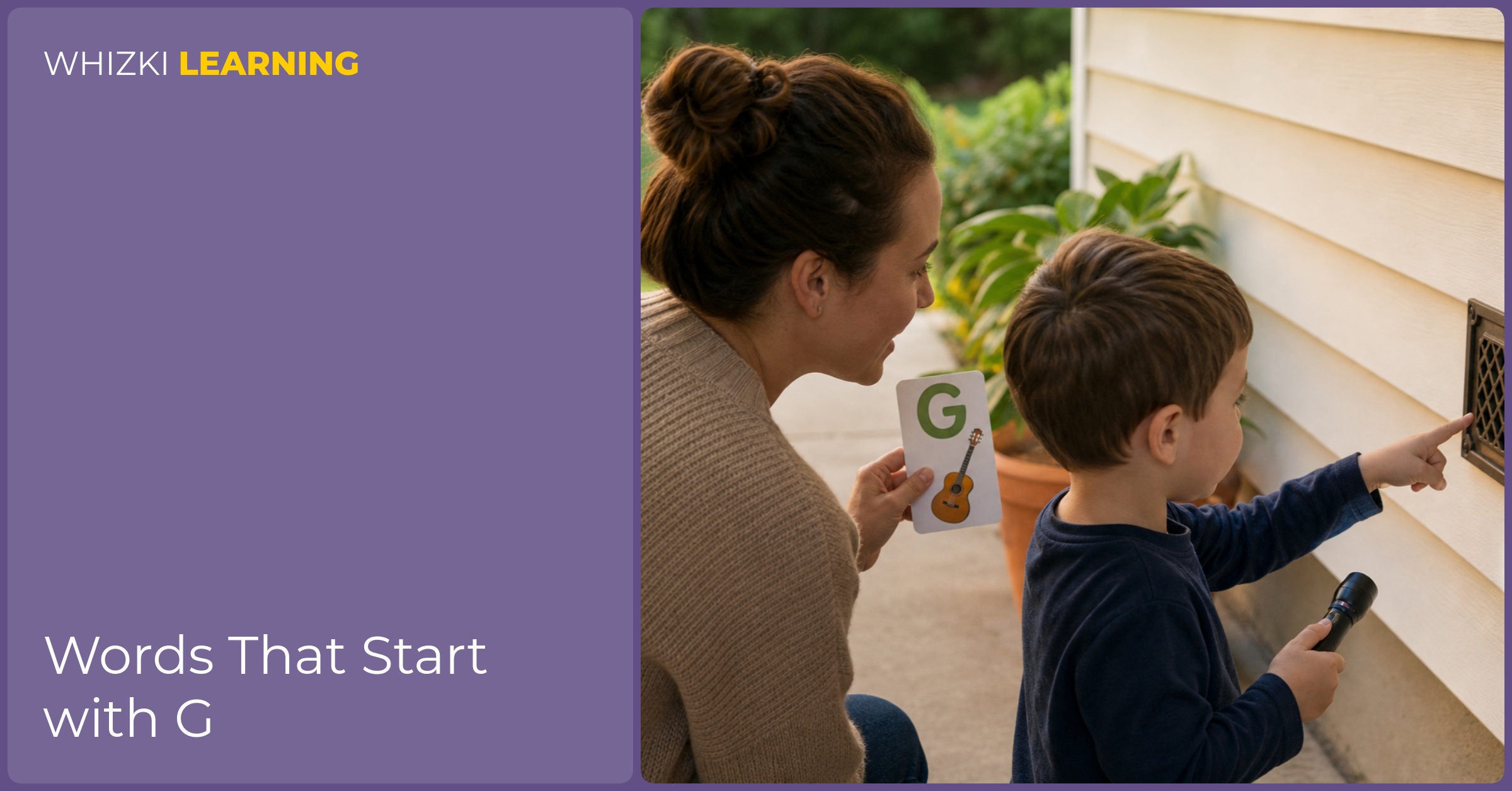
A parent and child in a cozy bedroom using a small flashlight to point at a book and toy during a calm bedtime word game, warm natural light, gentle focus.

When you teach letter G words this way, the goal is not perfect speech, it is steady exposure and lots of successful tries. Choose 5 to 8 words for the week, repeat them during real moments, and let the walking game and flashlight game do the heavy lifting.

Sight Words and Vocabulary Word Search Puzzle for Kinderga... Worksheet Cover BackgroundSight Words and Vocabulary Word Search Puzzle for KindergartenKids often stall on letter shapes or get bored fast with flashcards. The Sight Words and Vocabulary Word Search Puzzle from Whizki Learning is a screen-free next step: circle one word, say the word out loud, then hunt for the next word with a calm second round.
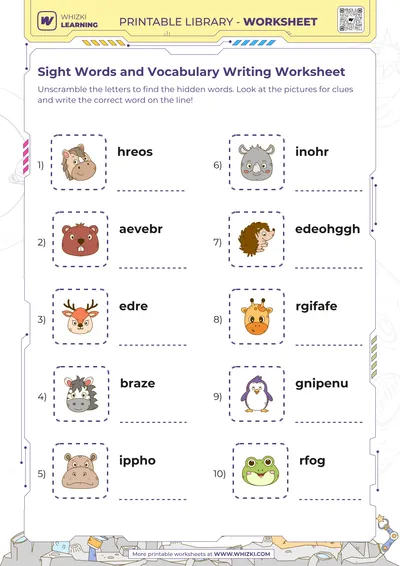
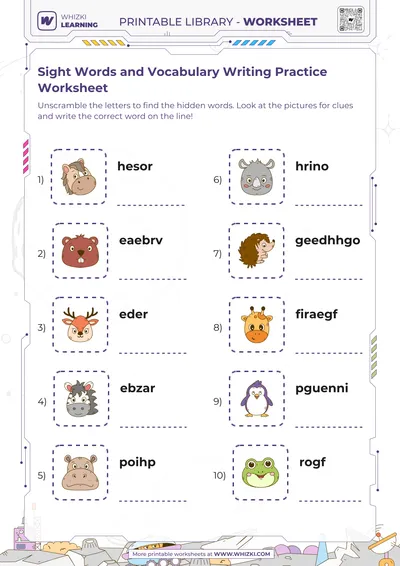
Sight Words and Vocabulary Writing Worksheet Worksheet Cover BackgroundSight Words and Vocabulary Writing WorksheetSight words writing can feel sticky when kids stall on letter shapes. Use this Whizki Learning printable for a quick, screen-free routine: name the picture, say the word, then use the scrambled letters to write the word once on the line. Keep it short, repeat for a few minutes, and stop while motivation is still up.
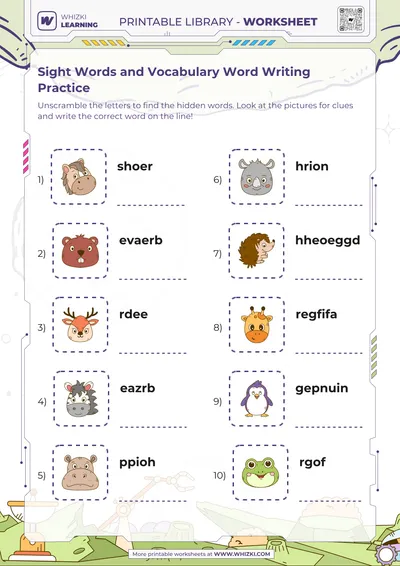
Sight Words and Vocabulary Word Writing Practice Worksheet Cover BackgroundSight Words and Vocabulary Word Writing PracticeFive-year-olds can stall when letter shapes feel confusing, or get bored before a word feels familiar. This Whizki Learning page pairs a picture with a scrambled-letter hint, then offers one writing line to finish together.

Frequently asked questions

What is the best way to teach letter G words to a 3-year-old?

Use real objects and short routines, like pointing to a <strong>book</strong> or a <strong>ball</strong> while you say the word once. Kids learn best when the word matches a hands-on moment and the adult keeps turns brief. If a child rarely points, struggles to follow simple directions, or seems very frustrated, ask a speech-language pathologist for guidance.

Why do my child’s G words sound mixed up?

G pronunciation can change based on the next letter, and young kids are still building sound patterns. Repeating the word with the same object or action helps the sound connect to meaning. If the child’s speech is hard to understand most of the time, consider a professional speech evaluation.

How many G words should we practice in one day?

Practice 5 to 8 words in a day, then stop while the child is still interested. Short practice fits how preschool attention works and keeps the routine from turning into a power struggle. If the child is consistently unable to engage even for brief moments, try fewer words and slower pacing, or check in with a therapist.

When should we add action words like bake or bring?

Add action words when the child can follow simple “do this” directions during play. Action words stick when the adult acts them out and the child copies the movement. If the child cannot participate in basic turn-taking, focus on nouns first and ask for support if needed.

Can we practice G words at bedtime without causing a fight?

Yes, use a calm flashlight game with just 2 or 3 items and keep the adult’s voice soft. Bedtime practice works best when it is predictable and short, and when the child gets to point. If bedtime games consistently escalate, switch to reading one picture book and name a couple of G objects only.

Limited Time Sale
Kids’ Workbooks!

Boost your child’s skills with our discounted workbooks. Engaging activities for preschool, kindergarten, and grade 1 - now at special sale prices!

June Summer Learning Workbook for Kindergarten to 1st Grad... Workbook Cover BackgroundJune Summer Learning Workbook for Kindergarten to 1st Grade: Math, Reading, Writing, Science, Brain QuestsA workbook for the slow weeks of June. Reading, math, writing, science, and brain quests for kids stepping from kindergarten into 1st grade.

-27% $10.99

List Price: $14.99
Buy Now
Summer Brain Activities Workbook for Preschool and Kinderg... Workbook Cover BackgroundSummer Brain Activities Workbook for Preschool and Kindergarten: Coloring, Logic Puzzles, Brain Quests, Social StudiesA summer thinking workbook for ages 4 to 6. Coloring, logic puzzles, brain quests, and short social studies activities for the slow afternoo...

-45% $10.99

List Price: $19.99
Buy Now
Preschool and Kindergarten Math Workbook Ages 3-7: Numbers... Workbook Cover BackgroundPreschool and Kindergarten Math Workbook Ages 3-7: Numbers, Counting, Shapes, Time, Simple AdditionA long-format early math workbook for ages 3 to 7. Numbers, counting, shapes, telling time, and gentle addition for kids who are still learn...

-40% $8.99

List Price: $14.99
Buy Now
Kindergarten Arbeitsbuch fur Vorschulkinder ab 5 Jahre: Za... Workbook Cover BackgroundKindergarten Arbeitsbuch fur Vorschulkinder ab 5 Jahre: Zahlen Schreiben Lernen, Konzentration, Feinmotorik, Logik und Malen (German Edition)A German-edition number workbook for ages 5 and up. Number tracing, fine motor practice, logic puzzles, and coloring, with all instructions ...

-19% $12.44

List Price: $15.44
Buy Now

Join the Screen-Free Movement.

Get exclusive activities, expert tips, and inspiration for a more meaningful, offline family life.

Copyright © 2025 - 2026 Whizki Learning. All rights reserved.