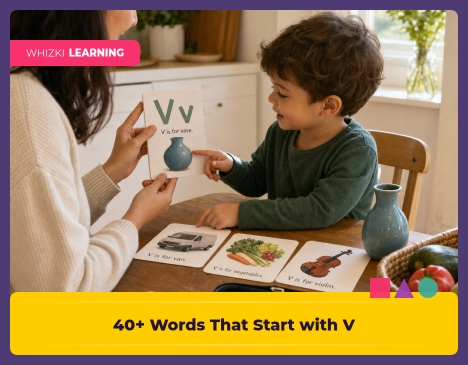
When you are trying to get “just one more” word out of a 3 to 7 year old, it can feel like you are bargaining for minutes, not learning. The good news is, letter V words stick best when you use everyday things and repeat the same sound during calm routines.
Reviewed by Sarah Mitchell, M.S., CCC-SLP, Speech-Language Pathologist.
Want a quick, print-and-go way to practice letter V recognition alongside early vocabulary? Check out the alphabet learning hub and pair it with Whizki Learning alphabet pages for short, repeatable practice at home.
Start with the V sound in real life
In early literacy teaching, the letter V sound works best when it is tied to what the child can see and touch, which fits the Orton-Gillingham approach of connecting sound to meaning. Start with one routine, like bath time or snack time, and say the V word clearly two times, then let your child “answer” with a gesture or a repeat.
In classroom guidance from NAEYC, short practice during play beats long practice on demand, so keep it light and predictable. Use the same script each day, for example, “V says /v/, ball starts with V,” and then pause for your child to point or say the word.
For letter formation support, use our letter V learning page alongside these first words, so your child hears the sound and also sees the letter shape.
Everyday objects that start with V
Occupational-therapy basics remind us that attention grows when hands are busy, so choose objects your child can hold and move while you name them. Reggio-inspired observation also helps here, because your child leads with what they reach for, and you label it with the V word.
Everyday words
- vase
- van
- veil
- violin
- vacuum
- vacation
- vegetable
- vaseful
- velvet
Big words for curious kids
- vocabulary
- volcano
- vulture
- velocity
- vibration
- veteran
- village
Tip for the kitchen table, say the V word, then give a choice: “Do you want the violin or the vacuum?” Choice keeps the practice from turning into a battle.
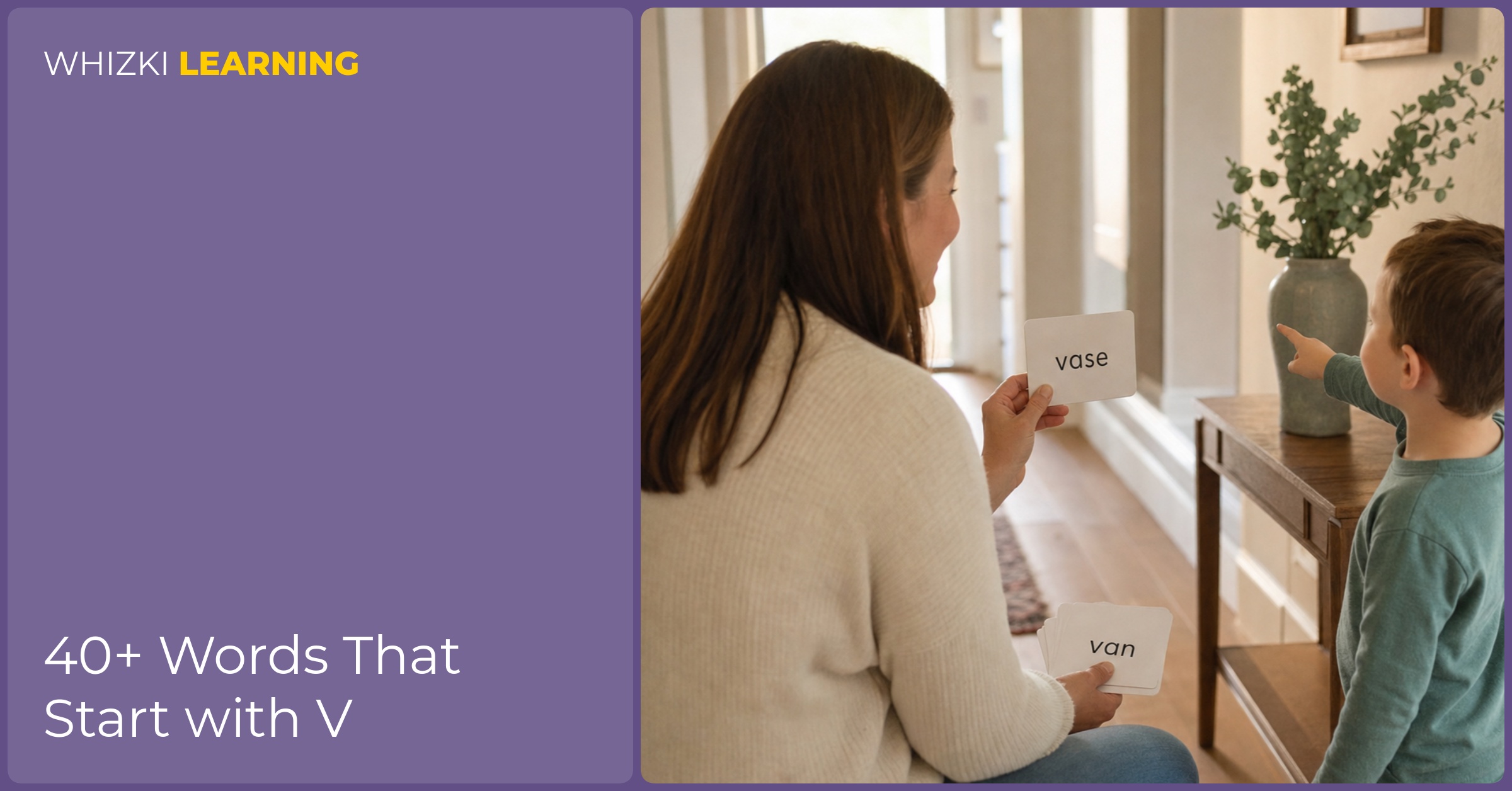
Action words your child can do
Speech-language pathology practice often starts with verbs because action makes meaning clear, and your child can “show” the word even before reading. In the classroom, this also supports phonics because the child hears the same V sound while doing the movement.
When a child resists, try a “first, then” routine, which matches how caregivers use predictable transitions in NAEYC guidance. “First we vacuum, then we read one page,” keeps expectations steady without pressure.
Everyday words
- vanish
- vibrate
- visit
- vote
- value
- vary
- vault
Big words for curious kids
- visualize
- validate
- venture
- vanquish
- venerate
- vigil
Script to try, “Show me how you visit,” then you model the action you can both do, like walking to a room or tapping a door and saying the word together.
First names starting with V plus a walking game
Common names help children practice letter sounds in a personal way, which is why early literacy activities often include name play. Repeating a name during play also supports attention, and it feels less like “work” to most preschool and kindergarten kids.
For a visual boost, you can also use our sight-words printables to keep the routine consistent for the week.
Everyday words
- Vera
- Victor
- Violet
- Vincent
- Valerie
- Vince
Big words for curious kids
- Veronica
- Vladimir
- Valentino
- Vivian
- Vaughn
- Vernon
Walking game, “Spot the V word,” pick one object in each room and say, “I spy a V,” then your child points and says the word or just repeats the /v/ sound. If you want describing words next, visit describing words starting with V so your child can add “what it is like” after they can name it.
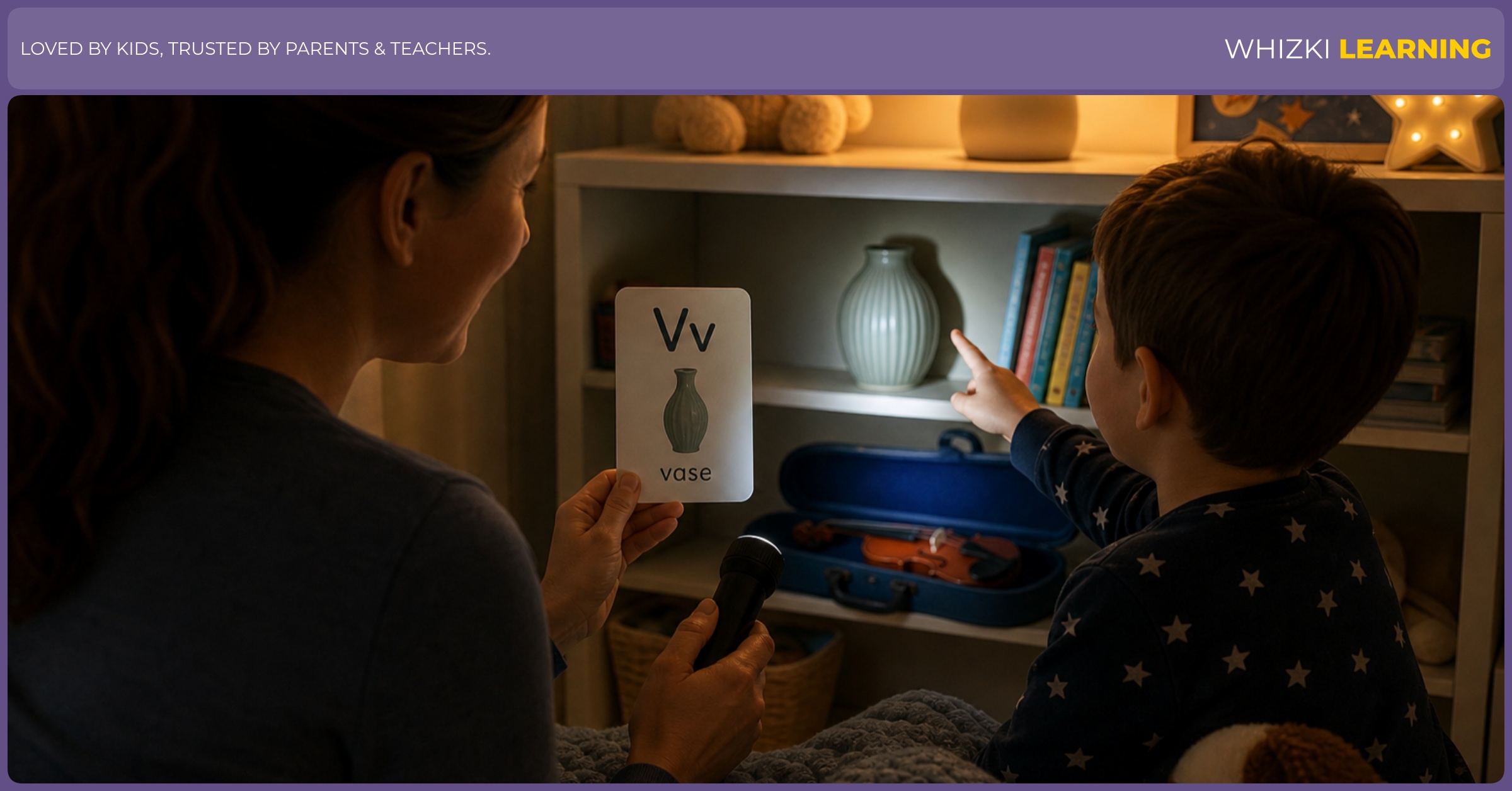
Flashlight bedtime variation for V practice
Bedtime practice works best when it is tiny and cozy, which matches OT-friendly “just enough” sensory input and keeps the routine from turning into a power struggle. Use a small flashlight, and let your child be the “spotter” for one V word per night.
Start with one safe rule, “We whisper the V word,” then shine the flashlight on a real object like a vase or a violin case and say the word once. Your child can answer by pointing, whispering the word, or just saying the first sound /v/.
If your child is ready for more, use the letter V shape practice from the alphabet learning hub for one quick trace after the flashlight game, then stop while it still feels fun.