
When you are trying to get through dinner and your child suddenly has “one more thing” to say, it can feel like vocabulary practice never happens. Let’s make it simple, with letter A words you can use while you live your day, not during a special lesson. For letter-shape practice, start with our letter A learning page.
Reviewed by Sarah Mitchell, M.S., CCC-SLP, Speech-Language Pathologist.
Letter A first words that actually stick, fast
In early literacy, the Orton-Gillingham style of teaching starts with clear sound-to-meaning connections, not worksheets alone, and letter A words are a great place to begin. When a child hears an A word while touching the real thing, the word has a job in their brain.
In NAEYC guidance, vocabulary grows best through everyday talk and play, so the letter A words below are chosen for “I can use this today” moments. The goal is not perfection, it is repetition with warmth.
In speech-language pathology practice, children learn faster when adults model the word and then give a quick turn to respond. A simple pattern like “ball, your turn” keeps it light and doable.
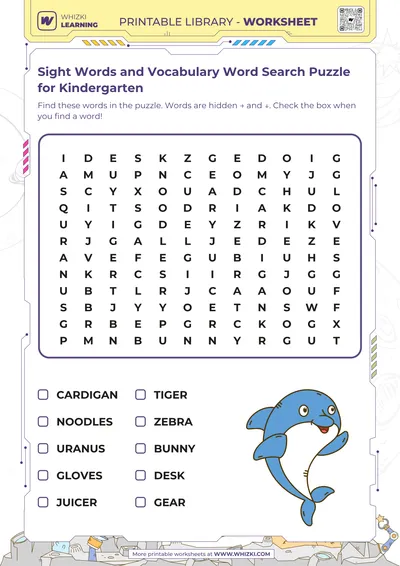
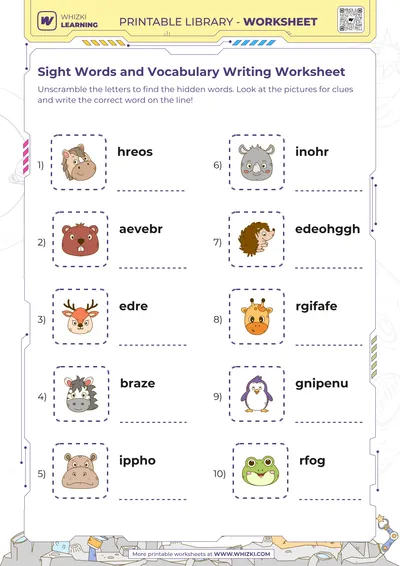
If you want more printable support, check our sight-words printables for extra practice routines.
Everyday objects that start with A
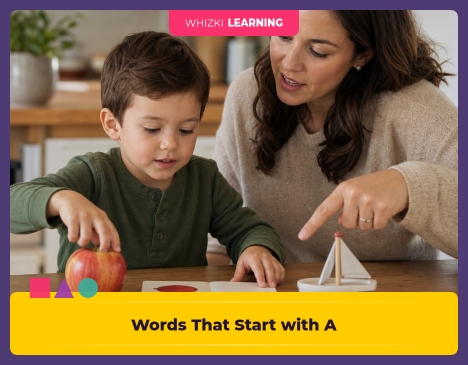
In a Reggio Emilia inspired approach, children learn through noticing what is already in their world, so everyday objects make letter A feel real. Pick one object at a time, name it, and let the child handle it.
In occupational-therapy basics, hands-on input helps attention, so try “touch and say” during cleanup, bath time, or snack time. If the child is wiggly, the object becomes the anchor.
In practice, adults can keep the language short and consistent, then expand only when the child is ready. One good routine is “see it, say it, do it.”
Everyday words
- apple
- ball
- bear
- book
- bath
- boat
- arm
- air
Big words for curious kids
- anchor
- arch
- atlas
- astronaut
- aquarium
- antenna
Tip for parents and teachers, hold the object close and say the word once, then pause for the child’s turn. If the child says a different word, gently model the correct A word and try again with the same object.
Action words that start with A
In an Orton-Gillingham mindset, action words help children connect sounds to meaning through movement. When the child does the action, the word becomes memorable.
In NAEYC play-based learning, action talk during games builds language without turning it into a test. Keep it short, then repeat the same verb during the next routine.
In speech-language pathology practice, modeling plus imitation works well, especially when adults use a steady pace. “I will bake. Your turn,” is clear and motivating.
Everyday words
- add
- aim
- act
- ask
- ate
Big words for curious kids
- absorb
- accomplish
- adopt
- attract
- attempt
- access
Quick script for the next car ride or playtime, “Watch me absorb (wipe up). Your turn, absorb.” If the child resists, switch to a game where the child chooses the action word.
First names that start with A, plus a walking game
In classroom routines, NAEYC encourages using familiar names because children already care about who is who. When adults say a name starting with A during greetings, children practice listening and responding without pressure.
In occupational-therapy basics, a walking game adds movement, which can help children stay regulated while they learn. The child gets to be the “finder,” and the adult keeps the language steady.
When you are ready for describing words, add describing words starting with A next, so the child can say more than just nouns and actions.
First Names
- Alex
- Ava
- Adam
- Aiden
- Amy
- Aria
First Names for quick practice
- Angel
- Anna
- Arthur
- Austin
- Avery
- Abby
- Alma
Walking-game script, “I spy an A word. You get one step for each A word you find.” Try it in the hallway, at the playground, or while walking to the car. For bedtime, use a flashlight and point at one object at a time, then say the A word together, “Apple, book, bath,” and end with one calm breath.
Whizki Learning has printable practice that pairs letter A talk with simple sight-word style routines, so parents and teachers can keep vocabulary practice consistent. If you want a ready-to-use set, visit the alphabet learning hub and pick a letter-A day plan.
Keep letter A practice small and repeatable, one object or one action at a time, and let the child’s hands lead the learning. When the child hears the same A words across the day, the words become part of their everyday speaking.
If you notice the child is struggling to hear the A sound consistently, ask the child’s speech-language pathologist for a short home routine that matches their needs. For most kids, steady modeling and lots of turn-taking is enough to build confidence.