PreschoolKindergartenFirst Grade

Words That Start with D: First Words for Kindergarten Readers

May 15, 2026
Words That Start with D: First Words for Kindergarten Readers

When you are trying to teach new words and your kid is wiggly, it can feel like you are doing all the work. A short, hands-on D word routine helps your child stay interested while building early reading vocabulary, one word at a time.

Reviewed by Sarah Mitchell, M.S., CCC-SLP, Speech-Language Pathologist.

Letter D first, then D words, with clear mouth practice

Letter D learning starts with the sound, and speech-language pathology practice reminds us that kids learn best when adults model the sound clearly and consistently. Before word time, say the letter sound and let your child feel your face and mouth as you make the /d/ sound.

Letter D recognition also helps reading later, and the Orton-Gillingham approach supports teaching in small steps with lots of repetition. Use our letter D learning page at our letter D learning page to match the sound to the letter shape.

Letter D writing can wait until your child is comfortable with recognition and pronunciation. When you do letter shape practice, keep it calm and brief, like a 2-minute station at the table.

Letter D vocabulary works best when it follows the sound. Pick one everyday word, one action word, and one name for the day, then stop while your child still wants more.

Everyday D words kids can touch and point to

Everyday D words are easiest when the worksheet or book matches real life, and NAEYC guidance supports learning through play and meaningful experiences. Bring one item to the table, point, and say the word slowly, then let your child touch it.

Everyday nouns also support early word recognition, and occupational-therapy basics remind us that hands-on input helps kids stay regulated. If your child is restless, do the word hunt first, then sit for a quick look at the object.

Everyday words

  • dad
  • duck
  • door
  • dog
  • drum
  • dish
  • donut
  • doorway
  • diaper

Big words for curious kids

  • desk
  • diver
  • dentist
  • doctor
  • dragon
  • diamond
  • donkey
  • drift

Everyday D word tip, use the “touch and tuck” routine. Say the word, have your child touch the object, then “tuck” the object back where it belongs so the word connects to a real action and place.

Action D words your child does all day

Action D words build spoken language for early reading, and the Reggio approach values learning that grows from what children are already doing. When your child bounces, you name the action with a D word and keep it playful.

Action verbs also help comprehension, and speech-language pathology practice often uses modeling plus repetition. Say the verb, do it with your child, and then give your child one turn to copy you.

Everyday words

  • dance
  • draw
  • dig
  • drag
  • drip
  • down
  • dip
  • dock
  • dragons

Big words for curious kids

  • deliver
  • design
  • decorate
  • develop
  • discuss
  • discover
  • direct
  • divert

Action D word script, “I see you draw. Your turn, draw.” Keep the verb as the star, then stop after one or two turns so the game stays easy.

For quick repetition without turning it into a chore, use our sight-words printables alongside the D words your child is practicing at home. Whizki Learning printable practice can give you a simple daily routine for early vocabulary and letter-sound connection.

First names that start with D

First names are a friendly way to practice sound awareness, and NAEYC guidance encourages using familiar, motivating language in early learning. When your child hears a name, attention usually follows, which makes the /d/ sound easier to notice.

First-name practice also supports social language, and occupational-therapy basics remind us that kids learn best when the activity feels safe and predictable. Use a name during greetings, book reading, and pretend play.

Everyday words

  • Danny
  • Dan
  • Dora
  • Deb
  • Dee
  • Dave
  • Don
  • Daisy
  • Den

Big words for curious kids

  • Delia
  • Dominic
  • Desiree
  • Darcy
  • Darlene
  • Declan

First-name tip, write one name on a sticky note and place it near a real-life spot, like the door or the desk. When you pass by, say the name and the starting sound together once, then move on.
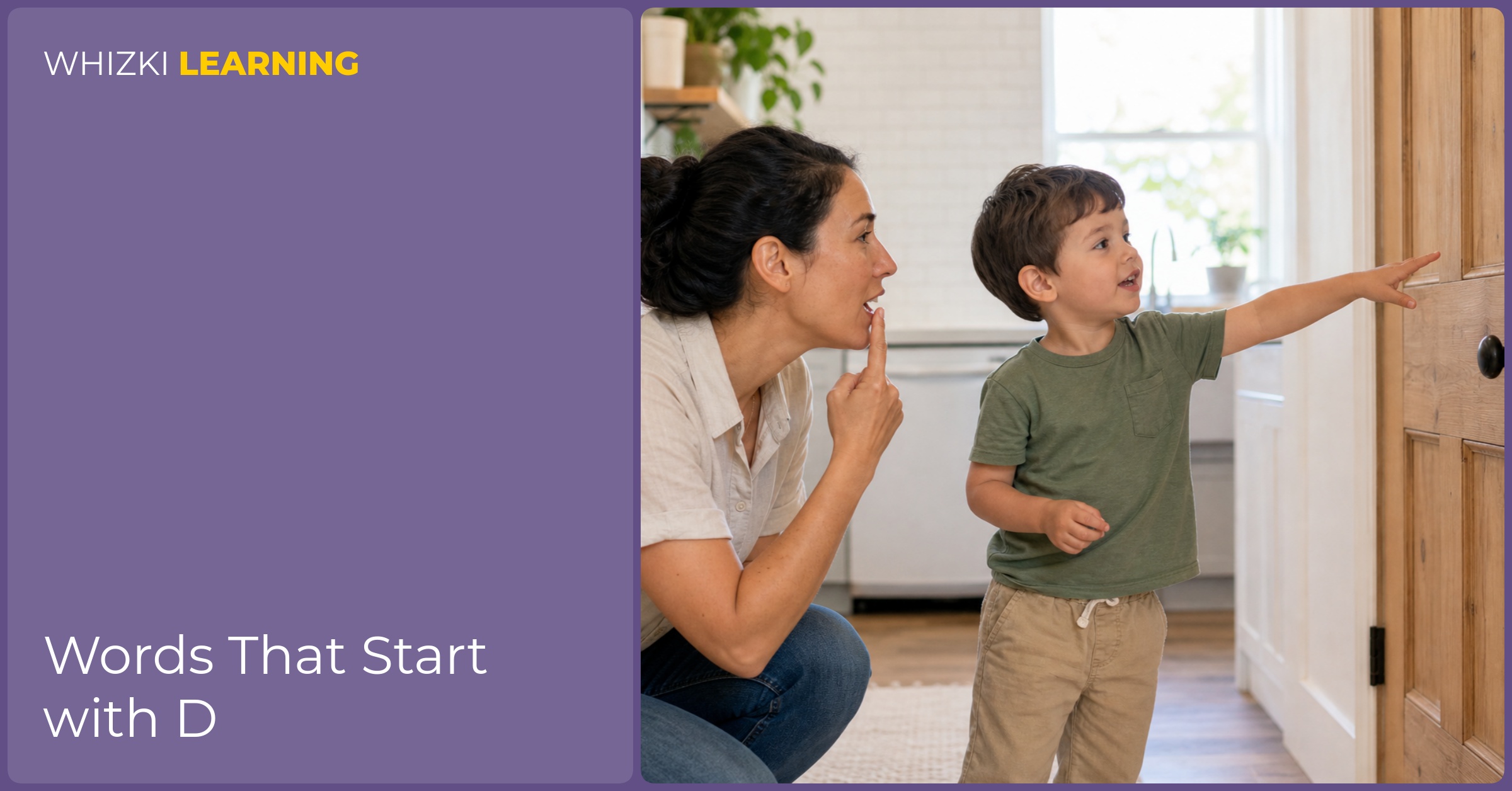
A parent and child walk through a bright home kitchen, pointing to a door and a duck toy while practicing the /d/ sound together.

Spot the D word walking game, then a flashlight bedtime version

Spot the D word games work because children get to move and point, and Reggio-style observation turns everyday life into learning. Keep the rules simple, one word per stop, and celebrate the pointing more than the pronunciation.

For letter-sound practice, the alphabet learning hub can help you stay consistent across days and activities, and Orton-Gillingham principles support short, repeatable routines. Use the alphabet learning hub at the alphabet learning hub to plan your next letter after D.

Walking game script, “Find something that starts with D,” then wait for your child to point. When your child points, say the word once, then ask, “Can you say it?”

Flashlight bedtime variation, use a small flashlight and a calm room. Shine the light on one object at a time and say the D word, then let your child take one turn shining the light and naming the word.

A parent and child lie on a bed with a flashlight, gently searching for objects that start with D and practicing the /d/ sound.

If your child is ready for more language after the D nouns and verbs, add describing words next, so the sentence gets richer. For describing words starting with D, see describing words starting with D, and keep it just as short and hands-on.

Sight Words and Vocabulary Word Search Puzzle for Kinderga... Worksheet Cover BackgroundSight Words and Vocabulary Word Search Puzzle for KindergartenKids often stall on letter shapes or get bored fast with flashcards. The Sight Words and Vocabulary Word Search Puzzle from Whizki Learning is a screen-free next step: circle one word, say the word out loud, then hunt for the next word with a calm second round.
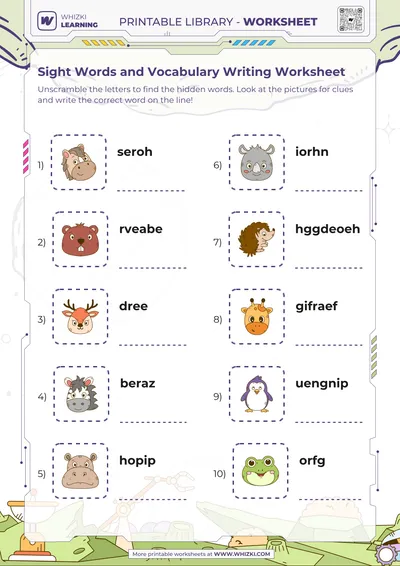
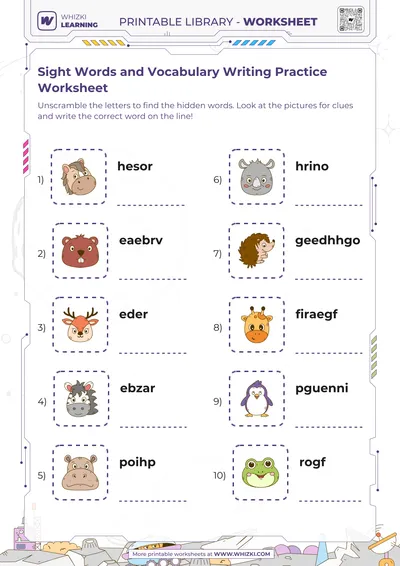
Sight Words and Vocabulary Writing Worksheet Worksheet Cover BackgroundSight Words and Vocabulary Writing WorksheetSight words writing can feel sticky when kids stall on letter shapes. Use this Whizki Learning printable for a quick, screen-free routine: name the picture, say the word, then use the scrambled letters to write the word once on the line. Keep it short, repeat for a few minutes, and stop while motivation is still up.
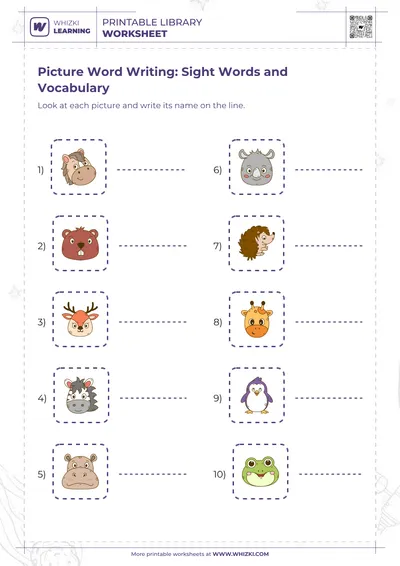
Sight Words and Vocabulary Word Writing Practice Worksheet Cover BackgroundSight Words and Vocabulary Word Writing PracticeFive-year-olds can stall when letter shapes feel confusing, or get bored before a word feels familiar. This Whizki Learning page pairs a picture with a scrambled-letter hint, then offers one writing line to finish together.

Frequently asked questions

What if my child says the wrong D word?

You can gently model the correct word and try again right away. Repetition with calm feedback helps kids notice sound patterns, and speech-language pathology practice often uses short, successful tries. If the same errors persist across many weeks or your child seems frustrated, ask a speech-language pathologist for guidance.

Why should I teach D words in small daily steps?

Small steps help your child remember without getting overwhelmed. Early literacy routines work best when adults keep sessions brief and consistent, which matches Orton-Gillingham-style pacing. If your child refuses most practice, slow down and focus on one word per day.

How many D words should we practice at once?

Aim for three words total, one noun, one verb, and one name. Using fewer words reduces confusion and keeps attention steady during play-based learning, which aligns with NAEYC guidance. If your child is still struggling, reduce to one word for a few days.

When is a good time to practice D words?

Practice works best when your child is regulated, like after a snack or before a short activity. Occupational-therapy basics suggest movement and sensory comfort improve readiness for learning, and short routines help. If your child is consistently too dysregulated to participate, try practice during calmer parts of the day.

Where can I find more letter practice after D?

Use the alphabet learning hub to plan the next letter and practice sequence. Consistent letter-sound practice supports early reading habits, which is part of speech-language pathology-informed routines. If you want a personalized plan, consider asking a teacher or therapist for next steps.

Limited Time Sale
Kids’ Workbooks!

Boost your child’s skills with our discounted workbooks. Engaging activities for preschool, kindergarten, and grade 1 - now at special sale prices!

June Summer Learning Workbook for Kindergarten to 1st Grad... Workbook Cover BackgroundJune Summer Learning Workbook for Kindergarten to 1st Grade: Math, Reading, Writing, Science, Brain QuestsA workbook for the slow weeks of June. Reading, math, writing, science, and brain quests for kids stepping from kindergarten into 1st grade.

-27% $10.99

List Price: $14.99
Buy Now
Summer Brain Activities Workbook for Preschool and Kinderg... Workbook Cover BackgroundSummer Brain Activities Workbook for Preschool and Kindergarten: Coloring, Logic Puzzles, Brain Quests, Social StudiesA summer thinking workbook for ages 4 to 6. Coloring, logic puzzles, brain quests, and short social studies activities for the slow afternoo...

-45% $10.99

List Price: $19.99
Buy Now
Preschool and Kindergarten Math Workbook Ages 3-7: Numbers... Workbook Cover BackgroundPreschool and Kindergarten Math Workbook Ages 3-7: Numbers, Counting, Shapes, Time, Simple AdditionA long-format early math workbook for ages 3 to 7. Numbers, counting, shapes, telling time, and gentle addition for kids who are still learn...

-40% $8.99

List Price: $14.99
Buy Now
Kindergarten Arbeitsbuch fur Vorschulkinder ab 5 Jahre: Za... Workbook Cover BackgroundKindergarten Arbeitsbuch fur Vorschulkinder ab 5 Jahre: Zahlen Schreiben Lernen, Konzentration, Feinmotorik, Logik und Malen (German Edition)A German-edition number workbook for ages 5 and up. Number tracing, fine motor practice, logic puzzles, and coloring, with all instructions ...

-19% $12.44

List Price: $15.44
Buy Now

Join the Screen-Free Movement.

Get exclusive activities, expert tips, and inspiration for a more meaningful, offline family life.

Copyright © 2025 - 2026 Whizki Learning. All rights reserved.