Some days it feels like your kid has a million feelings and zero words, and you are left guessing. When you give kindergarten-ready adjective words on purpose, the talking gets easier and the day gets smoother.
Reviewed by Sarah Mitchell, M.S., CCC-SLP, Speech-Language Pathologist.
Our letter S learning page helps you connect the sound and the shape, so your child can practice saying the word and tracing the letter at the same time. If you want more practice with early reading words, our sight-words printables are a great next stop.
Want a quick, hands-on way to practice letter S and describing words? Check out the alphabet learning hub for printable practice that pairs letter formation with simple vocabulary routines you can do at the table.
If you want to keep the same practice going on paper, take a look at our alphabet tracing workbook for preschool and kindergarten.
Feelings and emotions with S
In speech-language pathology practice, one helpful goal is giving kids a small set of accurate emotion words so they can communicate needs without getting stuck. Try these S adjectives when your child is calm, then use them again in the moment.
Everyday words
- scared
- shy
- sad
- serious
- sorry
- surprised
Big words for curious kids
- spooked
- startled
- shocked
- stunned
- somber
- spirited
Kitchen-table tip: pause during a story and pick the describing word. Script: “I see a shy face. Can you show me shy with your body?”
Looks and size with S
In Orton-Gillingham inspired routines, short, repeatable language helps kids store new vocabulary. Use these S adjectives while you look at real objects, like socks, shoes, or a picture in a book.
Everyday words
- small
- shiny
- smooth
- soft
- slim
- spare
Big words for curious kids
- silvery
- sturdy
- spotless
- shimmering
- scalloped
- sleek
Read-aloud tip: pause and pick the describing word. Script: “The cat looks sleek. What word would you pick for how it looks?”
Personality with S
Reggio Emilia style observation reminds us that kids learn best when language connects to what they notice about people. Use these S adjectives for classmates, family members, and the characters in books.
Everyday words
- sweet
- strong
- smart
- steady
- spunky
- selfish
Big words for curious kids
- supportive
- spiritual
- studious
- submissive
- sincere
- stubborn
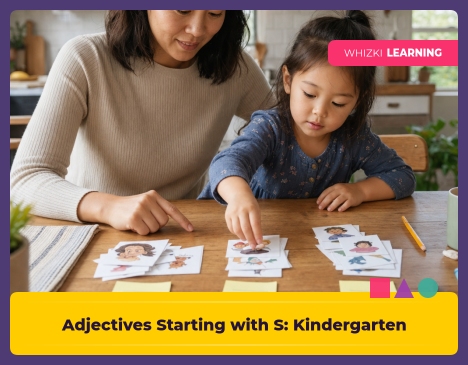
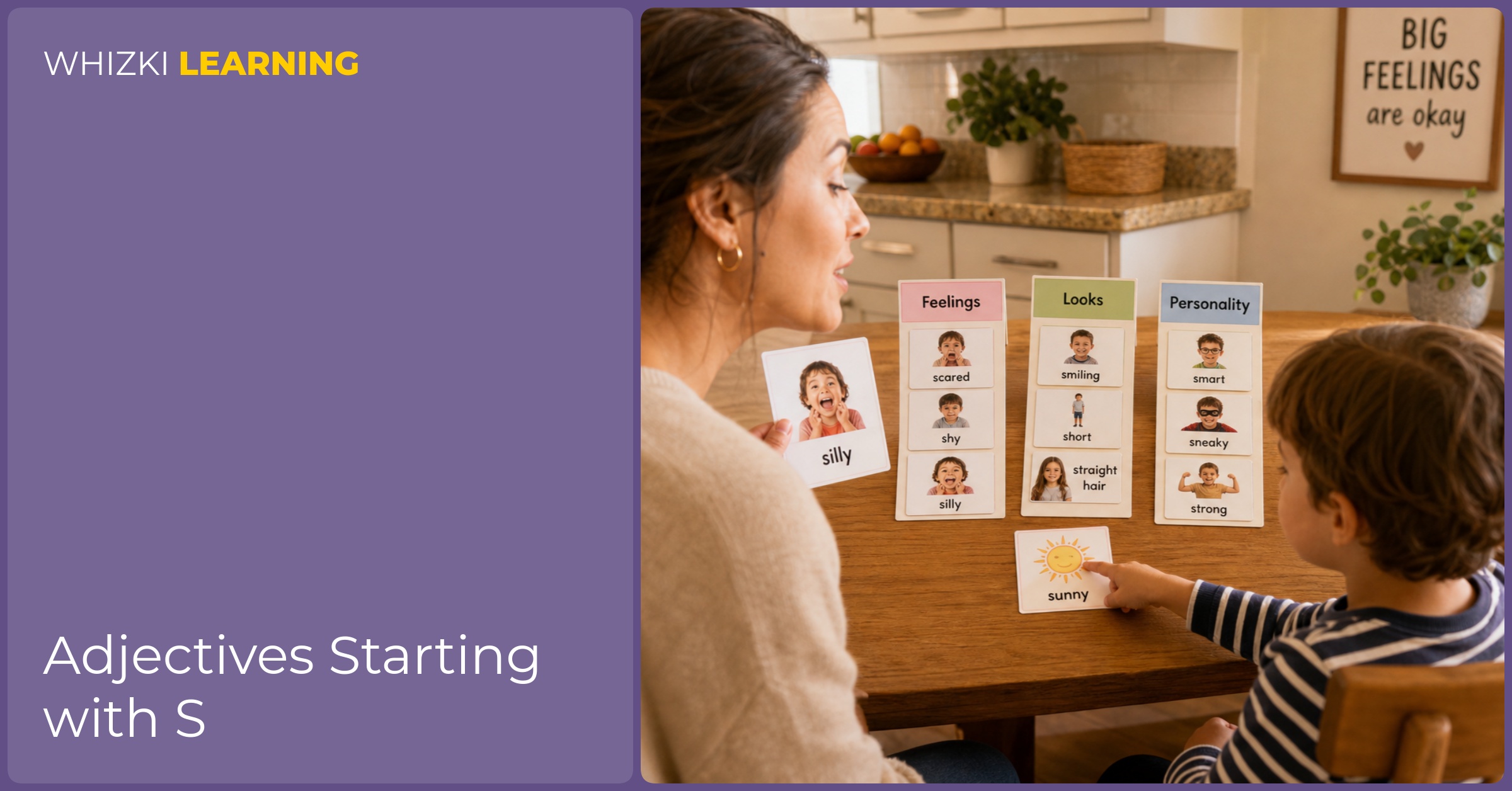
Kitchen-table sorting activity: set out three piles labeled Feelings, Looks, and Personality. Let your child sort S cards into the right pile, then ask, “Which pile does this word describe?”
When you practice the letter sound, the vocabulary sticks. Use our letter S learning page for a quick trace, then say one S adjective together and point to the letter shape.
If you also want more S words for early readers, you can pair adjective practice with nouns and verbs starting with S during a separate quick session.
One last parent script for real life: “I hear you. You look sad. Do you want a hug, help, or space?” The adjective gives your child a bridge from big feelings to clear choices.
For kindergarten readiness, keep it small and consistent. Two minutes of S adjectives after breakfast, plus one letter S trace, is enough to build confidence.