Math homework can feel unfamiliar when it looks different from how you learned, and that friction is real. The good news is that Common Core math for kindergarten and 1st grade is mostly about building number sense and clear strategies, not memorizing “tricks.”
Reviewed by Dr. Anna Klein, EdD, Early Childhood Curriculum Specialist.
What “Common Core math” actually means
Common Core math for kindergarten and 1st grade is a set of expectations for what children should understand and be able to do with numbers, shapes, and patterns. In early childhood, the NAEYC guidance lines up with this focus, because young learners grow best through hands-on play, talk, and repeated practice with meaning. When a worksheet looks “different,” it is usually asking for a strategy, like counting on, making a group, or using a number line, instead of just getting one correct answer.
Common Core math expectations also include the “how” of problem solving, not just the “what,” and that matches what occupational therapy basics call for, using concrete supports before moving to symbols. A kindergarten child might show 7 in a ten-frame, on a number line, with fingers, or with small objects, and each representation is a legitimate step toward the same math idea. If you want a parent-friendly starting point, our parent-friendly learning standards page at our parent-friendly learning standards page explains the skills in plain language.
The big skills in K and 1, in parent language
Common Core math in kindergarten and 1st grade centers on number sense, counting, and understanding what numbers mean in different situations. Reggio-inspired teaching reminds us to listen to children’s thinking and build on it, so the goal is often to help a child explain how they got an answer using words and pictures. For example, a child might count objects one by one, count on from a bigger number, or notice that a group “stays the same” when it is rearranged.
Common Core math also expects children to use representations, like ten-frames and number lines, because those visuals support working memory and reduce guessing. An Orton-Gillingham approach to math, meaning clear, systematic practice with immediate feedback, helps parents too, because it encourages short, repeated sessions and “show me” prompts that confirm understanding. If you want a simple place to start with number ideas, our numbers learning hub at our numbers learning hub breaks down the skills families see most often.
Common Core math includes early operations in a concrete way, like combining and separating within 10, and it often shows up as “story problems” with pictures. When homework asks for multiple steps, the worksheet is usually testing whether the child can represent the situation, not whether the child can do it in their head. If a child freezes, the fix is usually to return to objects, then pictures, then symbols, which is a very practical progression.
Three things to do at home when homework looks unfamiliar
Common Core math homework can feel weird because it asks for strategies you may not have used, so your job is not to “teach the old way,” it is to help the child show their thinking. NAEYC guidance supports using short, positive practice and keeping the focus on understanding, so you can do this without turning homework into a battle. Here are three moves that work for kindergarten and 1st grade, even if the worksheet style is new.
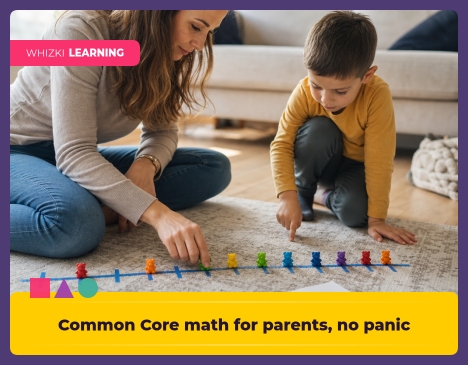
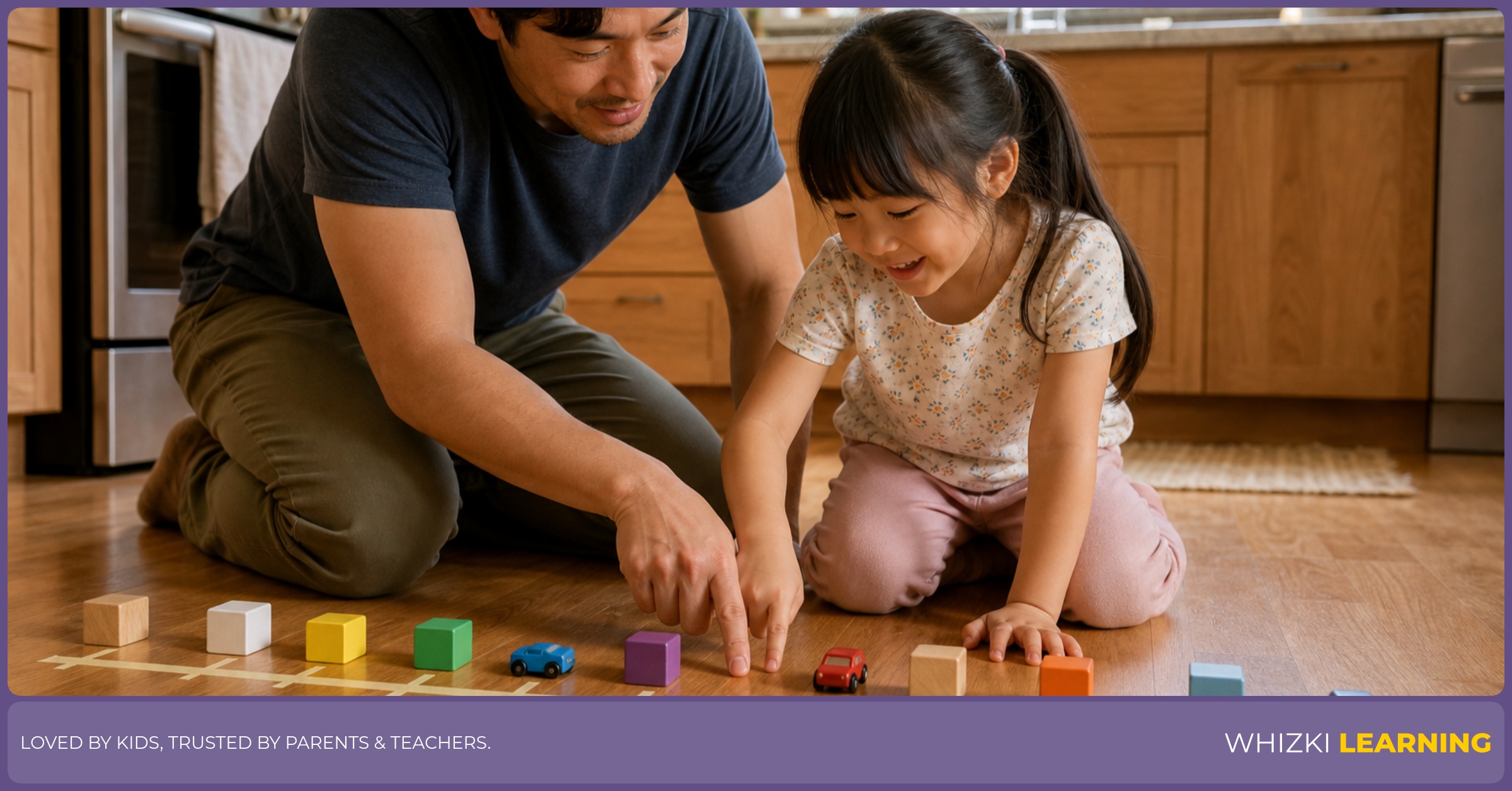
- Make a number line on the floor. Use painter’s tape to mark 0 through 10, then move small toys to “jump” forward and count on. Ask, “Show me where 7 lives,” then “Show me 7 different ways,” like 7 as 7 dots, 7 on the line, 7 fingers, or 7 blocks in a line. This matches the way number lines build magnitude and direction, which is a common Common Core expectation.
- Use a ten-frame at the fridge. A ten-frame helps children see parts and wholes, and it is a concrete bridge to later addition and subtraction within 10. Put magnets or paper squares on a ten-frame and ask, “How many are filled, and how many are empty?” When a child gets stuck, the ten-frame gives an immediate visual check without extra lecturing.
- Ask for “different ways,” not just one answer. When the worksheet says “draw,” you can say, “Show me 7 different ways,” and let the child choose: draw circles, use tally marks, build with blocks, or point on the number line. Speech-language pathology practice often highlights the value of explaining, so you can prompt with, “Tell me your math story,” while the child points to the representation.
Common Core math also benefits from consistent practice materials, so you can keep sessions light and predictable. Our math printables at our math printables are designed for hands-on number sense practice that fits the way young children learn. If you are using printables, aim for 5 to 10 minutes, one skill at a time, and a quick “you did it” wrap-up.
Try a simple number-sense printable set. Whizki Learning offers kid-friendly practice that focuses on number lines, ten-frames, and “show me” strategies instead of worksheets that feel like a test. If you want a low-stress way to match what kindergarten and 1st grade are working on, browse the number practice resources and pick one skill for the week.
If your child’s homework looks unfamiliar, you are not failing, you are learning a new math language together. Keep the focus on concrete representations, short practice, and “show me different ways,” and the worksheet style will start to feel less mysterious. And if a child repeatedly avoids math, can’t access number sense even with objects, or seems overwhelmed, it is worth asking the classroom teacher about supports and considering an evaluation through the school team.