It is exhausting when you are trying to get through dinner and your kid asks, “What month is it?” for the 20th time this week. The good news is that months become easier when you practice them the same way every day, with one real prop in your home, like a kitchen calendar. our learning standards page reminds us that young children learn best through repetition, meaningful routines, and hands-on experiences.
Reviewed by Dr. Anna Klein, EdD, Early Childhood Curriculum Specialist.
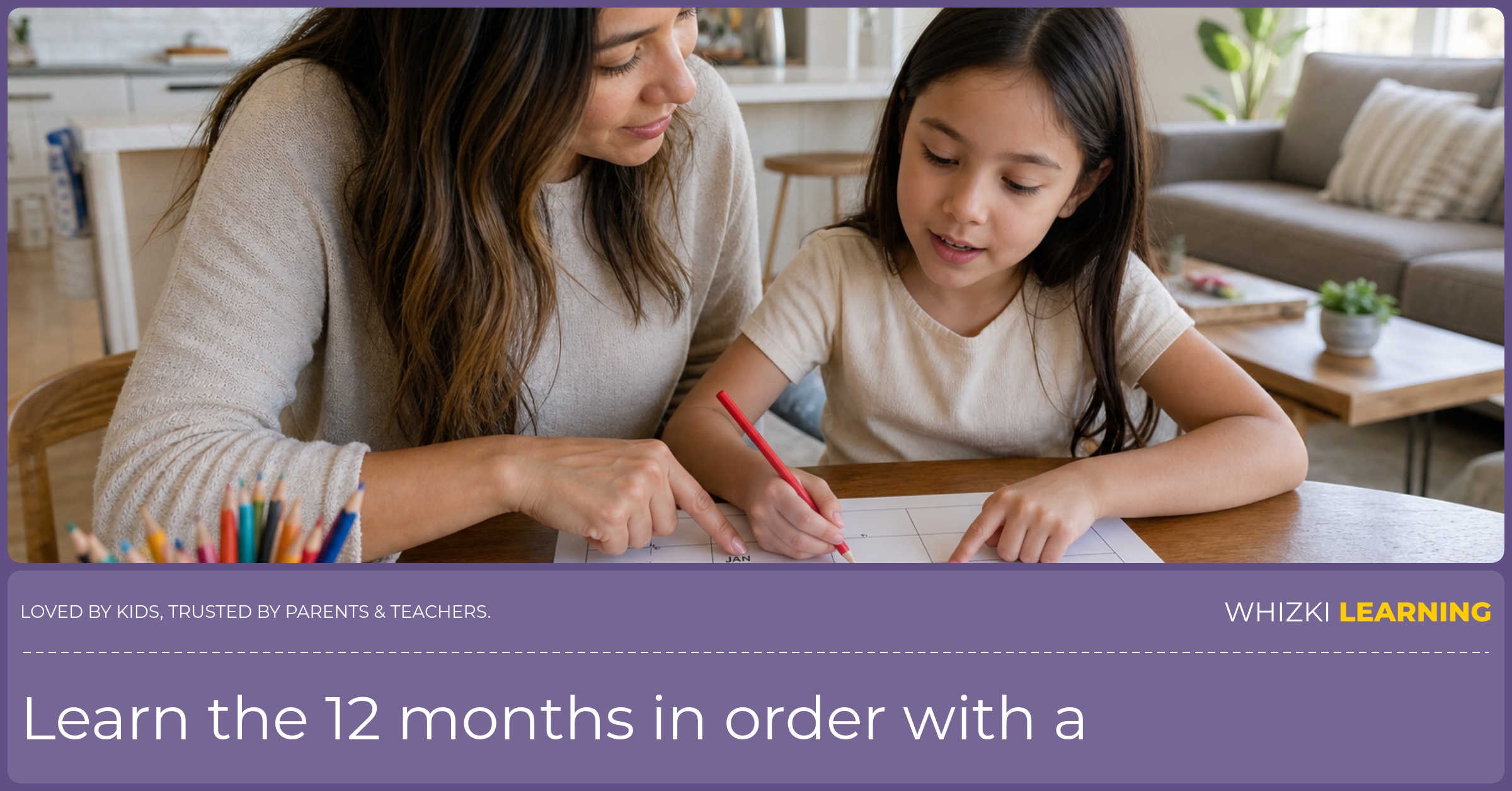
A daily kitchen-calendar routine for months in order
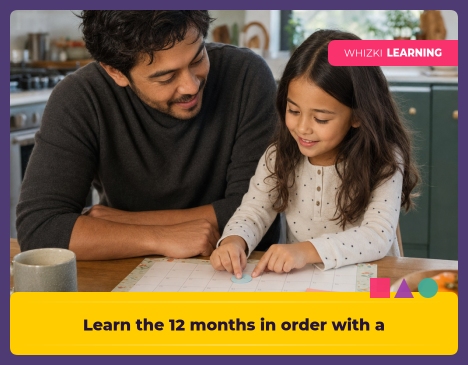
The kitchen calendar is the anchor for months learning, and a daily routine is the teaching tool that makes it stick, especially when you follow an Orton-Gillingham style of steady, consistent practice. Start with the same script every day, like “We are in this month, and tomorrow we will move to the next month.” Then point to the month name on the calendar and move a small marker, like a sticky note or a paper circle, to the current date.
The occupational-therapy basics for self-regulation matter here, because a predictable routine lowers the mental load for a busy preschooler or kindergartener. Keep the calendar moment short, 2 to 3 minutes, and let the child do the “move the marker” job. When the child leads the movement, the month order becomes a physical memory, not just a memorization task.
For the months-in-order skill, use the calendar to practice “next” and “before” without turning it into a quiz. Ask, “What comes next after March?” only after the child has seen the marker move there a few times. This matches NAEYC guidance that learning should be active, social, and connected to daily life.
- Point to the month name, say it together, and move the marker.
- Say “next month” once, then let the child try the next month name.
- End with one calm question, like “What season are we in?”
Map seasons on top, two months at a time
Months feel like a long list, so the Reggio observation approach helps us start with meaning first, then add details. Put seasonal “feelings” on top of the months using your calendar, and group months into four chunks, with two months per feeling. For example, winter can cover January and February, spring can cover March and April, summer can cover May and June, and fall can cover July and August, then repeat the cycle as you move through the year.
When you teach months in order, include the seasons because children remember patterns better than isolated names, which also fits common speech-language pathology practice for reducing confusion. Use simple, consistent language your child already uses, like “cold and cozy,” “muddy and rainy,” “hot and sunny,” and “crisp and windy.” Then connect each chunk to what the child sees at home, like jackets, rain boots, beach towels, or leaf piles.
Keep the “two months” idea concrete on the calendar by circling the two month names in each chunk. Ask one question per day, like “Are we in winter feelings or spring feelings?” and let the child point. This turns month order into a story the child can track.
- Circle two month names that match the current season feeling.
- Say the two month names once, together, while pointing.
- Move the marker and repeat the same seasonal question tomorrow.
When should a kid know the months in order?
Most children can start learning month names around ages 3 to 4, but “in order” usually lands closer to ages 5 to 7, and that is normal. This timing matches NAEYC guidance that development varies, and children learn at different speeds when practice is meaningful and low-pressure.
Months in order is a memory-and-sequencing skill, so it helps to build it gradually: first, “current month,” then “next month,” then “month order.” Orton-Gillingham style teaching supports this step-by-step approach by keeping practice consistent and avoiding big leaps in difficulty.
If your child can name the current month sometimes, that is a win, and it is enough to keep going with the daily calendar routine. If your child is getting stuck on multiple days in a row, switch to a smaller goal, like only practicing the next month name for two weeks, then expanding again.
When to ask a professional, like a speech-language pathologist or occupational therapist, is when months practice causes frequent frustration that does not improve with routine changes, or when the child also struggles with other sequencing and language tasks at home and school. A professional can help you spot whether the issue is attention, language processing, or another skill.
A short song for the order, plus a gentle mnemonic
A simple song or mnemonic helps children remember the order without you turning the kitchen into a classroom, and this approach fits common early literacy practice for repeated, rhythmic language. Use a short, kid-friendly chant that you sing while moving the marker, then stop before your child gets bored. Keep it to one line, like “January, February, March, and April,” then continue only if the child is still engaged.
For a mnemonic, connect each month to something your child already knows, like a birthday month, a holiday, or a seasonal activity. The Reggio-inspired part is that the child’s own experiences become the “hooks,” so the month names feel personal instead of random. If your family has a favorite park day in a certain month, that month becomes “park month” in your home language.
To support counting and number sense, you can also count the months in the year as you point, which connects to our numbers learning hub ideas for building math through everyday routines. You do not need to teach days in each month at first, just the idea that the year has 12 months and the calendar moves forward.
- Sing one short line while pointing to the month names.
- Let the child choose the “hook,” like “birthday month” or “beach month.”
- Celebrate correct pointing, not perfect reciting.
Quick practice ideas for busy days
When the day is hectic, the best months practice is the practice you can actually repeat, and that is a practical NAEYC-aligned approach. Use “micro-moments” during normal transitions, like after brushing teeth or while packing a backpack. Ask, “What month are we in?” and then, “What comes next?” while the child points to the calendar.
For kids who need more structure, use a simple call-and-response routine that feels like play. You say the first month name, the child says the next one, and you keep going only as far as the child can manage. This kind of predictable turn-taking is consistent with occupational-therapy heuristics for reducing overload and supporting attention.
If your child is ready for a little more, add a “month detective” game. Month detective rules are simple: the child finds the month name you say, then places the marker on the date. This keeps the task concrete and supports language comprehension.
- After school snack: point to the month and say it together.
- Before bed: sing the first four months only, then stop.
- Weekend: circle the next two months in the season feeling color.
Whizki Learning printable packs can support month practice with kid-friendly routines and repetition. If you want a ready-to-use option for daily calendar talk, check the month and calendar printables and pick one small activity to pair with your kitchen calendar marker.
Months in order do not have to be mastered all at once, and you do not have to get it perfect for your child to learn. Keep the kitchen calendar routine short, point and move the marker, and connect months to seasons and personal hooks. In a few weeks, you will likely notice your child starting to say “next month” without prompting, and that is the real goal.