
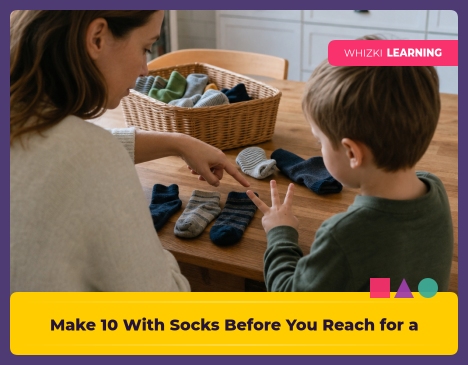
Turn clean socks into a five-minute make-10 game for ages 3-7, with smaller totals for preschoolers and missing-part questions for older children.
Practical articles about numbers and counting for parents and teachers.
Turn clean socks into a five-minute make-10 game for ages 3-7, with smaller totals for preschoolers and missing-part questions for older children.
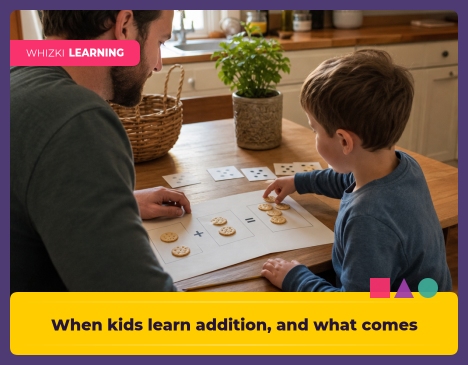
Most kids learn addition between ages 4 and 7, after counting, one-to-one matching, subitizing, and number bonds begin to feel steady.
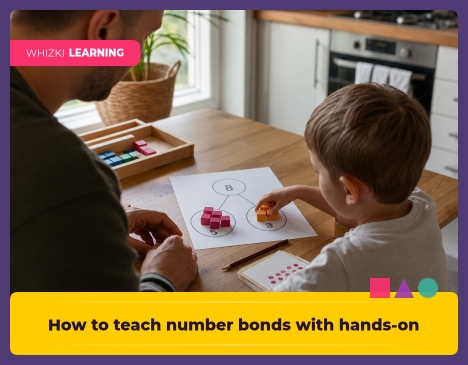
Teach number bonds with blocks, two hands, bond triangles, and a gentle weekly path from 5 to 10, before worksheet practice ever reaches the table.
Practical articles about numbers and counting for parents and teachers.
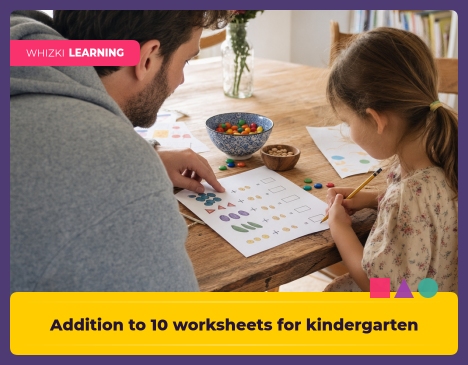
Our free articles cover the why and the how. For a structured journey, our printed workbooks pack 80+ pages of durable practice for hours of hands-on, no-screen learning.
Browse the workbooks
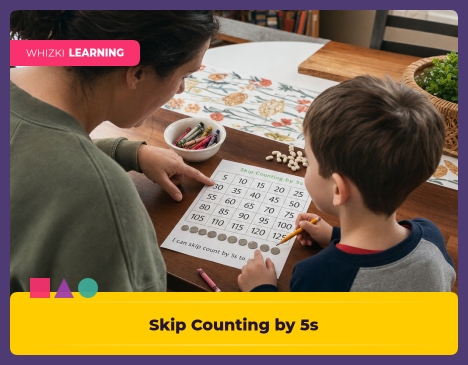
Free letter, number, and skill walk-throughs organized A to Z and 0 through 10. Use them alongside your favorite workbook or as a stand-alone reading break.
Open the learning hubPractical articles about numbers and counting for parents and teachers.
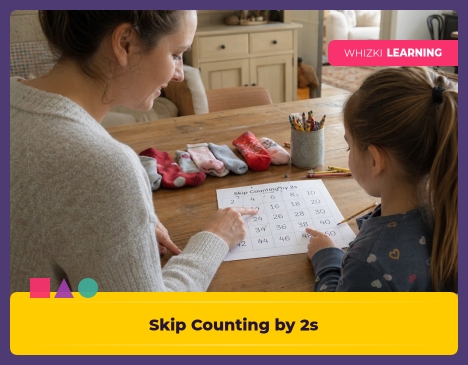
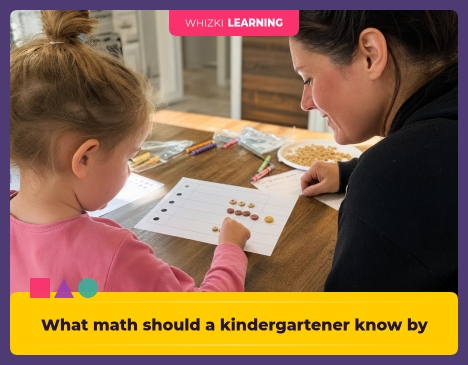
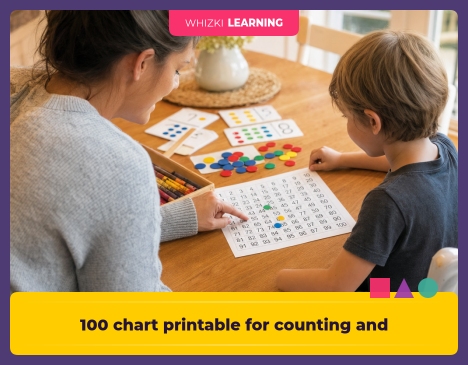
Hundreds of single-page activities sorted by age, subject, and skill. Print, sit beside your kid, done. No subscription, no companion app.
See the printablesGet exclusive activities, expert tips, and inspiration for a more meaningful, offline family life.
 Whizki Learningwhizki.com
Whizki helps parents and teachers turn letters, numbers, and everyday questions into simple learning activities for ages 3–7. Explore free printable worksheets, ready-to-use worksheet sets, and the Family Learning Planner for learning at home or in the classroom. Printed Whizki workbooks are also available separately on Amazon.
