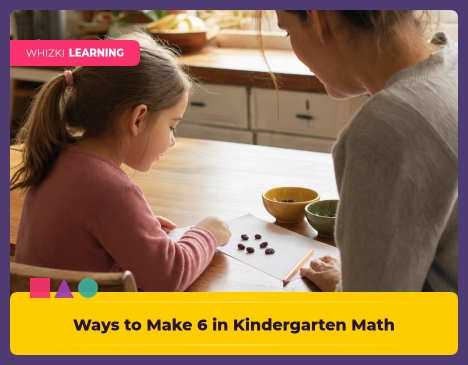
When your child guesses, wiggles, or insists “I already know six,” put six raisins on the table and say, “Let’s see how many ways six can split.” Kindergarten math does not need a lecture at the kitchen table. Common Core K.OA.A.3 means your kindergartener will be asked to break 6 apart in different ways, and playful practice with objects gets your child there.
Reviewed by Whizki Editorial Team, Early Childhood Education Editors.
Number bonds that make 6
A number bond is a small way to show that one whole number can be split into two parts. For 6, the whole is six, and the parts can change while the total stays the same. In Orton-Gillingham teaching, children learn best when seeing, saying, touching, and moving work together, so number bonds feel clearer with real objects than with bare symbols.
Use kid-readable pairs before equations: one apple and five crackers make 6, two raisins and four raisins make 6, three blocks and three blocks make 6, four cereal pieces and two cereal pieces make 6, and five buttons and one button make 6. Say the pair out loud while your child points to each group. The goal is for your child to hear that 1 and 5, 2 and 4, 3 and 3, 4 and 2, and 5 and 1 are all fair ways to build the same total.
The doubles fact 3 + 3 is worth slowing down for because many children remember doubles as friendly facts. Show a die face with three pips on one side and three pips on the other side, then say, “Three here and three there make six.” The die gives your child a picture to carry into mental math later.
If your child still needs a little number recognition before breaking 6 apart, use our number 6 learning page for counting, tracing, and quick visual practice. The number bond work goes better when your child can spot the numeral 6 without stopping to think hard. For children ages 3 to 7, short practice with real objects is usually more useful than a long stack of pages.
Five-minute object games for 6
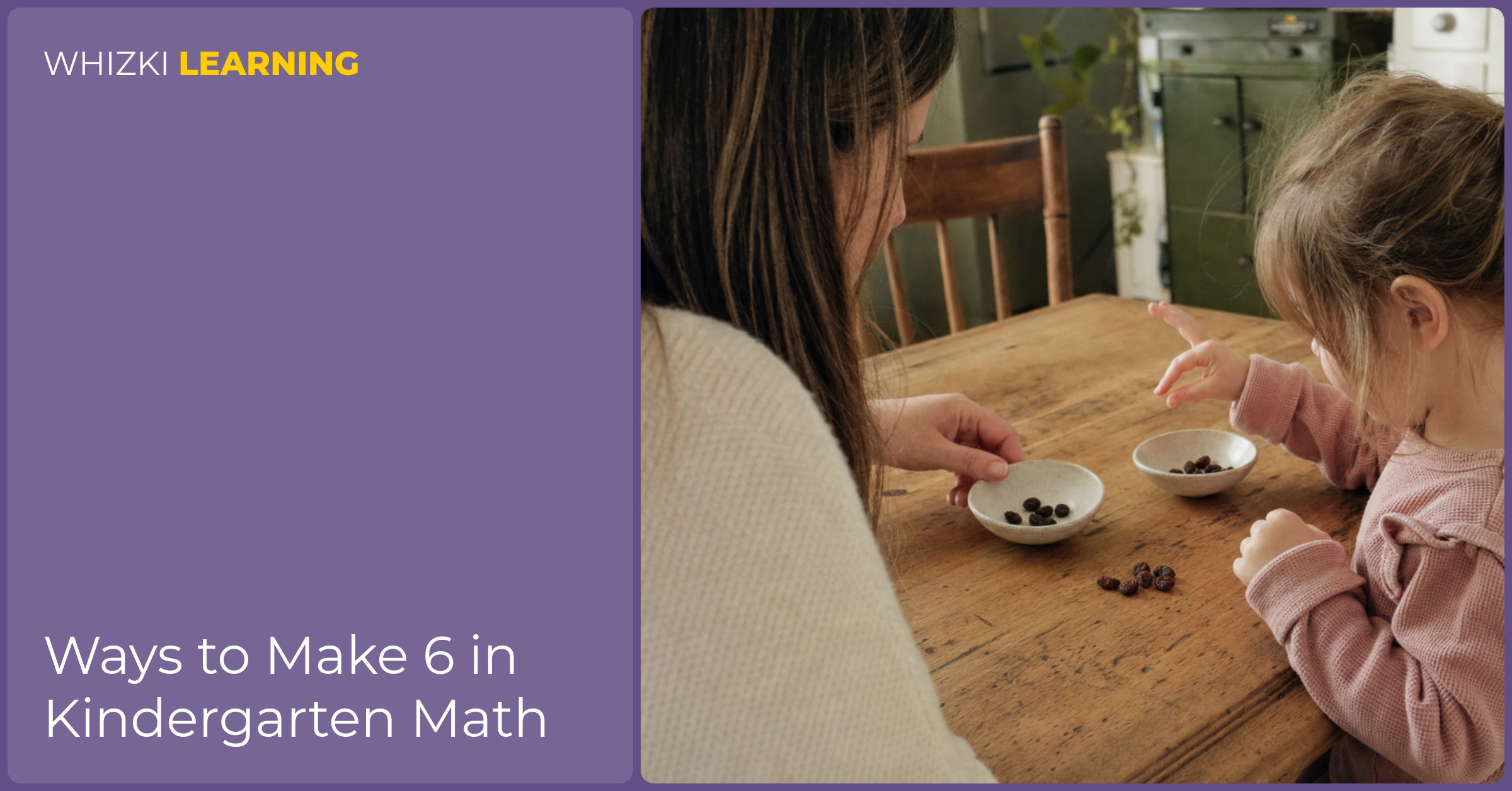
The raisin bowl game is the fastest way to make number bonds feel real. Give your child six raisins and two small bowls, then ask your child to split the raisins in any way and count both bowls. NAEYC guidance reminds teachers and families that young children learn math through hands-on play, so the bowl game counts as real math even when the snack is a little silly.
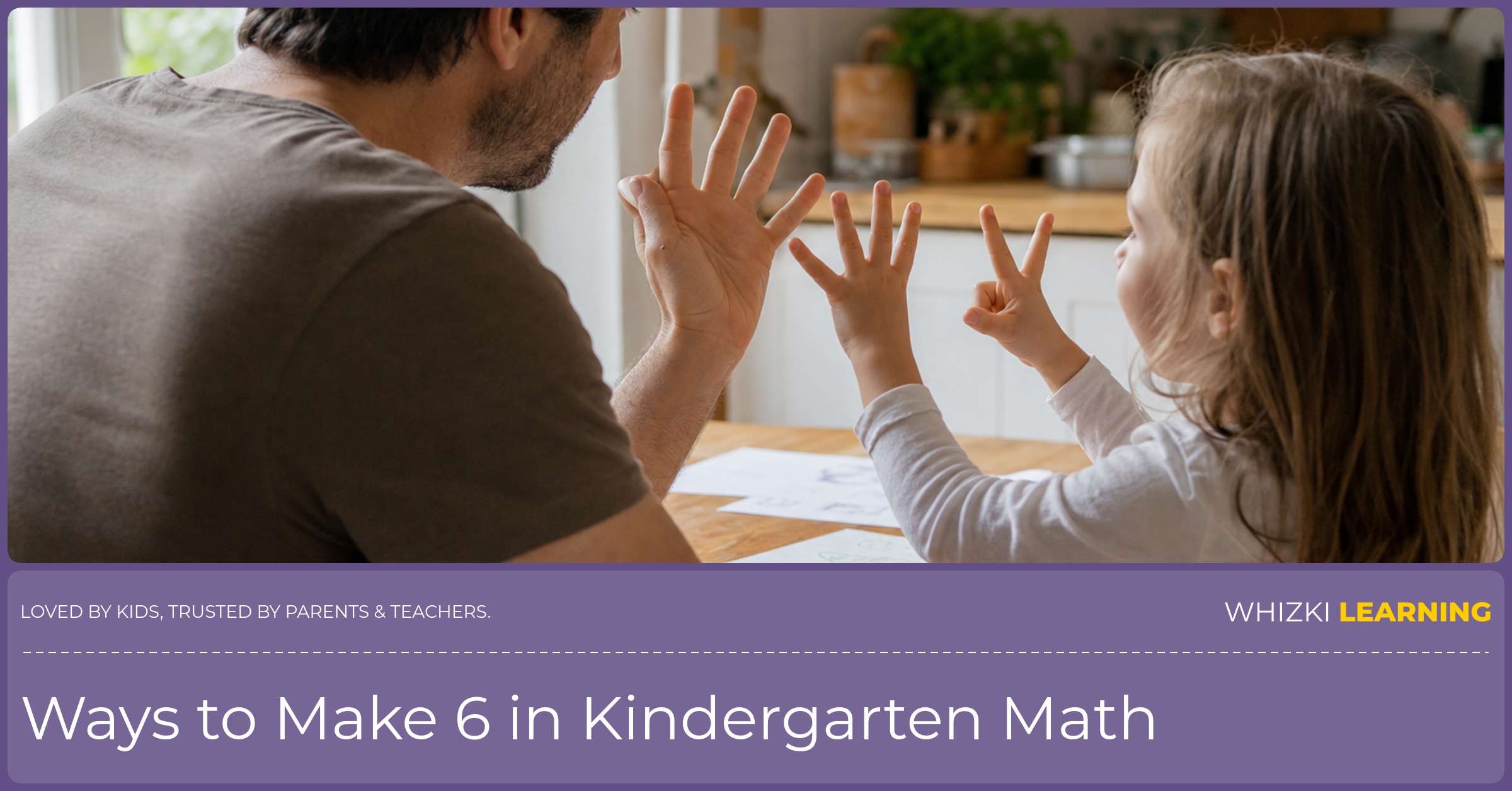
The finger-bond game turns two hands into a math mat. Ask your child to show six fingers, then ask, “How many fingers on the left hand, and how many fingers on the right hand?” Occupational therapy basics remind parents to watch hand comfort and finger control, so let your child use a table, lap, or your hands for support if finger patterns feel tricky.
The snack-time share 6 game works well with a sibling, cousin, or stuffed animal. Put six small snack pieces on a plate and ask, “How can we share six between two people?” A Reggio-inspired approach values the child’s idea first, so accept an uneven share, count both sides, and then invite another way.
Simple equations for making 6
Simple equations on paper can come after the object play, not before. Write one pair at a time and say the signs in plain words: the plus sign means “put together,” and the equals sign means “same amount as.” Montessori observation reminds adults to move from concrete materials to symbols only when the child has touched and counted the real quantity first.
Write 1 + 5 = 6, 2 + 4 = 6, 3 + 3 = 6, 4 + 2 = 6, and 5 + 1 = 6 on a small piece of paper. Let your child place raisins, blocks, or cereal pieces above each number while reading the equation with you. The first look at + and = signs should feel like exposure, not a timed drill.
Everyday counts keep the idea alive without turning the house into school. Notice six legs on a bug picture, six pips on a die showing six, or six pieces of fruit in a fruit bowl. For broader number practice, the numbers learning hub can help you connect 6 with the other numbers your child is learning.
For a low-prep day, our counting printables give you a hands-on backup when crayons and paper sound easier than pulling out bowls. Choose one page, add real counters, and stop while your child still feels successful.
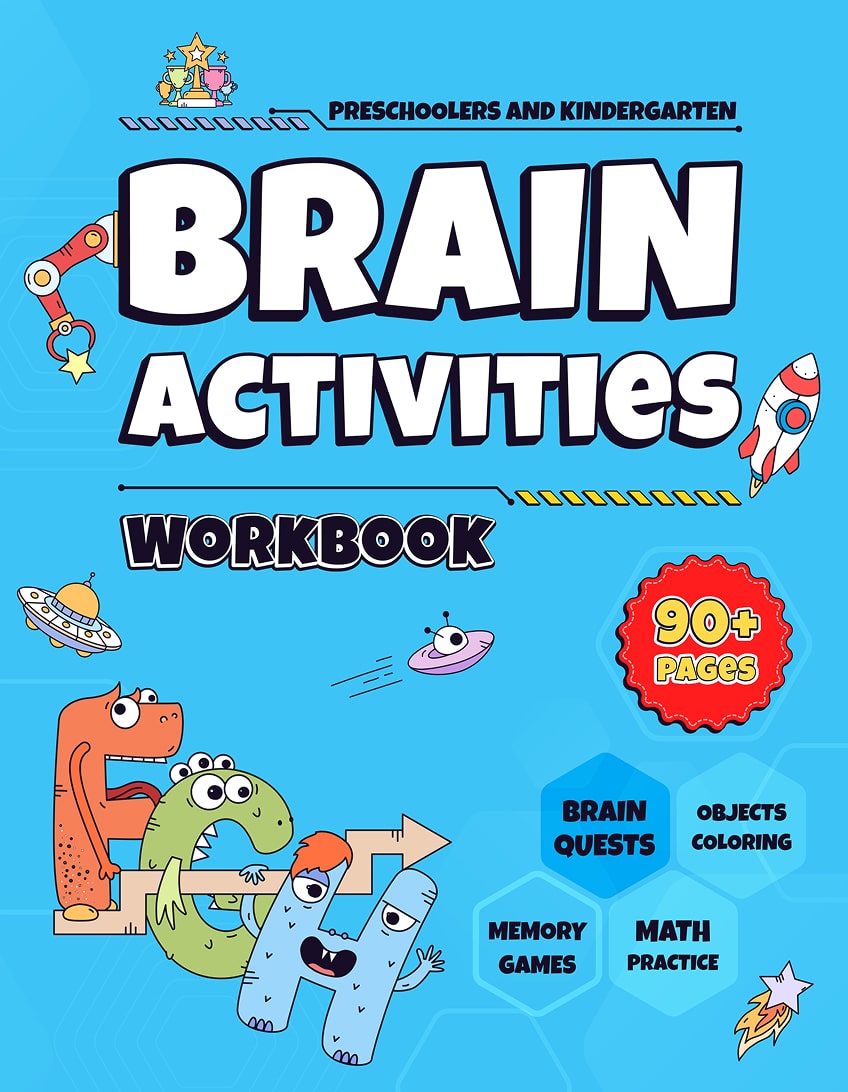
If you want to keep the same practice going on paper, take a look at our preschool and kindergarten math workbook.
Ways to make 6 become meaningful when your child can move the six objects, say the two parts, and then see the matching equation. Keep practice short, warm, and ordinary, because five calm minutes repeated across a week beats one long battle. At school, your child may hear: Common Core K.OA.A.3 asks kindergarten children to break 6 apart in more than one way.