PreschoolKindergartenFirst Grade

Ways to Make 3 in Kindergarten Math: Number Bonds, Objects, and Simple Equations

Jun 1, 2026
Ways to Make 3 in Kindergarten Math: Number Bonds, Objects, and Simple Equations

If your child turns every math question into a negotiation over snacks, put three raisins on the table and ask, “How can we put some in each bowl?” Ways to make 3 should feel small, playful, and visible, because children ages 3-7 learn best when the number is in front of their hands. Common Core K.OA.A.3 simply means your kindergartener will be asked to break 3 apart in different ways, and this kitchen-table practice gets your child there.

Reviewed by Whizki Editorial Team, Early Childhood Education Editors.

Number bonds that make 3

A number bond for 3 is a small picture of a whole, 3, split into two parts. In a Reggio-style room, I watch which split a child makes before I name the math, because young children often show understanding with hands before words. The kindergarten language can stay plain: three is made of one and two, or two and one.

At the kitchen table, place three blueberries, buttons, or blocks in a row and slide one object to the left side and two objects to the right side. Say, “One and two make three,” and then switch the sides so the child sees two objects and one object make the same total. The kid-readable pairs are 1 and 2, and 2 and 1, with real objects doing the explaining before an equation appears.

If number recognition still feels shaky, step back to counting and naming 3 on our number 3 learning page before asking for parts. Families who want a wider count-and-match path can browse the numbers learning hub and keep the making-3 work as a short side activity.
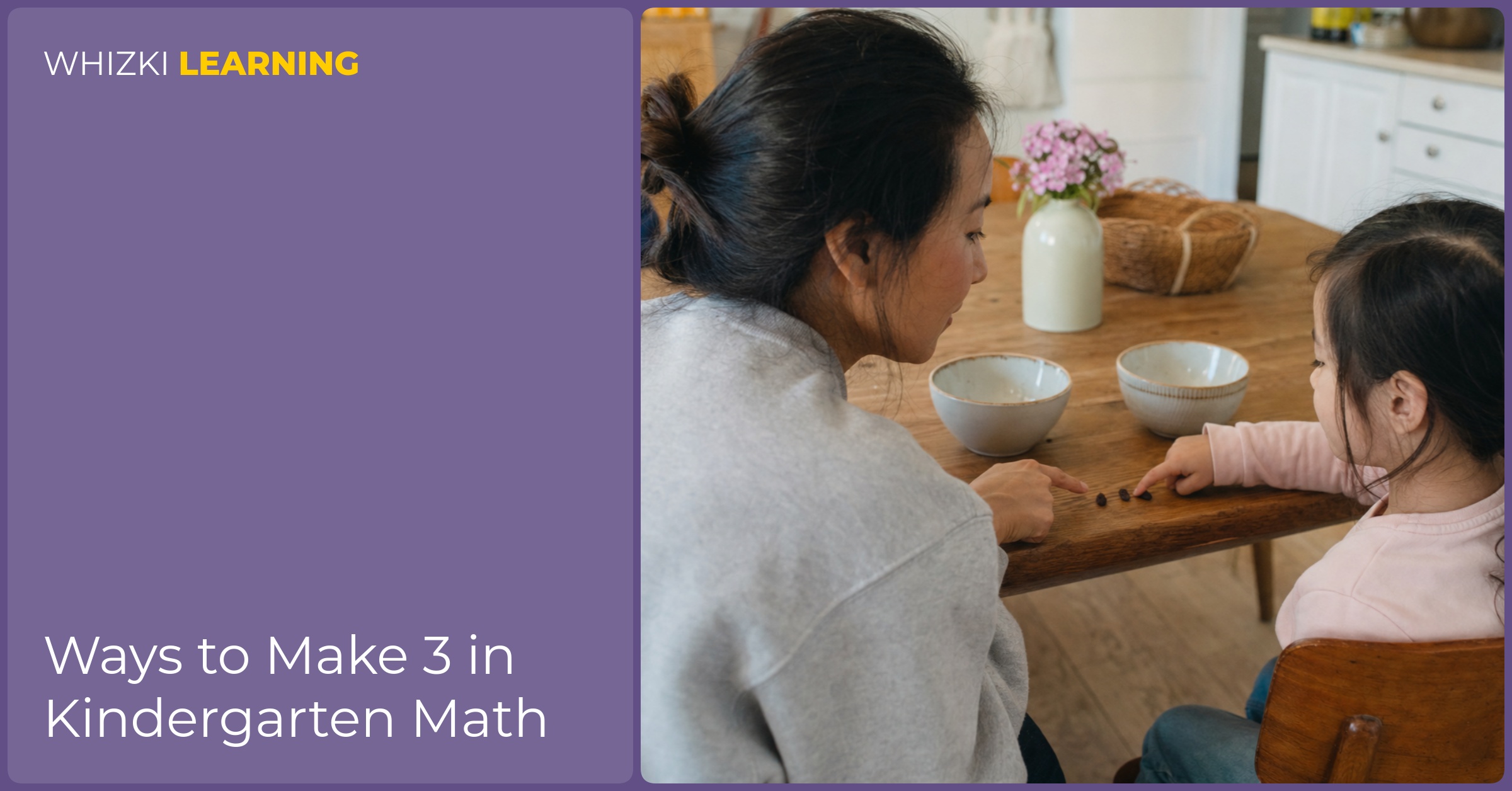
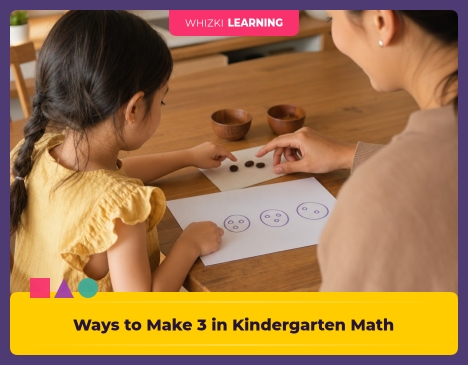
A parent and child split three raisins between two small bowls to make number bonds for 3.

Hands-on games for making 3

Hands-on games work because a preschool body learns math through touch, movement, and sight. Occupational therapy basics remind me to lower the fine-motor demand when the math is new, so big bowls, chunky snacks, and open hands beat tiny pencil marks. Montessori practice points in the same direction: concrete materials come before symbols.

Game one is the raisin split, and the game takes about five minutes. Put three raisins in one bowl, give your child a second bowl, and ask for a new way to split the raisins between the bowls. Name each result in a calm voice: zero and three, one and two, two and one, or three and zero.

Game two is the finger bond, and no supplies are needed. Ask your child to show three fingers using two hands, such as one finger on the left hand and two fingers on the right hand. Then ask for another finger bond, such as two on the left and one on the right. The finger bond gives the child a body map for 3 before paper enters the picture.

Game three is share 3 at snack time with a sibling, a caregiver, or a stuffed animal. Put three crackers on a napkin and ask, “How could two people share these?” Fairness may become the debate, which is fine, because the math talk still names the parts: one for Sam and two for Lee, or two for Sam and one for Lee.
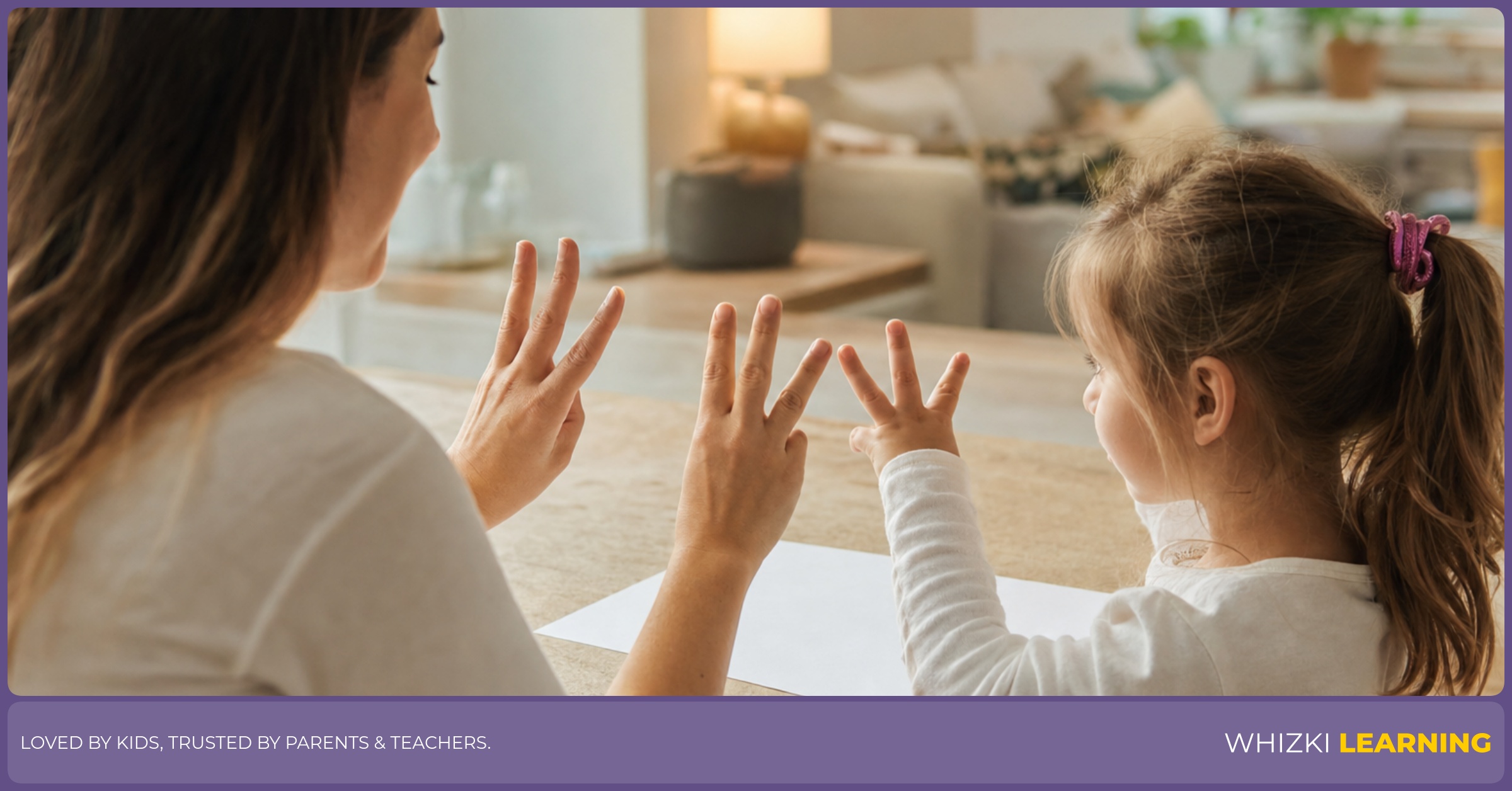
A caregiver helps a child show three fingers across two hands during a finger-bond game.

When a printable would save the afternoon, choose one small page from our counting printables and use raisins or blocks on top of the page. The printable should support the table game, not replace the talk, the touch, or the quick celebration when your child finds a new split.

Simple equations on paper

Simple equations on paper should feel like labeling a game that already happened. The Orton-Gillingham approach often moves from touch to speech to symbol, and early math can follow the same friendly path. After the raisin split, write the matching number sentence beside the bowls.

Write 1 + 2 = 3 and say, “One plus two equals three.” Then write 2 + 1 = 3 and say, “Two plus one equals three.” Explain that the plus sign means put together and the equal sign means is the same amount as. Keep the pencil in adult hands at first if writing slows the math down.

Everyday counts can keep 3 familiar without turning the day into a quiz. NAEYC guidance favors playful, meaningful math, so mention three little pigs during a story, three sides on a triangle during drawing, or three meals in a day while setting the table. The goal is exposure, not drill, and a cheerful two-minute count often teaches more than a tired worksheet.

The ways to make 3 become easier when your child can see, move, say, and finally write the parts. At school, your child may hear: “Break 3 apart in more than one way,” which is Common Core K.OA.A.3 in plain classroom words.

Independent Picture Spelling, Say It, Spell It, Done Worksheet Cover BackgroundIndependent Picture Spelling, Say It, Spell It, DoneIndependent picture spelling practice with a simple routine, say it, spell it, then read it back to check.
Trace, Copy, and Write, Practice Short-Word Spelling Patte... Worksheet Cover BackgroundTrace, Copy, and Write, Practice Short-Word Spelling PatternsTrace, copy, then write short picture words with support, building fine-motor control and more confident spelling.
Build and Blend, Make Short Words from Sound Steps Worksheet Cover BackgroundBuild and Blend, Make Short Words from Sound StepsUse a build-and-blend routine with picture cues to make short words, then say them smoothly to lock in spelling.

Frequently asked questions

What are the ways to make 3 for kindergarten?

The main pairs are 1 and 2, and 2 and 1, with 0 and 3 added when your child is ready. Children learn the idea faster when the parts are moved with fingers, snacks, or counters before symbols are shown. Ask the kindergarten teacher or a pediatric occupational therapist for ideas if counting three objects is still hard after plenty of playful practice.

Why does the order change in 1 + 2 and 2 + 1?

The order changes because the two parts can trade sides while the total stays 3. Moving real objects helps a child see that one raisin in the left bowl and two in the right bowl still match two in the left bowl and one in the right bowl. If the order feels confusing, keep the work with bowls and fingers for a few more days before writing equations.

How long should practice with ways to make 3 last?

Practice can last about five minutes at a time for most preschool and kindergarten children. Short playful repeats work better than long drills because attention, hand control, and number sense are still growing. Stop early if your child is tired, hungry, or guessing wildly, and ask the teacher for guidance if small counts stay frustrating.

Should my preschooler write 1 + 2 = 3?

A preschooler can see 1 + 2 = 3 as a gentle label after playing with objects. Early equation exposure helps the plus sign and equal sign feel familiar before kindergarten paper tasks arrive. Skip handwriting if pencil work causes stress, and let an adult write the equation while the child moves the objects.

Limited Time Sale
Kids’ Workbooks!

Boost your child’s skills with our discounted workbooks. Engaging activities for preschool, kindergarten, and grade 1 - now at special sale prices!

June Summer Learning Workbook for Kindergarten to 1st Grad... Workbook Cover BackgroundJune Summer Learning Workbook for Kindergarten to 1st Grade: Math, Reading, Writing, Science, Brain QuestsA workbook for the slow weeks of June. Reading, math, writing, science, and brain quests for kids stepping from kindergarten into 1st grade.

-27% $10.99

List Price: $14.99
Buy Now
July Summer Learning Workbook for Kindergarten to 1st Grad... Workbook Cover BackgroundJuly Summer Learning Workbook for Kindergarten to 1st Grade: Alphabet Tracing, Math, Numbers, Preschool ActivitiesA July workbook for the middle of summer. Alphabet tracing, early math, number practice, and pencil work for kids moving from kindergarten i...

-27% $10.99

List Price: $14.99
Buy Now
August Summer Learning Workbook for Kindergarten to 1st Gr... Workbook Cover BackgroundAugust Summer Learning Workbook for Kindergarten to 1st Grade: Numbers Tracing, Alphabet, Writing, Science, Social StudiesAn August workbook for the last stretch of summer. Number tracing, alphabet review, writing, science, and gentle social studies for the week...

-27% $10.99

List Price: $14.99
Buy Now
Animal Coloring Adventures Workbook for Kids Ages 3-7: Fac... Workbook Cover BackgroundAnimal Coloring Adventures Workbook for Kids Ages 3-7: Facts, Mazes, Quizzes, and Coloring ActivitiesAn animal-themed coloring and brain-quest book for ages 3 to 7. Facts, mazes, and quizzes about jungle, ocean, and backyard animals.

-31% $8.99

List Price: $12.99
Buy Now

Join the Screen-Free Movement.

Get exclusive activities, expert tips, and inspiration for a more meaningful, offline family life.

Copyright © 2025 - 2026 Whizki Learning. All rights reserved.