
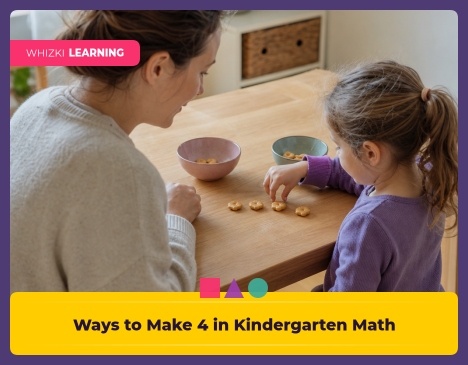
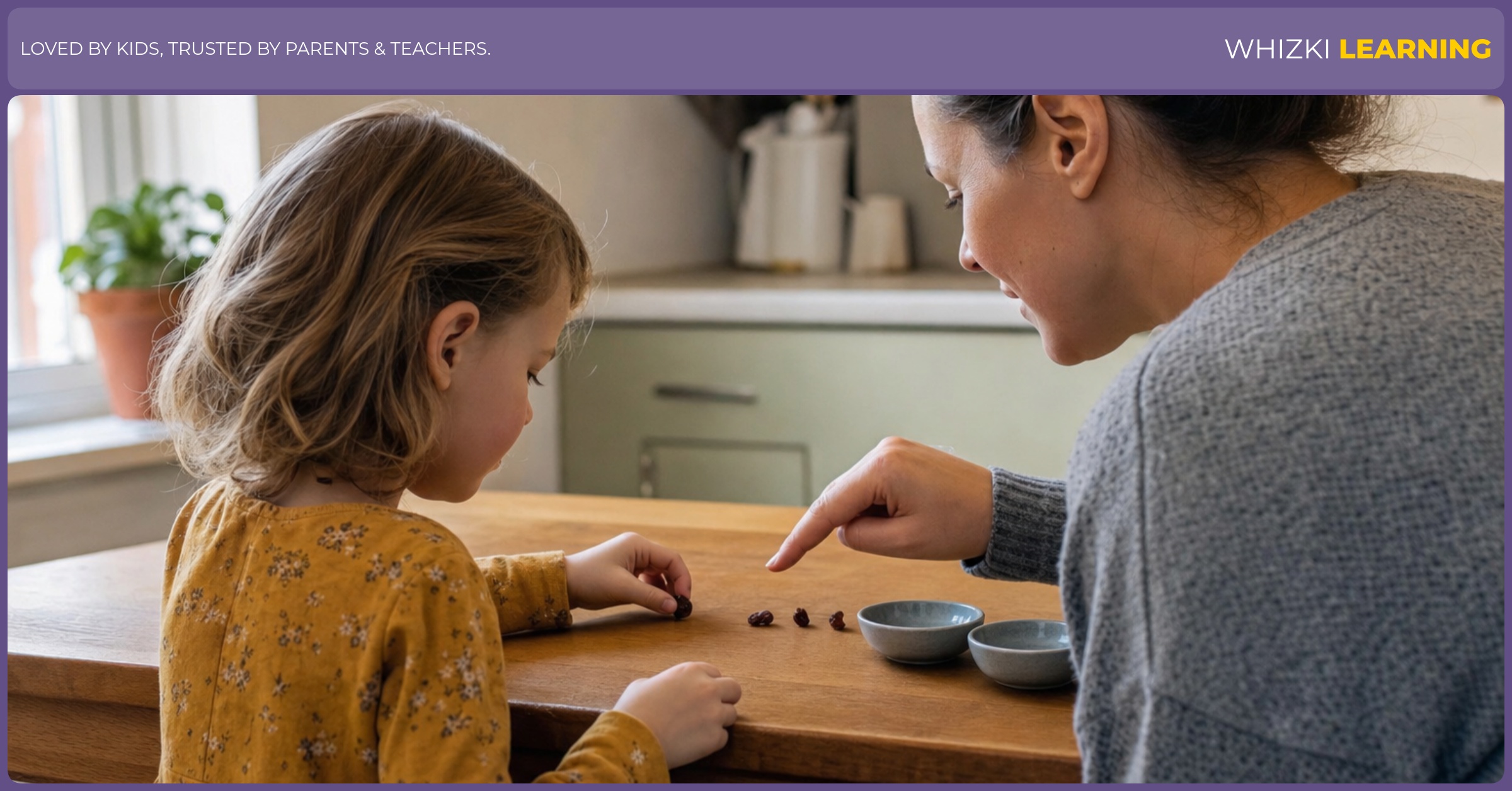
If your child shuts down the second math feels like school, start with four raisins and two little bowls, because a snack-size count feels safer than a worksheet. Ways to make 4 are small, but the idea matters: one whole amount can be split into two parts in more than one way. Common Core K.OA.A.3 means your kindergartener will be asked to break 4 apart in different ways, and kitchen-table practice gets your child ready for that question.
If number recognition still feels wobbly, spend a few minutes with our number 4 learning page before asking for number bonds. A child who can find, say, and count four objects has a much easier time seeing how four can split into smaller groups.
Reviewed by Whizki Editorial Team, Early Childhood Education Editors.
Number bonds that make 4
A number bond for 4 means two small groups live inside one total group of four. In my kindergarten groups, the Orton-Gillingham habit of seeing, saying, touching, and moving the material helps young children connect the spoken number to the amount in front of them. A parent can use that same multisensory path with coins, crackers, beads, buttons, or raisins.
Place four small objects in one pile and say, “Four is the whole.” Move one object to the left and three objects to the right, then say, “One and three make four.” Move two objects to each side for “two and two make four,” then move three objects left and one object right for “three and one make four.”
The doubles fact 2 + 2 is usually the first doubles fact a kindergartener starts to own. Two hands with two fingers up on each hand, two shoes beside two shoes, or two crackers beside two crackers all make the same visual message. A child does not need to memorize the words first, because the matched groups make the idea clear.
Hands-on games with 4 objects
Hands-on math is not extra for ages 3 to 7, because NAEYC guidance keeps early math tied to play, talk, and real materials. Occupational-therapy basics also remind adults that small hands need movement, touch, and short turns before pencil work feels comfortable. Five minutes is enough when the child is still engaged.
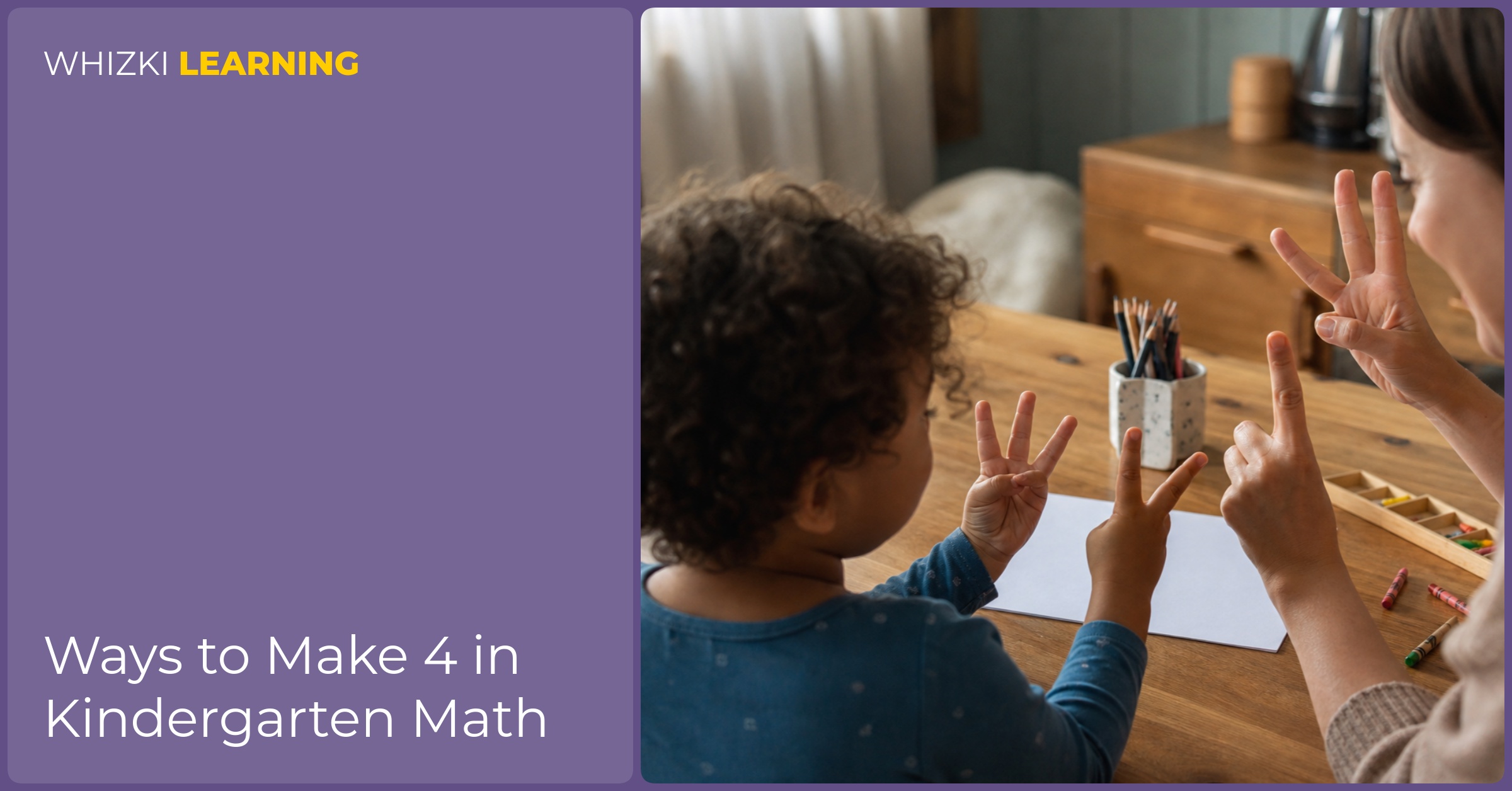
The raisin bowl game is simple: give your child four raisins and two small bowls, then ask, “Can you split the raisins another way?” The finger-bond game uses two hands: ask, “Show four fingers, with some fingers on the left hand and some fingers on the right hand.” The snack-time share works with a sibling or stuffed animal: give four crackers and ask, “How many for you, and how many for your buddy?”
Reggio-inspired teaching asks adults to observe the child’s strategy before jumping in with a correction. A child may count every raisin again, move one cracker at a time, or notice that 1 and 3 can flip into 3 and 1. Everyday counts can stay light, such as four wheels on a car, four legs on a dog, or four corners on a square.
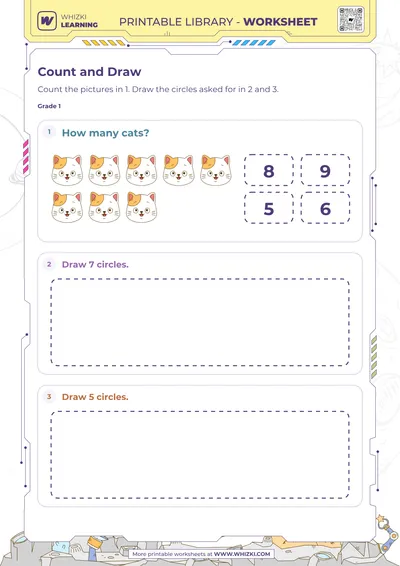
When a parent wants a page nearby, the hands-on set in our counting printables gives simple off-screen number practice without turning the kitchen table into a test. Choose one page, keep crayons out, and stop while the child still feels successful.
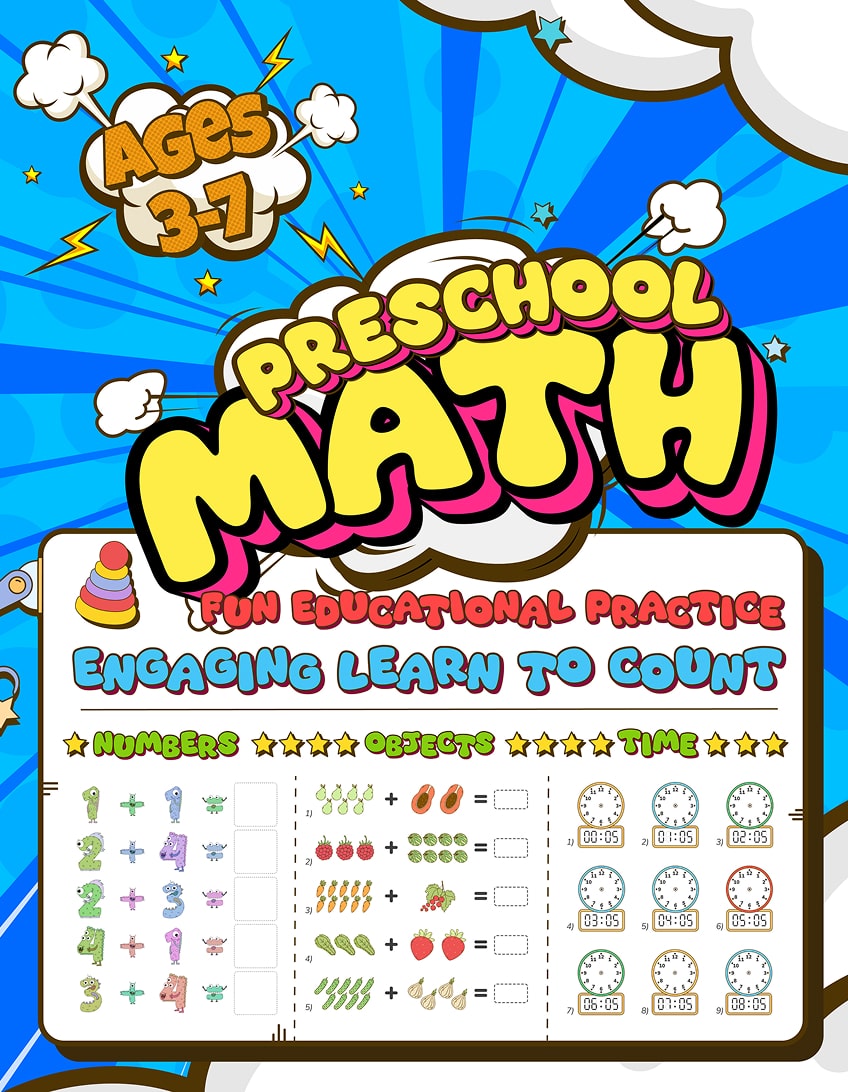
If you want to keep the same practice going on paper, take a look at our preschool and kindergarten math workbook.
Simple equations on paper
Simple equations can come after the child has moved real objects, not before. NAEYC-aligned early math keeps symbols connected to meaning, so the plus sign and equals sign are labels for an idea the child already touched. The paper step is exposure, not drill.
Write “1 + 3 = 4” and place one raisin under the 1 and three raisins under the 3. Write “2 + 2 = 4” and let your child make the doubles pair with two objects on each side. Write “3 + 1 = 4” and point out that the same two parts can switch places while the whole stays four.
Use plain language for the signs: plus means “and,” and equals means “is the same amount as.” A child can read the equation as a tiny story: “one and three is four.” For more age 3 to 7 number play beyond 4, the numbers learning hub keeps counting, matching, and number sense in one place.
Ways to make 4 are a small routine, and small routines build school readiness when practice stays warm and brief. At school, your child may hear: “Can you break 4 into two parts?” That is Common Core K.OA.A.3 in kid-friendly language.