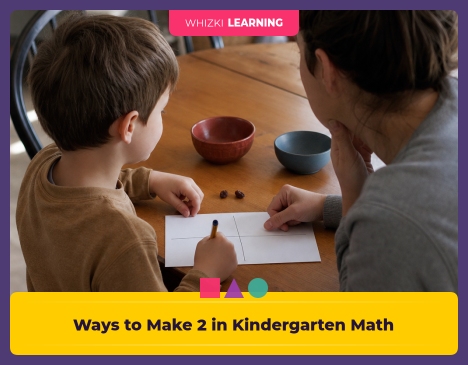
When kindergarten math homework says “make 2” and your child is tired, hungry, or suddenly sure math is impossible, put two raisins on the table and ask, “How can these two go into two bowls?” The small next step turns a school phrase into something your child can touch. Common Core K.OA.A.3 means your kindergartener will be asked to break 2 apart in different ways, and this kitchen-table practice gets your child there.
Reviewed by Whizki Editorial Team, Early Childhood Education Editors.
Number bonds that make 2
A number bond for 2 is just two parts that make one whole group of 2. On the table, the pairs look like an empty bowl and two raisins, one raisin and one raisin, and two raisins and an empty bowl. The pair parents usually hear first is 1 + 1, because equal sharing is easy to see.
In my Orton-Gillingham tutoring, I say the math, touch the objects, and let the child move the objects before I write symbols. For a child who is still learning the written numeral, keep our number 2 learning page nearby for quick recognition practice with the numeral 2. The spoken sentence can be simple: “One here and one there make two.”
Everyday counts make the number bond feel familiar before paper work begins. Two eyes, two hands, two feet, and two shoes give your child real sets of 2 all day long. For broader number play around the same age range, the numbers learning hub keeps counting, numeral recognition, and early quantity practice in one place.
Hands-on games with two objects
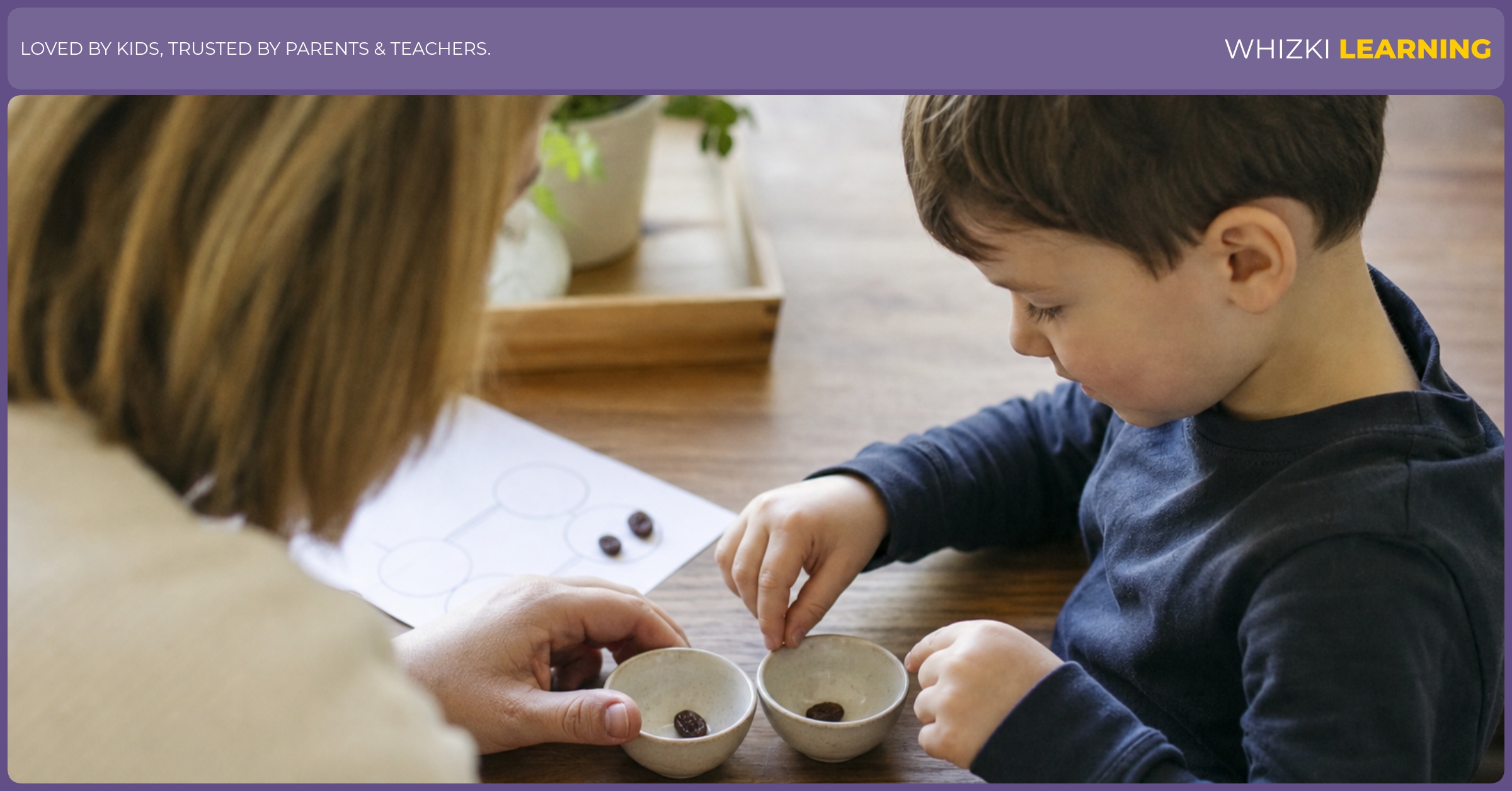
The first 5-minute game uses two raisins and two small bowls. Ask your child to split the two raisins into the bowls in every way, then narrate each arrangement: “Zero in this bowl and two in that bowl,” “one and one,” and “two and zero.” NAEYC guidance fits right here because young children build early math through play, talk, and real materials.
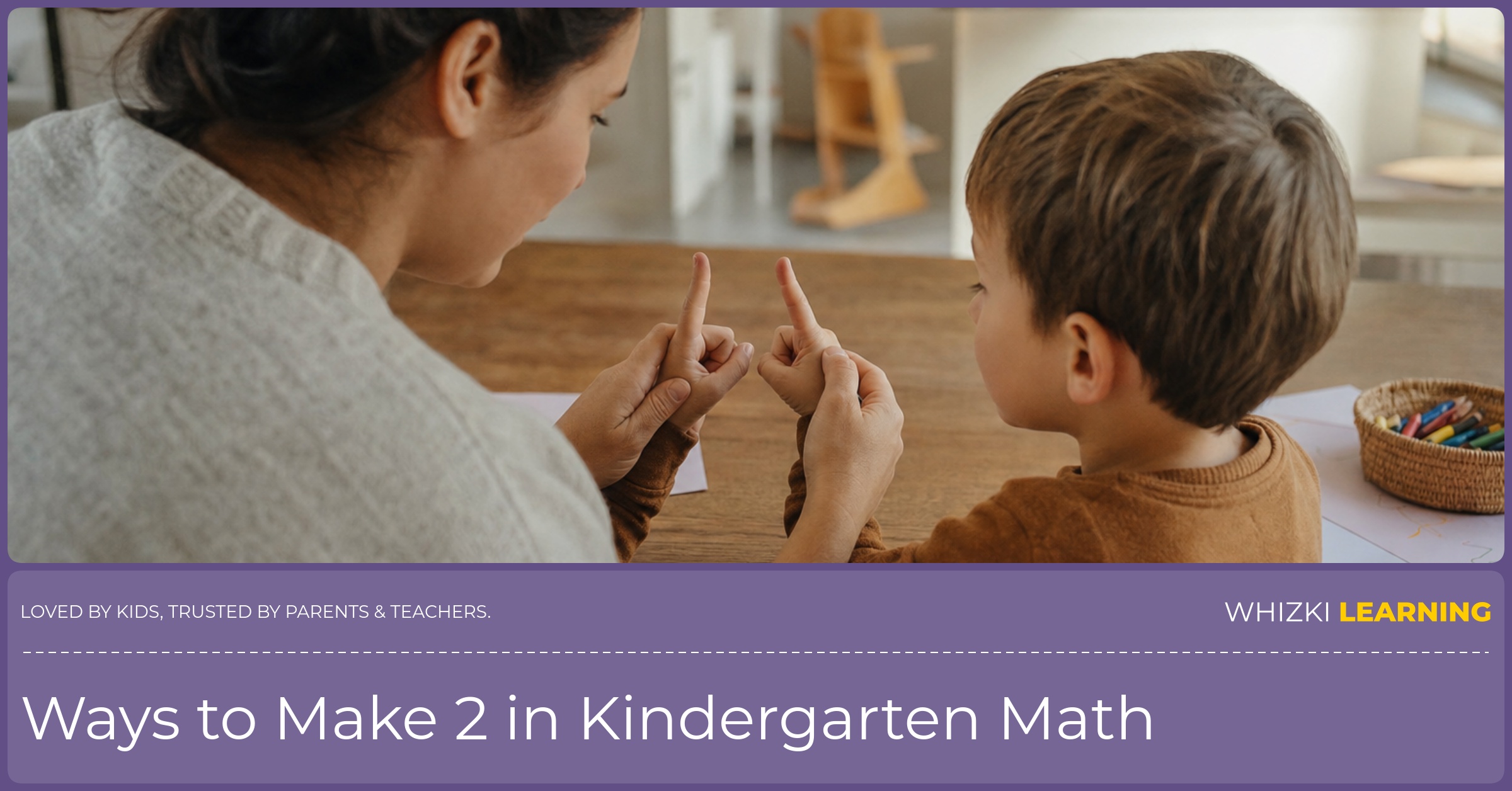
The second 5-minute game uses two hands as a finger-bond. Ask your child to show 2 with fingers, then ask, “How many on the left hand, and how many on the right hand?” Occupational-therapy basics support finger play because little hand movements help children connect body awareness, counting, and early pencil readiness.
The third 5-minute game happens at snack time with a sibling, cousin, or stuffed animal. Put two crackers on a plate and say, “Share 2 so each friend gets some,” then try the same share with one friend getting both and the other friend getting none. Reggio-inspired teaching treats the child’s arrangement as a clue, so watch what your child does before correcting or adding math words.
Simple equations on paper
Paper comes after your child has moved real objects, not before. Write one tiny line at a time: 0 + 2 = 2, 1 + 1 = 2, and 2 + 0 = 2. The first look at the plus sign and equals sign can stay calm, because exposure is the goal, not speed.
In Montessori work, a child handles the material before naming the symbol, and the same idea helps with early equations. Point to the bowls while reading the equation, so “one plus one equals two” matches something your child just built. If your child wants to draw, two dots, two raisins, or two circles are enough.
Simple equation practice should feel short and almost casual for ages 3 to 7. A child who writes only the number 2, traces the plus sign with a finger, or watches you write the equation is still getting useful exposure. Stop after a few minutes, especially when the child can still leave the table feeling capable.
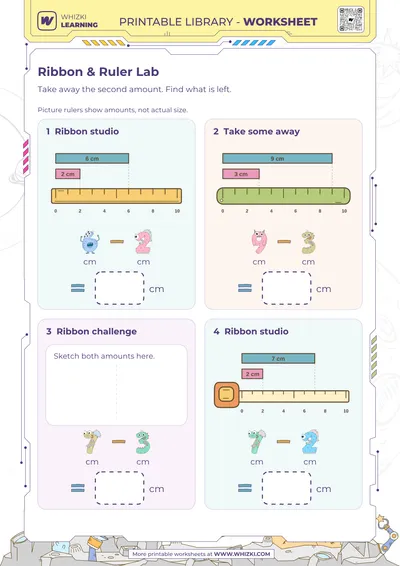
When a printable would give the table a little structure, try our counting printables after your child has moved real raisins, fingers, or snack pieces. Keep the page as a choice, not a test, and stop while the work still feels light.
If you want to keep the same practice going on paper, take a look at our preschool and kindergarten math workbook.
Ways to make 2 are small, but the habit matters because your child is learning that a number can be broken apart and put back together. What your kid will hear at school: Common Core K.OA.A.3 asks kindergarten children to decompose numbers, so “1 and 1 make 2” is real curriculum practice, not a hobby exercise.