When the school-day reading pressure shows up at dinner, it can feel like you are hunting for a calm activity that actually helps. A kitchen-table word scramble game gives your child a short, hands-on way to practice CVC reading without screens.
Reviewed by Sarah Mitchell, M.S., CCC-SLP, Speech-Language Pathologist.
Why word scrambles help CVC reading
Word scramble worksheets work because the worksheet asks the child to notice letter order, then blend sounds to make a real word, which is the heart of CVC reading practice. This lines up with the Orton-Gillingham approach of short, clear sound work and immediate, meaningful feedback.
NAEYC guidance also supports keeping early literacy practice playful and low-stress, especially for kids who get frustrated when they feel “wrong.” A word scramble game stays concrete, the child can point and move letters, and the activity ends before it turns into a power struggle.
From an occupational-therapy basics lens, a paper-and-pencil task uses fine-motor input in a way that many kids enjoy, like circling letters, dragging with a finger, or writing the answer once. You are not asking for long reading stamina, you are asking for quick attention to sounds and spelling patterns.
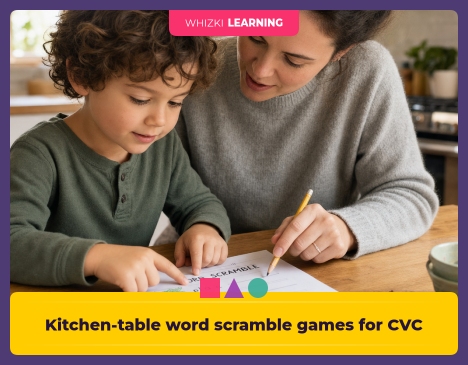
Set up the kitchen-table scramble in 5 minutes
The printable word scramble worksheet is the easiest starting point, because it gives you the scrambled letters and a place for the answer. If you already use our sight-words printables, you can mix in a couple of familiar words so the child feels successful right away.
For letter sound support, keep a small “sound cheat” card nearby, like a simple list of common CVC sound blends, and use it only when needed. The goal is speech-language pathology style practice of “say it, touch it, write it,” with the worksheet doing the heavy lifting so you are not inventing new rules every night.
Choose one short routine, for example, “point to the letters, say each sound, then blend for the whole word.” Reggio and Montessori observation both remind us that kids learn best when the materials guide the work, so let the paper be the guide, not the adult’s explanation.
Three difficulty levels for ages 3 to 7
The preschool version uses 3-letter words with a picture clue, so the child can connect the word to a real object or image. Keep the scrambled letters to three only, and let the picture act as the confidence builder.
The kindergarten version uses 3 or 4 letters with no picture clue, so the child must rely on letter sounds and blending. This is where many kids start to need more repetition, and the worksheet format helps you repeat without turning it into a lecture.
The 1st grade version uses 4 to 5 letters with mixed letter patterns, still on paper and still short. If the child gets stuck, return to the kindergarten set for that day, because NAEYC supports meeting kids where they are rather than pushing through frustration.
Word examples you can use right away, Preschool (3 letters with picture clue): cat, sun, pig, bed, map. Kindergarten (3-4 letters, no clue): hat, rain, milk, tree, boat. 1st grade (4-5 letters, mixed): shop, frog, coat, star, brave.
How to play the rules that prevent meltdowns
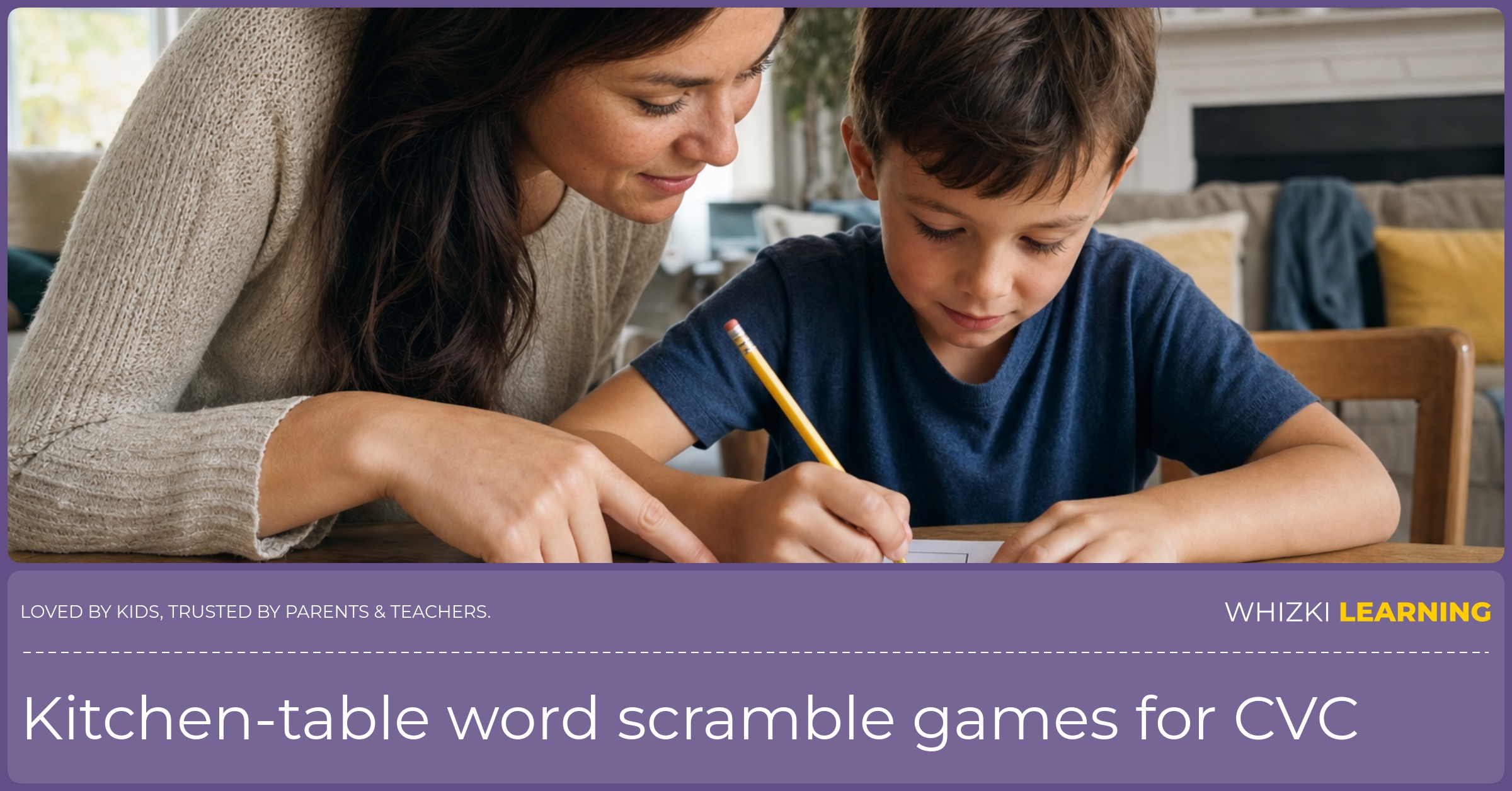
The worksheet game works best with a simple, repeatable script. For each word, the child says the sounds in order, then blends the sounds, then writes the real word, and the adult gives one quick, warm check. Speech-language pathology practice often emphasizes short turns and immediate correctness cues, which is exactly what this routine provides.
When the child misses a word, avoid re-teaching everything. Try “Try again with me,” then point to the first letter sound, say it, and ask the child to finish blending, because Orton-Gillingham style instruction uses small steps and clear feedback.
If attention drops, end early and save the rest for tomorrow. NAEYC supports brief sessions, and occupational-therapy basics remind us that many kids do better with a clear finish line than with an open-ended “keep going.”
For extra practice that fits this same paper-and-sounds vibe, check out Whizki Learning printables for early letter and word practice. A short set of pages plus this scramble routine is a steady way to build confidence without turning reading time into a daily negotiation.
Grab the family printable and start tonight
The easiest way to begin is to print the scrambled-words family worksheet and do just 3 words at the kitchen table. If you want a quick bridge from letters to reading, pair the scramble with our English printables so the child sees the same words across different activities.
Try a “two-day loop,” where Day 1 is scramble, Day 2 is the same words but the child writes the correct word first. Reggio-style learning values revisiting materials, because repetition with fresh hands-on input helps children lock in letter order.
If you are teaching in a classroom or homeschool, rotate roles, the child scrambles while the adult blends, then switch. That turn-taking supports attention and keeps the worksheet from becoming a test.
If word scrambles feel too easy, move up one difficulty level, and if they feel too hard, move down and keep the session short. The win you are looking for is not “perfect answers,” it is the child’s growing comfort with letter sounds and blending.
Want a quick next step for tomorrow? Print the scrambled-words family sheet, pick the level that matches today’s mood, and play for 5 minutes with three words only.