Some days it feels like your preschooler knows a few “good” words, then the next day you get blank stares at the dinner table. You are not doing anything wrong, and you are not alone. Vocabulary grows when kids hear words often, use words in real moments, and get gentle chances to say them back.
Reviewed by Sarah Mitchell, M.S., CCC-SLP, Speech-Language Pathologist.
Why flashcards do not build vocabulary fast
In speech-language pathology practice, vocabulary growth is usually about use, not just recognition. A flashcard can show a word, but conversation gives a child a reason to understand it, notice it, and try it in context. The NAEYC guidance on developmentally appropriate practice also points back to everyday interactions, not isolated drills.
Orton-Gillingham approach principles remind educators to connect learning to meaningful language, with repeated exposure and clear, consistent use. When a child hears “soggy” while helping wipe up a spill, “soggy” becomes a lived meaning, not a random label. When a child says “soggy” while describing the mess, the word sticks because the child used it.
If you want a quick check, ask yourself what your child does with the word after seeing it. If the child never uses the word during play, routines, or story talk, the vocabulary is less likely to grow. If your child hears the word, repeats it, and uses it again later, vocabulary growth becomes much more natural.
The 3 ways vocabulary grows between 3 and 7
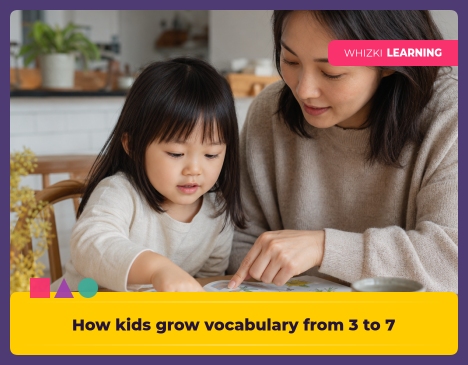
Reggio-inspired teaching observation often looks for language happening during real experiences, like building, cooking, and pretend play. Between ages 3 and 7, vocabulary grows through read-aloud exposure, kitchen-table talk, and “say it back” moments. These three channels work together, and each one is simple to start today.
First, read-aloud exposure matters because books repeat patterns of language and introduce new words in a safe, repeatable way. Second, kitchen-table talk matters because everyday routines bring words into the child’s world, like “crunchy,” “sticky,” or “careful.” Third, “say it back” moments matter because children learn best when adults invite a response, then model the word again without pressure, which is a common occupational-therapy heuristic for supporting participation.
Here is a practical way to think about it: read-aloud gives the word, kitchen talk gives the meaning, and say-it-back gives the practice. When all three happen, vocabulary growth feels steady instead of random.
- Read-aloud effect: new words show up repeatedly across pages.
- Kitchen-talk effect: words attach to real objects, actions, and feelings.
- Say-it-back effect: the child gets a low-stakes chance to use the word.
One word-of-the-day routine that actually works
In NAEYC-aligned routines, the goal is short, consistent practice that fits the day. Pick one word for the day, keep it in your mouth during real moments, and invite the child to use it once. This routine works well alongside our alphabet learning hub when you want to connect vocabulary to letter sounds and picture talk.
Try this 3-step routine at home or in the classroom. Step one, choose a word that matches what the child is already doing, like “glide” during toy cars or “tremble” during a pretend thunder game. Step two, say the word in a sentence, then point to something concrete. Step three, ask for a simple response, like “Can you say it?” or “Show me ‘glide’ with your car.”
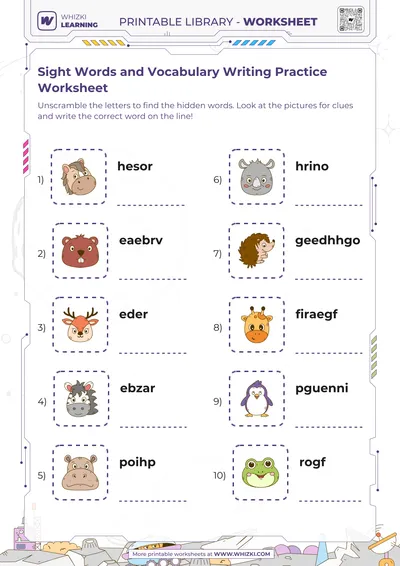
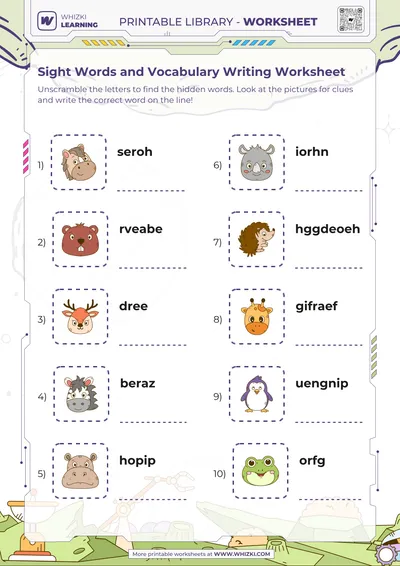
For extra support, use word visuals and quick practice sheets. The sight-words and vocabulary printables can help you keep word talk organized without turning the day into flashcard time, especially when you pair the printable with conversation from the book or routine at hand, like our sight-words printables.
- Choose: one word that fits today’s play or routine.
One read-aloud habit for better word learning
Speech-language pathology practice often emphasizes “responsive reading,” where the adult notices the child’s attention and builds language from it. A simple habit helps: pause for 3 seconds at one page, then ask a question that uses the target word. When the child answers, the adult repeats the answer with the word slightly expanded.
Orton-Gillingham approach thinking supports this by keeping language consistent and giving repeated exposure. If the target word is “curious,” the adult can say, “You look curious,” then later in the same book, “The cat is curious too,” and finally in the kitchen, “You are curious about the apples.” The word gets multiple chances without extra pressure.
Reggio-inspired classrooms also treat books like invitations to talk, not tests. After the story, the adult can ask, “Which part felt funny, and which part felt brave?” Then the adult offers a word bank of 3 choices, so the child can pick a word that matches the feeling.
Quick support for vocabulary talk: Whizki Learning printables can give you a ready-to-use structure for word-of-the-day practice and quick sight-word connections. If you want a low-prep way to keep vocabulary exposure consistent, start with sight-words printables and pair each page with one real-life sentence during the day.
Car-ride word game and what to do when kids resist
Occupational-therapy basics often point to participation and regulation, which matters when a child is tired or overstimulated. A car ride is a perfect time for word play because the child can respond without sitting still at a table. Keep it light, short, and connected to what the child sees outside.
Try the “Spot and Say” game. The adult chooses one category, like “things that are bumpy” or “things that are shiny,” then asks the child to spot one example. When the child names it, the adult adds one new vocabulary word, like “That is shiny,” then “Shiny means it reflects light,” then invites the child to repeat “shiny.”
If the child resists, lower the demand, not the language. Instead of “Say the word,” try “Point to the word” on a small card, or model the word and ask for a choice, like “Do you want to say ‘shiny’ or ‘glossy’?” If resistance keeps happening across days, ask a speech-language pathologist for a quick screen, especially if the child avoids talking or struggles to follow simple directions.
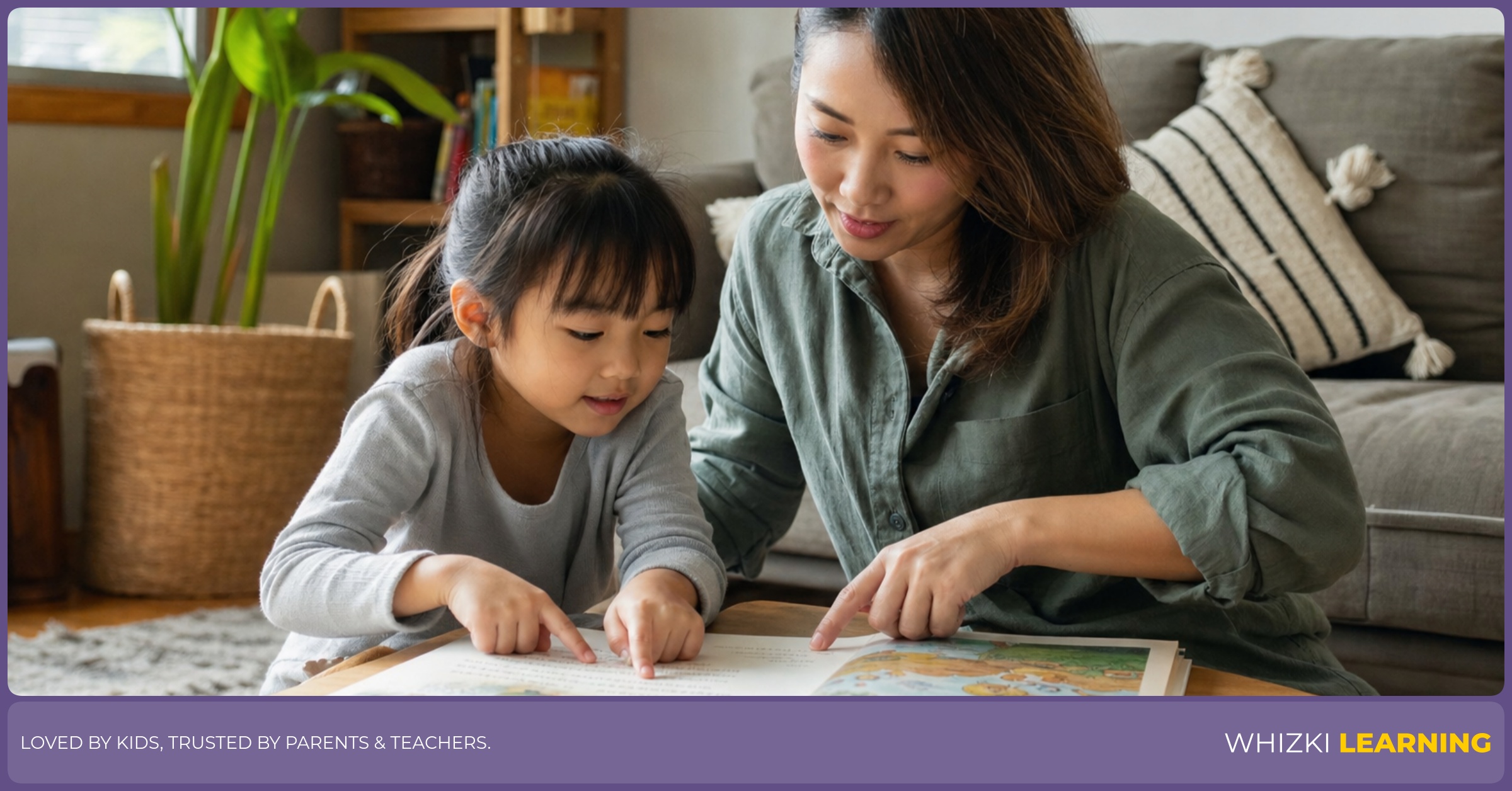
Vocabulary growth between ages 3 and 7 is not about doing more, it is about doing the right language moments more often. Choose one word-of-the-day routine, keep one read-aloud habit that invites a response, and use one car-ride game to practice words in motion. When conversation becomes the “main course,” flashcards become optional side dishes.
If you want one starting point for tomorrow, pick a word that matches the morning routine, say it while you do the action, and ask for one tiny response. That is how vocabulary becomes part of your child’s everyday life.