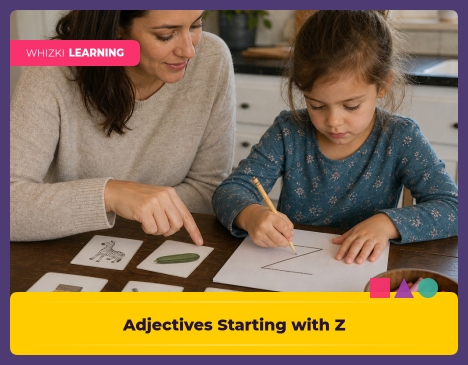
Some days it feels like your child has a whole mouthful of feelings and zero words to match them. Let’s make Z adjectives feel doable, so kindergarten-ready describing words show up at the kitchen table, not just on worksheets.
Reviewed by Sarah Mitchell, M.S., CCC-SLP, Speech-Language Pathologist.
Feelings Z words for kinder conversations (Orton-Gillingham style)
When preschool and kindergarten teachers use explicit word practice, children get more confident describing what they feel. Speech-language pathology practice also supports giving children a small set of emotion words they can reach for during real moments.
Pick one Z feeling word, then use it in a sentence while you name what you see. For example, “You look zany today,” or “That sound makes you zestful.”
Everyday words
- zany
- zesty
- zippy
- zoned
- zestful
Big words for curious kids
- zealous
- zenith
- zenlike
- zestful
- zephyrlike
- zoological
- zonal
- zestiness
Kitchen-table script: “I see your face. Are you feeling zany or zesty?” After your child picks, add one more sentence using the same Z word, then move on. That repetition is how children store new adjectives.
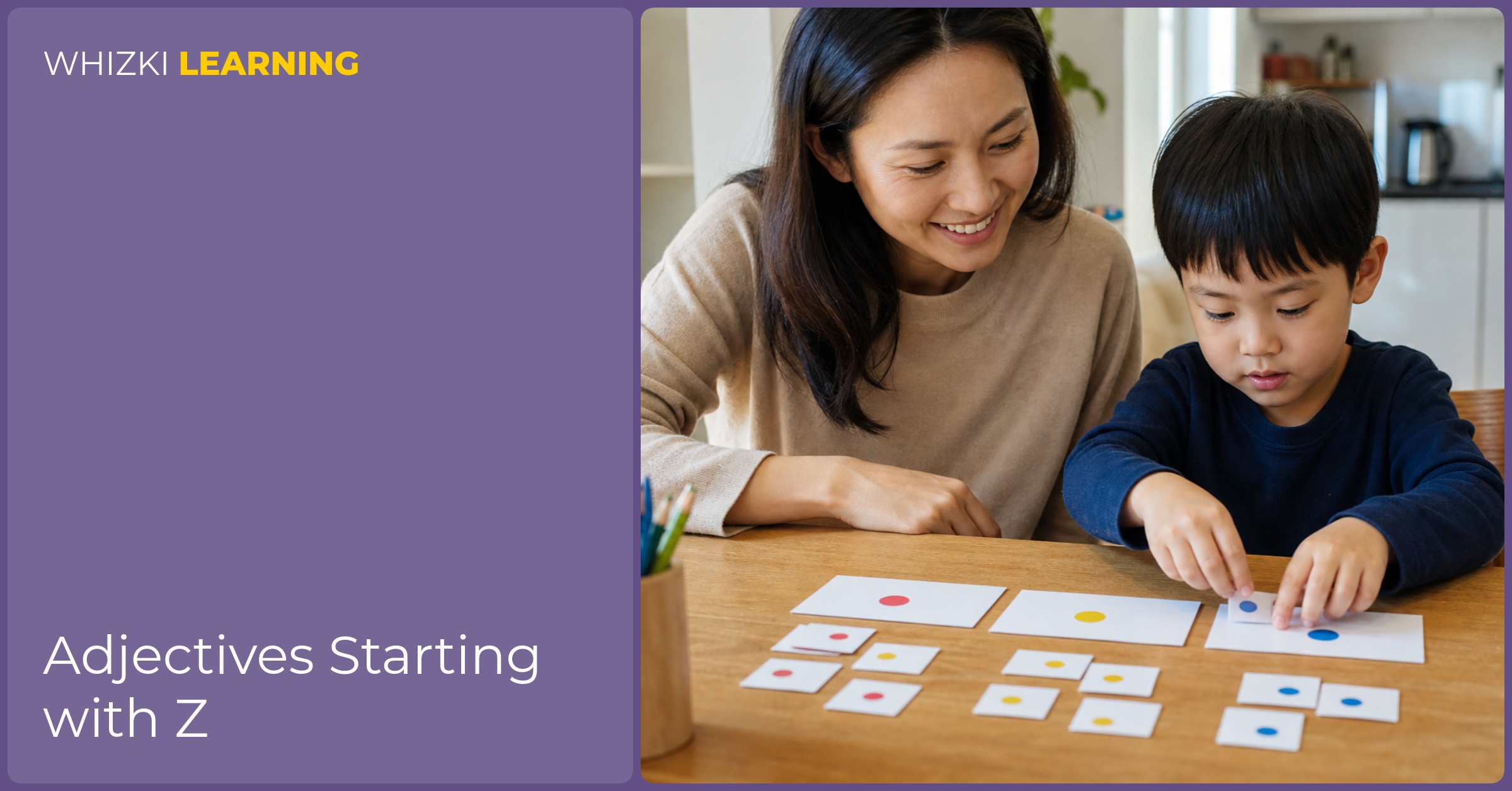
Looks and size Z words for describing what you see (NAEYC guidance)
NAEYC guidance reminds us that young children learn best through playful observation. Using describing words for what children notice supports early language, and it also helps children practice “what kind” and “which one” thinking.
Try a quick look-around. During snack, bath time, or getting dressed, use one Z adjective to describe a real thing in front of you, then let your child try next.
Everyday words
- zebraic
- zigzag
- zippy
- zonal
- zany
- zestful
- zoned
- zigzaggy
Big words for curious kids
- zincic
- zinciferous
- zincian
- zonal
- zootomic
- zoological
Read-aloud tip: when a book shows a character or object, pause and pick the describing word. “Is the picture zigzag or zebraic?” Then point to the detail your child is noticing.
Personality Z words that fit real kids (OT basics)
Occupational therapy basics often focus on regulation and communication, not perfection. When caregivers offer a few personality words, children can label behavior without feeling “in trouble,” which makes it easier to reset and try again.
Use personality Z adjectives during everyday routines. “That was zealous effort,” or “You’re being zenlike while you wait.” Keep it short, then give your child the next step.
Everyday words
- zany
- zesty
- zippy
- zoned
- zestful
- zealous
- zenlike
- zonal
- zigzag
- zigzaggy
Big words for curious kids
- zenith
- zephyrlike
- zestiness
- zoological
- zootomic
- zincic
- zincian
- zinciferous
One sorting activity for the whole family: set out three piles on the table, feelings, looks, and personality. Pick one Z card at a time, ask “Where does this Z word belong?” and celebrate the choice, even if it needs a second try.
Want more Z words for early readers? Add a quick turn to practice nouns and verbs starting with Z after adjective sorting, so your child gets a balanced word toolbox.
For letter practice, connect the word to the shape. Use our letter Z learning page to trace the Z, then say one Z adjective your child chose from the sorting game.
If you want extra support with the “say it, see it, use it” routine, pair adjective talk with our sight-words printables for short, calm practice sessions.
Whizki Learning offers printable practice that pairs letter work with everyday vocabulary, so children can say a word, see it, and use it in a sentence. For quick routines, explore the alphabet learning hub and choose a letter Z activity for your next screen-free moment.
If you want to keep the same practice going on paper, take a look at our alphabet tracing workbook for preschool and kindergarten.