It is hard when your child can say a few describing words, then freezes when you ask for “the right word.” With a short routine and a small word bank, kindergarten-ready “T” adjectives become easy to use. This guide connects to our letter T learning page, our sight-words printables, and the alphabet learning hub.
Reviewed by Sarah Mitchell, M.S., CCC-SLP, Speech-Language Pathologist.
When you practice adjectives, you are practicing language for how kids notice feelings, describe what they see, and explain who they are. For more early-reader practice with letter T, visit nouns and verbs starting with T too.
Whizki Learning has printable practice that helps kids connect letters to sounds and words. Pair this “T” adjective list with our letter T learning page for quick, hands-on practice at home.
If you want to keep the same practice going on paper, take a look at our alphabet tracing workbook for preschool and kindergarten.
Feelings and emotion “T” adjectives
Following NAEYC guidance, strong language practice works best when it happens in everyday moments, not just worksheets. Use these “T” feeling words while you label what your child is noticing, then give a quick choice: “Tired or thankful?”
Everyday words
- tired
- tender
- thankful
- tough
- terrible
- teary
- troubled
- tame
Big words for curious kids
- thoughtful
- triumphant
- tranquil
- trembling
- tantalizing
- tenderhearted
Kitchen-table tip from speech-language pathology practice: pause and pick the describing word. Read a line like “I feel ____” and wait, then help with a choice between two “T” words.
Looks and size “T” adjectives
Orton-Gillingham style teaching reminds us that clear, consistent language helps kids build meaning. When you describe objects, use “T” words for size and look, then let your child copy the sentence frame: “The ____ is ____.”
Everyday words
- tiny
- tall
- thick
- thin
- taller
- tiniest
- tubby
- tattered
Big words for curious kids
- transparent
- textured
- tangly
- threadlike
- triangular
- twin
- tessellated
Try this with a real item, like a sock or a crayon: “Is it tiny or tall?” “Is it textured or smooth?” Occupational-therapy basics say kids learn best when they can touch and move while they talk.
Personality “T” adjectives
Reggio-inspired observation helps a lot here. Watch your child’s behavior during play, then name it with a “T” word that matches what you see, like “That was thoughtful,” or “You were brave.”
Everyday words
- trusty
- talkative
- trusting
- tardy
Big words for curious kids
- tenacious
- trustworthy
- temperamental
- tactful
- terrific
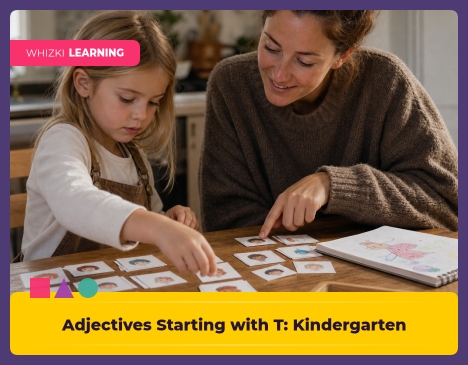
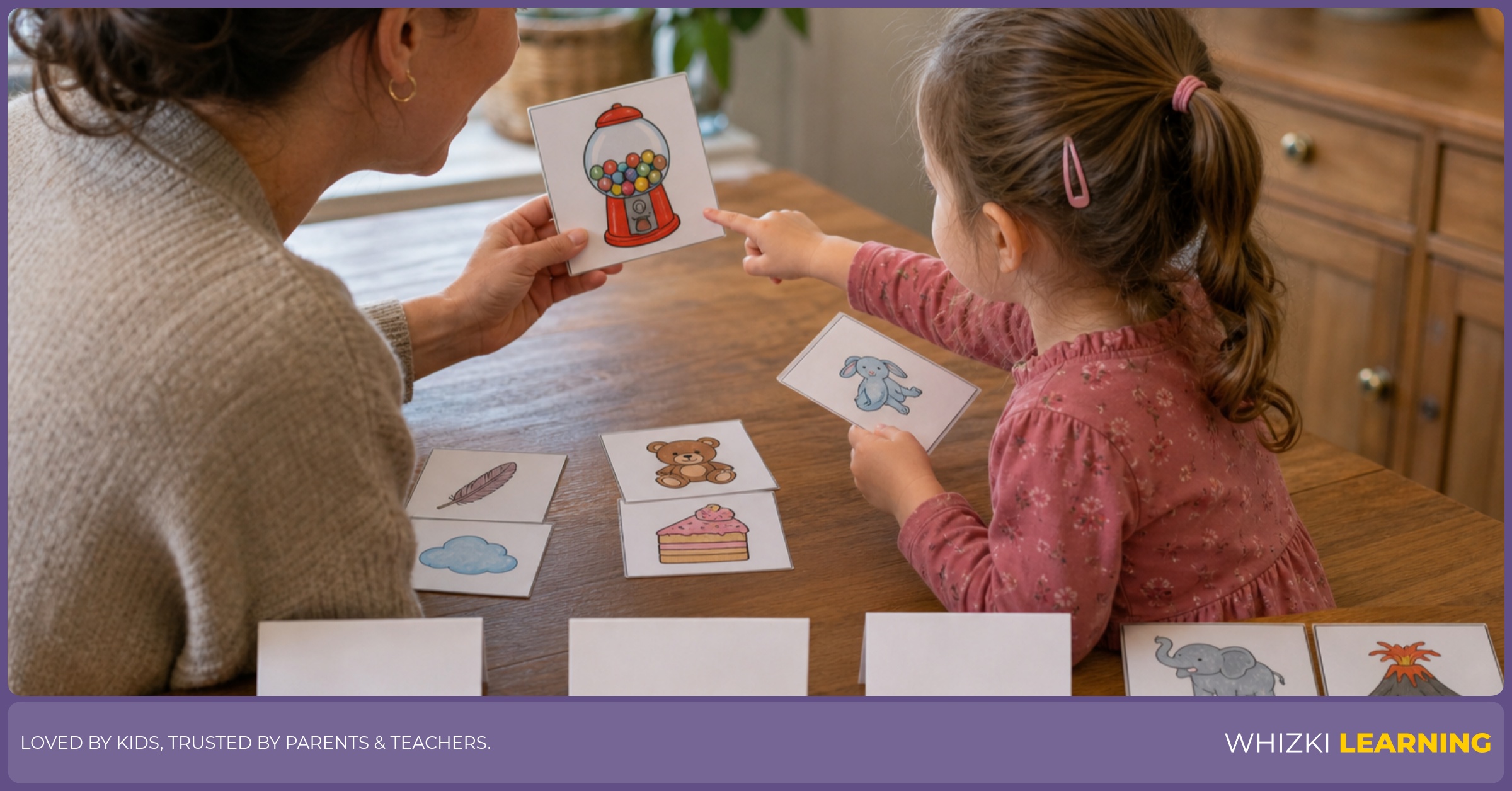
Sorting activity you can do in 5 minutes: make three piles on the table, Feelings, Looks, and Personality. Place one card at a time, and ask, “Where does this describing word belong?” Then finish with a sentence: “A ____ kid is ____.”
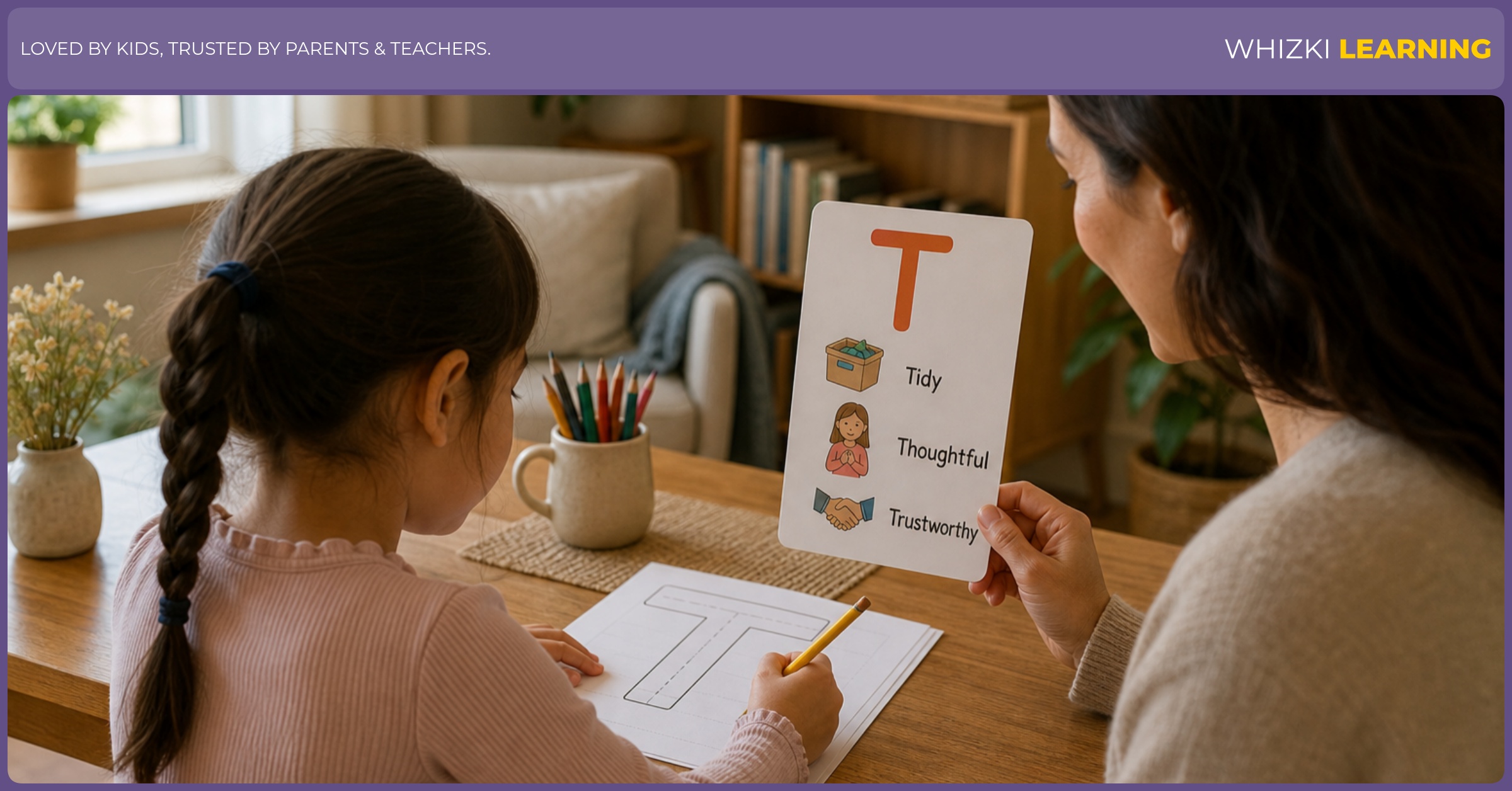
To tie this to letter learning, use the letter T shape while you say the words. Have your child trace a big T in the air, then on paper, then pick one “T” adjective to match the moment, like “tiny” for a small toy or “thankful” for a kind act. For more practice pages, check our sight-words printables and the alphabet learning hub at the alphabet learning hub.
When you read together, use the same routine every time: pause and pick the describing word, then let your child point to the picture and choose a “T” adjective. That steady rhythm makes language feel doable, not like a test.