
PreschoolKindergartenFirst Grade

30+ Adjectives Starting with A: Kindergarten Words for Feelings, Looks, and Personality

May 29, 2026
30+ Adjectives Starting with A: Kindergarten Words for Feelings, Looks, and Personality

Some mornings, it feels like your child has a million feelings and zero words to match them. When you give a few clear A describing words and a quick routine, language gets easier and calmer for everyone.

Reviewed by Sarah Mitchell, M.S., CCC-SLP, Speech-Language Pathologist.

For our letter practice, use our letter A learning page and keep the focus on describing words your kindergartener already uses.

Feelings adjectives that start with A

In speech-language pathology practice, we often start with a small set of emotion words so kids can label what they feel instead of acting it out. Pick one word at a time and connect it to what you see in the moment.

Try these A feeling words during everyday routines like getting dressed, waiting for a turn, or cleaning up.

Everyday words

  • afraid
  • angry
  • annoyed
  • anxious
  • awake
  • alert

Big words for curious kids

  • alarmed
  • ashamed
  • astonished
  • agitated
  • apathetic
  • adamant

Kitchen-table tip: hold up a picture or point to your child’s face in a mirror and say, “I see angry. Are you angry or something else?” Then let your child choose the describing word.
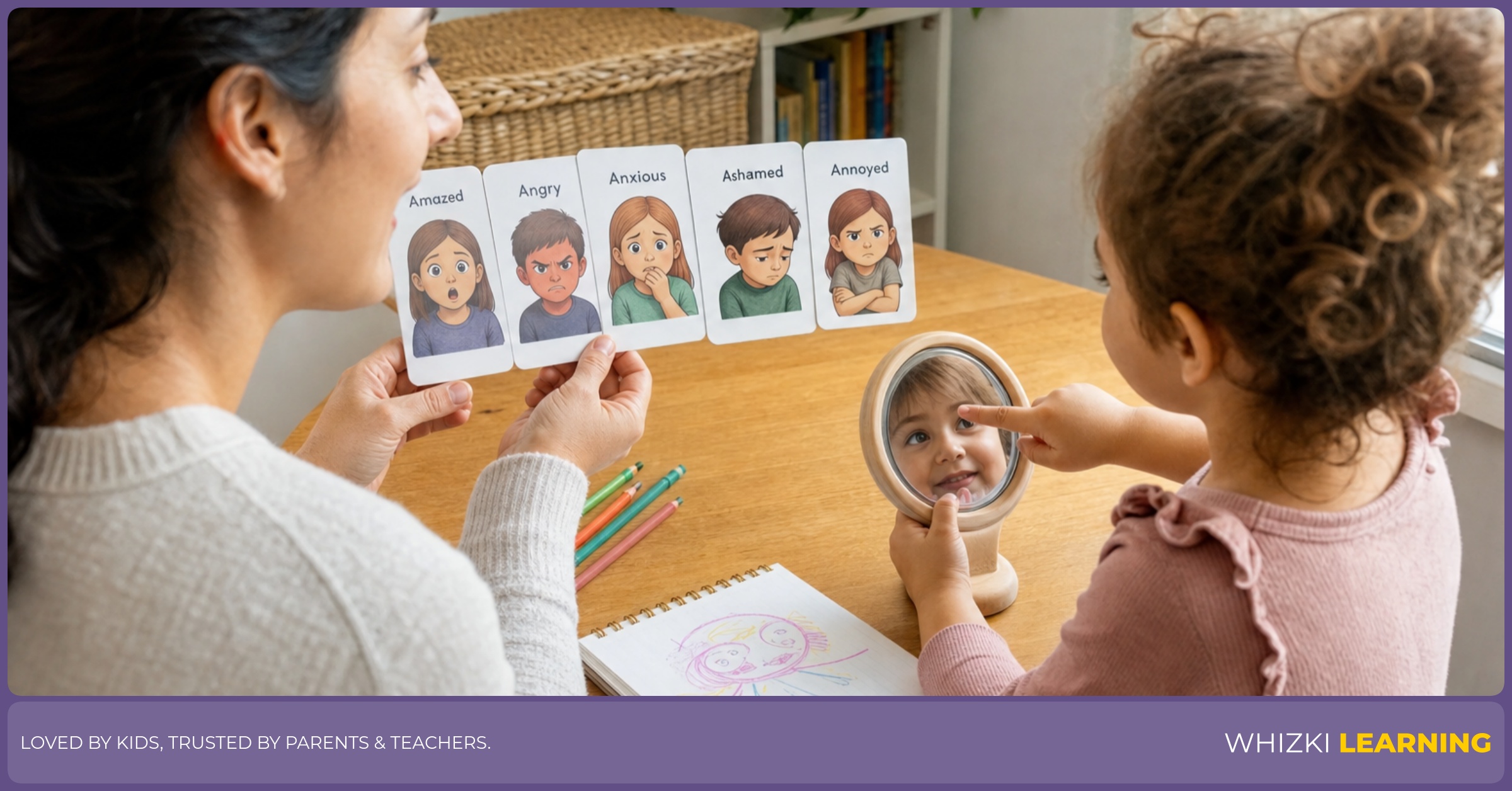
A parent and child use a small mirror and emotion cards to practice A feeling words at the kitchen table

Look and size adjectives that start with A

Reggio-inspired observation reminds us that kids learn best when language matches what they can notice right now. Use these A words while you compare objects, clothes, and pictures.

Occupational-therapy basics for early learners also point to short, hands-on language moments, like “Which one is bigger?” or “Which one is darker?” Keep it concrete and quick.

Everyday words

  • active
  • alive
  • airy
  • actual
  • another
  • ajar

Big words for curious kids

  • abundant
  • ample
  • astronomical
  • antique
  • asymmetrical
  • angular

Read-aloud tip: pause on each page and pick the describing word. Say, “The cat looks angry and the room feels anxious. Which A word fits best?”

Personality adjectives that start with A

NAEYC guidance encourages warm, responsive talk that builds social-emotional skills. When you name a character’s personality with an A word, you help your child connect behavior to language.

Use these words during play, turn-taking, and group games, and keep your coaching simple: describe, then ask.

Everyday words

  • adorable
  • agreeable
  • amiable
  • affable
  • artful
  • aware

Big words for curious kids

  • assertive
  • admirable
  • adaptable
  • ambitious
  • autonomous

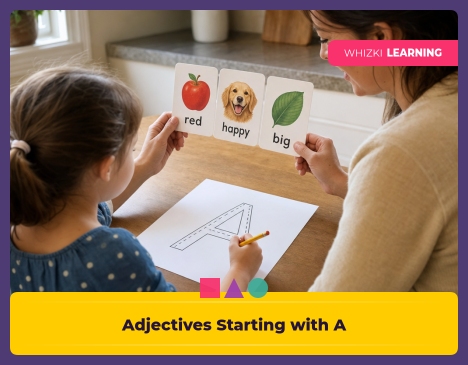
One sorting activity to do today: set out three piles labeled with pictures or simple drawings, Feelings, Looks, and Personality. Your child sorts the cards into the right pile, then you practice the letter A by tracing an uppercase A on paper right after each correct choice.
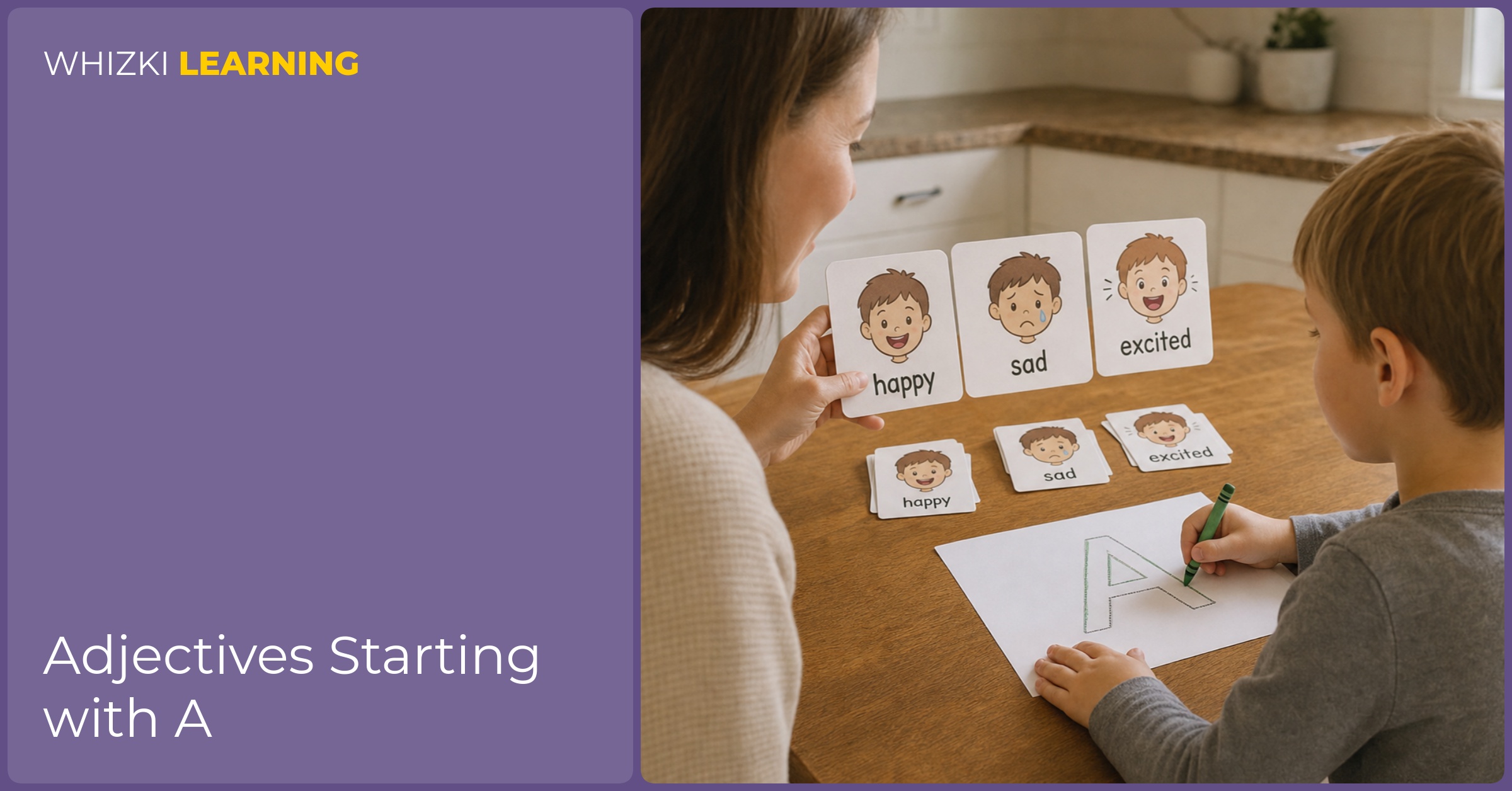
A parent and child sort A adjective cards into three piles and trace the letter A on paper at the kitchen table

Want quick extra practice without extra prep? Try our sight-words printables alongside adjective talk, so your child gets both word reading and describing-word confidence in the same routine.

Whizki Learning materials can help you keep sessions short, consistent, and kid-friendly.

When your child uses an A word, celebrate the meaning first, then gently repeat it back in a full sentence. If you want more letter practice, return to our letter A learning page and keep tracing the uppercase A while you name one feeling, one look, and one personality word.

For more early-reader words, you can also explore nouns and verbs starting with A for early readers so your child builds a complete A-word toolbox.

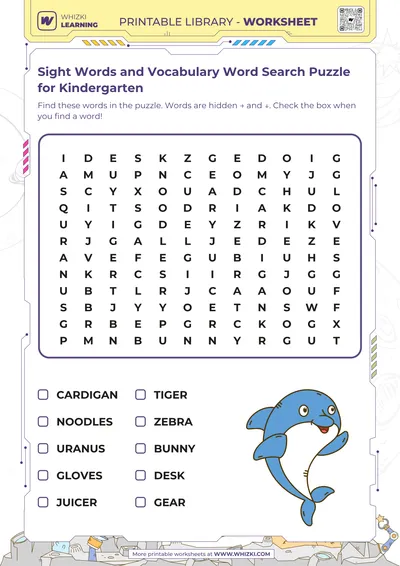
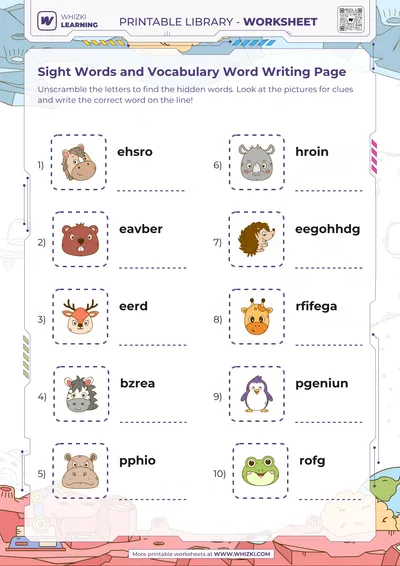
Picture Writing: Sight Words and Vocabulary Worksheet Worksheet Cover BackgroundPicture Writing: Sight Words and Vocabulary WorksheetKids sometimes stall on letter shapes, and seven-year-olds can lose interest fast when work feels too long. This Whizki Learning page keeps things short, look at the picture, say the word, then write one word. Use it during a quick, calm station time to practice sight words and vocabulary.
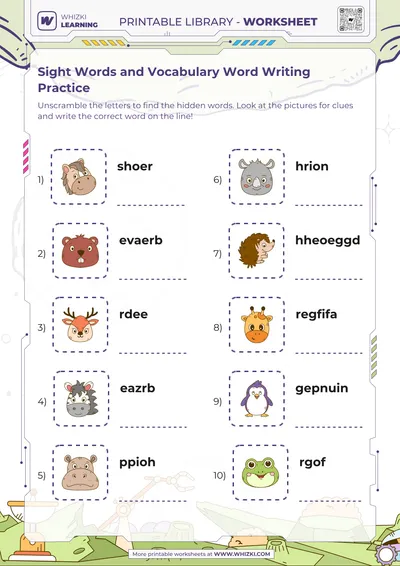
Sight Words and Vocabulary Writing Practice Worksheet Worksheet Cover BackgroundSight Words and Vocabulary Writing Practice WorksheetSome kids stall on letter shapes, and five-year-olds get bored fast before the word feels familiar. Use this Whizki Learning page by saying the word, matching it to the picture and scrambled letters, then letting your child write it once on the line. Stop after one word, even if the page has more.
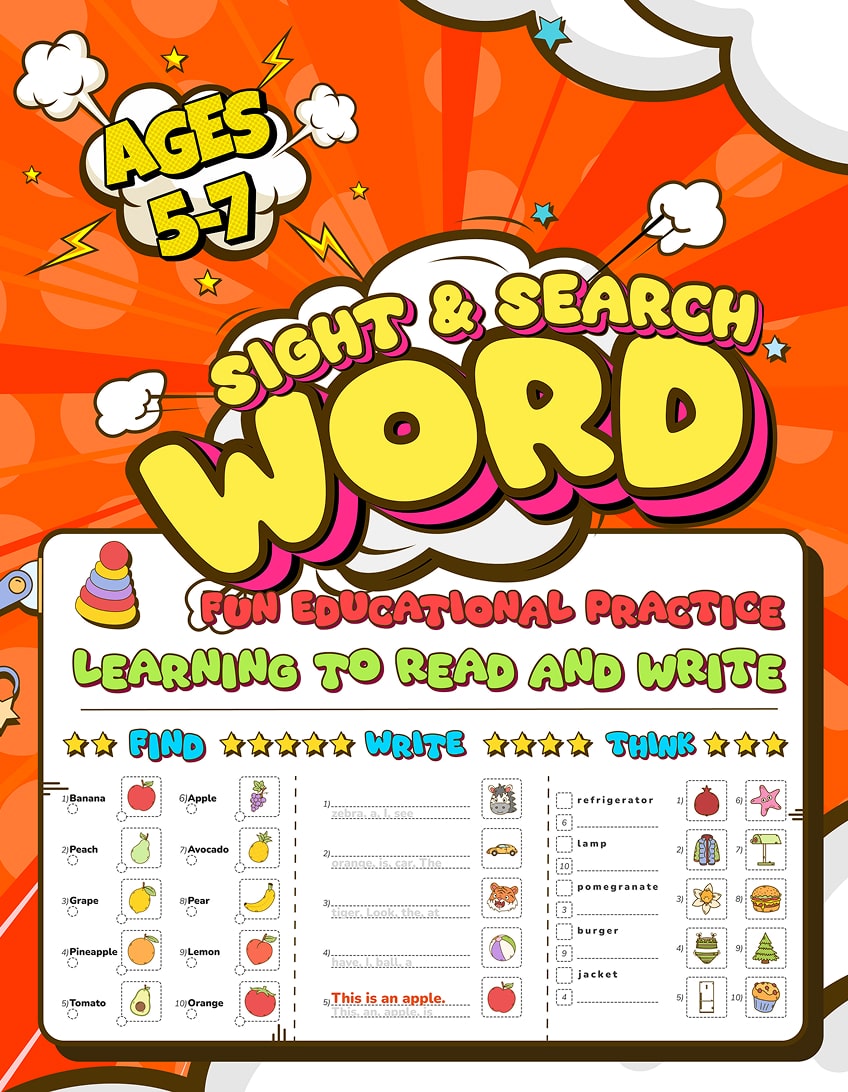
Sight Words and Vocabulary Writing Worksheet Worksheet Cover BackgroundSight Words and Vocabulary Writing WorksheetKids often stall on letter shapes, and five-year-olds can get bored fast when spelling practice drags on. On this Sight Words and Vocabulary page, start by pointing to the picture, say the word out loud, and have your child copy just the first letter from the scrambled hint before writing the full word. From Whizki Learning, this kind of short, guided step keeps the focus on the word.

Frequently asked questions

What is the easiest way to teach A adjectives?

Start with a tiny set of A words and use them during real moments like dressing or cleanup. Kids learn faster when the adjective matches what they can see and feel in the room. If your child rarely uses any emotion words after repeated practice, ask a speech-language pathologist for guidance.

Why do kids mix up feelings words?

Kids often feel the emotion first, then need time to match it to the right word. Limited working memory and big sensations can make labeling hard. If confusion is frequent and causes big meltdowns, a speech-language pathologist or occupational therapist can help with strategies.

How should I correct an adjective mistake?

Use a calm, quick correction by modeling the right word and repeating the sentence. For example, “You feel afraid, not angry,” then offer a choice between two A words. If correcting makes your child shut down, slow down and focus on one word at a time.

When is it okay to use bigger A words?

Use bigger A words when your child can still connect them to a clear situation or picture. Pair the word with a simple example and let the child choose from two options. If the word feels too hard, keep the routine going with everyday A words first.

Limited Time Sale
Kids’ Workbooks!

Boost your child’s skills with our discounted workbooks. Engaging activities for preschool, kindergarten, and grade 1 - now at special sale prices!

June Summer Learning Workbook for Kindergarten to 1st Grad... Workbook Cover BackgroundJune Summer Learning Workbook for Kindergarten to 1st Grade: Math, Reading, Writing, Science, Brain QuestsA workbook for the slow weeks of June. Reading, math, writing, science, and brain quests for kids stepping from kindergarten into 1st grade.

-27% $10.99

List Price: $14.99
Buy Now
July Summer Learning Workbook for Kindergarten to 1st Grad... Workbook Cover BackgroundJuly Summer Learning Workbook for Kindergarten to 1st Grade: Alphabet Tracing, Math, Numbers, Preschool ActivitiesA July workbook for the middle of summer. Alphabet tracing, early math, number practice, and pencil work for kids moving from kindergarten i...

-27% $10.99

List Price: $14.99
Buy Now
August Summer Learning Workbook for Kindergarten to 1st Gr... Workbook Cover BackgroundAugust Summer Learning Workbook for Kindergarten to 1st Grade: Numbers Tracing, Alphabet, Writing, Science, Social StudiesAn August workbook for the last stretch of summer. Number tracing, alphabet review, writing, science, and gentle social studies for the week...

-27% $10.99

List Price: $14.99
Buy Now
Animal Coloring Adventures Workbook for Kids Ages 3-7: Fac... Workbook Cover BackgroundAnimal Coloring Adventures Workbook for Kids Ages 3-7: Facts, Mazes, Quizzes, and Coloring ActivitiesAn animal-themed coloring and brain-quest book for ages 3 to 7. Facts, mazes, and quizzes about jungle, ocean, and backyard animals.

-31% $8.99

List Price: $12.99
Buy Now

Join the Screen-Free Movement.

Get exclusive activities, expert tips, and inspiration for a more meaningful, offline family life.

Copyright © 2025 - 2026 Whizki Learning. All rights reserved.