Some days it feels like your child can only say “good” or “mad,” and you are stuck guessing what they mean. Let’s make describing feel doable with J adjectives, plus a quick letter J practice from our letter J learning page.
Reviewed by Sarah Mitchell, M.S., CCC-SLP, Speech-Language Pathologist.
Feelings adjectives starting with J
When you use the Orton-Gillingham idea of explicit word practice, children get more confident choosing a describing word instead of acting it out. Pick one feeling word and repeat it during real moments, like after a transition or during play.
For NAEYC-aligned guidance, keep it short and warm, then let your child try. A child does not need a perfect sentence to learn a new adjective, a single word is a win.
Everyday words
- jolly
- jumpy
- jittery
- jaded
- joyful
- jubilant
- joyous
- jocose
- jocular
Big words for curious kids
- judgmental
- jealous
- jaundiced
- jarring
- jaded
- justified
- jocund
- judicious
Kitchen-table script: “I see your face. Are you feeling jittery or jolly?” After your child answers, add one more word, “You are feeling jittery today.”
Looks and size adjectives starting with J
In Reggio-inspired observation, children learn best when they can look closely and talk about what they notice. Use J adjectives during everyday “look and compare” moments, like comparing toys, clothes, or snacks.
Occupational-therapy basics remind us that describing gets easier when the body feels regulated. If your child is wiggly, do a quick movement break, then sit together with the object in hand.
Everyday words
- jagged
- jerky
- jellylike
- juicy
- jumpy
- jumbled
- jaggy
- jet-black
- jewelled
- jolly
Big words for curious kids
- junoesque
- junctured
- juiceless
- jocular
- junctive
- jigsawed
- judgmental
- jubilant
Read-aloud tip: pause and pick the describing word. “The apple is juicy. The rock is jagged. Which one fits what you see?”
Personality adjectives starting with J
Speech-language pathology practice often starts with “word first” moments, because children need a quick label before they can explain. Choose one personality adjective for the day and use it in gentle feedback, not in criticism.
NAEYC guidance on supportive language helps children feel safe trying new words. When your child makes a choice, name the trait with a calm tone and then ask for one more try.
Everyday words
- jolly
- joyful
- jovial
- jumpy
- jittery
- jaded
- jocular
- jocose
- joyous
- jubilant
Big words for curious kids
- jealous
- judicious
- judgmental
- justified
- jarring
- jaundiced
- jocund
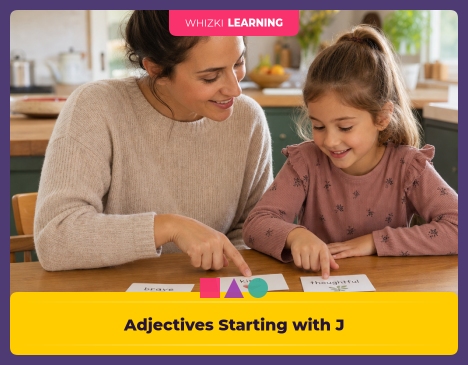
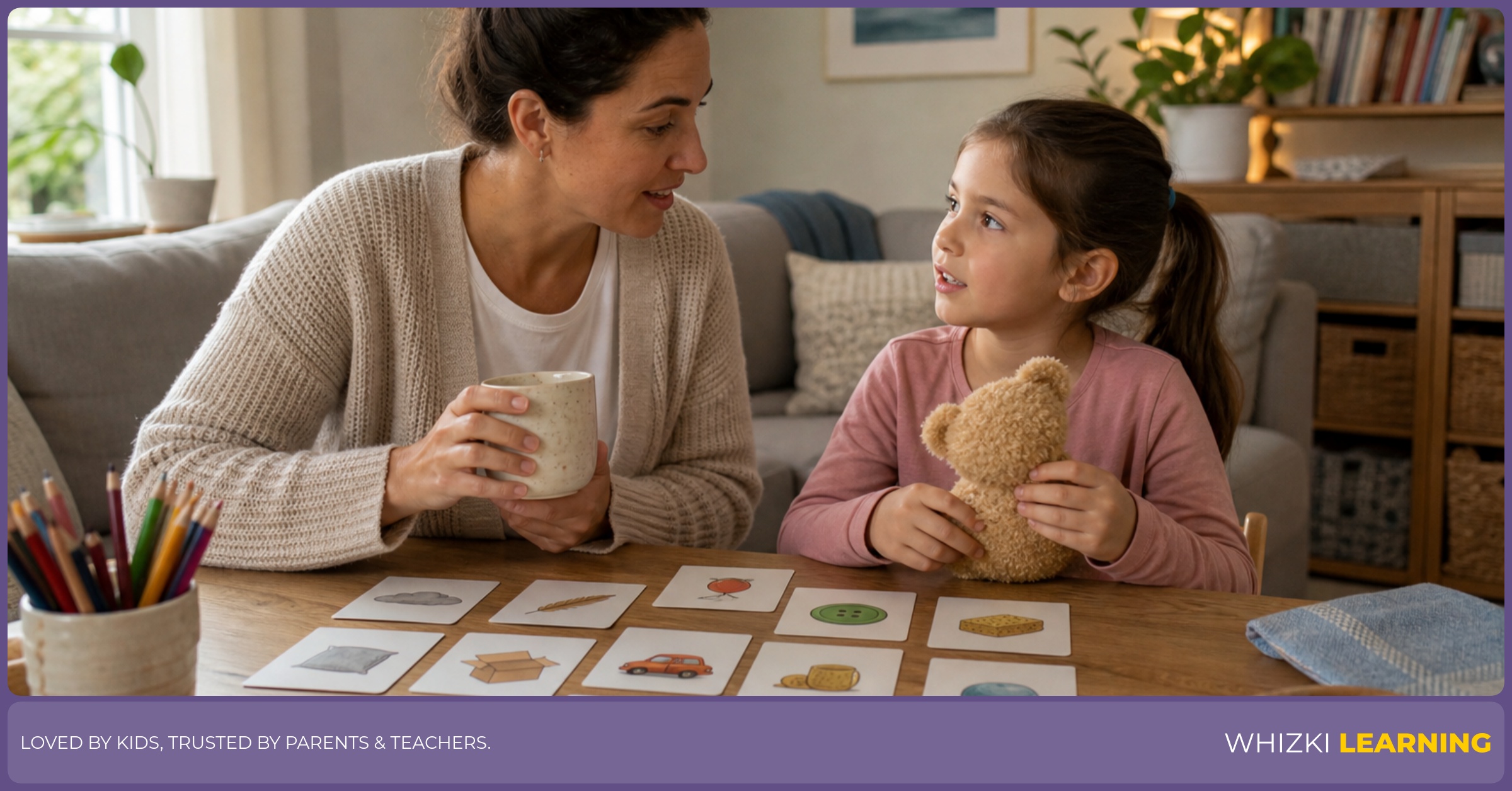
3-pile sorting activity: make piles labeled J-feelings, J-looks, and J-personality. Your child picks one card, places it in a pile, and says one word only, “jolly,” “jagged,” or “jealous.”
When your child is ready for more early reading, connect adjectives to first-words practice with nouns and verbs starting with J so describing words and “naming words” grow together.
Whizki Learning printable practice can help your child keep J adjectives straight with quick, hands-on sorting and word matching. Try pairing today’s J words with our sight-words printables for a short, repeatable routine.
If you want to keep the same practice going on paper, take a look at our alphabet tracing workbook for preschool and kindergarten.
Letter J tie-in: trace the letter J on paper, then point to the adjective card that starts with J. “J is for jolly,” or “J is for juicy.” For extra practice, have your child form a J with their finger in the air, then on the page.