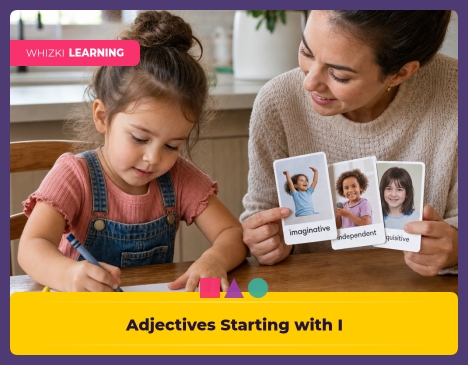
When your child blurts, “I don’t know!” during describing time, it can feel like you are doing all the work. With letter I adjectives, you can make it simple and repeatable, the way preschool teachers do during calm, short practice. For our our letter I learning page, you can also practice the letter I shape while your child says the describing word out loud.
Reviewed by Sarah Mitchell, M.S., CCC-SLP, Speech-Language Pathologist.
Feelings adjectives that start with I
In early literacy practice, speech-language pathologists and Orton-Gillingham style routines both use quick, concrete word swaps to build automatic language. Pick one feeling at a time and connect it to what your child is already noticing in the room, like the way a body feels when it is waiting or when it is excited.
For kindergarten-ready describing, these I feeling words help children label emotions without a long explanation. You can point to your child’s face, then point to the word card, then ask for one sentence: “I am ___.”
Everyday words
- itchy
- irritated
- ill
- insecure
- impatient
- inquisitive
- inspired
- invisible
- itching
Big words for curious kids
- incensed
- intense
- impertinent
- impish
- indignant
- immense
Tip for the kitchen table, use a “pause and pick” moment. After you model one sentence, pause and let your child choose the describing word from two options, like “Are you impatient or inspired?”
If your child is working on sight words and vocabulary alongside letter sounds, pair the adjective moment with short practice from our sight-words printables so the routine feels familiar and not like a test.
Look and size adjectives starting with I
Reggio-inspired teaching reminds us that children learn language through noticing, not through worksheets alone. When you describe what you see, you are giving your child a reason to use adjectives, like comparing a shirt sleeve, a toy, or a shadow on the wall.
Use these I words for quick comparisons. You can hold up two objects, then ask, “Which one is icy, and which one is ill?” and let your child point, even if the sentence is not perfect yet.
Everyday words
- icy
- inborn
- immaculate
- imperfect
- ill-fated
- ideal
- impressive
- incredible
Big words for curious kids
- immense
- ineligible
- iridescent
- inconspicuous
- indelible
- inanimate
Closing tip for this section, keep the sentences short and sensory. “The ice is icy,” “That picture looks inconspicuous,” and “The room feels immaculate.” Then practice the letter I shape while your child traces the capital I on paper, using the alphabet learning hub as your guide.
When you hear a child say “That one is big,” you can gently upgrade with one word. Try, “Do you mean immense or impressive?”

Personality adjectives starting with I
Occupational-therapy basics for communication say we get better language when we reduce the number of choices and give the child a role. Let your child be the “adjective chooser,” and your job is to offer two options and celebrate the word, not the grammar.
These I personality words fit play, routines, and classroom talk. Use them during clean-up, turn-taking, and pretend play, because children already act out who they are.
Everyday words
- idle
- impish
- inquisitive
- intelligent
- insecure
- inspired
- impatient
- imperfect
Big words for curious kids
- industrious
- impartial
- influential
- imposing
- inimitable
- irresistible
- irresponsible
- inflexible
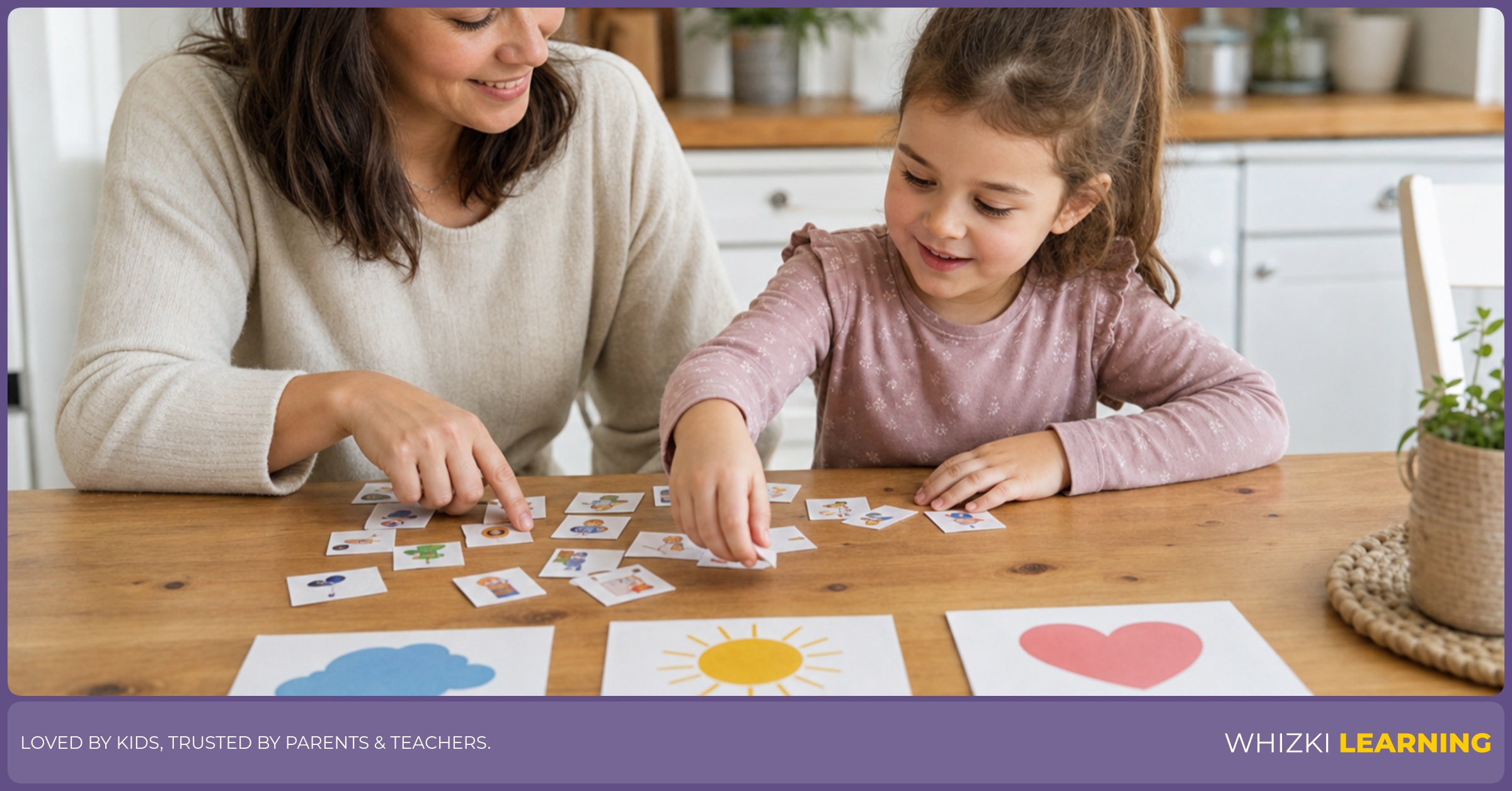
Kitchen-table sorting activity, set out three piles labeled with pictures: Feelings, Looks, and Personality. Put adjective cards in the middle, then ask your child to place each card in the right pile and say one sentence, “I am ___,” or “It looks ___.”
If your child is also learning first words, connect the dots with nouns and verbs starting with I so describing words and “naming” words grow together.
Whizki Learning supports letter practice with kid-friendly printable activities. Pair your letter I tracing with a short vocabulary routine from the learning hub, so your child gets both handwriting practice and adjective talk in the same week.
our letter I learning pageIf you want to keep the same practice going on paper, take a look at our alphabet tracing workbook for preschool and kindergarten.
Before you end the day, do one quick read-aloud moment. When you read a simple story, pause and pick the describing word, “Is the character impatient or inspired?” Then practice the letter I shape again by tracing a capital I and saying the chosen adjective out loud.