Some days it feels like you are repeating the same “say it, spell it, do it” routine and your child is still not grabbing the new words. Letter I can be easier when you teach a few words that match real life, then practice for just a couple minutes. Our letter I learning page can help you keep the sound and the shape of the letter steady, while vocabulary stays hands-on.
Reviewed by Sarah Mitchell, M.S., CCC-SLP, Speech-Language Pathologist.
Letter I words that fit real life, not worksheets only
In an Orton-Gillingham approach, the goal is clear, repeated practice with small steps, so letter I words land in memory instead of feeling random. A quick way to do that is to pick words your child can touch or use today, like ball or book, and say the word while your hands are doing the action.
In NAEYC guidance, play-based learning matters because children learn language through meaningful interaction, not just memorizing. When a child hears an I word during play, the word connects to a real moment, like bath time or building time, and the child is more likely to use the word back.
In occupational-therapy basics, many kids learn best when their bodies are involved, like pointing, reaching, and moving. A simple routine is “see it, touch it, say it,” then one short turn where your child brings the item or points to it.
For letter-shape practice, use our letter I learning page alongside these first words, so the sound and the spelling feel connected.
Everyday objects that start with I
Reggio-inspired teaching reminds us that children learn through observation and experience, so everyday objects are perfect for letter I vocabulary. When you keep the objects in your child’s world, the word becomes familiar, and the child does not have to guess what you mean.
Speech-language pathology practice often uses consistent labeling, because children benefit when adults model the same word in the same way. Try saying the I word once, then again while your child touches it, like “book” while fingers trace the cover.
Everyday words
- ice
- ink
- igloo
- island
- iron
- idea
- image
- item
- inch
Big words for curious kids
- island
- insect
- instrument
- invention
- imagination
- information
- ingredient
- invitation
Tip for the kitchen table, say the I word while you point, then ask one simple question: “Where is the insect?” If your child points, celebrate the pointing and repeat the word once more.
Action words your child can do with you
When you teach verbs, the Reggio and Montessori observation mindset helps because children learn best when adults model the action and then give the child a turn. A verb like in or into is not needed here, but a verb like inspire is not an everyday action either, so the best verb choices are ones your child can actually perform right now.
Orton-Gillingham style practice works well with actions because the child can “see it and do it” in the same moment. Keep the verb short, do it once slowly, then do it again while the child copies.
Occupational-therapy heuristics often suggest using movement to support attention, so verbs are a great fit for kids who wiggle. Try a quick “I verb” mini-game while you wait for shoes, like “bring” or “build,” then switch to a calmer activity.
Everyday words
- inspire
- invite
- iron
- improve
- include
- introduce
- investigate
- illustrate
- identify
Big words for curious kids
- invent
- imagine
- increase
- indicate
- instruct
- interact
- invest
- invite
Script you can use, “I will invent a pretend story, and you will add one idea.” Keep it playful, then stop while your child still wants more.
First names that start with I
Common names are a friendly bridge between vocabulary and real communication, and NAEYC encourages using children’s interests to support language growth. When a child hears a name during play, the name becomes a useful word, not just a sound.
Speech-language pathology practice also supports using names in context, because children learn word meaning through repeated, natural use. Try using the name during a turn-taking game, like “Isla, your turn,” while the child hands you a pretend item.
To keep the routine smooth, use a short “I name” moment and then move on, so the learning feels like a calm rhythm instead of a test. This matches the “small steps” idea many educators use in structured literacy.
Everyday words
- Ian
- Isla
- Isaac
- Imani
- Ivan
- Ingrid
Big words for curious kids
- Ivory
- Indigo
- Ignacio
- Isabel
- Imogen
- Idris
- Inez
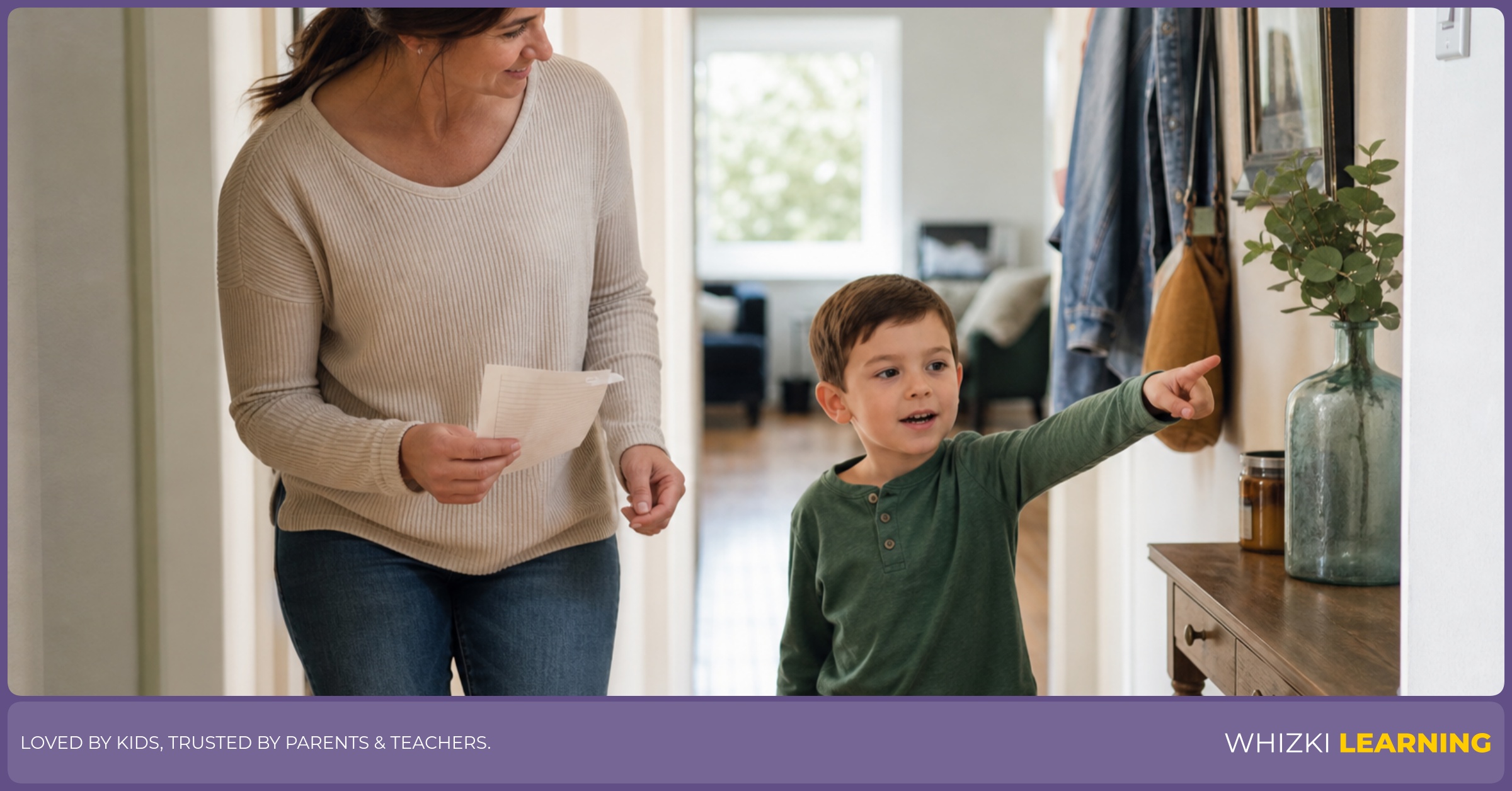
Walking-game tip, “Spot the I word,” choose one room and hunt for I words together, then end with one big hug and one repeat of the best word you found.
Want a quick, ready-to-use practice set for letter I vocabulary? Whizki Learning offers our sight-words printables so you can keep practice short, consistent, and connected to what your child already knows.
For more language practice, add describing words starting with I after your child feels steady with these first nouns and verbs, so the vocabulary grows in a natural order.
Bedtime variation with a flashlight, turn off the overhead light and use a flashlight to “find” I words on a page or in a simple word list, then let your child say the word before the light moves to the next one. Keep the session to two or three words, because short practice helps children stay confident and ready for tomorrow.
Spot the I word walking game and quick bedtime practice
In a Montessori-style routine, children do best with clear, limited choices, so the walking game works when you pick one target word and hunt for it together. The occupational-therapy friendly part is that the child is moving, pointing, and using their eyes in a purposeful way.
In NAEYC play-based learning, children learn language when adults follow the child’s attention, so let the child lead the hunt and then model the I word right where the child is looking. If the child says “I see it,” you can respond with the exact I word and a gentle “yes, you found it.”
For letter sound practice, keep one steady reference point with the alphabet learning hub, then rotate back to letter I when your child is ready for another round.
Everyday words
- ice
- ink
- igloo
- island
- iron
- insect
- instrument
- invention
- imagination
- information
Big words for curious kids
- ingredient
- invitation
- invent
- imagine
- increase
- indicate
- instruct
- interact
Closing script for parents and teachers, “We found an I word, we said it, and now we’re done.” Ending on a calm note helps children want to come back tomorrow.