
When you are trying to get through dinner and your child suddenly “can’t” find the right word, it can feel like you are doing the work and they are doing the guessing. The good news is that first words get easier when you use short, repeatable routines with real objects and simple actions, and you keep the focus on one sound at a time.
Reviewed by Sarah Mitchell, M.S., CCC-SLP, Speech-Language Pathologist.
For letter W, our letter W learning page and our sight-words printables can help you practice with the same words across the week, without turning it into a long lesson.
Why letter W first words work (and how to use them)
In the Orton-Gillingham approach, early literacy grows when children hear a sound, say it, and connect it to something concrete, like a ball or a book. For letter W, you can keep it simple by picking 3 to 5 words for the day and using them in everyday moments, not worksheets only.
In NAEYC guidance, vocabulary sticks best when adults talk with children during real play and routines, like bath time and snack time. Occupational-therapy basics also point to this same idea, use hands-on input, then ask for a quick response, like “ball” or “blow,” so the child stays engaged.
When you want a bigger picture of how the letter fits in, the alphabet learning hub can guide your next steps after today’s first words.
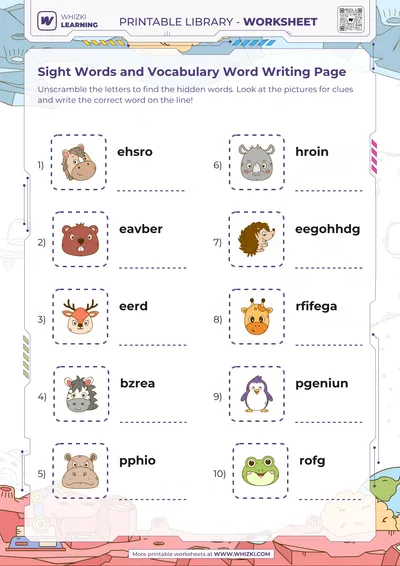
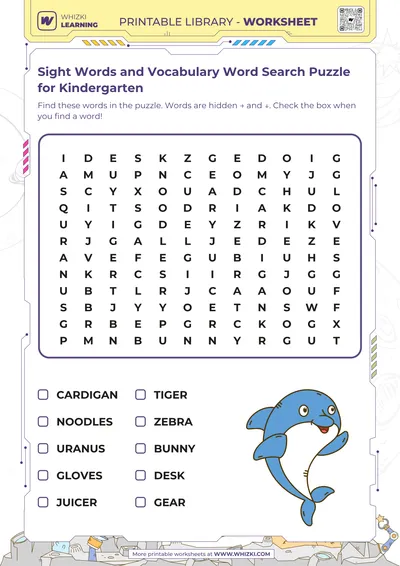
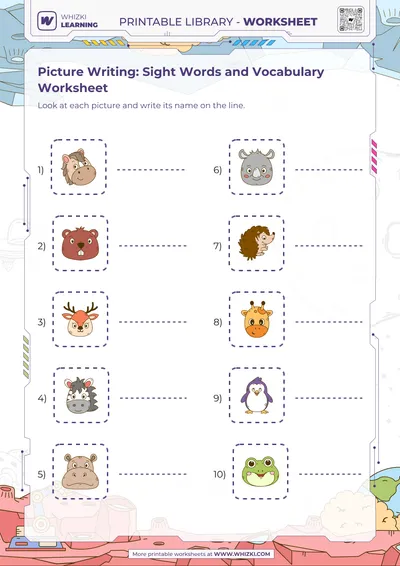
Whizki Learning has printable practice that matches this kind of routine, like letter and vocabulary pages you can use for quick, repeatable sessions. If you want a ready-to-go option, check the our letter W learning page for simple practice ideas you can do at home.
Everyday objects that start with W
Reggio-inspired teaching reminds us that children learn through noticing and touching what is already in their world. Everyday objects that start with W are perfect because your child can point, hold, and name them during real routines.
Everyday words
- wall
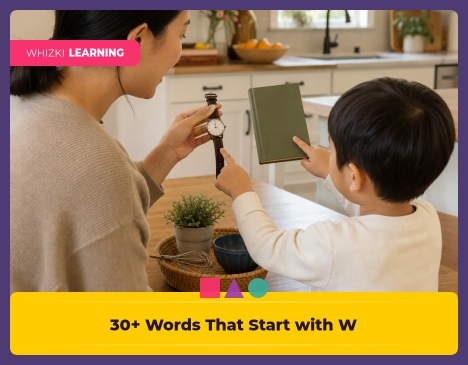
- watch
- water
- wagon
- window
- whale
Big words for curious kids
- whisk
- whistle
- wreath
- windowpane
- woodpecker
- workbench
- wood
Try this script during clean-up: “I see the window. Can you find the watch?” Keep it to one request, then celebrate the try, even if the word comes out a little mixed up.
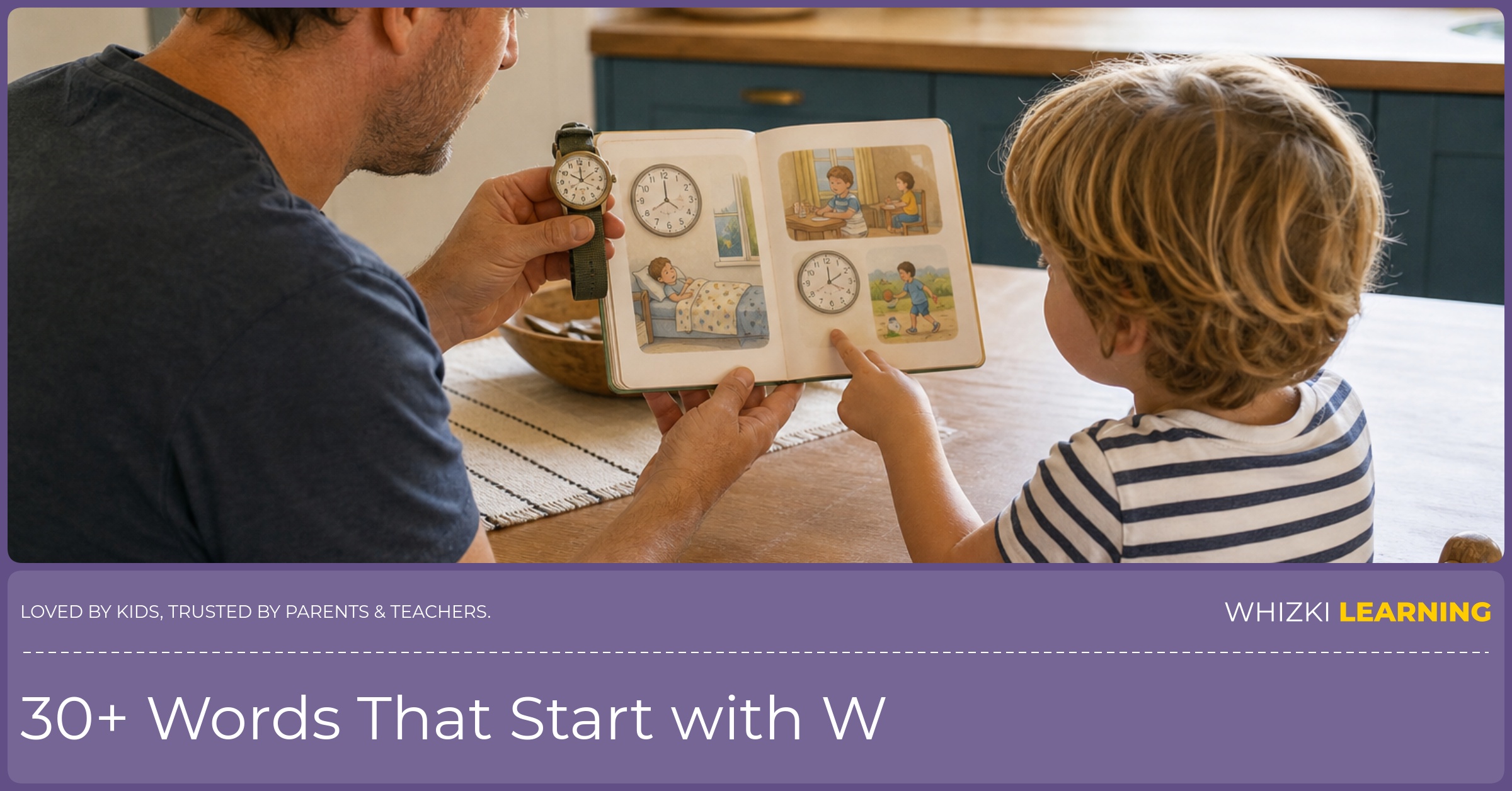
Action words that start with W
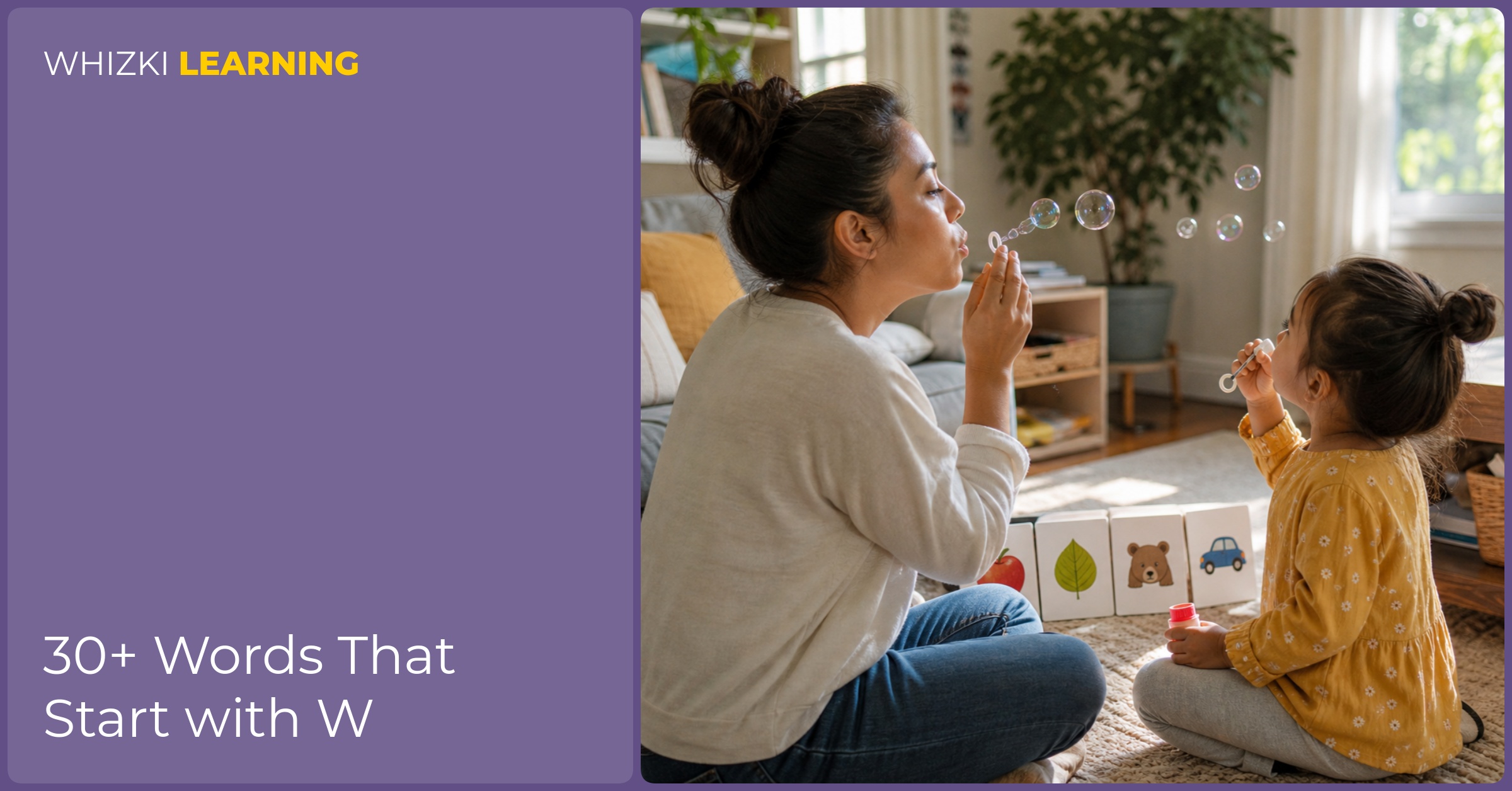
Speech-language pathology practice often highlights that kids learn words faster when adults model the action and the word together, then give the child a chance to copy. Action words are great for letter W because you can do them right away, like blowing bubbles or bouncing a ball.
For a Reggio-style “make it real” moment, put a small set of actions in front of your child and let the child choose which one to do first. This keeps the learning feeling like play, not a test.
Everyday words
- walk
- wave
- wash
- wear
- wind
- wrap
- whirl
Big words for curious kids
- whisper
- whirlwind
- wonder
- weave
- weigh
- withstand
- witness
Use a quick “say it, do it” routine: you say the word, you do the action, then you ask for one try. If your child freezes, lower the demand, for example “Watch me,” then try again after one successful action.
First names with W, plus a walking game and bedtime flashlight
When children learn common names, they get extra practice with word boundaries, which helps early reading. In NAEYC-aligned classroom talk, names also make vocabulary feel personal, like “That is Wendy,” not just “a word on paper.”
If you want the next step after first words, you can also practice describing words starting with W, like describing words starting with W, so your child can build fuller sentences.
Everyday words
- Wendy
- Will
- Wes
- Wanda
- Wayne
- Whit
Big words for curious kids
- Winston
- Winifred
- Wilhelmina
- Waverly
- Wellington
Spot the W word walking game: Pick one W word for the walk, like window or watch, and take turns spotting it. The parent says, “I see a W word,” then the child finishes with the word, even if it is approximate.
Flashlight bedtime variation: During bedtime, use a small flashlight to “hunt” for W objects in the room, like a wall or water bottle. The parent keeps it calm and says, “Shine the light on the W word,” then the child points and names it once, then lights out.
For the next 3 days, choose one list word for the morning routine and one for the evening routine. The letter W practice becomes easier when the words show up in real life, and when your child gets lots of short chances to say the word out loud.