
Most mornings at our house, the question “What is that?” lands right when everyone is hungry and in a hurry. Roman numeral V is one of those symbols kids can learn quickly without worksheets, and you can keep it calm and repeatable at breakfast.
Reviewed by Whizki Editorial Team, Early Childhood Education Editors.
Where kids actually see Roman numeral V
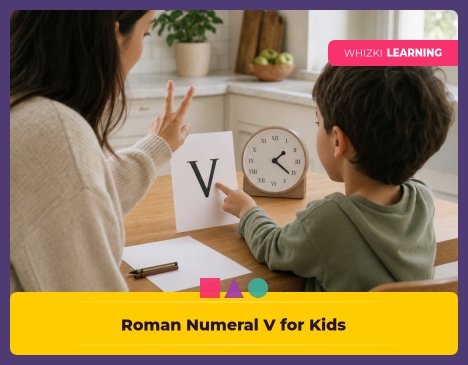
Roman numeral V shows up in kid life as a symbol for five, not a math problem. When a child points at a clock face, V is right there at 5 o’clock on an analog clock, and that makes the symbol feel real.
Roman numeral V also appears in stories and play, like Volume V on a comic book, Henry V in a book title, and a high-five moment with friends. This is the kind of noticing that matches early childhood guidance, where children learn best when symbols connect to meaningful experiences.
Roman numeral V can even be a quick “look-and-label” moment in the car, at bedtime, or during story time. If your child is sprinting through questions, Roman numeral V is a great one to answer in a simple, consistent way, then move on.
The one rule: V is a stand-alone five
Roman numeral V means five all by itself, and the symbol is stand-alone. In other words, Roman numeral V is not a combination of other symbols that children need to add up, it is just the name of the number five in Roman numeral form.
Early math guidance from NAEYC focuses on building number sense through clear, small steps and lots of repetition. For Roman numeral V, the “small step” is saying the same sentence each time: “V is five,” and letting the symbol become familiar through seeing it again and again.
Kindergarteners do not need Roman-numeral math, and most of them are still learning how to read the numbers they see. Roman numeral V is a reading skill first, a symbol recognition skill second.
Memorize trick: the hand-shape V
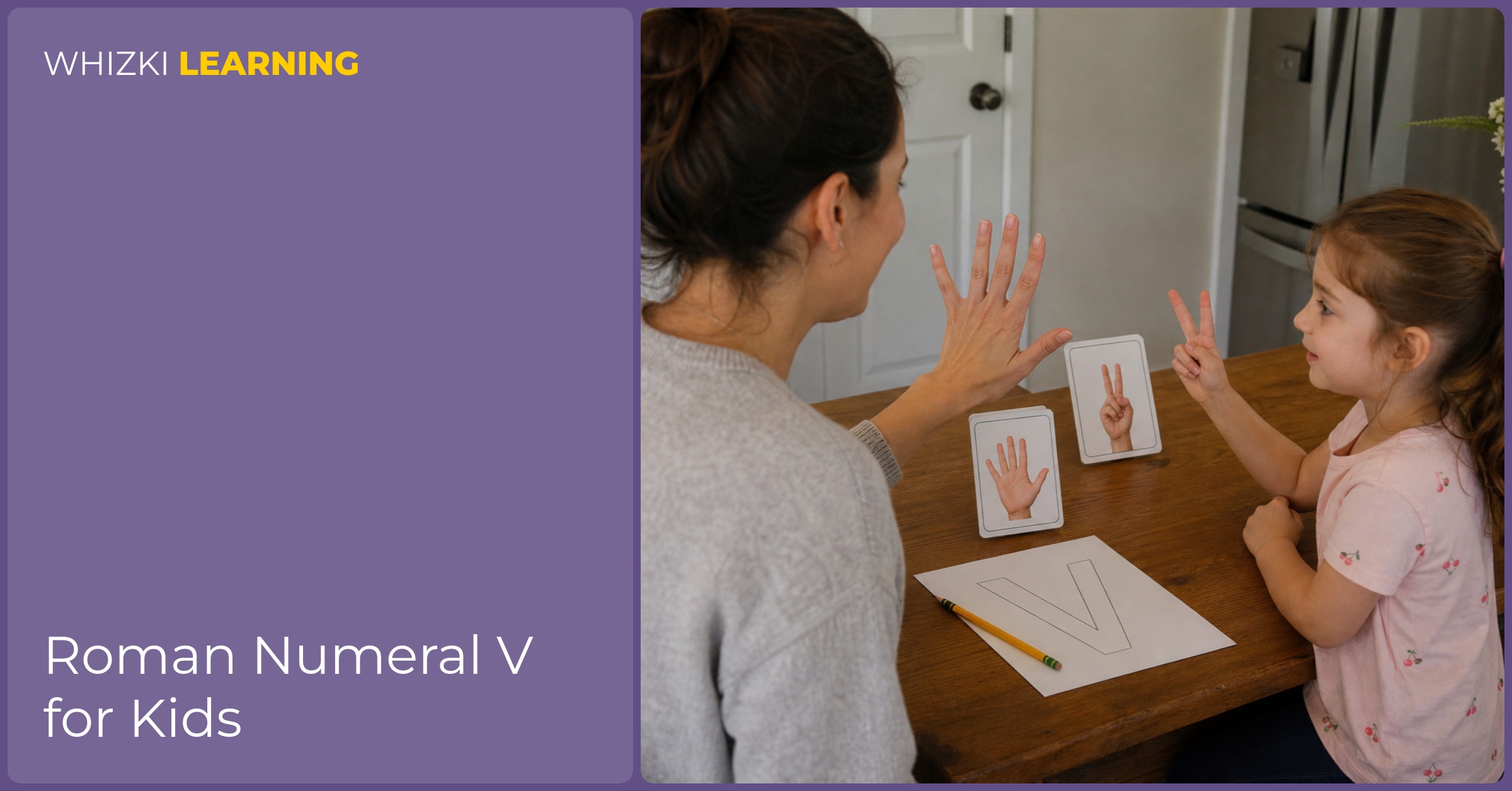
Roman numeral V is easiest to remember with a body cue, and occupational-therapy basics often recommend using movement to support attention and memory. Do this at the table: open your hand, spread your thumb and pointer finger, then look at the “V-shape” gap between them.
Roman numeral V equals five because the symbol looks like that same open V shape. When your child asks, you can repeat a short script: “Open your hand, look for the V, the V means five.”
For extra consistency, pair the hand trick with one calm visual: point at an analog clock when it is near 5 o’clock, or point at a book cover that shows Volume V. The repetition of symbol plus meaning builds familiarity without pressure.
One screen-free spot-and-say game
Roman numeral V practice works best as a quick game, not a lesson that lasts too long, and Reggio-inspired observation reminds us to follow the child’s interest. Try this: during a routine, ask your child to spot V and say it out loud.
Game steps for Roman numeral V: pick one place to look, like a clock face, a book chapter heading, or a movie title card. When your child finds the V, you say, “V is five,” and your child traces the V once on a napkin with a finger or pencil, then you celebrate the noticing and move on.
If your child gets wiggly, keep it short, like one search then one trace. That matches what many early childhood classrooms do, small bursts of attention with immediate success.
Want a quick print-and-go support for symbol reading? Use our Roman numeral V learning page and pair it with a napkin trace. It helps children connect the V shape to “five” through simple, kid-friendly practice that fits real home routines.
If you want to keep the same practice going on paper, take a look at our number tracing workbook for preschool and kindergarten.
Bedtime cue: look for V at 5 o’clock
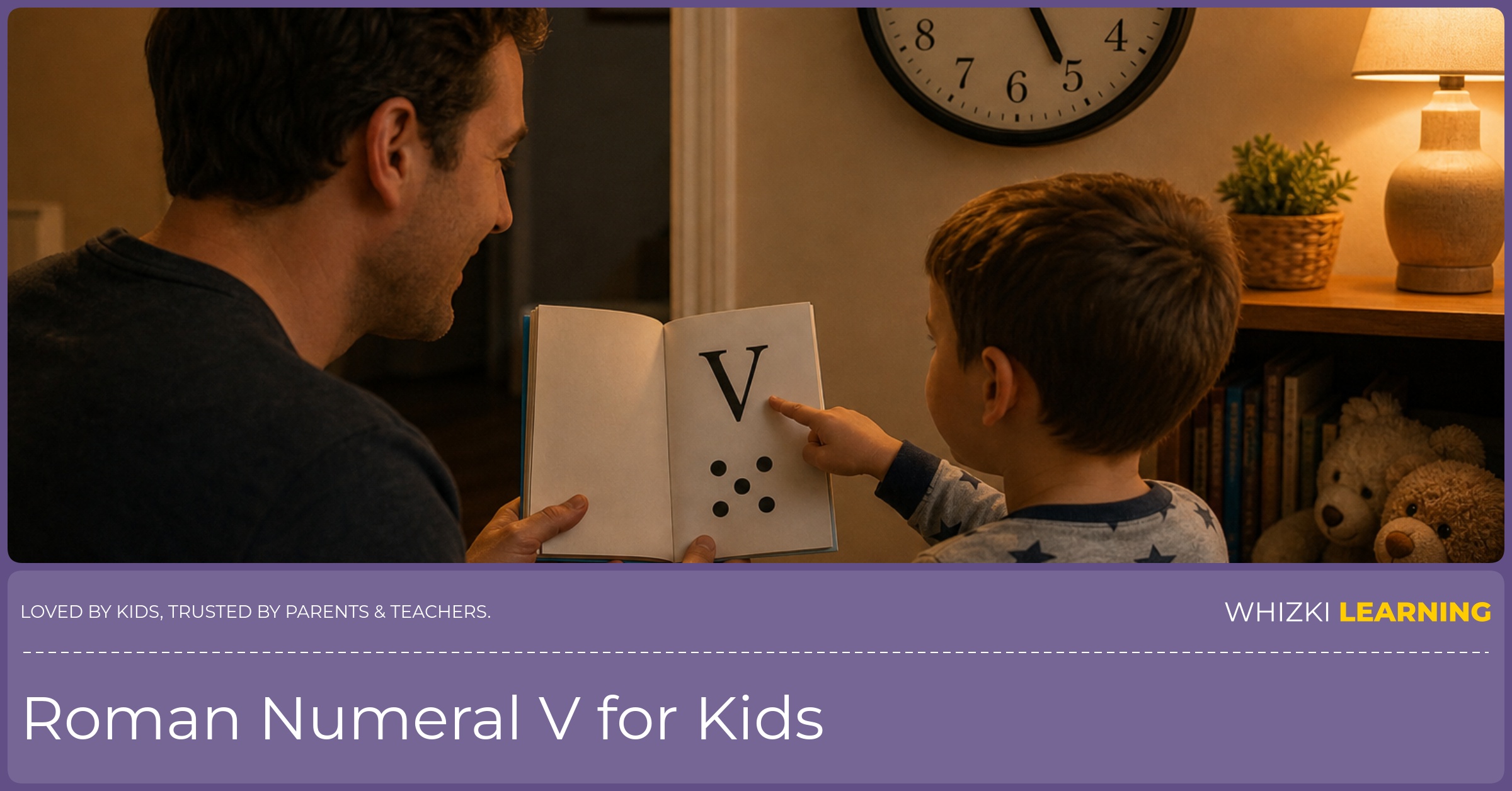
Roman numeral V becomes easier when bedtime includes one predictable cue, and many speech-language pathology and early literacy routines use consistent prompts to reduce stress. When bedtime is getting close to 5 o’clock, invite your child to look for the V on the clock face and say, “V is five.”
Roman numeral V should feel like a fun “look with me” moment, not a test. When the clock is not near five, you can still do a quick search in a book that has Volume V or a story title with Henry V, then end the moment kindly.
Kindergarteners and many 3-7-year-olds do not need Roman numeral math, they need to read the ones they see. If your child is struggling with attention or symbol shapes, keep the cue shorter, use the hand V trick, and celebrate the attempt.
Roman numeral V practice can keep going in small ways throughout the day, and it helps to have one place to return to when your child asks again. Visit our Roman numeral V learning page to practice the glyph shape, then browse the numbers learning hub for more symbol spotting ideas.
If you want extra screen-free support, add one counting moment using our counting printables. Even five minutes of symbol noticing and one quick trace can make Roman numeral V feel familiar and doable.