
Roman numeral X can feel random when a child brings it home from a book or screen, and you are not sure what to say. The good news is that X is one simple shape with one simple meaning, and kindergarteners mostly need to recognize it, not do Roman-numeral math.
Reviewed by Whizki Editorial Team, Early Childhood Education Editors.
Where kids actually see Roman numeral X
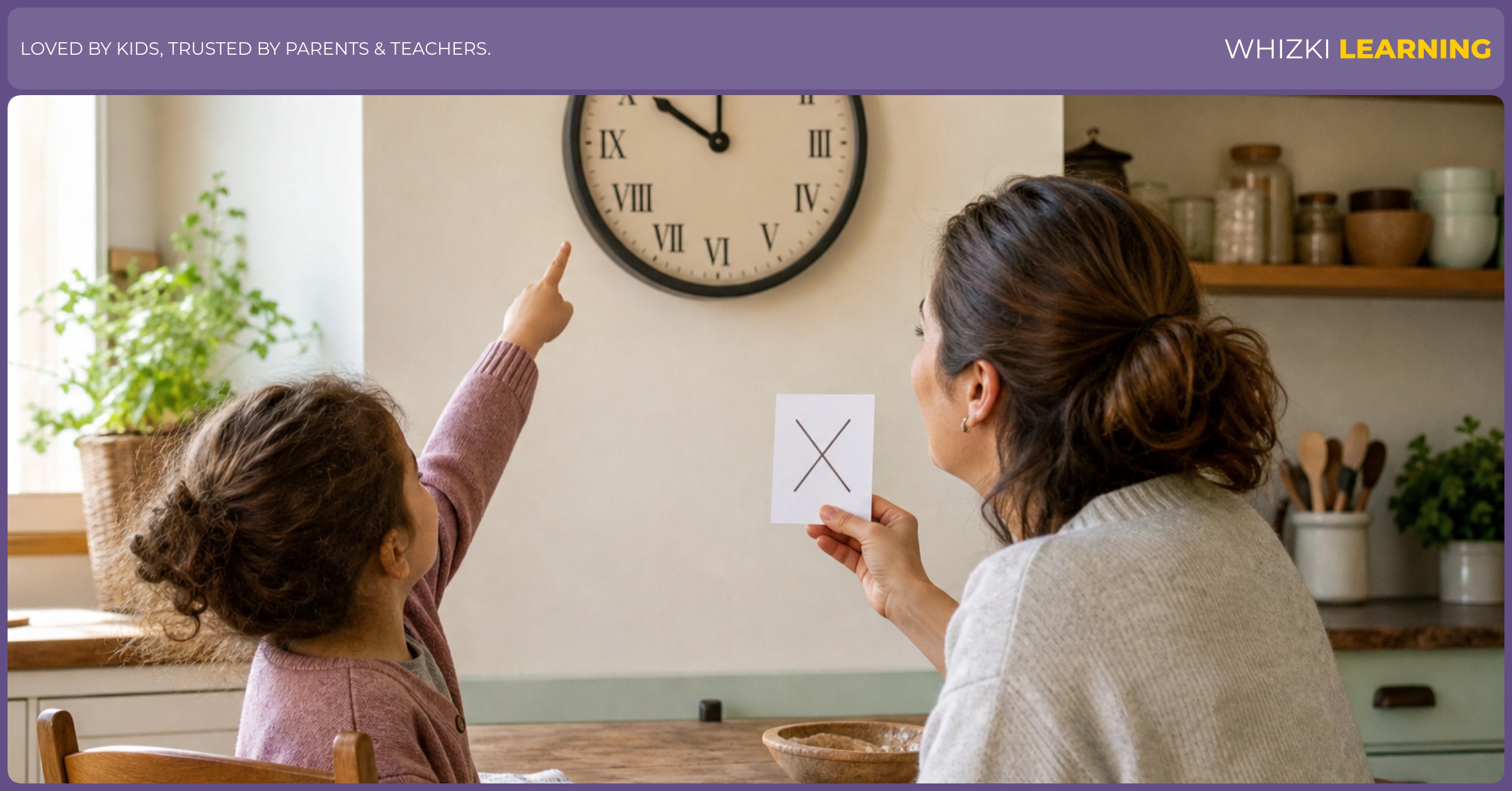
Roman numeral X shows up in everyday places, so the first step is helping the child connect the symbol to real life. A clock face often shows 10 o'clock, and that “10” is written as X in some learning materials. Sports fans also see Roman numeral X in Super Bowl X, and movie fans may notice “X-Men” or “Movie X” sequels.
Roman numeral X also shows up in a ten-finger count, because ten fingers is a very concrete idea for ages 3 to 7. When a child holds up all ten fingers, the symbol X becomes easier to remember because it matches a body-based picture. This kind of noticing lines up with NAEYC guidance on building early math through meaningful experiences, not worksheets alone.
The simple rule for Roman numeral X
Roman numeral X is the symbol for ten, and the shape is like two Vs touching at the tips. If you hold up two hands like “V” shapes and bring them together so the points touch, you get the idea of X. This matches how many Orton-Gillingham style approaches teach symbol formation, by linking a visual shape to a repeatable “how it looks” cue.
Roman numeral X is written with two crossing lines, and the easiest parent script is, “Two Vs touching at the tips makes X.” Then add the meaning, “X means 10, five plus five.” Five plus five is a kid-friendly way to remember the amount without turning it into a math lesson.
- Make two V shapes with your hands
- Touch the tips together to form X
- Say, “X is 10, five plus five”
A screen-free spot-and-say game for X
Roman numeral X gets stickier when the child hunts for it in familiar places, and occupational-therapy basics often point to short, sensory-friendly tasks like tracing and pointing. Try a “spot-and-say” round while you are already doing something normal, like reading or getting ready for the day. The goal is quick success, not perfect recall.
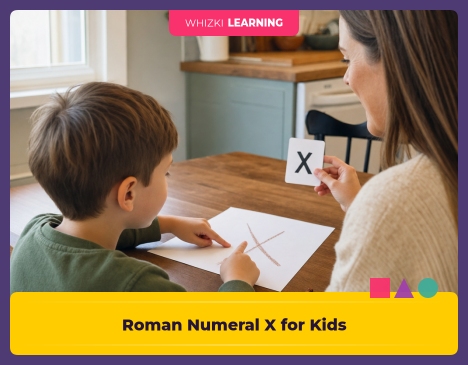
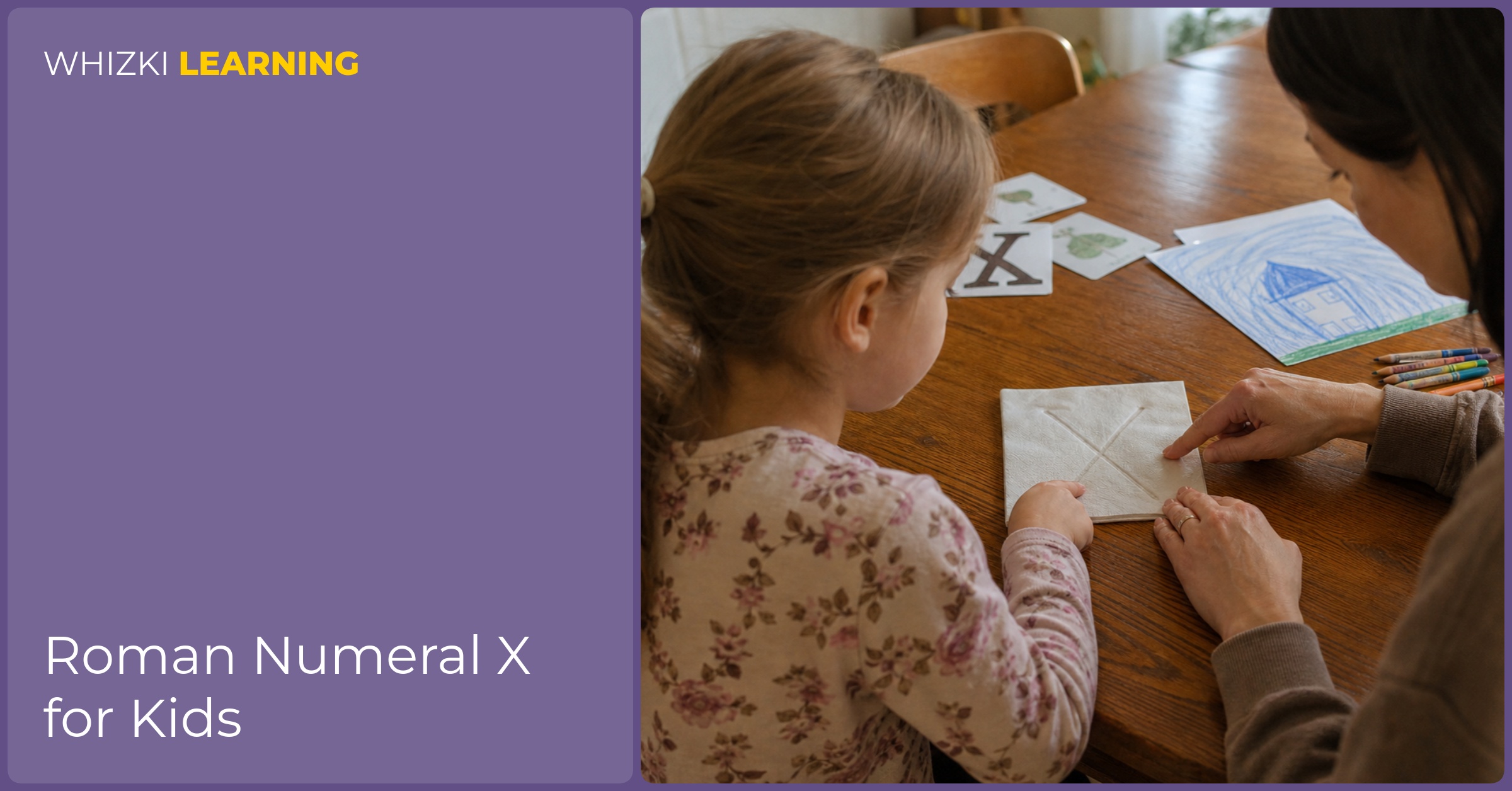
Roman numeral X game idea: pick one clock, one book, or one movie title your child already knows, then do this once or twice. Look for the symbol X, point to it, and say, “X is 10.” Then trace X one time on a napkin with a finger or a crayon, slow enough for the child to feel the shape.
Bedtime cue, and what to expect in kindergarten
Roman numeral X does not need to become a math test, and kindergarteners usually do best when they read the symbols they see. Reggio-inspired observation and NAEYC guidance both emphasize noticing and conversation, so the bedtime routine can be a gentle check-in. Try this cue: “Look for X on the clock when bedtime is 10 o'clock.”
Roman numeral X also helps when parents keep the expectation simple, because symbol recognition is the win at this age. If a child asks, “Is X 10?” you can answer, “Yes, X is 10,” and move on. If a child seems overwhelmed by symbols across many activities, it is okay to pause and focus on one place, like the clock, for a few days.
Roman numeral X practice is easiest when it is consistent, so use our Roman numeral X learning page for the glyph shape and a quick reminder of what X means. For more everyday number talk, visit the numbers learning hub, and if you want extra hands-on practice, add our counting printables to your screen-free rotation.
Want a simple, repeatable way to practice number symbols like Roman numeral X? Check out the numbers learning hub for kid-friendly activities you can do at the table, plus counting-and-number-sense printables that match how young children learn best, with hands-on repetition.
If you want to keep the same practice going on paper, take a look at our number tracing workbook for preschool and kindergarten.
Roman numeral X is worth practicing for the shape, not for complicated Roman-numeral math. When you see X again, point, say “X is 10,” and trace it once, then let the day move forward. For one more round of practice, open our Roman numeral X learning page and copy the X shape slowly with a pencil or crayon.