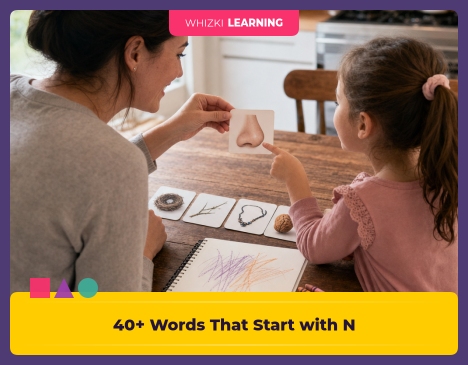
Some days, it feels like you are repeating the same “try again” for every new word, and your kid just shuts down. When you keep it short and hands-on, learning letter N words becomes a calm routine instead of a fight. For our letter N learning page, start with a few easy wins and build from there.
Reviewed by Sarah Mitchell, M.S., CCC-SLP, Speech-Language Pathologist.
Want more practice after today’s words? Visit our letter N learning page and pair it with our sight-words printables.
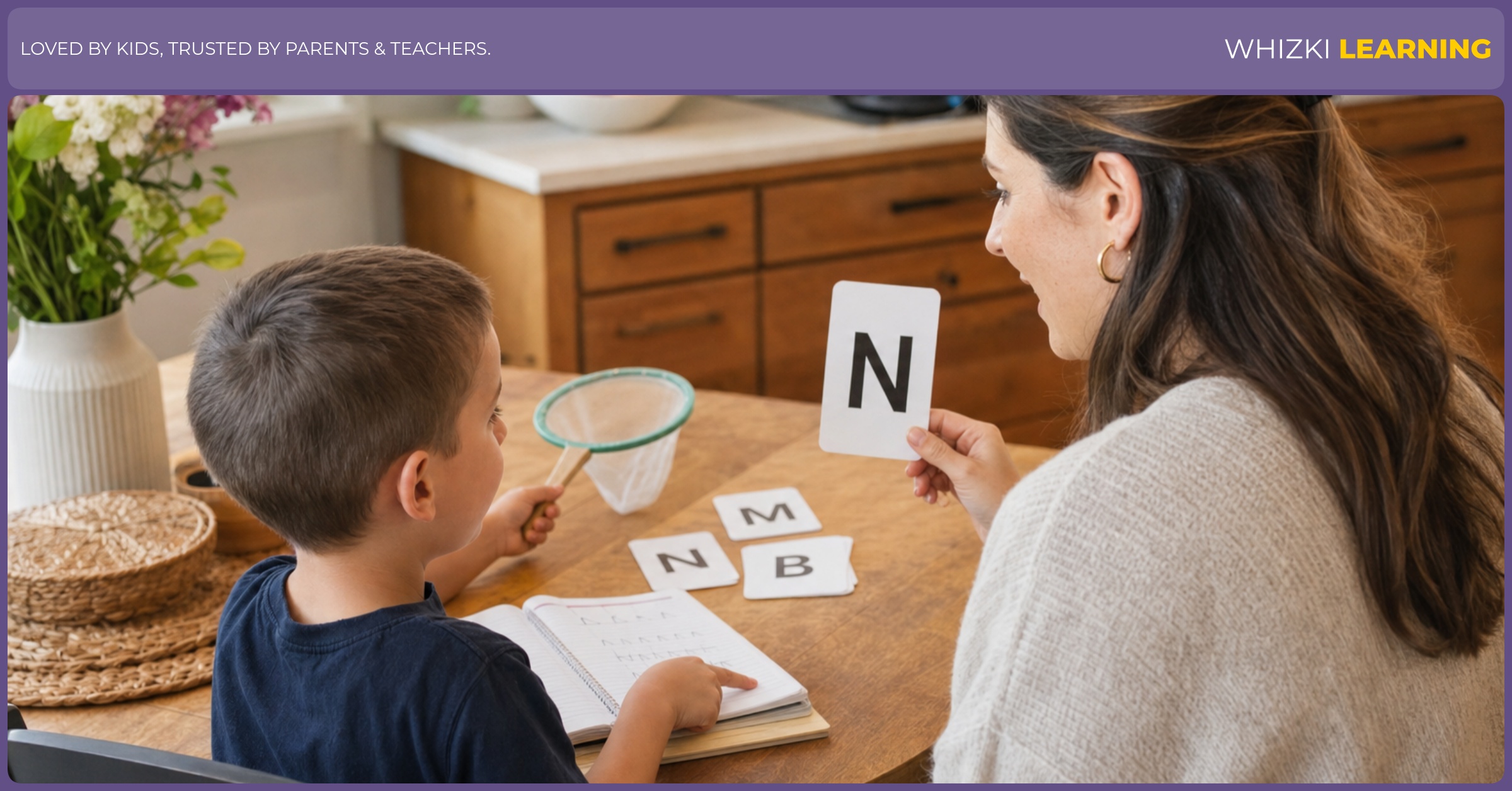
N first words kids can touch, see, and point to
In early literacy routines, speech-language pathologists often suggest pairing a word with a real object, because kids learn best when meaning is right there in front of them, like in an Orton-Gillingham style “see it, say it, use it” moment. Pick one object, name it, and let your child touch it for a few seconds.
Everyday objects are also a great fit for Reggio-inspired observation, because you are letting your child notice what is already in the room. Try one object at a time, and stop while your child still wants “one more.”
Everyday words
- nail
- nap
- name
- nest
- nut
- net
- no
- night
Big words for curious kids
- nurse
- needle
- north
- number
- nation
- neighborhood
- notebook
- newspaper
Parent script: “I see a net. Your turn, touch it and say net.” Then your child uses the word once in a sentence, like “I see the net,” before you move on.
N action words for “I can do it” language
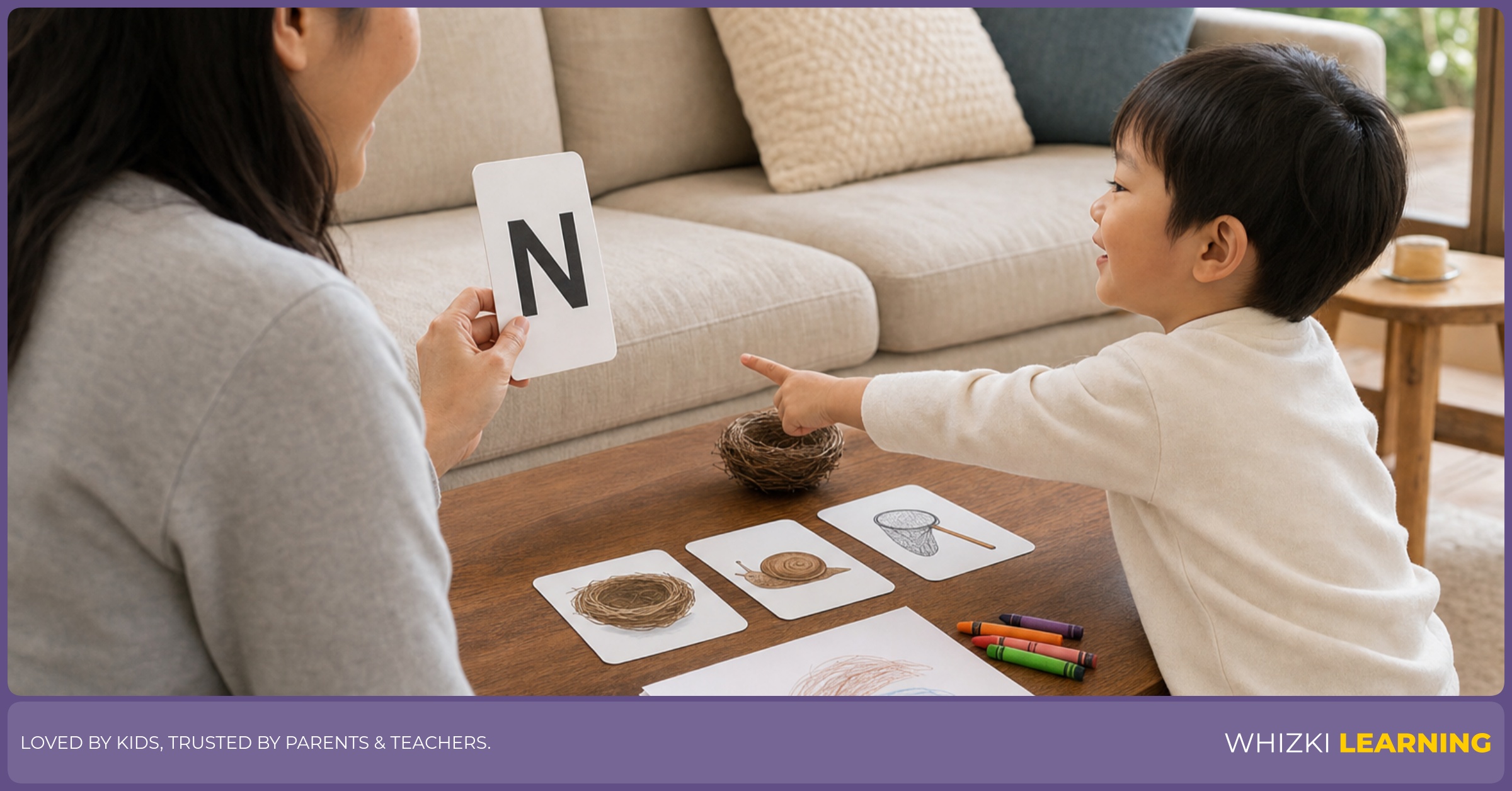
When you add action words, you are supporting functional communication, which is a common occupational-therapy friendly idea, because movement and language grow together. Keep the action small, like a quick pretend or a real task you already do.
NAEYC guidance also points to learning through play, so action words work best when your child is doing something, not just repeating. Say the word, do the action, then let your child try it once.
Everyday words
- nibble
- nod
- nudge
- nestle
- need
- notice
Big words for curious kids
- navigate
- nourish
- negotiate
- nominate
- normalize
- neaten
- nurture
Parent script: “Watch me, I will nod. Now you nod. Then say, ‘I nod.’” If your child gets stuck, model the word once and give them a choice, like “Do you want to nod or notice?”
First names starting with N, plus a quick walking and flashlight game
Common names are powerful because children hear them all day, and that repeated exposure helps word learning stick. Speech-language pathology practice often uses “high-interest words” first, because attention is the doorway to memory.
For the walking game, use the same N words you practiced at home, then let your child hunt for them in real life. For the bedtime flashlight version, keep it gentle and short, like a 3-minute wind-down activity.
Everyday words
- Nancy
- Naomi
- Nate
- Neil
- Nick
- Norma
- Noah
- Nina
Big words for curious kids
- Nelson
- Nevaeh
- Natalie
- Newton
- Nicole
- Norman
- Nathan
- Nora
Walking game script: “Spot an N thing. If you find it, point and say the word.” Flashlight bedtime variation: “Shine the flashlight on something that starts with N, then whisper the word.” If you want more practice with describing words starting with N, add one adjective after your child names the object.
Whizki Learning has printable practice that pairs letter N sound work with simple word reading, so your child can see the word, say the word, and use it in a quick routine. If you like short sessions, check out the alphabet learning hub for more letter-by-letter activities.
Keep the letter N practice to one small burst, then move on to play, because the goal is confident talking, not perfect recall. When your child can name a few N words and use them in a sentence, you are building real kindergarten readiness.