Some days it feels like your child has a million feelings and zero describing words. Let’s make it easier with kindergarten-ready K adjectives you can use at the kitchen table, plus a quick letter K practice on our letter K learning page.
Reviewed by Sarah Mitchell, M.S., CCC-SLP, Speech-Language Pathologist.
Feelings with K, for kinder talk
When preschoolers name feelings, speech and self-regulation get a little clearer. Using the Orton-Gillingham approach of short, repeatable language helps children store describing words they can pull out during real moments.
Try saying the feeling word first, then offering choices, like a calm script. This matches NAEYC guidance on supportive language interactions, not testing.
Everyday words
- kind
- keen
- kooky
- kinder
- knotty
- kicky
- kinky
Big words for curious kids
- knowing
- kind-hearted
- knackered
- kill-joy
- kindest
- knightly
- kaleidoscopic
Kitchen-table script: “I see a keen face. Do you feel keen or knackered?” When the word fits, the child learns it faster through use.
Looks and size with K, for describing what you see
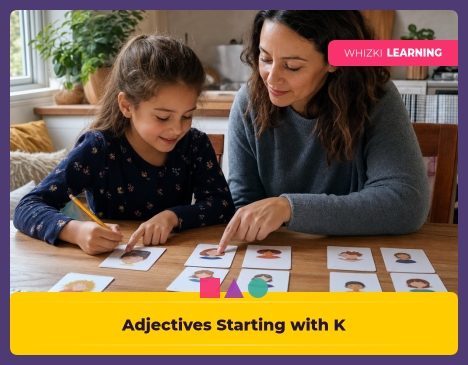
Reggio-inspired observation is a fancy way of saying, “Look closely, then talk about what you notice.” Occupational-therapy basics also remind us that children learn language best when it connects to what their hands are doing.
Use the words while you point, so the child links the adjective to a visual detail. Speech-language pathology practice often starts with concrete labeling before expecting longer sentences.
Everyday words
- khaki
- knobby
- knarled
- knotty
- knee-high
- knee-length
- knitted
- kooky
Big words for curious kids
- kaleidoscopic
- kinetic
- kaleidoscopical
- knotless
- king-size
- knee-deep
Read-aloud tip: pause after you describe the picture, then pick the describing word together. “The dinosaur looks knobby. What word fits best, knarled or knotted?”
Personality with K, for “who are you?” talk
When children describe personality, they practice social language, which supports classroom readiness. NAEYC encourages warm, responsive back-and-forth, and that is exactly what you can do with simple K adjective swaps.
Keep it concrete, like “That choice shows kind thinking.” Repeating the word in a supportive tone helps children accept feedback without feeling blamed.
Everyday words
- kind
- keen
- kinder
- knowing
- kindly
- kooky
- knacky
- knackish
Big words for curious kids
- kind-hearted
- kindest
- knightly
- knowledgeable
- knucklehead
- kill-joy
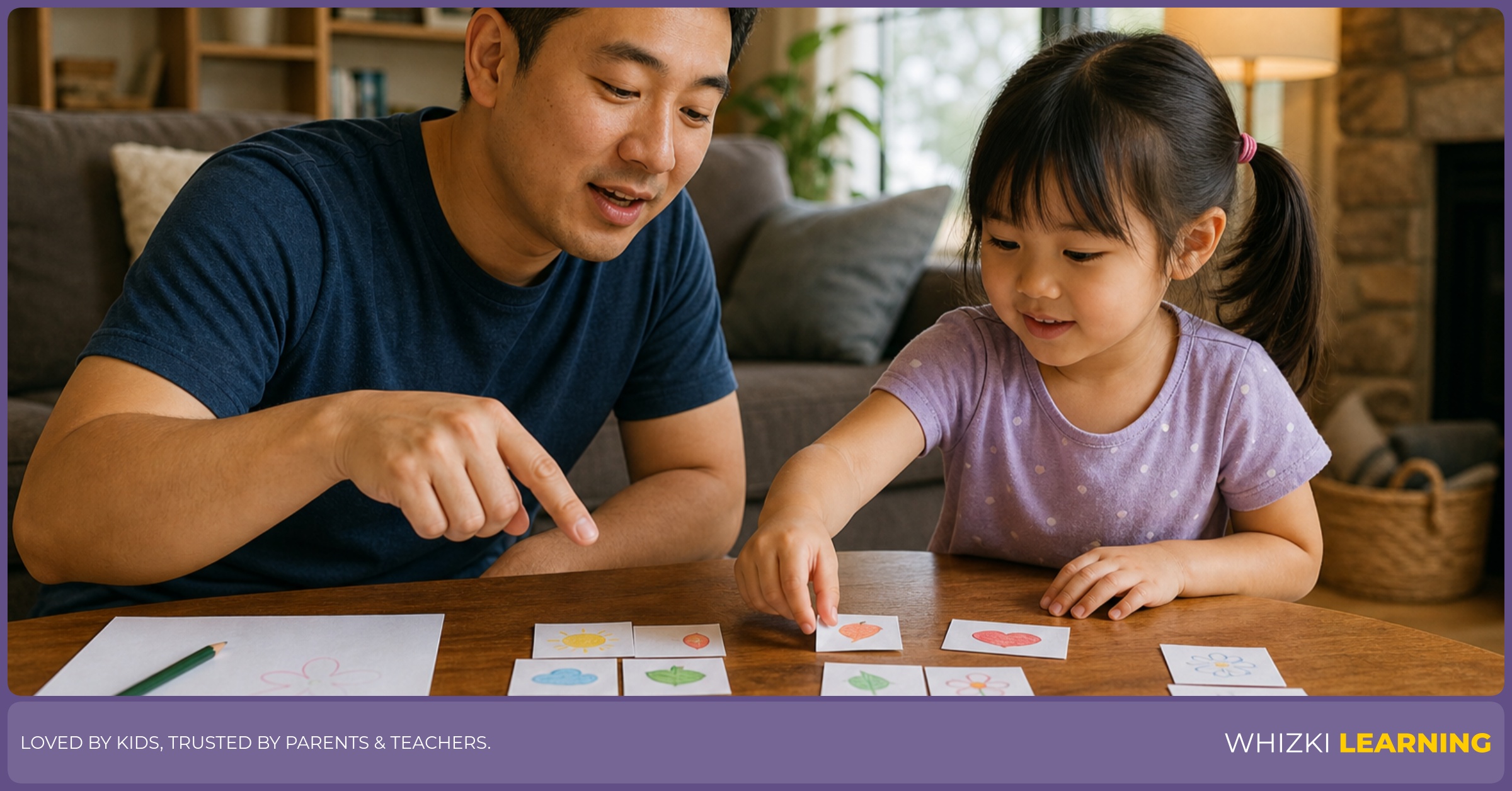
One sorting activity you can do in 5 minutes: write or print three piles, feelings, looks, and personality. Then pick one card at a time and ask, “Where does this K word belong?”
For letter practice, pair the language with the shape, use the alphabet learning hub and trace a big K while saying the adjective you chose. If you want more quick practice sheets, check our sight-words printables for extra kitchen-table momentum.
And if your child is ready to read a little beyond adjectives, add one short look at nouns and verbs starting with K so the whole sentence gets stronger.
Whizki Learning offers printable practice that pairs letter work with kid-friendly vocabulary routines. Try a simple letter K tracing page, then let your child choose one K adjective card to match what they traced, using our letter K learning page as the anchor for the day.
If you want to keep the same practice going on paper, take a look at our alphabet tracing workbook for preschool and kindergarten.
Last tip for the road: when your child says “I’m mad,” you can respond with one describing word, then one choice. “That looks kooky or knackered to you?” You are building vocabulary and confidence at the same time.