
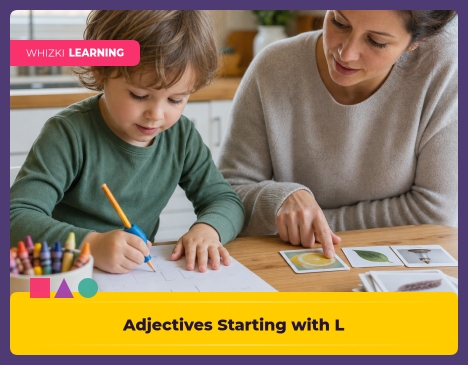
Some days, it feels like kindergarten-ready language is one more thing to manage, especially when your child can’t find the “right” word. You can keep it simple and fun with L adjectives your child can actually use, plus a quick letter practice on our letter L learning page.
Reviewed by Sarah Mitchell, M.S., CCC-SLP, Speech-Language Pathologist.
Want extra practice without extra prep? Check out our sight-words printables for quick, kid-friendly language routines that pair well with adjective play. Whizki Learning makes it easy to keep sessions short and consistent.
If you want to keep the same practice going on paper, take a look at our alphabet tracing workbook for preschool and kindergarten.
Feelings and emotions that start with L
In speech-language pathology practice and early literacy routines, clear emotion words help kids label what they feel, which supports calmer conversations. When you use L feeling words during real moments, your child gets more “word options” for the same big feeling.
Try this during transitions, like after cleanup or before bedtime, and keep the tone warm and steady. The goal is not perfect sentences, it is giving your child a describing word to grab.
Everyday words
- lively
- lonesome
- lonely
- loud
- lucky
- light
- low
Big words for curious kids
- lamentable
- lethargic
- lighthearted
- languid
- livid
- loathsome
Kitchen-table script: “I see a lively voice. Are you feeling lively or lonesome?” After your child answers, you model one short sentence and move on.
Looks and size adjectives starting with L
Reggio-inspired observation and NAEYC guidance both point to using what children can notice right now. When you describe size and look with L words, your child learns to connect language to what their eyes and hands are already doing.
Keep it concrete. Use the adjective while you point, like “long” on a ribbon or “light” on a feather, then ask your child to choose the describing word.
Everyday words
- long
- lanky
- lean
- lopsided
- limp
- lacy
- luminous
Big words for curious kids
- limpid
- lithesome
- lusterless
- littlest
- limber
- lopsidedly
Read-aloud tip: pause and pick the describing word. “The line is long or lean? Let’s choose one.” Then reread the sentence with the chosen word.
Personality adjectives that start with L
Occupational-therapy basics for self-regulation often include language for character and behavior, not just “good” or “bad.” When your child can name personality traits, behavior talks get clearer and less personal.
Use these L words for real-life moments, like sharing, waiting, or trying again. The adjective becomes a bridge between feelings and choices.
Everyday words
- lovable
- loving
- lenient
- likable
- loyal
Big words for curious kids
- levelheaded
- lionhearted
- longsighted
- learned
- lawful
- liberal
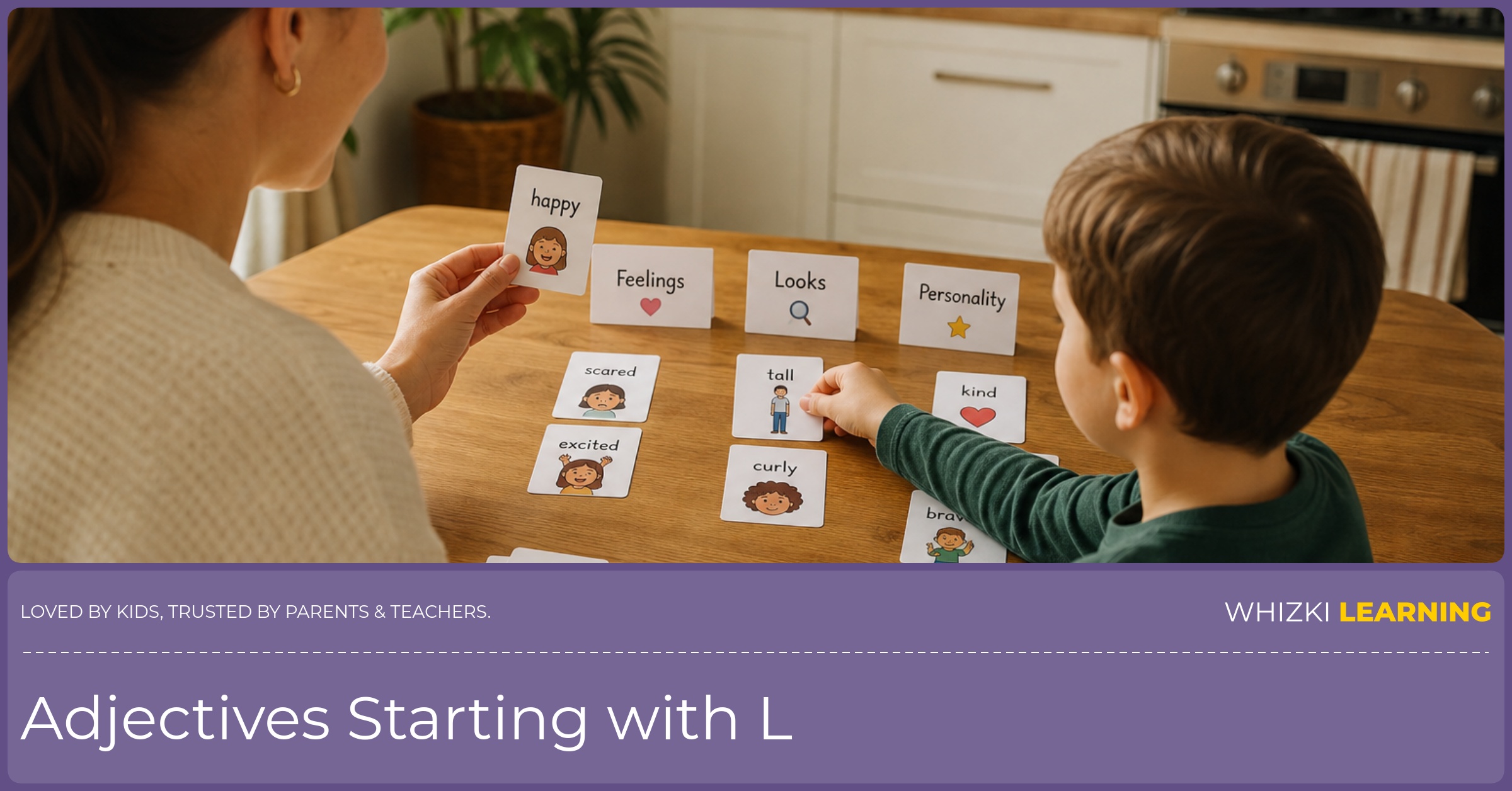
Sorting activity (3 piles): make three bowls labeled “L feelings,” “L looks,” and “L personality.” Hand your child one card at a time and say, “Where does this L word belong?” If your child hesitates, offer two choices, then celebrate the pick.
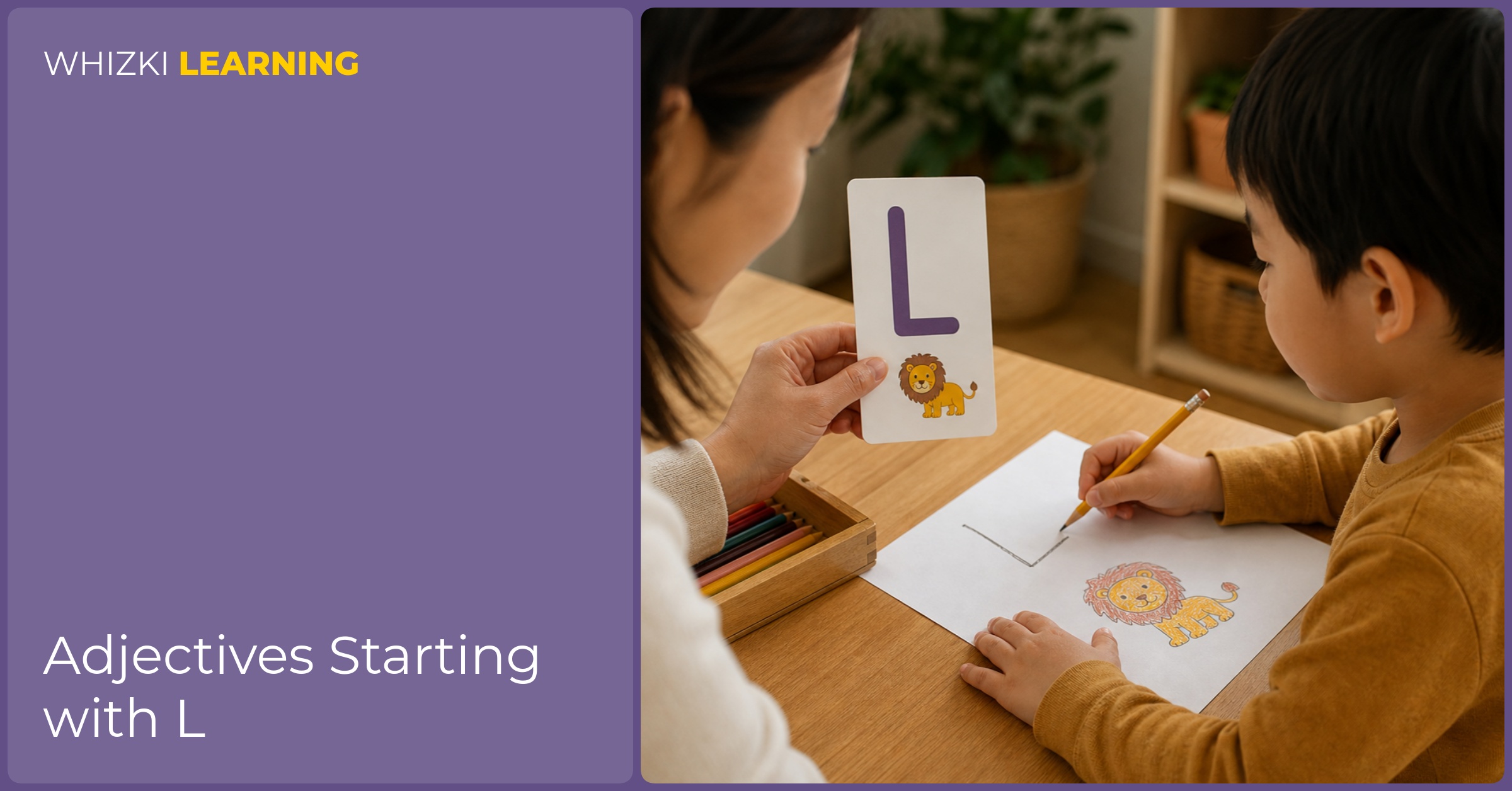
To connect adjective talk to letter practice, use the letter L shape during your routine. Have your child trace an L, then say one adjective that starts with L, like “long” or “lovable,” and make a quick drawing to match.
For more early-reader practice, add a quick word mix from nouns and verbs starting with L so your child hears L words in more than one job. If you want the full alphabet flow, visit the alphabet learning hub and keep your sessions short and repeatable.