PreschoolKindergartenFirst Grade

30+ Adjectives Starting with M: Kindergarten Words for Feelings, Looks, and Personality

Jul 31, 2026
30+ Adjectives Starting with M: Kindergarten Words for Feelings, Looks, and Personality

Some days it feels like your child knows the “right” word, then the moment you ask, it disappears. Let’s make M adjectives feel easy and usable at the kitchen table, with simple sorting and letter M practice from our letter M learning page.

Reviewed by Sarah Mitchell, M.S., CCC-SLP, Speech-Language Pathologist.

Want a quick way to keep practice consistent? Add an M-focused routine using our letter M learning page and pair it with our sight-words printables for short, repeatable sessions that fit real life.

If you want to keep the same practice going on paper, take a look at our alphabet tracing workbook for preschool and kindergarten.

Feelings that start with M

When families label feelings, children get more practice noticing their body and choosing words, which matches everyday speech-language and early literacy routines. In an Orton-Gillingham style, you can keep it concrete and repeat the same describing word often.

Pick one feeling word at a time, then connect it to a real moment from the day. For example, “I see merry hands,” or “Your face looks mild.”

Everyday words

  • merry
  • mild
  • mad
  • mean
  • mighty
  • mournful
  • mirthful
  • miserable

Big words for curious kids

  • maddening
  • melancholy
  • mystified
  • moral
  • merciful

Kitchen-table script: “Pause and pick the describing word.” Ask, “Is your body feeling mild or mad?” Then repeat the word back with calm voice and a simple next step, like a hug, a breath, or a drink of water.
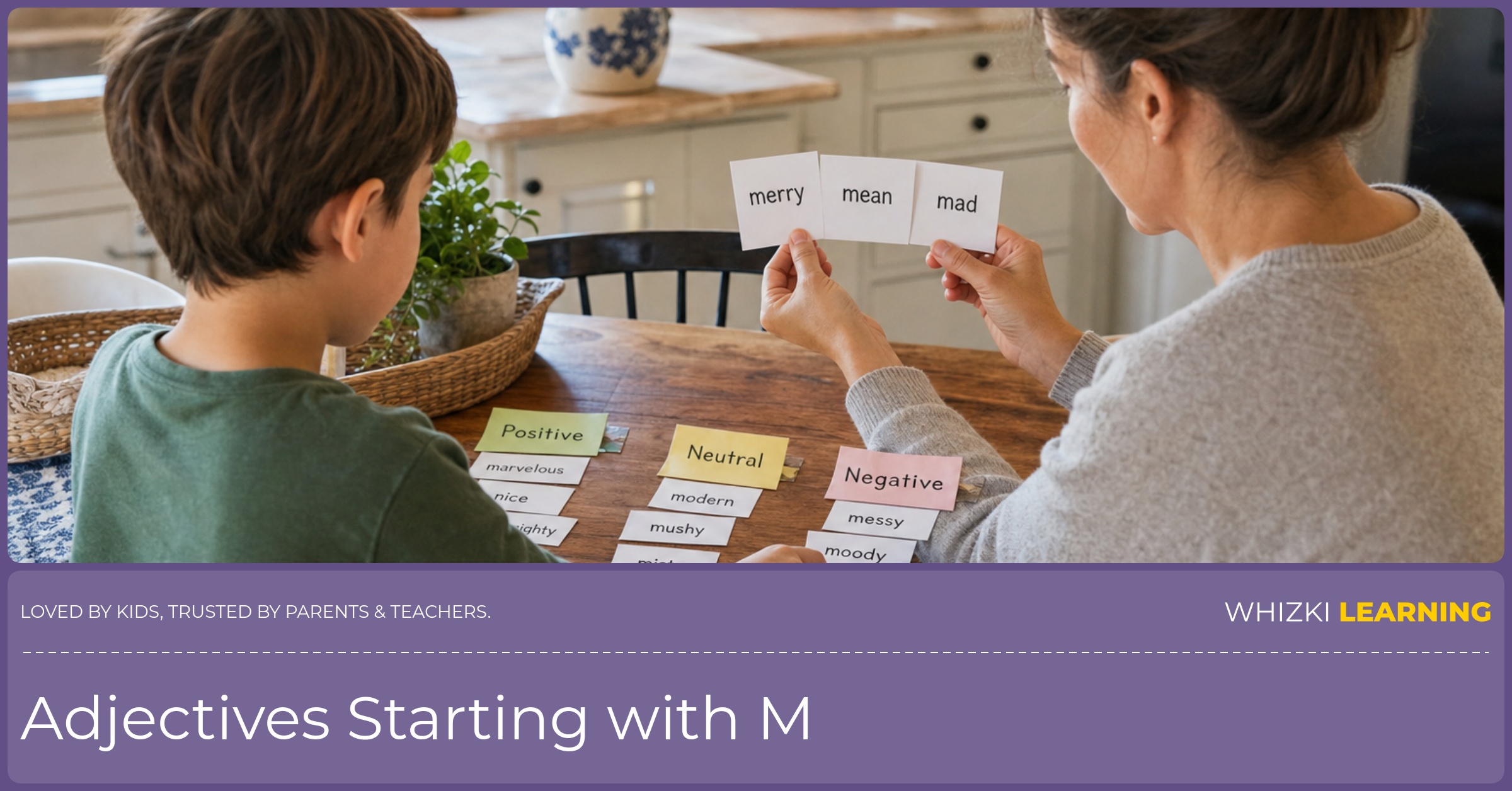
Parent and child sorting M adjective cards into three piles at the kitchen table, with fingers pointing and a calm focus

Looks and size with M

For looks and size, Reggio-inspired observation helps, because children learn best when they can see, touch, and compare. NAEYC guidance also points to using everyday language during play, not waiting for a “perfect lesson time.”

Use the describing word while you compare two things, like a small cup and a big cup, or a dark marker and a light one. Keep it short, then let the child try.

Everyday words

  • mini
  • meaty
  • mossy
  • milky
  • misty
  • muddy
  • mottled

Big words for curious kids

  • microscopic
  • magnificent
  • massive
  • measurable
  • mammoth
  • monstrous

Tip for quick practice: hold two picture cards or objects side by side and ask, “Which one is mini?” or “Which one is massive?” Then switch roles so the child describes first.
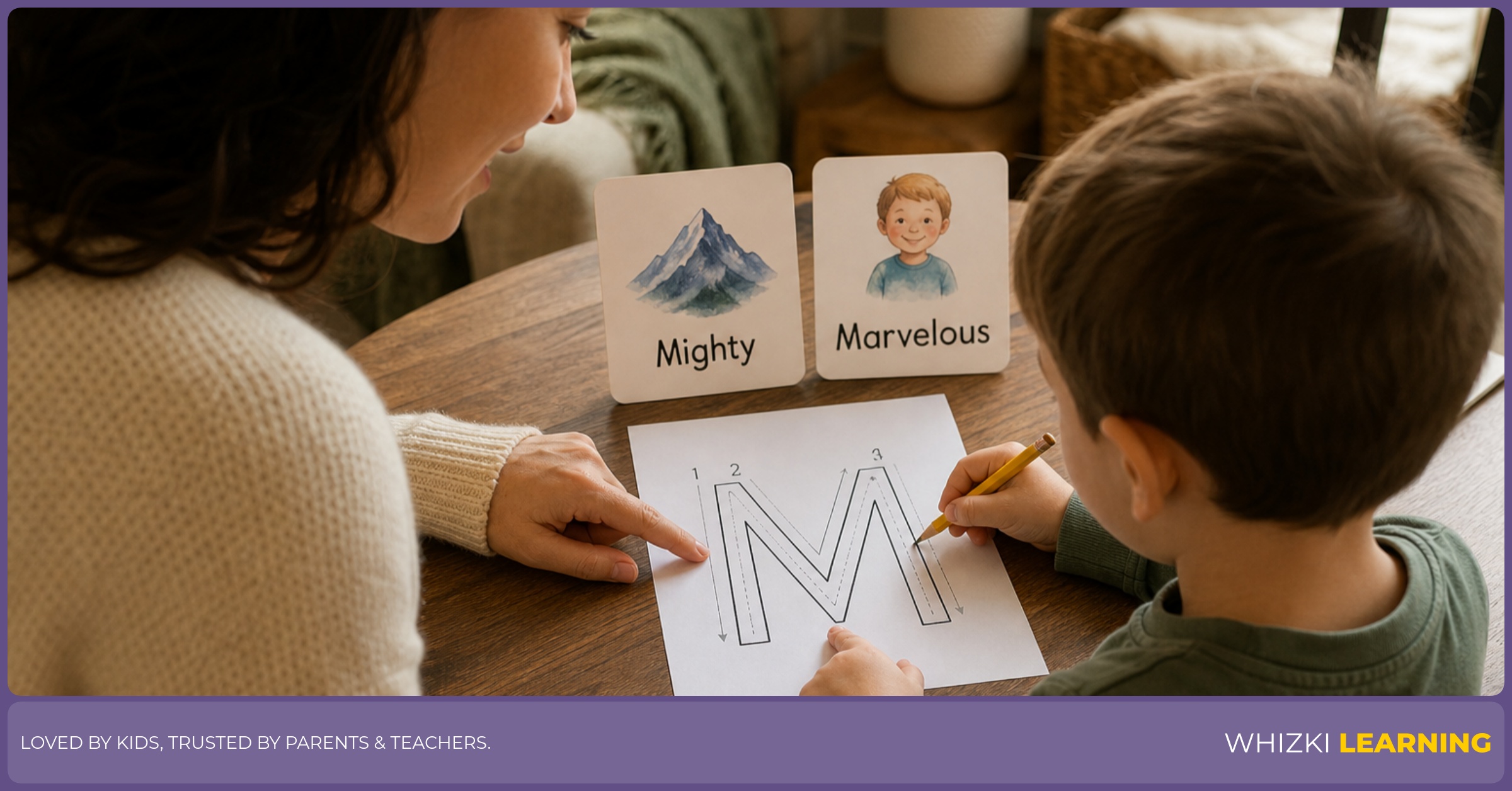
Parent and child tracing the letter M while practicing M adjective words in a calm kitchen setting

Personality adjectives that start with M

Personality words help children talk about behavior without turning it into a fight, which fits occupational-therapy style coaching for regulation through language. Speech-language pathology practice also favors “label, then choose,” so the child hears a word and gets a next option.

When a child is acting a certain way, use the personality word like a weather report, not a verdict. “That was mischievous,” followed by, “What’s a safer choice?”

Everyday words

  • mannerly
  • mischievous
  • mellow
  • modest
  • motivated
  • mindful
  • mature

Big words for curious kids

  • magnanimous
  • meaningful
  • masterful

One more connection for early readers: after an adjective, add a quick “word family” moment with nouns and verbs starting with M so the child sees how describing words work with action and things.

Letter M practice that sticks: open the alphabet learning hub, then trace the letter M while saying one adjective from today’s piles. Keep the session under five minutes, and let the child pick the last word.

Next step for tonight: set up three piles on the table labeled mood, look, and me, then sort 12 adjective cards or slips of paper. If the child gets stuck, you model one move, then you hand the marker back.

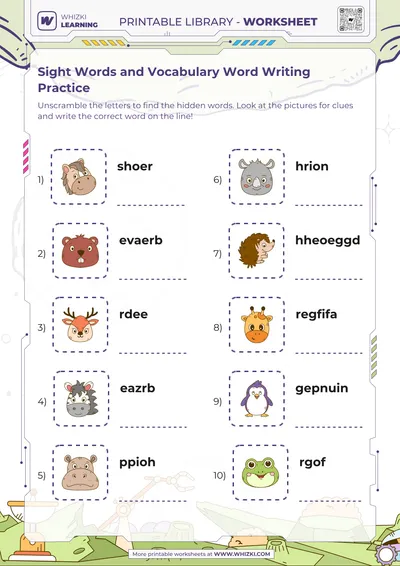
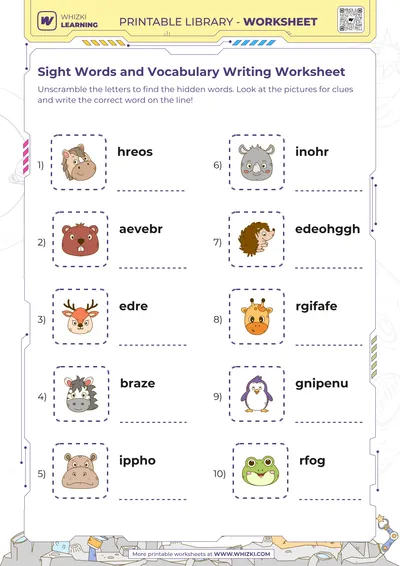
Picture Word Writing: Sight Words and Vocabulary Picture Word Writing: Sight Words and Vocabulary
Name the pictures and write words including horse, beaver, and deer. Practice spelling with picture clues and adult support.
Sight Words and Vocabulary Word Search Puzzle for Kindergarten Sight Words and Vocabulary Word Search Puzzle for Kindergarten
Find tiger, cardigan, and zebra in an across-and-down word search. Use the printed checklist to compare spellings and record each found word.
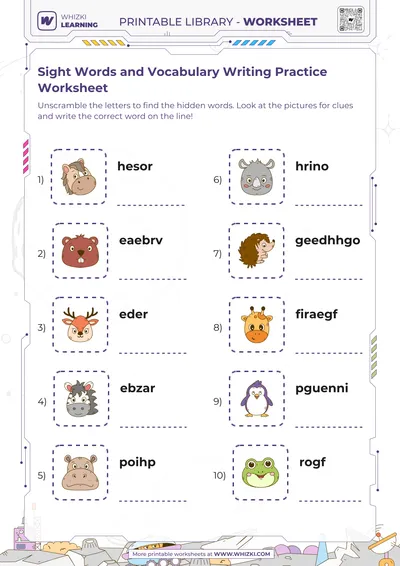
Sight Words and Vocabulary Writing Practice Worksheet Sight Words and Vocabulary Writing Practice Worksheet
Rearrange letter hints and write words including horse, beaver, and deer. Practice spelling with picture clues and adult support.

One idea. A place in your week.

Add an activity to your Family Learning Planner, choose a day, and keep a note of how it went.
See the Family PlannerFree for one learner. Children do not sign in.

Frequently asked questions

What if my child refuses to use M adjectives?

Offer the adjective as a choice between two words, like mild or mad, so the child can point instead of perform. Repetition during play builds comfort, and speech-language practice often starts with low-pressure responding. If refusal stays strong or speech feels very hard, ask a speech-language pathologist for a quick check-in.

Why do sorting piles help with describing words?

Sorting gives the child a job, so adjectives connect to real thinking, not just memorizing. Occupational-therapy heuristics support hands-on tasks that reduce language pressure. If sorting becomes stressful, slow down and use fewer cards for one pile at a time.

How do I connect adjectives to the letter M?

Pair the letter M shape with one adjective you say while tracing, so the sound and word travel together. Early literacy guidance supports short, repeated multisensory moments. If tracing is painful or frustrating, switch to air tracing with a finger and try again later.

When should I add more “big words”?

Add big words after the child can use at least one everyday word in a real moment, like mild or mini. NAEYC guidance favors building from familiar language with gentle expansion. If big words cause confusion, return to everyday words for a few days.

Limited-time savings
on Whizki workbooks.

Boost your child’s skills with our discounted workbooks. Engaging activities for preschool, kindergarten, and grade 1 - now at special sale prices!

August Summer Learning Workbook for Kindergarten to 1st Gr... Workbook Cover BackgroundAugust Summer Learning Workbook for Kindergarten to 1st Grade: Numbers Tracing, Alphabet, Writing, Science, Social StudiesAn August workbook for the last stretch of summer. Number tracing, alphabet review, writing, science, and gentle social studies for the week...

-27% $10.99

List Price: $14.99
Buy Now
July Summer Learning Workbook for Kindergarten to 1st Grad... Workbook Cover BackgroundJuly Summer Learning Workbook for Kindergarten to 1st Grade: Alphabet Tracing, Math, Numbers, Preschool ActivitiesA July workbook for the middle of summer. Alphabet tracing, early math, number practice, and pencil work for kids moving from kindergarten i...

-27% $10.99

List Price: $14.99
Buy Now
Summer Brain Activities Workbook for Preschool and Kinderg... Workbook Cover BackgroundSummer Brain Activities Workbook for Preschool and Kindergarten: Social Studies, Math, Addition, Number SenseThe math-leaning volume of the Summer Brain set. Number sense, simple addition, social studies, and gentle problem-solving for ages 4 to 6.

-45% $10.99

List Price: $19.99
Buy Now
Sight Words and Word Search Workbook for Kids Ages 5-7: Pr... Workbook Cover BackgroundSight Words and Word Search Workbook for Kids Ages 5-7: Pre-K, Kindergarten, 1st Grade ReadingA sight words and word search workbook for ages 5 to 7. Themed puzzles, sentence-building, and trace-and-write practice for early independen...

-40% $8.99

List Price: $14.99
Buy Now

Join the Screen-Free Movement.

Get exclusive activities, expert tips, and inspiration for a more meaningful, offline family life.

Copyright © 2025 - 2026 Whizki Learning. All rights reserved.