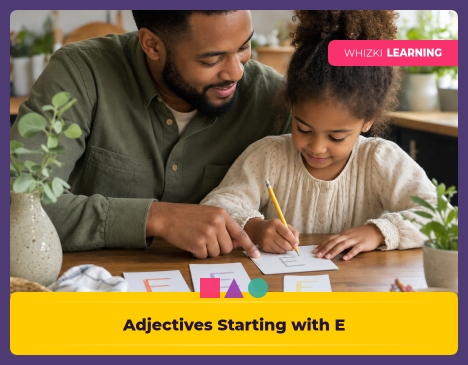
Some days, it feels like your kindergartener can only say “good” or “fine,” and you are stuck guessing what they mean. When you give a few clear E describing words, speech and play get easier fast, and letter practice fits right in with real life.
Reviewed by Sarah Mitchell, M.S., CCC-SLP, Speech-Language Pathologist.
Use our letter E learning page to connect the word work to the letter shape, then borrow the sorting idea below when you are making breakfast or cleaning up.
Whizki Learning has printable practice that pairs letter E with simple vocabulary so kids can point, say, and write. If you want a quick, low-pressure routine, check our letter E learning page and use it for a short daily warm-up.
For extra practice with early word reading, add our sight-words printables after the adjective sorting game.
If you want to keep the same practice going on paper, take a look at our alphabet tracing workbook for preschool and kindergarten.
Feelings and emotions with E (Orton-Gillingham style)
When you teach adjectives with a steady routine, Orton-Gillingham-informed repetition helps kids store words in a usable way. Pick one feeling word, say it, and ask for a matching moment from the day.
Everyday words
- eager
- excited
- enjoying
- easy
- embarrassed
- enraged
- even
- expected
Big words for curious kids
- earnest
- emotional
- envious
- exhausted
- enchanting
- euphoric
Kitchen-table script: “Show me your eager face. Now point to the feeling word that matches your body.” Then pause and pick the describing word, for example, “Was your turn easy or expected?”
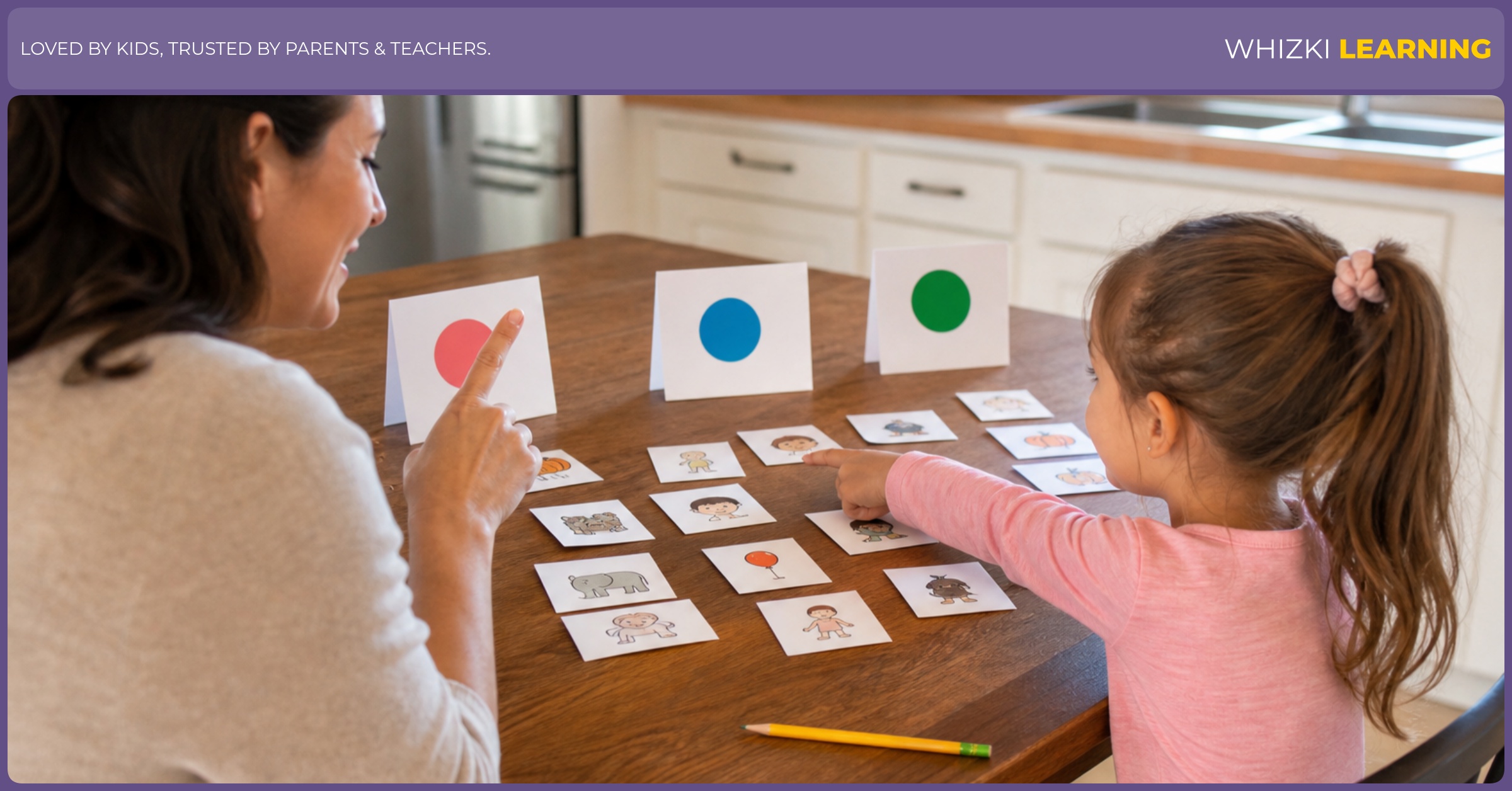
Looks and size with E (NAEYC language-rich moments)
NAEYC guidance leans on everyday talk, so keep it playful and concrete. Use one object from the room, then invite your child to describe it with an E word.
Everyday words
- early
- erect
- empty
- elastic
- enlarged
- extended
- extra
Big words for curious kids
- enormous
- excessive
- expansive
- extra-large
- extra-small
Read-aloud tip: pause and pick the describing word. “The block tower is empty now. Is it extended or enlarged?” If your child freezes, offer two choices and let them point.
Personality adjectives with E (OT basics for self-talk)
Occupational-therapy basics often start with self-talk that matches what a child feels and does. When personality words are available, kids can label behavior without the whole moment turning into a power struggle.
Everyday words
- excellent
- ethical
- entertained
- energetic
- exciting
- engaging
Big words for curious kids
- eloquent
- enterprising
- eminent
- enlightened
- exceptional
- expedient
Try a 3-pile sorting activity: make piles labeled feeling, look, and personality. Your child sorts the E words you say out loud, then each time they place a card, they answer one question, “Who is this word for?”
Want more E words for early readers? Add a quick connection to nouns and verbs starting with E for early readers so your child can build full sentences, not just descriptions.
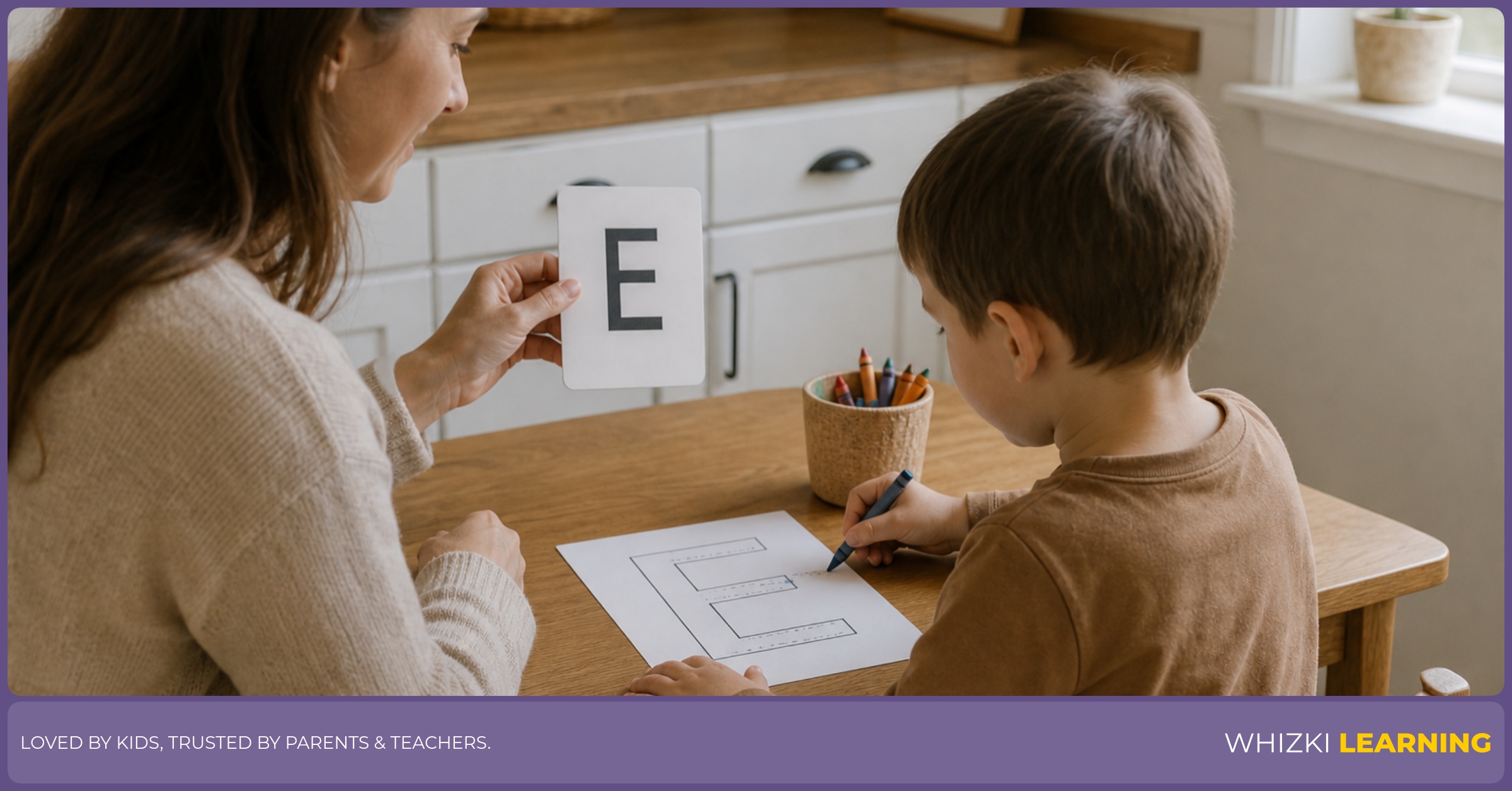
To tie it to letter practice, use the alphabet learning hub and end each session with one big E in the air, then one on paper. Say the adjective as your pencil traces the E, for example, “excellent work,” while your child watches the letter shape form.
Quick practice ideas for letter E (speech and letter awareness)
Speech-language pathology practice often uses short, repeatable turns, so keep the routine under two minutes. The letter E becomes a cue for “slow down and describe,” not a test.
Use the letter E with the same three steps each time: point, say, and write. Point to the E on our letter E learning page, say one adjective, then write one E while your child repeats the adjective.
If your child is not ready to write, use a finger trace on paper first, then switch to a crayon. When your child uses an E adjective correctly, celebrate the word, not the perfection.
One last script for tough moments: “I hear you. Let’s find the E word.” Then offer two options from the piles, and let your child point. That small choice helps feelings land in words, and the letter E keeps the practice steady.