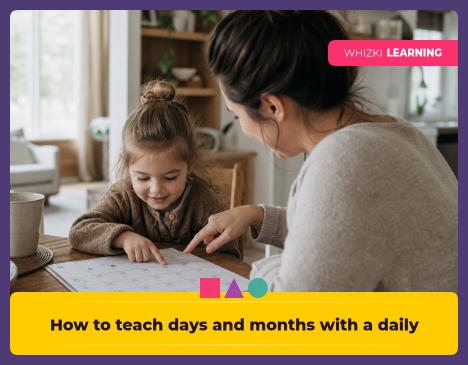
If your child sings Tuesday after Friday, argues about whether tomorrow is a school day, or asks again and again when the birthday month comes, start with one calm calendar minute at the same time each day. Ask the same three questions before breakfast or morning meeting: What day is today, what day was yesterday, and what day comes tomorrow? Young children build time words through repetition, movement, and real events, not through a long wall calendar lecture.
Reviewed by Dr. Anna Klein, EdD, Early Childhood Curriculum Specialist.
Start with a one-minute calendar routine
The daily calendar minute works best when the time and questions stay boring in the best way. Choose one daily anchor, breakfast, coat hooks, circle time, or the first homeschool table activity, and use the same script every day. The steady script lowers the adult workload because the parent or teacher is not inventing a lesson while children are wiggly.
NAEYC guidance on developmentally appropriate practice reminds early-childhood educators to teach new ideas through meaningful routine, not through long explanations. A child age 3 to 7 can learn time language by pointing, answering, singing, and connecting the calendar to lunch, library day, soccer, or a grandparent visit. The adult goal is not perfect recitation, the adult goal is steady exposure.
Print one simple calendar helper from Whizki Learning's our printable library and tape the page at child height near the breakfast table or meeting rug. A wall page gives the child a place to point while answering the same three questions each day. The printable should feel like a cue for the routine, not like a test.
Teach yesterday, today, and tomorrow first
Yesterday, today, and tomorrow should come before full dates because those words match a child's lived day. Ask, "What did we do yesterday?" then name one real event, such as park, bath, pancakes, or library. Ask, "What are we doing today?" and connect the answer to one visible plan.
Reggio-inspired teaching starts with observation of the child's real world, and calendar language fits beautifully inside that practice. A teacher can photograph Monday's nature walk, Tuesday's paint table, or Friday's family breakfast and use the photo as the memory cue. Montessori practice also values concrete-to-abstract teaching, so a real lunchbox packed for today carries more meaning than a printed date square.
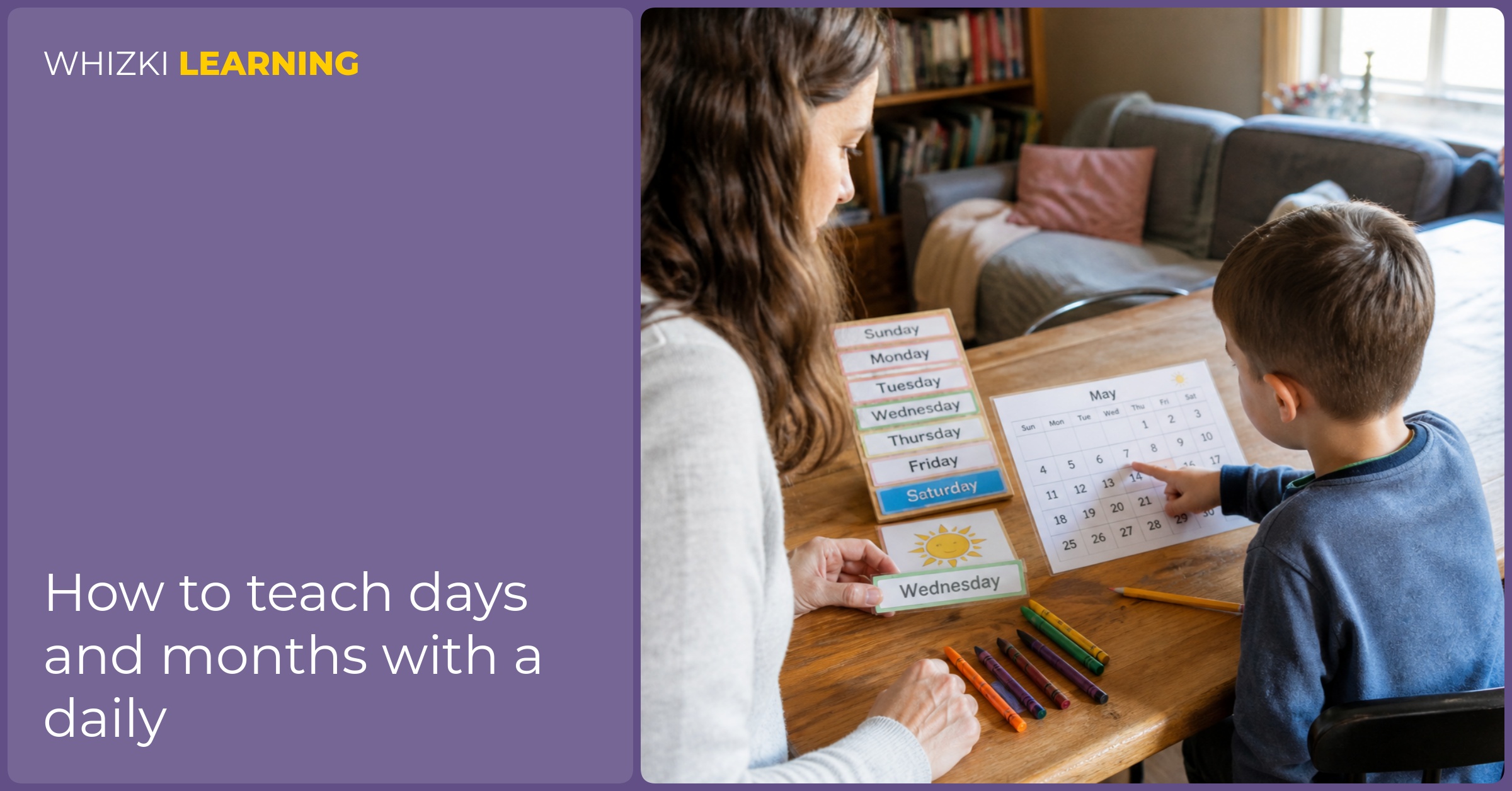
Use the song trick for days of the week
The song trick gives days of the week a rhythm that children can hold in memory. Sing the same days-of-the-week song every day, then stop before the last word and let the child fill in the missing day. A familiar tune reduces the demand on memory because the melody carries the order.
The Orton-Gillingham approach pairs sound, sight, movement, and speech because multisensory practice helps young learners hold a sequence. Sing the song while tapping one finger per day, stepping seven times, or moving a clothespin along a paper strip. Speech-language practice often uses the same fill-in pattern, so the adult can say, "Sunday, Monday, Tuesday," pause, and wait without rushing the child.
Add dates and numbers after the language feels steady
Calendar dates make more sense after a child can answer today, yesterday, and tomorrow with support. A date is a number label for the day of the month, and the number label should not carry the whole lesson. Say, "Today is Wednesday, and the date is 14," while pointing to the number square.
Occupational-therapy basics remind adults that near-point copying and tiny squares can be tiring for little hands and eyes. A preschool or kindergarten calendar should have large numbers, clear spacing, and one pointing job before any writing job. A child who wants to write the number can trace in the air, write on a dry-erase board, or circle the date with a crayon.
Early number confidence also helps the calendar routine feel easier, especially when the month moves past 10. If counting to 31 feels shaky, use the numbers learning hub for short number practice away from the calendar minute. Separate number play keeps the calendar routine calm and prevents one tiny routine from turning into a full math lesson.
Teach months through birthdays and holidays
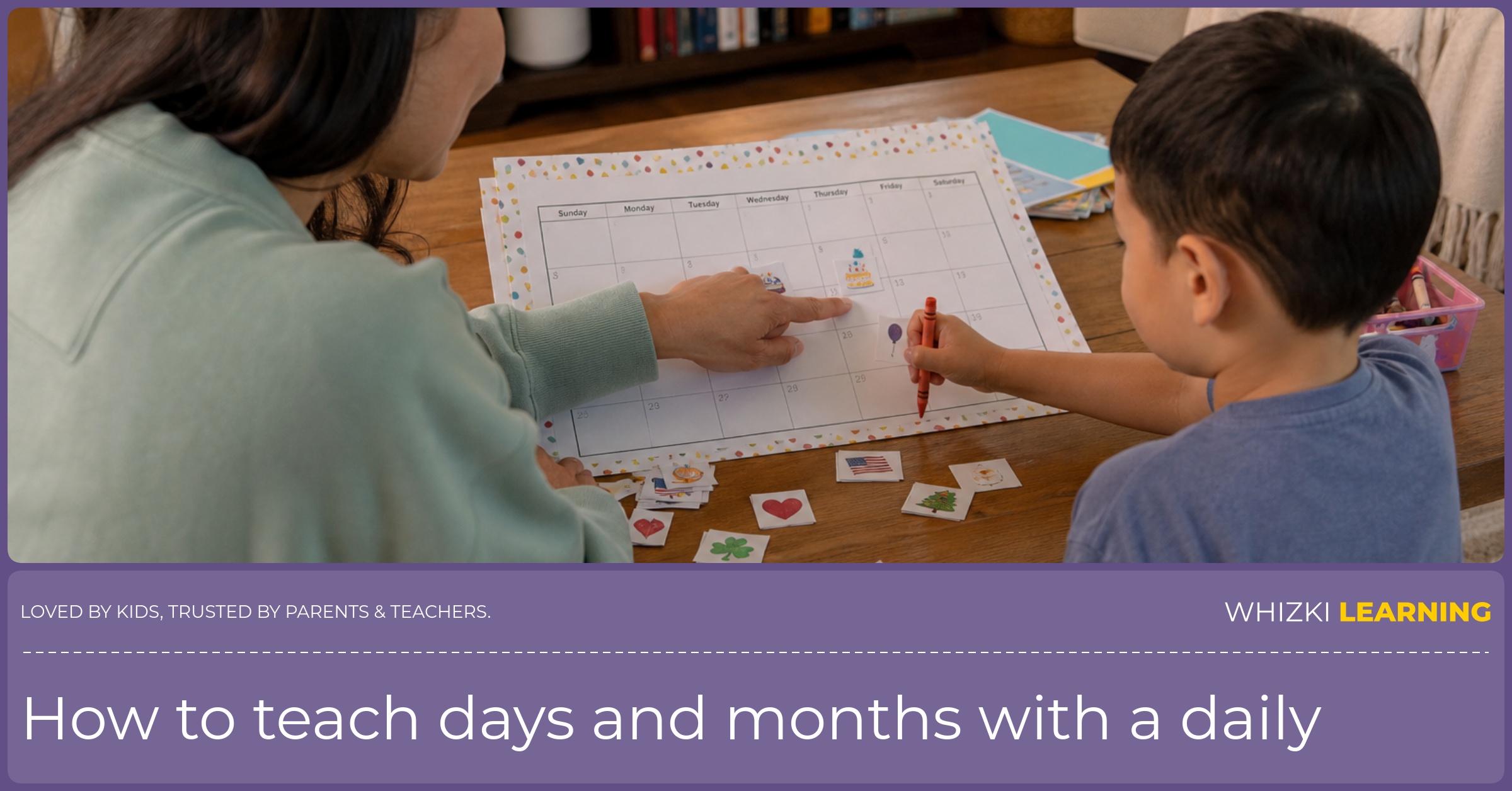
Months are harder than days because months move slowly and feel less visible to young children. Start with the child's birthday month, family birthday months, and the holidays your family or classroom actually celebrates. The month becomes meaningful when the child can say, "My birthday is in May," or "Pumpkins come in October."
NAEYC family-centered practice supports using the child's home culture, celebrations, and family calendar as teaching material. A classroom teacher can invite families to share one important month, and a homeschool parent can add a sticker for a cousin visit or camping trip. The adult script can stay short: "June is our beach month," or "December is when Grandma visits."
If your family wants the full sequence, use a kid-friendly guide to all 12 months in order after the child has a few anchor months. Sing the month song, then stop at the child's birthday month and cheer softly. The full list matters, but personal meaning makes the full list stick.
Keep the routine kind when a child forgets
Mistakes are information, not misbehavior, during a calendar routine. A child may know the song at circle time and still freeze when asked at the table because context changes memory. Offer two choices, such as "Is today Monday or Tuesday?" and point to the answer while saying the word clearly.
Occupational-therapy heuristics and early-childhood classroom practice both favor reducing the load when a child is tired, hungry, or busy with a transition. A calendar minute can become ten seconds on hard mornings: sing, point, name today, and move on. Consistency matters more than length, and a warm adult voice keeps the routine safe enough for practice.
The calendar minute is small on purpose, and small practice is often what families can protect. Start with today, yesterday, and tomorrow, add the song, then connect months to birthdays and holidays. A child who hears the same calm questions each day will gradually build the language for time without a battle at the kitchen table.