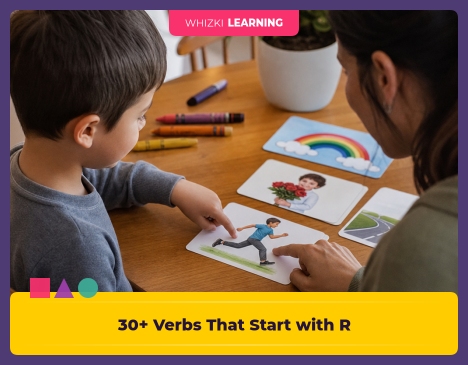
When a child freezes over a worksheet or starts wiggling halfway through letter practice, grab one action word, act the word out together, and say the /r/ sound before the word. R verbs work well for ages 3 to 7 because children can hear the starting sound, move their bodies, and connect print to real life in under a minute.
Reviewed by Whizki Editorial Team, Early Childhood Education Editors.
How to teach R verbs without turning practice into a battle
The letter R can feel tricky because the sound changes slightly in real speech, especially for young children who are still building clear speech patterns. The Orton-Gillingham approach gives children a steady path: say the sound, touch or trace the letter, then use the word in a real action. A quick routine might be, “R says /r/, run starts with R, now run to the rug.”
Kindergarten vocabulary grows faster when children use words instead of only naming flashcards. NAEYC guidance supports playful, meaningful language practice, and R verbs fit that guidance because a child can move, pretend, and talk in the same minute. For extra letter-sound practice, pair these words with our letter R learning page during morning table time.
Action words are verbs, so the R words below are different from object words and describing words. If a child wants rain, rabbit, or robot, use first words starting with R for nouns. If a child wants red, round, or rough, use describing words starting with R for adjectives.
Print a matching R-word practice page from our sight-words printables and tape the page near the kitchen table or circle-time wall. A visible page turns one spare minute into a read-it, say-it, act-it routine.
Body action R verbs children can act out
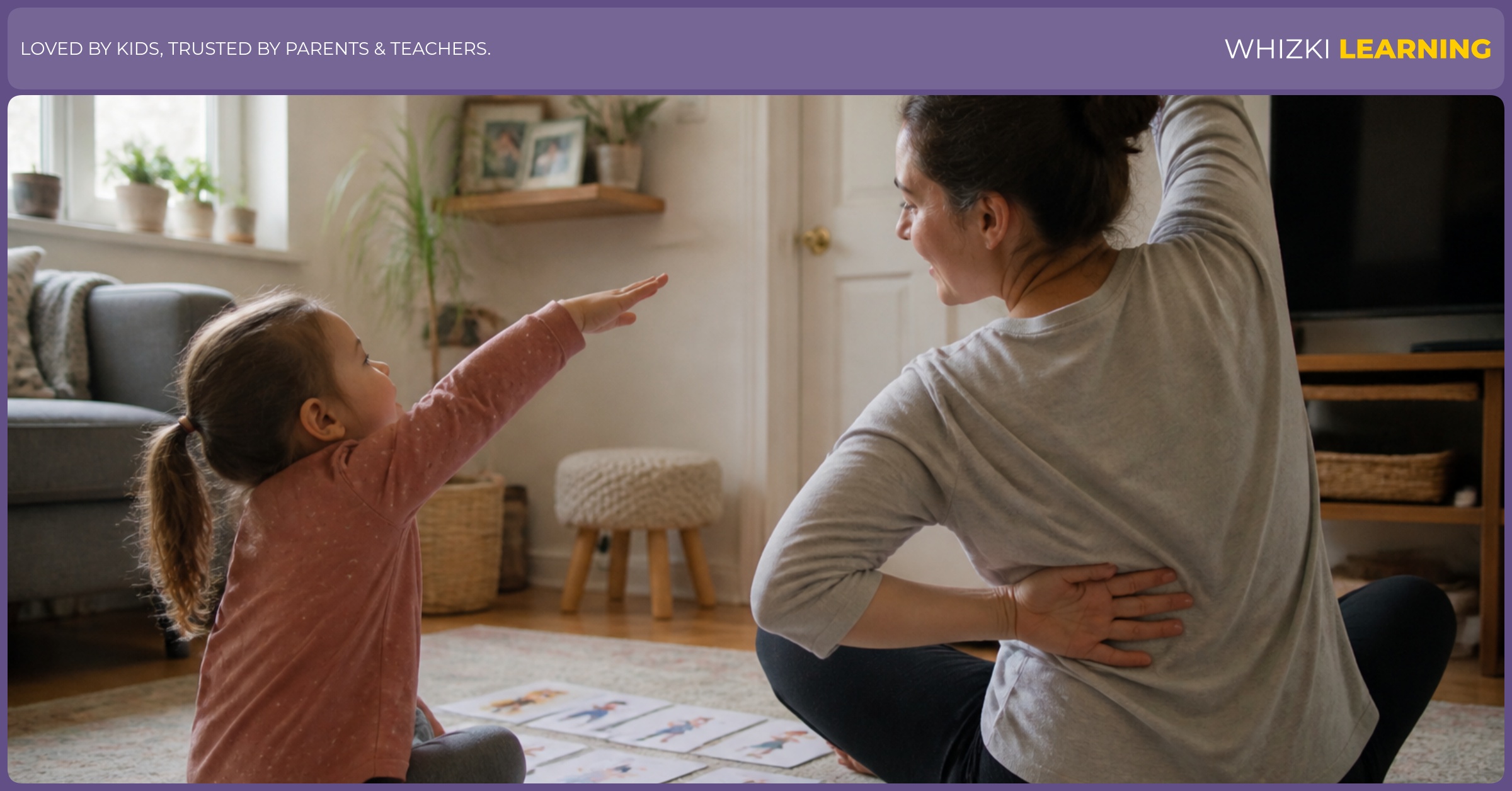
Body action R verbs are the easiest place to start because movement gives the brain and body the same message. Occupational-therapy basics often use big movement before fine-motor work, so a child who runs, reaches, and rolls may settle more easily before tracing. Keep the movement safe, short, and silly enough to invite a smile.
Read one word, model the action, then let the child copy the action. A Reggio-inspired teacher would watch which action catches the child’s interest and build the next sentence from that interest. A child who loves “roar” may read more willingly when the word feels like play.
- Run: Run to the rug.
- Reach: Reach for the sky.
- Roll: Roll across the mat.
- Raise: Raise both hands high.
- Rest: Rest your sleepy body.
- Rub: Rub your hands together.
- Rock: Rock side to side.
- Ride: Ride your pretend bike.
- Roar: Roar like a lion.
- Rotate: Rotate your shoulders slowly.
- Rise: Rise from your chair.
- Relax: Relax on the pillow.
Household R verbs for real daily routines
Household R verbs help children hear literacy inside normal family life. Montessori practice values practical life work because small chores build independence, sequencing, and careful hand use. A child can rinse a cup, return shoes, or replace marker caps while hearing the same starting sound each time.
Use household R verbs during a routine that already exists, not during a brand-new lesson when everyone is tired. Say the verb first, give the child a tiny job, and praise the effort with clear language. “You returned the shoes” gives better vocabulary practice than “Good job.”
- Rinse: Rinse the cup gently.
- Read: Read one picture book.
- Return: Return shoes to basket.
- Refill: Refill the water bowl.
- Remove: Remove socks from floor.
- Recycle: Recycle the clean box.
- Rake: Rake leaves into piles.
- Repair: Repair the torn page.
- Replace: Replace caps on markers.
- Ring: Ring the dinner bell.
- Restock: Restock napkins in drawer.
- Replant: Replant the little sprout.
Play R verbs for blocks, puppets, and pretend games
Play R verbs give children a reason to repeat words without feeling drilled. Speech-language pathology practice often builds language through imitation, expansion, and turn-taking, and pretend play gives those skills a natural home. A teacher can say “rescue,” a child can rescue the bear, and the class can repeat the word with meaning.
Keep the example sentence small enough for a preschooler to copy. A 3-word or 4-word sentence gives the child a full idea without overloading working memory. A kindergarten child who wants more language can add a color, place, or character after the action word is secure.
- Rescue: Rescue the teddy bear.
- Row: Row your cardboard boat.
- Rattle: Rattle the music shaker.
- Rebuild: Rebuild the block tower.
- Reshape: Reshape the play dough.
- Reveal: Reveal the hidden card.
- Replay: Replay the puppet show.
- Redo: Redo the puzzle corner.
- Reconnect: Reconnect the train tracks.
- Rev: Rev the toy truck.
- Rip: Rip paper for collage.
- Retell: Retell the dragon story.
An R verb charades game for ages 3 to 7
The R verb charades game turns vocabulary practice into shared laughter. NAEYC-aligned play works best when children can choose, move, and communicate with a caring adult nearby. The goal is not perfect guessing, the goal is hearing and using R action words in a warm back-and-forth exchange.
Write six to ten R verbs on paper strips, fold the strips, and place the strips in a bowl. A grown-up can whisper the word to a younger preschooler, while an older kindergartener can try to read the word first. Keep each turn short so children get many chances to move and speak.
- Choose one paper strip from the bowl.
- Whisper the word if the child needs help.
- Perform the action without saying the answer.
- Name the R verb after each guess.
- Celebrate with a quiet clap or smile.
A trace-the-word tip for the letter R
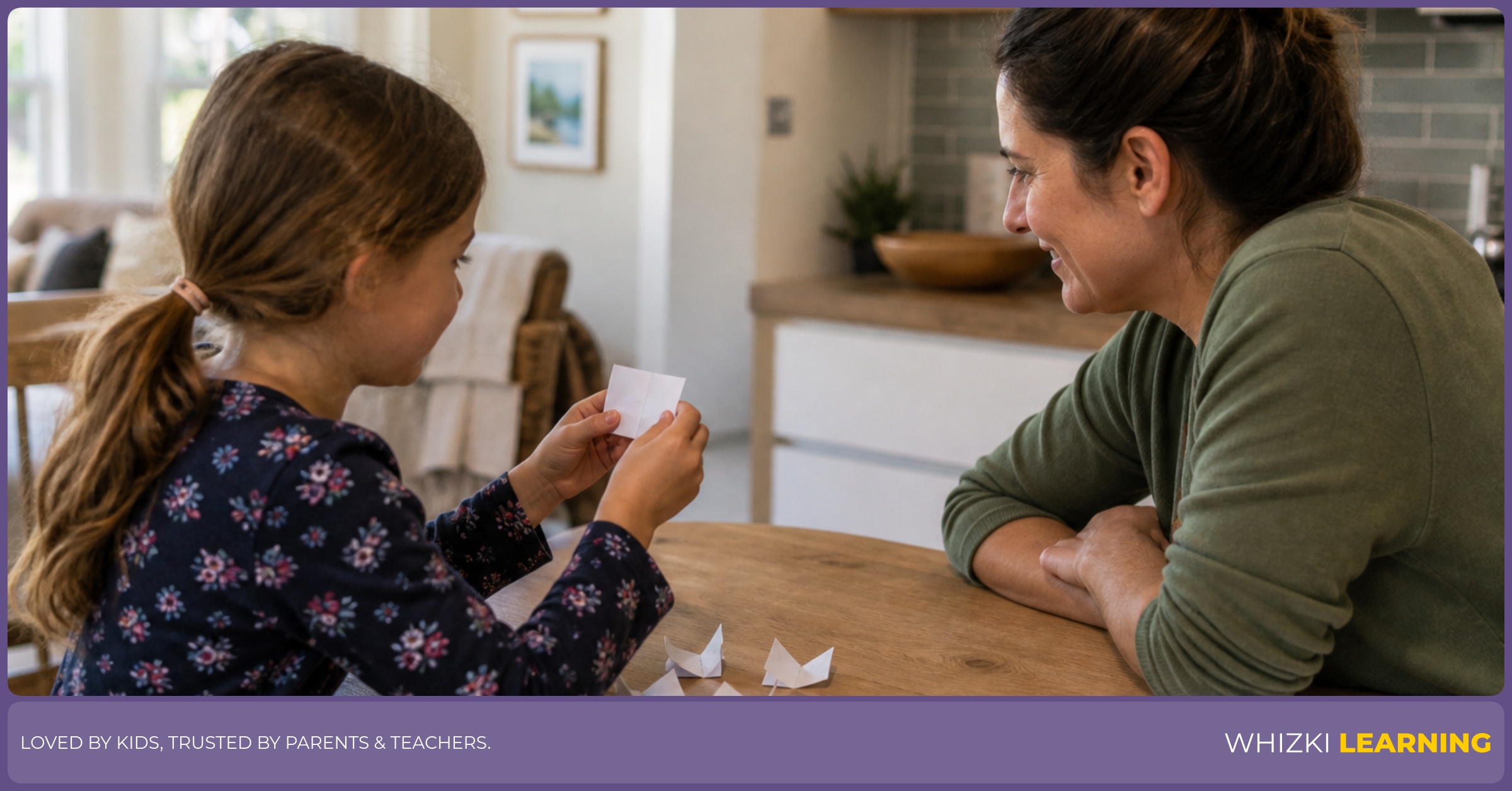
The trace-the-word tip is simple: trace the uppercase R with a finger before using a pencil. Orton-Gillingham lessons often use multisensory steps because a child benefits from seeing, saying, touching, and moving through the same letter pattern. Start at the top line, pull down, bump around, and kick out the leg.
Use a chunky crayon, broken crayon, or short pencil for young hands because occupational-therapy basics favor tools that encourage a more natural finger grip. Say the verb while tracing the first letter, then act the whole word. A child can trace R in “run,” say “run,” and run two steps to make print feel useful.
Trace only two or three words at a sitting for children ages 3 to 5, and add more only when the hand stays relaxed. A kindergarten child may trace a full mini-list if the pencil grip remains comfortable and the mood stays calm. Stop before the page becomes a power struggle because short practice done often beats one long worksheet battle.
Quick teaching notes for parents and teachers
R verbs are strongest when a child sees the word, hears the /r/ sound, says the word, and acts the word out. The Orton-Gillingham sequence and Reggio observation can live together easily: give a clear sound routine, then follow the child’s play interest. A child who chooses the action gains more practice because the word has a purpose.
Use nouns, adjectives, and verbs in separate small moments so children do not have to sort too much at once. Name the category out loud with plain language: “Run is an action word” or “Red tells what kind.” Category language builds early grammar without turning the kitchen table into a lecture.
Start with three R verbs today, one body action, one household action, and one play action. Tape the printable where practice already happens, act out the words for one minute, and let the child feel the win before adding more.