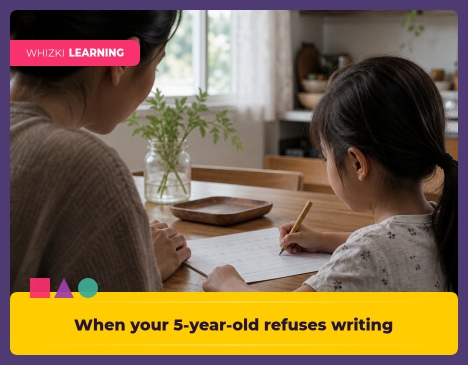
When your 5-year-old refuses to practice writing, put the pencil down for two minutes, name the hard feeling, and offer one tiny job like tracing one letter or drawing one line. Writing refusal at age 5 is usually a competence problem hiding inside a behavior problem, because the child may already feel behind, rushed, or clumsy before the page even starts. A calm reset protects the relationship and gives the hand, eyes, and brain a smaller target.
Reviewed by Whizki Editorial Team, Early Childhood Education Editors.
Why writing refusal is usually fear, not defiance
Writing practice asks a 5-year-old to manage pencil grip, posture, letter memory, sound awareness, spacing, and adult feedback at the same time. The Orton-Gillingham approach reminds teachers to make new literacy work explicit, multisensory, and paced so the child can feel the next step instead of guessing the whole task. When the child says, “No,” the child may be saying, “I do not know how to make my hand do that yet.”
NAEYC guidance on developmentally appropriate practice also matters here, because children between 3 and 7 grow unevenly across language, movement, attention, and confidence. A child may tell a rich story, recognize many letters, and still avoid forming those letters with a pencil. The mismatch can look like stubbornness at the kitchen table, especially when dinner, homework folders, and tired adults are all in the room.
Occupational-therapy basics give parents another useful lens: handwriting is a fine-motor task built on shoulder stability, hand strength, finger control, and visual-motor planning. A child who presses too hard, grips awkwardly, swaps hands often, or tires after two letters may be working much harder than the page suggests. The first goal is not prettier letters, the first goal is safer effort.
Shrink the ask before you teach the letter
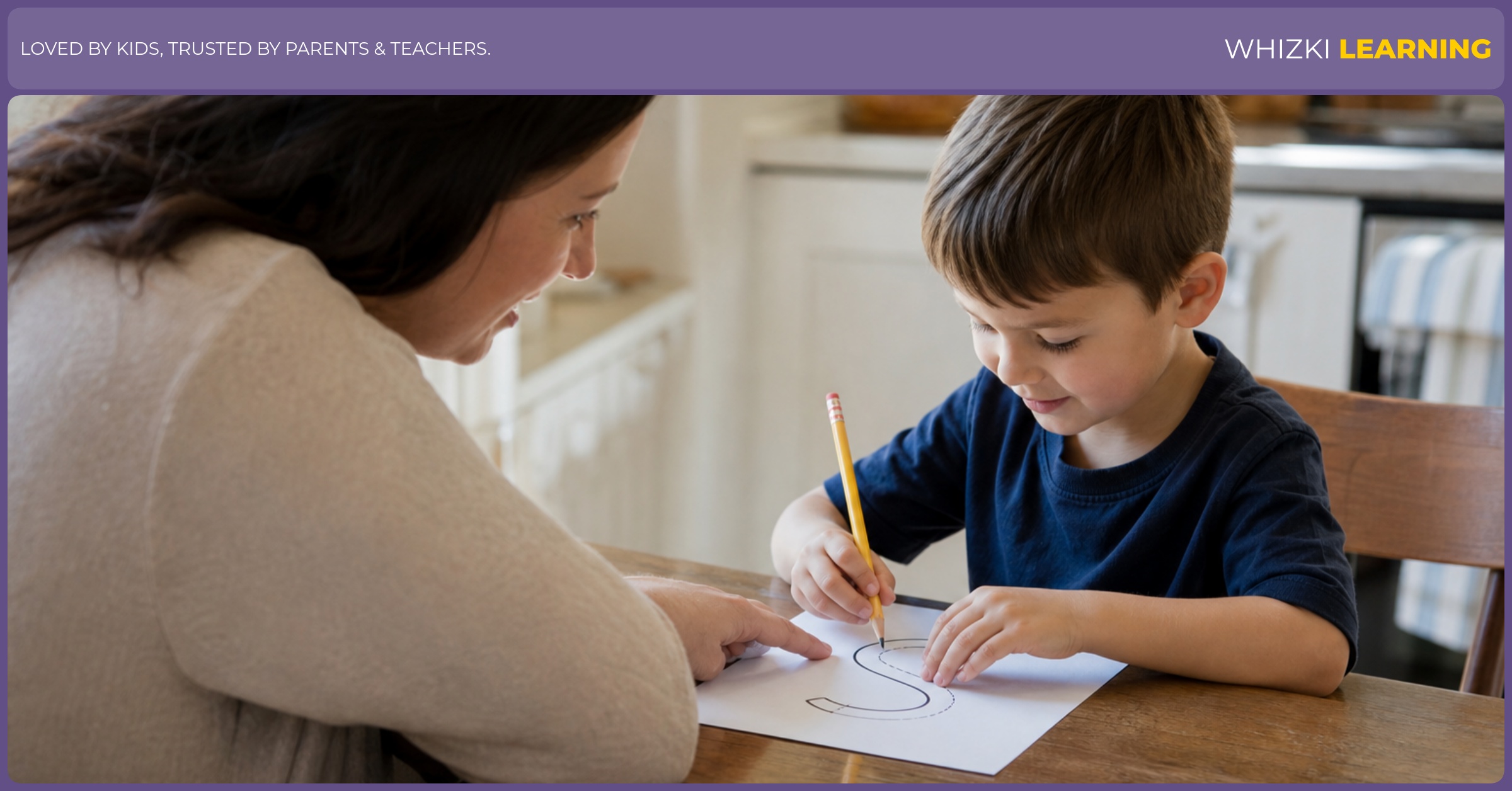
The fastest reset is to make the writing task so small that the child can finish before fear takes over. In my classroom, I often move from “write your name” to “make the first line of the first letter,” because success with one stroke changes the child’s body language. Montessori and Reggio-inspired observation both start with watching the child’s materials, pace, and choices before adding more instruction.
The writing page should have fewer marks, more space, and a clear stopping point. Try one letter, one word, or one picture label, then close the pencil work while the child still feels successful. If the child wants to keep going, the parent can say, “Your hand still looks steady, so choose one more,” instead of turning the moment into a long practice session.
The writing tool can also shrink the demand. A short crayon, a broken piece of chalk, a chunky pencil, or a marker on a vertical surface can make grasp and wrist position easier for small hands. Occupational therapists often use short tools because short tools naturally invite a more functional finger grasp without a lecture about pencil grip.
A playful page can lower the stakes when the child expects correction. For fresh ideas, the guide to making writing fun gives parents simple ways to mix marks, pictures, and pretend play. The point is not to hide learning inside entertainment, the point is to make the first attempt feel safe enough to try.
Use a 7-day confidence reset when refusal becomes a pattern
A 7-day reset helps when writing refusal has become the same argument every afternoon. The plan should rebuild trust before the plan asks for neat handwriting, because a worried child needs repeated proof that practice will stay short and kind. The Orton-Gillingham principle of step-by-step practice fits this moment well, because the child sees one clear action at a time.
The first two days can focus on drawing, air-writing, sand tracing, or forming letters with play dough instead of pencil lines. The middle days can add one familiar letter, one name letter, or one sound-linked word. The final days can invite a real reason to write, such as a snack label, a card for a grandparent, or a sign for a block building.
Parents who want a ready structure can follow the 7-day writing confidence reset and keep each session shorter than the child expects. The reset works best when the adult ends practice after a win, even if the child made only one strong stroke. Stopping early teaches the child that writing practice has an ending the child can trust.
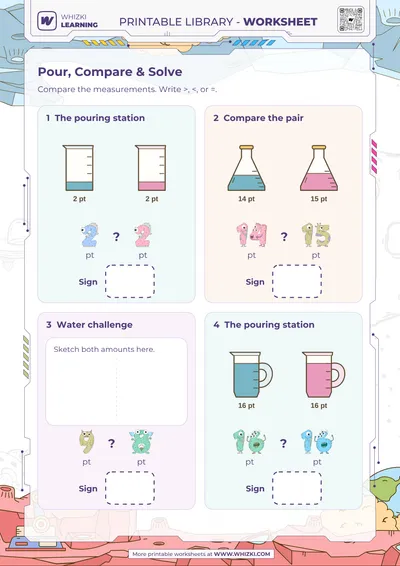
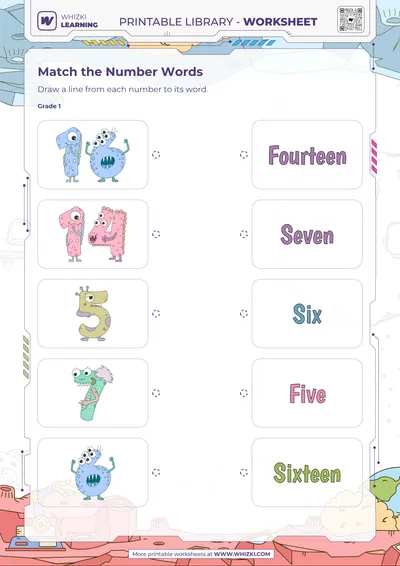
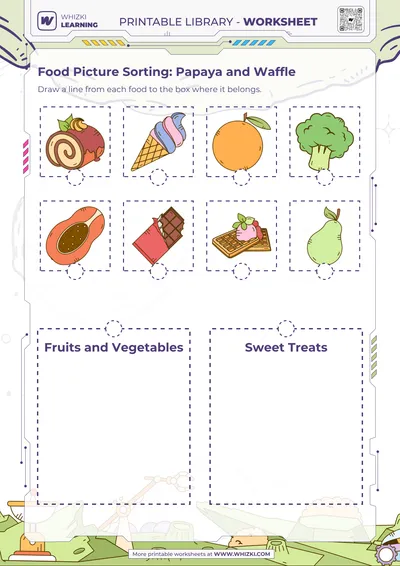
For a low-pressure page, choose one simple tracing or prewriting sheet from our printable library and place only that page on the table. A single page with open space is easier for a hesitant 5-year-old than a packet that looks endless.
Two scripts that lower the stakes
The first script is for the moment the child refuses before touching the pencil: “Writing feels too big right now. I will make the job smaller, and your job is one line.” Speech-language pathology practice often models short, concrete language for young children, because a child under pressure may not process a long explanation. The script names the problem, removes shame, and gives one action.
The second script is for messy writing or a letter that goes sideways: “That was a brave try. Circle the part you like best, and I will show one tiny fix.” NAEYC-aligned feedback focuses on effort, process, and specific next steps rather than global praise or criticism. The child learns that mistakes are information, not proof that the child is bad at writing.
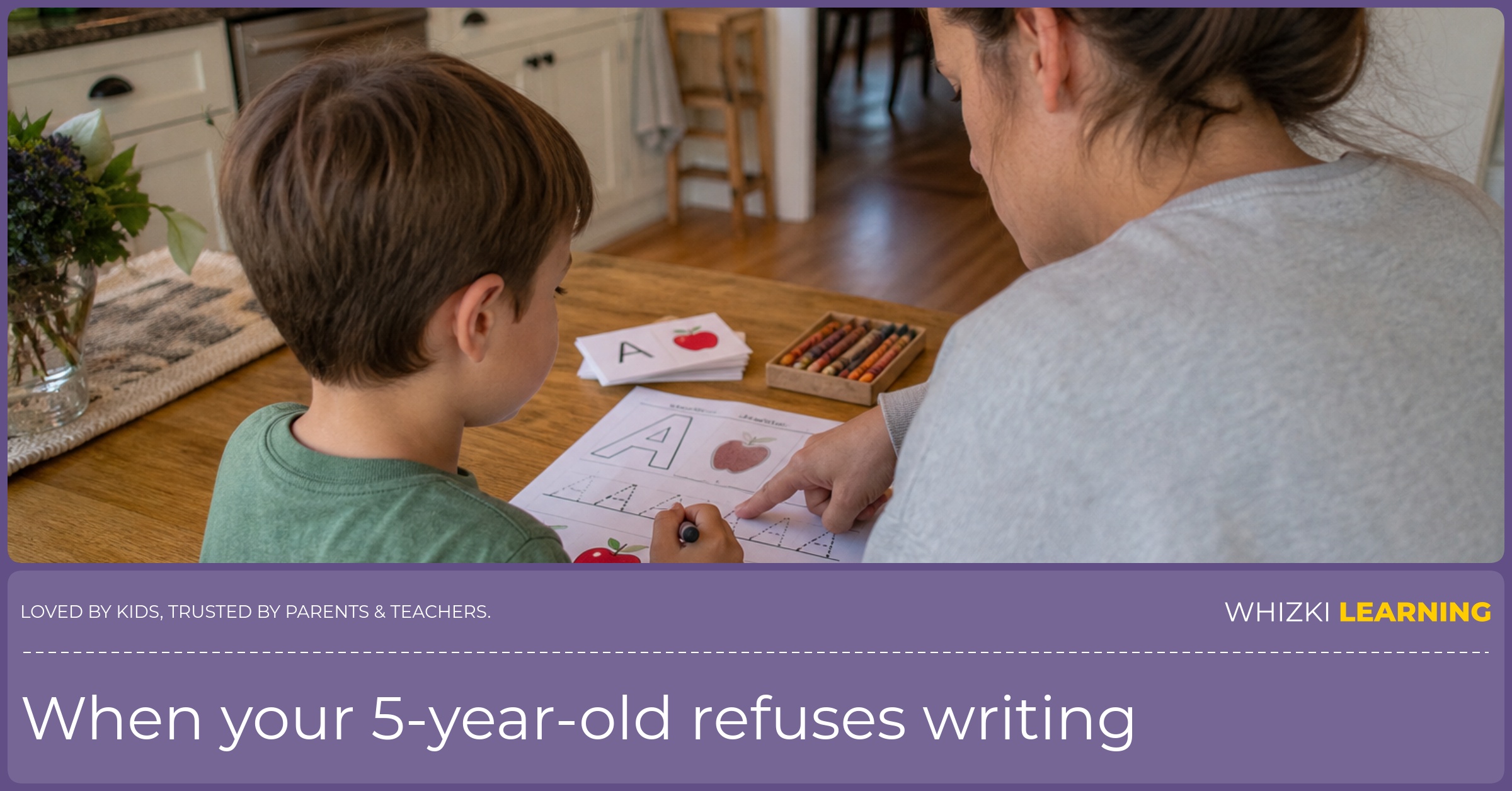
The adult tone matters as much as the words. A quiet voice, a chair beside the child instead of across the table, and a finger pointing to the next stroke can make the practice feel cooperative. Reggio teachers often talk about the environment as a teacher, and a calmer setup can teach safety before the adult says a word.
When to pause and when to ask for help
A short pause is wise when the child is hungry, exhausted, wiggly, or already upset from another part of the day. Early-childhood teachers often adjust timing before changing the whole plan, because a skill can look absent when the child’s body is simply done. Morning practice, porch chalk, or a three-minute session after a snack may work better than a worksheet at bedtime.
Professional support is worth considering when pain, strong hand fatigue, extreme grip tension, frequent avoidance, or major frustration continues across settings. A pediatric occupational therapist can look at hand strength, pencil grasp, posture, and visual-motor coordination, while the kindergarten teacher can compare classroom patterns with home patterns. A speech-language pathologist or reading specialist may help if letter sounds, word retrieval, or early literacy language are also part of the struggle.
The parent does not need to turn every refusal into a lesson. The better plan is to protect the child’s belief that writing is learnable, then practice in doses the child can handle. Confidence is not a bonus skill in early writing, confidence is the bridge that gets the pencil moving again.
Writing practice can stay small, warm, and honest while a 5-year-old builds the strength and courage to try again. For more kitchen-table ideas like these, join our weekly newsletter.