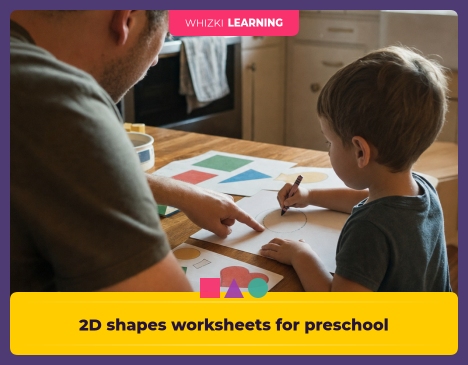
If your preschooler calls every shape a circle or melts down when the pencil comes out, start with one 5-minute trace-and-find page, then hunt for the same shape on the table, wall, or floor. Shape learning works best when paper practice stays short and hands-on play carries the idea into real life.
Reviewed by Whizki Editorial Team, Early Childhood Education Editors.
What the 2D shapes worksheets cover
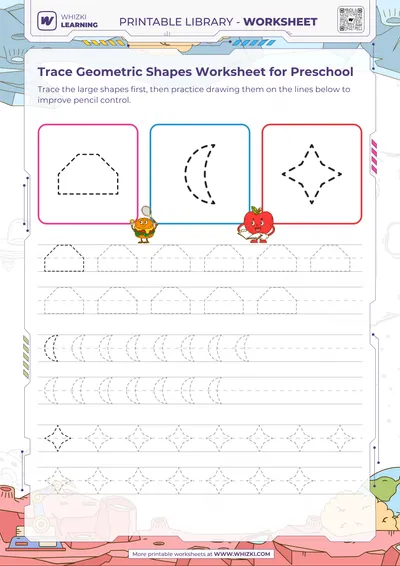
The 2D shapes worksheets cover circle, square, triangle, rectangle, oval, star, heart, diamond, pentagon, and hexagon. Each shape page uses a steady routine: trace the outline, find matching pictures, sort examples, and draw one shape from memory.
Parents who search for “shapes worksheets preschool” usually need clear pages, not a giant stack of look-alike printables. The shape set below keeps the task simple enough for morning bins, small groups, homeschool lessons, or a quiet kitchen table.
The preschool shape routine fits NAEYC guidance because young children learn math best through talk, objects, movement, and short paper tasks. The worksheet page gives the child a clear target while the adult names sides, corners, curves, straight lines, and same-or-different details.
The printable set works well beside crayons, buttons, blocks, and snack pieces because children need to feel and see geometry before shape words stick. For extra pages that match short table time, browse our printable library and choose one shape at a time.
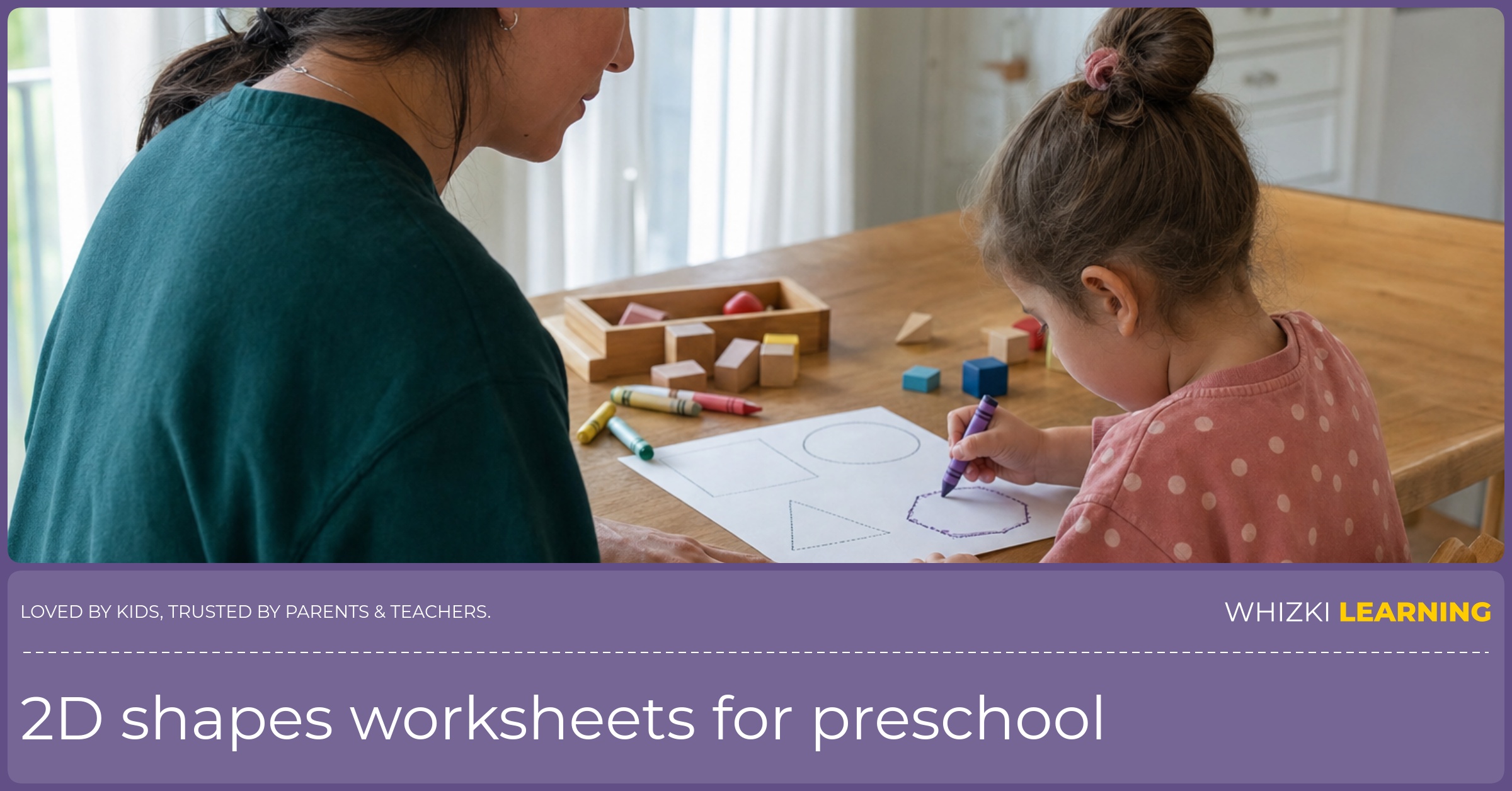
How to use one page without a power struggle
The one-page plan starts with the easiest visible difference, usually circle versus triangle or square versus oval. Occupational-therapy basics point to short hand warm-ups first, so the child can pinch a crayon, make big arm circles, and trace with a finger before using a pencil.
The adult script matters because shape language can feel crowded at age 3 or 4. Say, “A triangle has three sides,” then pause while the child touches each side, because the hand often understands before the mouth can explain.
The worksheet session can stop after one row when the child is tired, wiggly, or hungry. Reggio-style observation treats the child’s pace as useful information, so the adult can write “loves stars” or “needs more curve practice” for the next small lesson.
Shape walk game for home or classroom
The shape walk game turns the worksheet target into a room search after table practice. Montessori practice often moves from concrete objects to picture symbols, so a child can match the rectangle worksheet to a book, a door, or a placemat.
The adult can choose one shape card, name the shape, and invite the child to find three real examples. If the child wants to count the finds, pair the walk with the numbers learning hub so shape language and counting language grow together.
The shape walk game works in a classroom line, a kitchen, a yard, or a waiting room with no prep. The adult can keep the tone playful by accepting close matches, then saying the exact math word: “That plate is an oval because the curve is longer one way.”
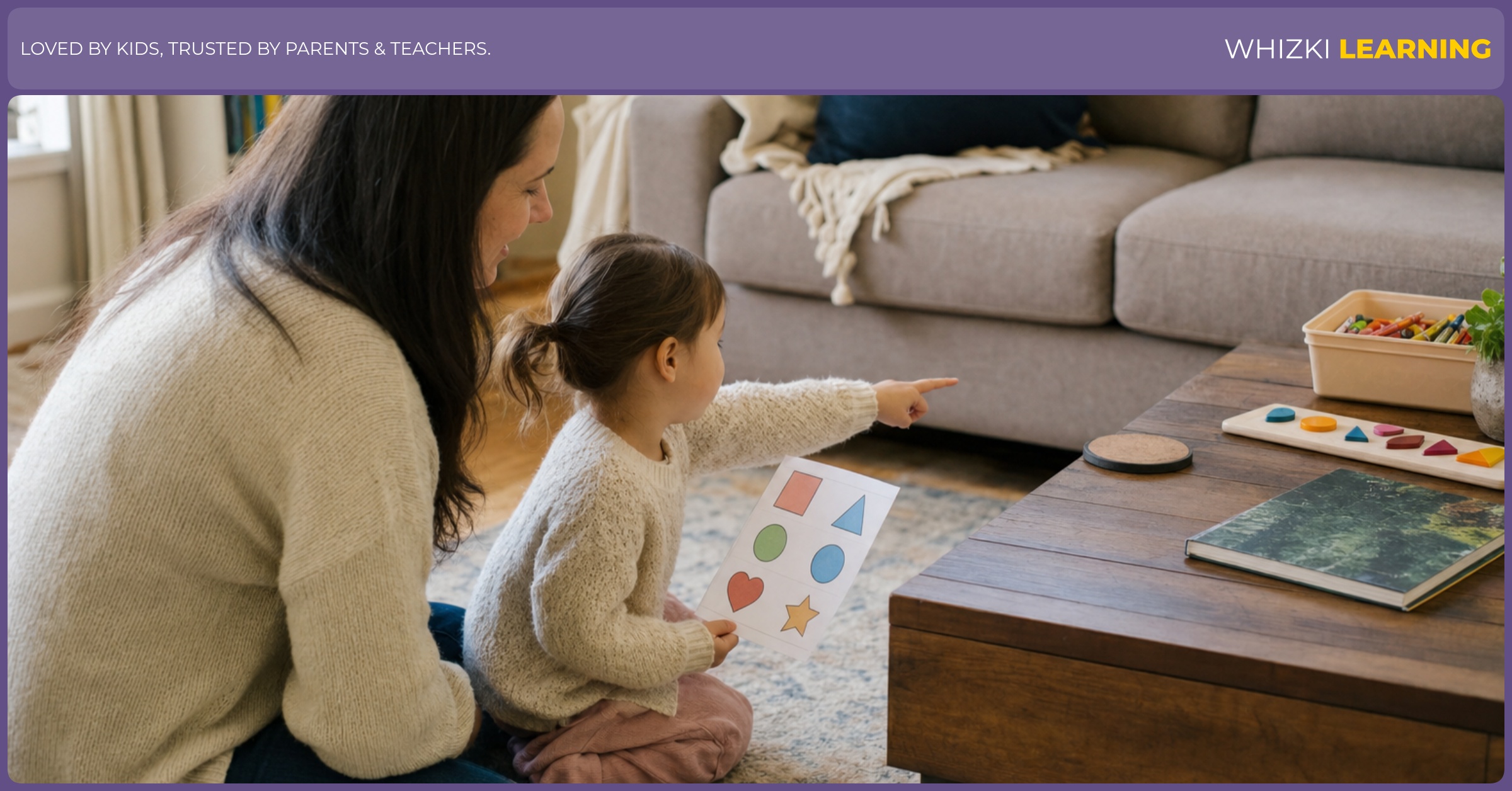
Trace, find, sort, and draw: skill by skill
The tracing page builds path control before the child has to plan a whole drawing alone. The Orton-Gillingham approach uses multisensory practice for letters, and the same say-touch-trace rhythm helps shape names become easier to remember.
The find page builds visual discrimination because the child compares one target shape with several nearby pictures. Speech-language pathology practice often pairs naming with pointing, so the adult can say the word, wait, and let the child point before correcting.
The sort page asks the child to notice attributes instead of memorizing a poster. A square and a rectangle can both have straight sides and corners, while a circle and an oval share one continuous curve.
The draw page gives a kindergarten child a chance to try the shape without a dotted line. The adult can model one calm try, praise a clear feature, and save perfect corners for another day.
Choosing printables for ages 3 to 7
The best worksheet for a 3-year-old has large outlines, wide tracing paths, and only a few choices on the page. NAEYC developmentally appropriate practice favors materials that match the child’s current control, so a preschool page should leave room for big marks and extra thinking time.
The best worksheet for a 6- or 7-year-old can add sorting by sides, corners, and real-world examples without turning the page into a test. Orton-Gillingham tutoring reminds educators to keep review predictable, so repeated directions can lower the language load while the math idea stays fresh.
The premium 2D Shapes Practice Pack in our worksheet sets keeps the same trace, find, sort, and draw rhythm across the full shape set. The complete pack lives in Plus for families and classrooms that want the pages in one place.
The worksheet choice should match the child in front of the adult, not the age printed on a package. A child who draws tiny careful stars may need more open drawing space, while a child who presses hard may need a thicker crayon and fewer shapes per page.
The shape worksheet works best when the adult keeps the session short, names one clear feature, and follows with a real object hunt. A calm five minutes with circle, square, triangle, or rectangle practice can teach more than a long stack of pages at the wrong time.