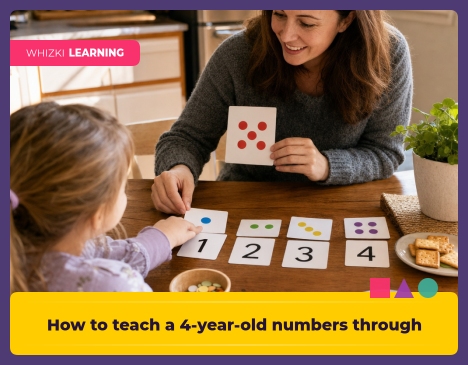
If your four-year-old can sing to ten but freezes when you point to a 6, start today with three minutes of matching one numeral to one tiny snack pile instead of starting another worksheet. Four-year-olds often know the counting chant before number symbols make sense, and that mismatch is normal. The first calm step is to match one numeral to one small pile of real objects, then stop while the play still feels good.
Reviewed by Dr. Anna Klein, EdD, Early Childhood Curriculum Specialist.
Start with recognition before writing
Number recognition comes before number writing because a four-year-old's eyes, ears, and language are usually ready before pencil control is steady. The Orton-Gillingham approach gives a helpful teaching rhythm here: say the name, see the symbol, touch a matching amount, and repeat in a predictable order. A child who can point to 3 on a card is building a real math doorway, even when a written 3 still looks wobbly.
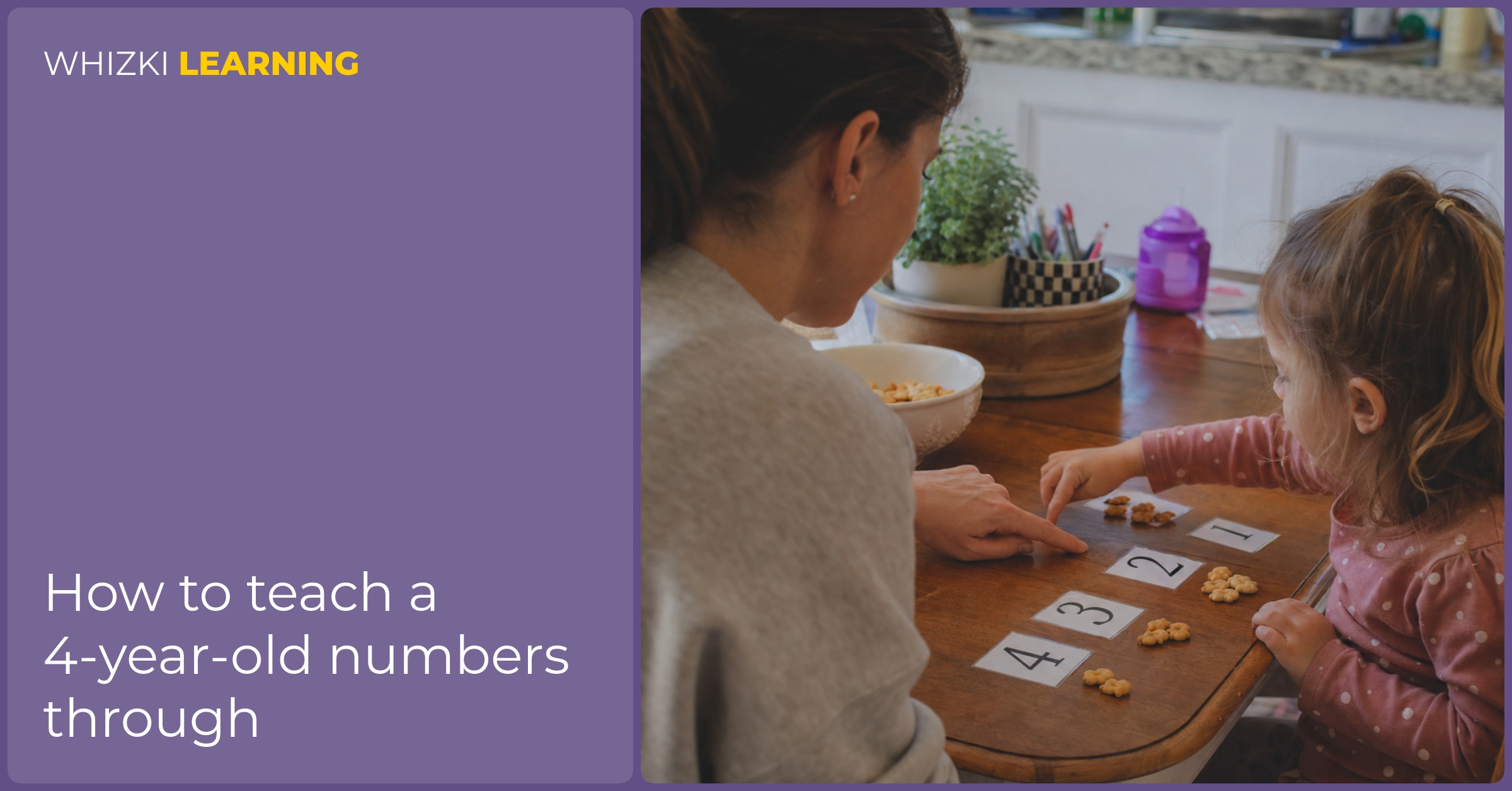
Number practice should begin with 1, 2, and 3 rather than a full wall of 1 through 10. A parent can place a card with 2 beside two crackers, two blocks, or two socks and say, “Two means two things.” The adult language stays short because the child's job is to connect the symbol with the amount, not perform a lesson.
Number reversals and mix-ups are information, not failure. An occupational-therapy rule of thumb is big movement before tiny marks, so air-writing a huge 5 or tracing a sandpaper-style numeral with one finger can come before pencil writing. For a simple order of skills and number pages to revisit later, keep the numbers learning hub nearby as a parent reference.
Count everything your child touches
Counting works best when each number word lands on one object the child can touch or move. NAEYC guidance for early math favors playful, meaningful counting over isolated drill because young children learn quantity through real routines. The adult can slow the pace by moving one object at a time and saying one number word for each move.
Breakfast can become math without becoming a lesson. Count three banana slices as the fork taps each slice, count four shoes as the child lines shoes by the door, or count five blocks as the tower grows. A steady hand motion helps the child hear that “one, two, three” is more than a song.
Kitchen counting is especially useful because food, cups, spoons, and plates already matter to the child. If snack time is your easiest teaching window, try a few kitchen number games that fit beside pouring, sorting, and serving. The best counting routine is the routine that the family can repeat without a battle.
Use the subitizing dice trick
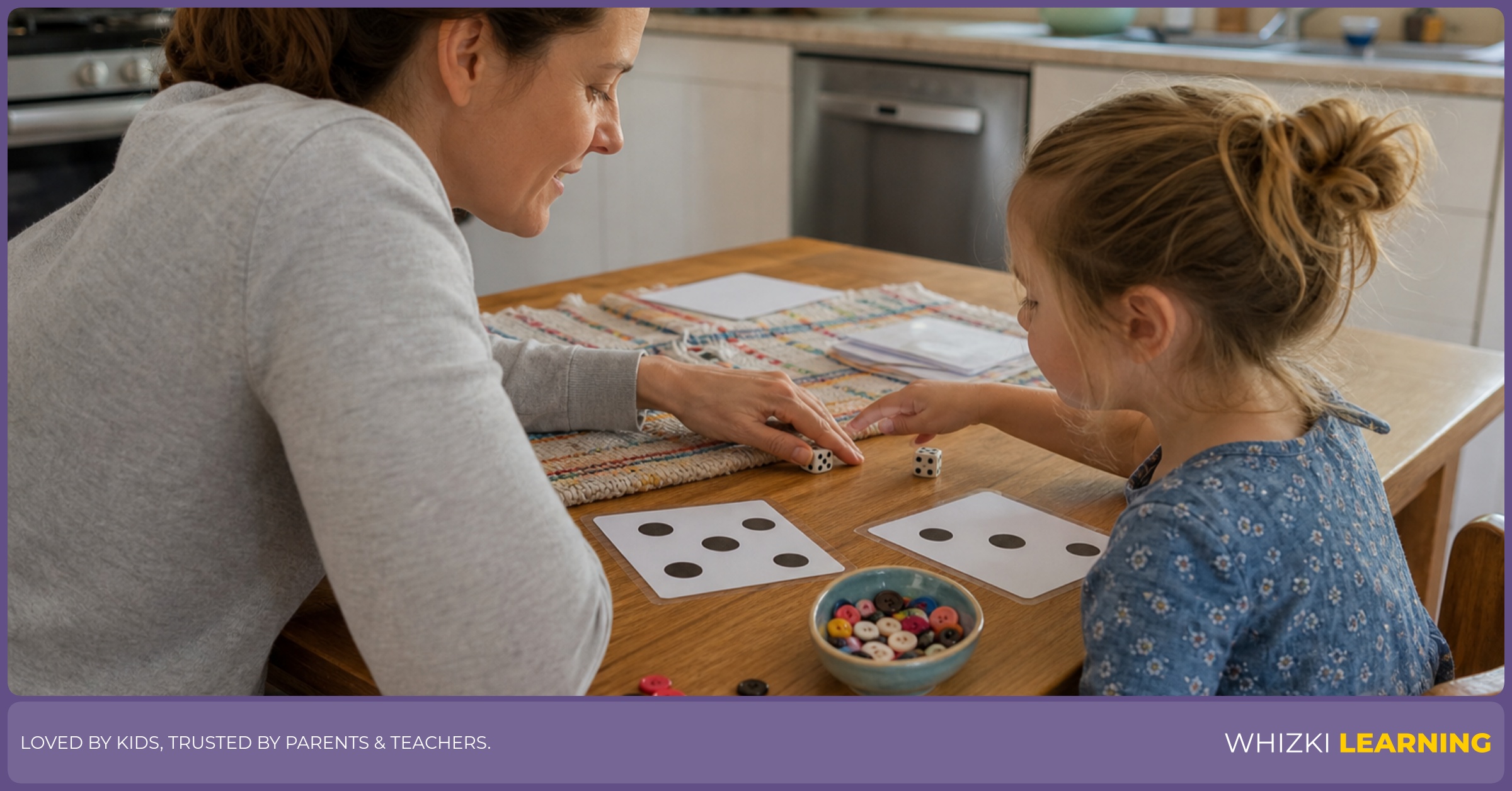
Subitizing means seeing a small amount without counting every dot. Montessori math materials and many early-childhood classrooms use dot patterns because children can compare amounts before children can explain place value or written symbols. A die gives that same visual practice with no prep.
The dice trick is simple: show one die face for two seconds, cover the die with your hand, and ask, “How many dots did you see?” The child can answer with a number word, fingers, or a matching pile of buttons. The adult then uncovers the die and counts the dots slowly to check the guess.
Subitizing practice should stay small and playful. Start with 1, 2, and 3 dot patterns, then add 4, 5, and 6 when the early patterns feel easy. If the child counts every dot, the adult can say, “Counting works too,” because pattern seeing grows with repeated exposure.
Make numeral hunts around the house
Numeral hunts turn number recognition into noticing, which fits the Reggio Emilia habit of following what children already see in the room. A four-year-old may care more about finding a 4 on the mailbox than circling a 4 on paper. The adult role is to narrate the discovery and connect the symbol to the name.
A house hunt can begin with one target number. Place a sticky note with 2 near the snack table, then invite the child to find another 2 on a calendar, a book page, or a measuring cup. The child gets a short burst of success because the game has a clear job and a quick finish.
Number hunts also help children learn that numerals live in many fonts and sizes. A 5 on a puzzle may look different from a 5 on a clock, so the adult can say, “Same number, different look.” That language builds flexible recognition without turning the hunt into a quiz.
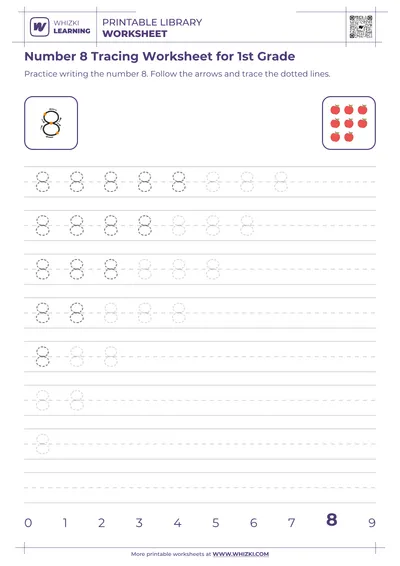
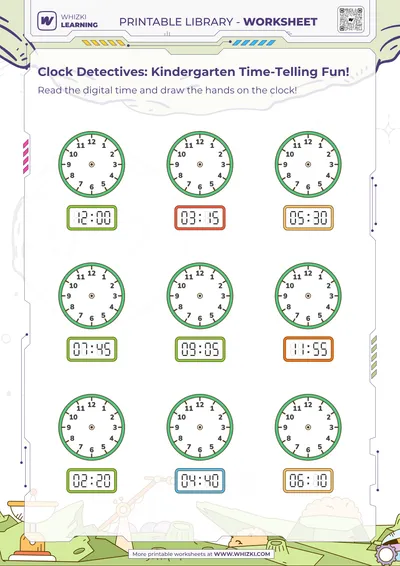
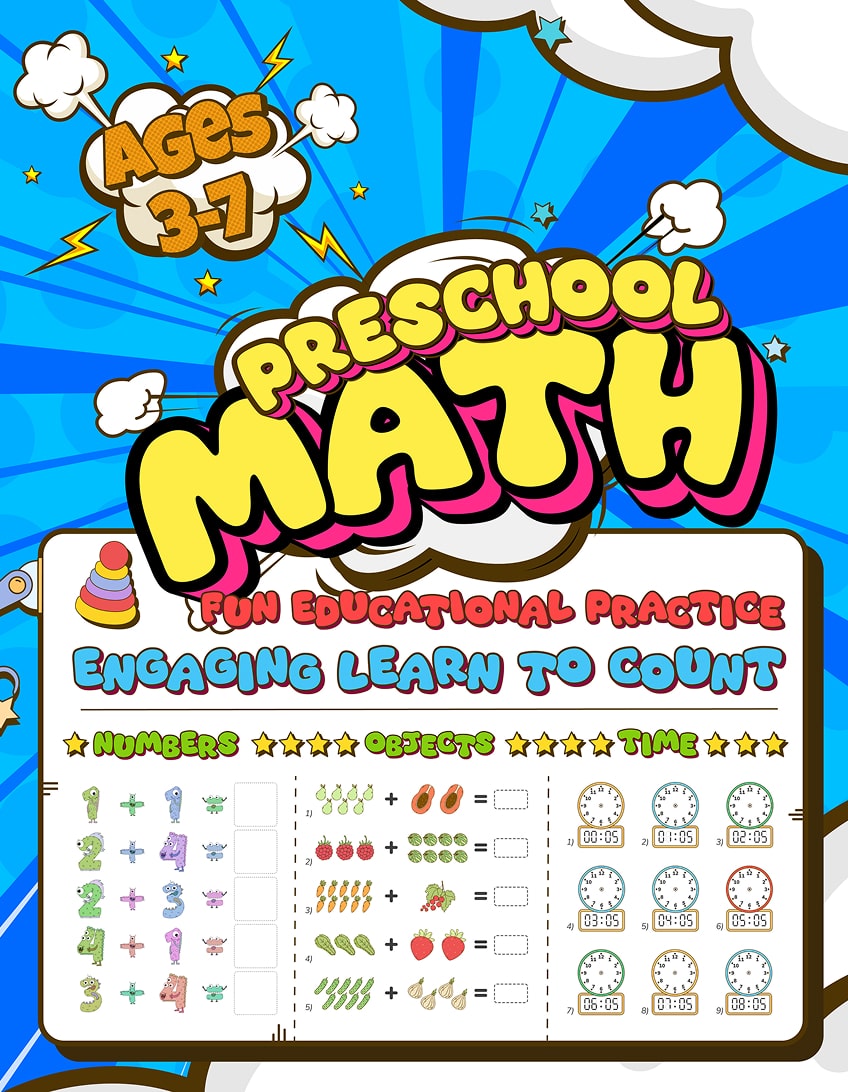
When the wall hunt is working, print one matching number page and tape the page beside the snack spot. Whizki Learning has simple number printables in our printable library, so the printable becomes a cue for play instead of a sit-down test.
Try a week-one number plan
The week-one plan should feel like repetition with tiny changes, which matches NAEYC guidance on developmentally appropriate practice. Four-year-olds need many chances with the same idea before an adult adds more symbols. A calm plan beats a big stack of pages.
Day 1 and Day 2 can focus on matching 1, 2, and 3 to real objects. Day 3 and Day 4 can add dice patterns for 1, 2, and 3, followed by a two-minute hunt for the same numerals around the room. The adult should stop while the child still wants one more turn.
Day 5 can add 4 if the first three numerals feel familiar. Day 6 can bring back the earlier numerals in snack counting, block building, or toy cleanup. Day 7 can be a no-pressure review where the child chooses the favorite number game from the week.
Worksheets belong after the play works, not before the child has a mental picture for the number. If the child asks to write, use a thick crayon, a vertical easel, or a large sheet of paper because occupational-therapy practice often favors stronger shoulder and wrist movement before small pencil work. If the child avoids all number talk for many weeks, ask the pediatrician or the child's teacher for help ruling out vision, language, or attention barriers.
Teaching numbers to a four-year-old is less about racing to 100 and more about making 1, 2, 3, 4, and 5 feel real in the child's hands. Count what the child touches, notice numerals in everyday places, and use dice patterns before asking for written numbers. A few warm minutes each day will do more than a long worksheet session that leaves everyone tense.