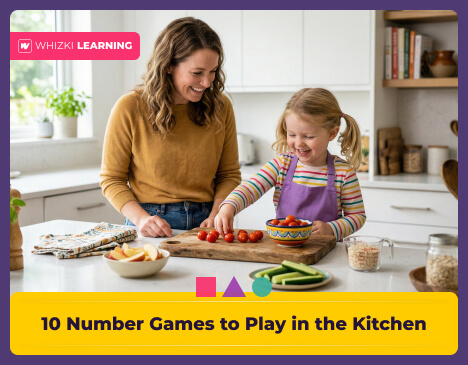
Let’s be honest, kitchen math can feel like a lot when you are already juggling real life. The snack is running late, the stove is hot, and someone is asking for “just one more bite” while you are trying to count out ingredients. When the day is busy, it helps to have number practice that is simple, screen-free, and doable in the moment.
In my years teaching early childhood math, parents told me the same thing over and over, they want counting practice that does not require a digital tablet or a whole new routine. The good news is the kitchen is basically a ready-made math classroom. Kitchen number games use everyday pantry items to build real number understanding through hands-on, screen-free play. Montessori educators also lean on practical life activities, like cooking and sorting groceries, because they connect naturally to bigger ideas like volume, fractions, and one-to-one correspondence, far better than passive flashcards.
This guide is a practical playbook with 10 zero-prep number games made for busy parents and energetic preschoolers. Each screen-free math activity targets a foundational kindergarten skill using safe, common kitchen materials. And when these counting games show up during the daily cooking routine, the kitchen can shift from chaotic to calm, with early math skills getting steady practice. If you want more ideas for keeping the mood regulated while learning happens, check out 10 Calm-Down Activities Before Tracing and Writing (Ages 4-6).
Sorting and Counting Pantry Items
Pantry items are perfect, uniform manipulatives for building early counting skills. Educational psychologists often point out that when children physically move small objects, it supports one-to-one correspondence, meaning one spoken number matches exactly one physical item. These three pantry games give kids quick wins and real numerical confidence.
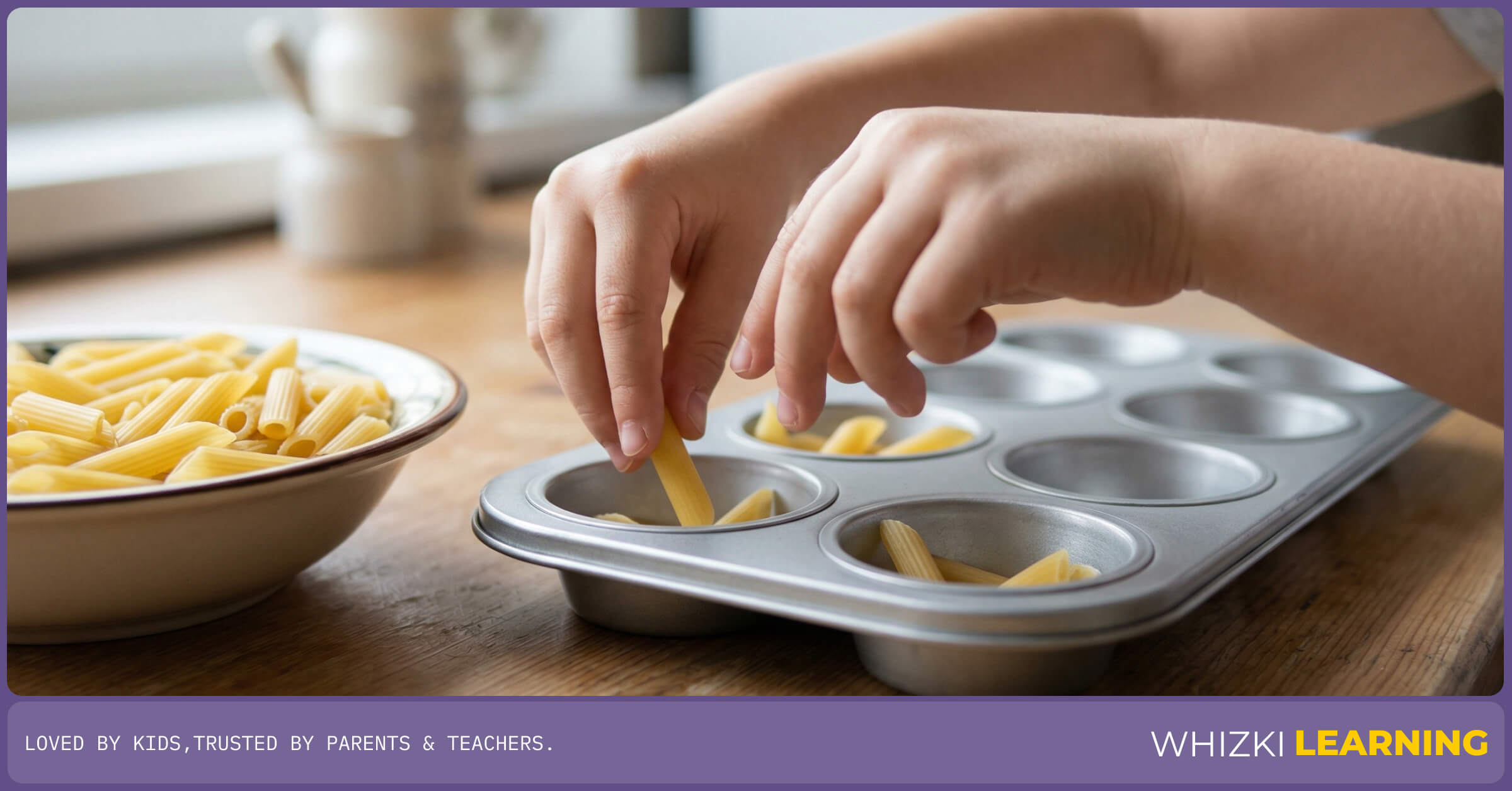
- 1. The Muffin Tin Sorter: Provide the child with a standard six-cup muffin tin and a bowl of mixed dry beans or large pasta shells. The parent calls out a number, and the child places exactly that many items into the first muffin cup.
- 2. The 'High Five' Snack Count: When preparing a snack, parents can use resources like our Number 5 learning hub to practice quantities up to five. The child counts out exactly five crackers or five grapes, touching each piece individually before eating it.
- 3. The Silverware Match: Ask the child to set the kitchen table by counting out the exact number of forks and spoons needed for the family dinner. Matching three forks to three family members is a simple way to show practical math in action.
Measuring Volume and Baking Math
Baking is naturally full of math. Measuring helps introduce early fractions and volume concepts in a way that feels real, not abstract. Early childhood math standards also highlight that comparing quantities, more versus less, sets the foundation for later addition and subtraction. These four measuring games make those ideas visible and easy to talk about.
- 4. The Water Pouring Station: Place two empty plastic bowls and a small measuring cup on a towel. The child counts exactly how many small cups of water it takes to fill the larger bowl, exploring capacity and volume step by step.
- 5. The 'More or Less' Scale: Fill two identical clear cups with different amounts of cereal. The parent asks the child to look closely and identify which cup holds 'more' and which cup holds 'less', building comparative vocabulary that shows up everywhere.
- 6. The Recipe Reader: The parent reads a simple recipe aloud, emphasizing the numbers, like “We need two eggs.” The child becomes the “ingredient gatherer,” actively fetching the correct quantity of items from the refrigerator.
- 7. The Perfect Ten Base: When baking, use a traditional ten-frame drawn on a piece of paper to count out chocolate chips or raisins. Parents can use our Number 10 learning hub for printable ten-frames, helping the child visualize a complete group of ten before adding the ingredients to the bowl.
Snack Time Subtraction and Addition
Snack time is one of the easiest times to practice basic arithmetic because kids are already motivated to participate. Kindergarten teachers often use edible manipulatives since eating makes subtraction feel concrete. These three snack-based games turn “math talk” into something fun and rewarding.
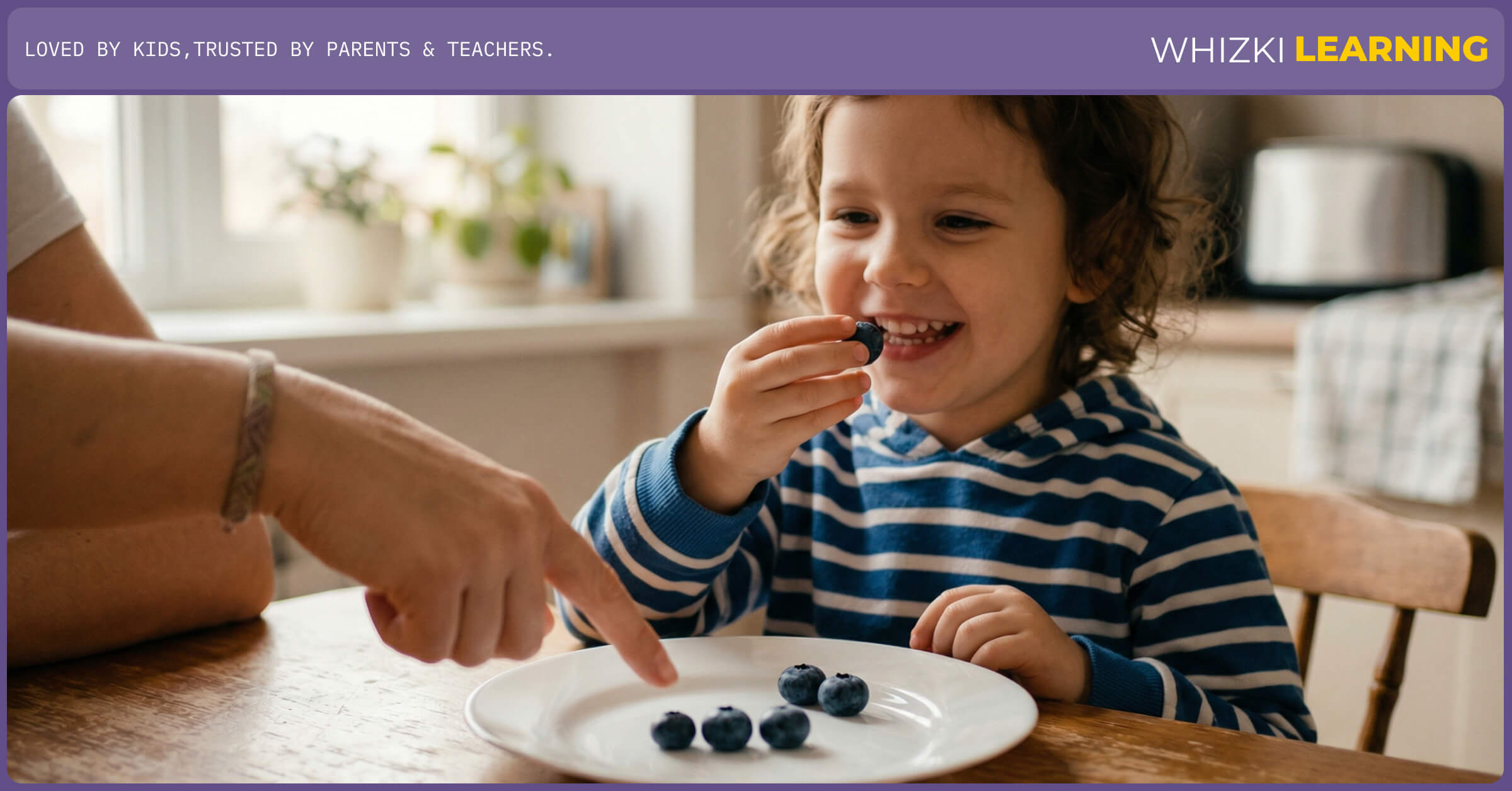
- 8. The Disappearing Blueberries (Subtraction): Place six blueberries on a plate. The child eats two blueberries. The parent asks, “If we had six and you ate two, how many blueberries are left?” This creates a real-world subtraction lesson with an instant payoff.
- 9. The Cracker Addition Challenge: Place two cheese crackers on the left side of a plate and three on the right. The child counts the left group, then the right group, and finally counts them all together to discover the sum of five.
- 10. The Apple Slice Fractions: The parent cuts a whole apple into two equal halves, naming the halves out loud. Then the parent cuts the halves into quarters, showing how one whole object breaks into equal smaller parts.
Solidifying Math Skills with Whizki Workbooks
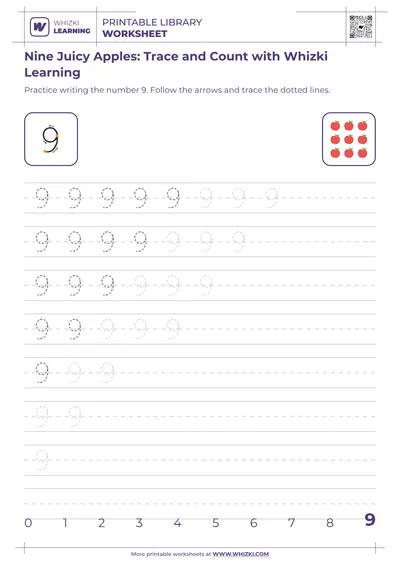
Kitchen number games do a lot of heavy lifting for a child’s understanding. Still, kids eventually need structured practice to master written numerals. Whizki printed kindergarten workbooks use logic-based math puzzles on premium 120gsm paper, which creates the tactile friction kids need for steady pencil control.
This higher-friction paper helps the pencil stay put instead of sliding around. That means the child can confidently write the numbers they just practiced counting in the kitchen. And if you have noticed your child sometimes flips numbers while learning to write, you may find this helpful: Number Reversals (Writing 3, 5, 7 Backwards): When to Worry.
By moving from snack-time math to Whizki screen-free workbooks, parents help their preschooler build more permanent, clearly formed handwriting and stronger number confidence.
Learning in the Heart of the Home
Parents do not need a chalkboard or a quiet study room to support a strong math foundation. With the kitchen as the setting, and these 10 screen-free number games as the plan, learning becomes part of everyday family life. When counting turns into a natural, joyful part of cooking and eating, children start to see numbers as friendly and useful, not stressful.
If you ever feel stuck on what to do when your child says “I’m bored,” remember this, boredom can be a signal for more hands-on play. For more ideas, visit Why "Boredom" is the Ultimate Screen-Free Teacher.