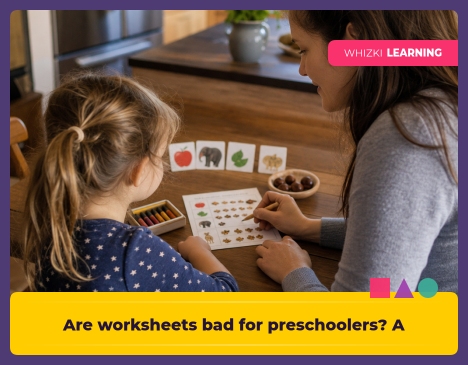
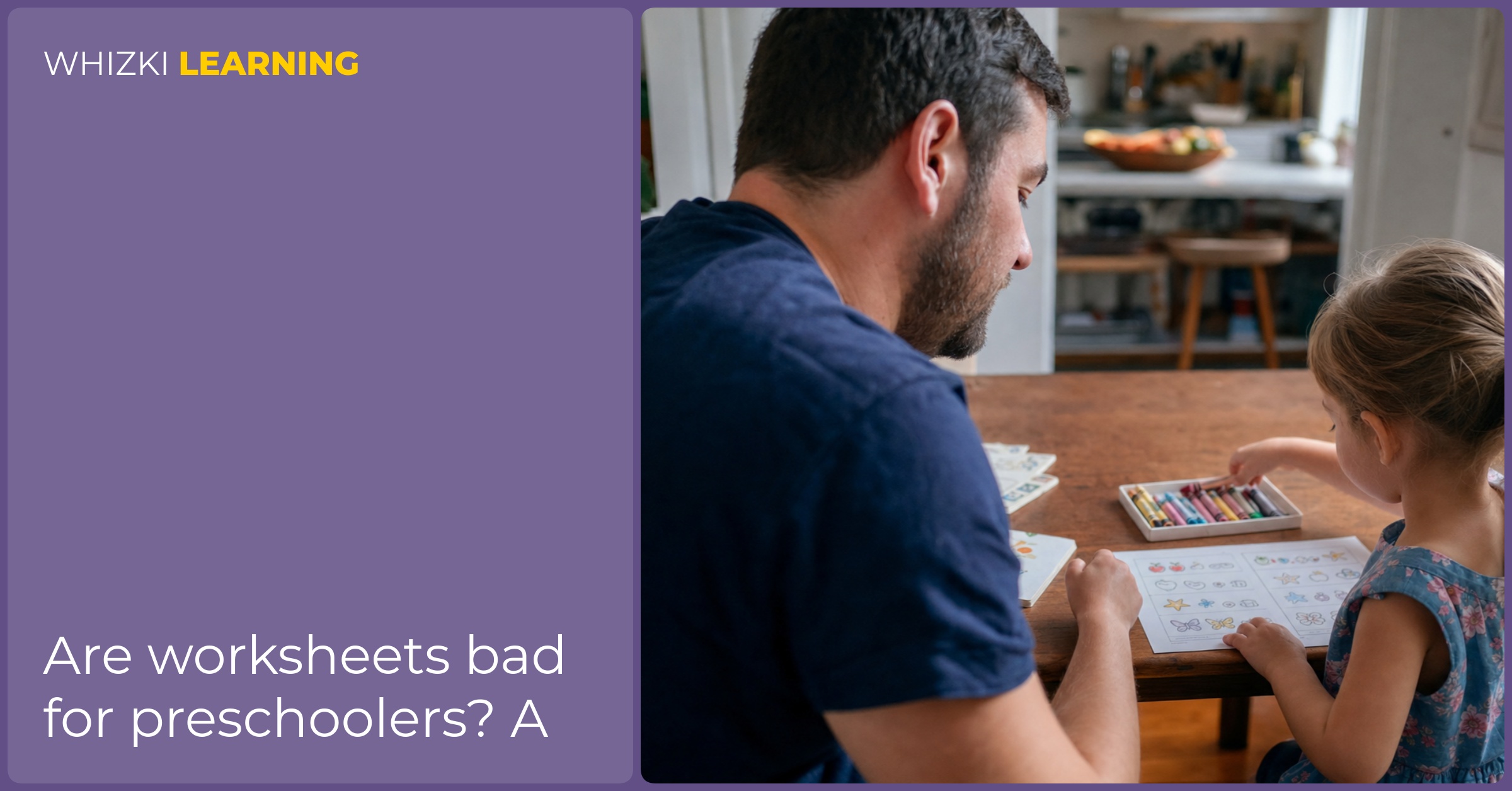
If your preschooler crumples a worksheet, runs from the table, or begs for help on every box, put the page away for today and try one three-minute crayon-and-count page tomorrow. The worksheet is not the enemy, but the power struggle can turn a small skill into a family battle. A good preschool page should feel chosen, brief, and easy to leave.
Reviewed by Whizki Editorial Team, Early Childhood Education Editors.
The strongest case against preschool worksheets
The play-based critique deserves a fair hearing because preschool children learn through movement, talk, pretend play, building, and real objects. NAEYC guidance has long reminded early-childhood teachers that young children need active, meaningful experiences before formal paper tasks. A worksheet that asks a 3-year-old to sit still, copy tiny marks, and finish a full page can miss the child in front of the adult.
Reggio-inspired classrooms offer another useful warning: the child’s ideas matter, and adult-made pages can shrink a wide question into one correct answer. A child sorting shells, drawing a bug, or building a block road is often showing more thinking than a child circling a printed answer. A worksheet can flatten rich play when the page replaces observation, conversation, and hands-on discovery.
Drill-and-kill is especially weak at age 3 because repeated tracing, matching, or circling without a playful purpose does not respect short attention spans or developing hands. The Orton-Gillingham approach, when used well, is multisensory and explicit, not a pile of silent pages. A letter page works better after the child has heard the sound, felt the mouth movement, built the letter with clay, and traced the letter with a finger.
When paper work can help a young child
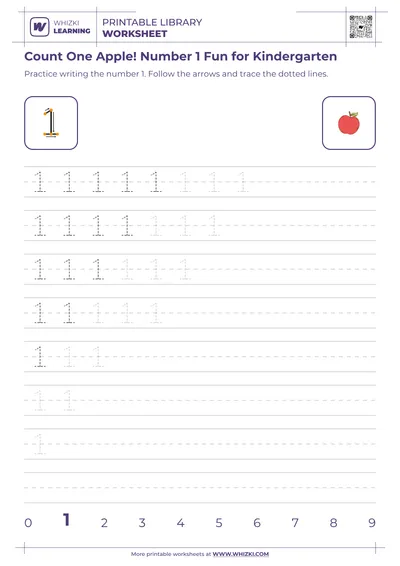
A short worksheet can be useful when paper work asks for one clear action and leaves room for the child’s body and voice. Occupational-therapy basics point adults toward big motions before small motions, so a preschool page should allow chunky crayons, open space, and relaxed shoulders. A five-minute page can help a child practice stopping, starting, crossing left to right, and noticing details.
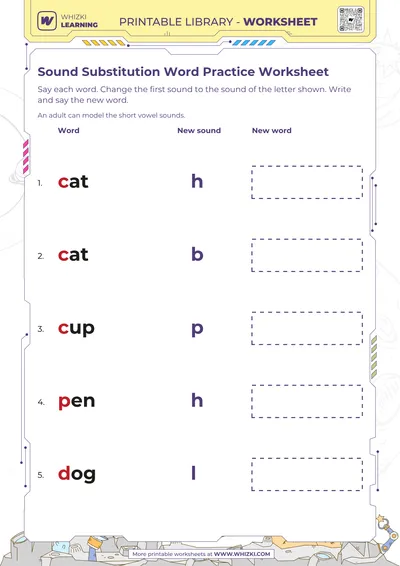
The Orton-Gillingham approach gives a helpful test for early paper work: the child should hear the sound, say the sound, see the symbol, and make the symbol with the hand. A letter worksheet that follows sound play, sand tracing, and a quick picture hunt can support memory. A worksheet that starts the lesson and ends the lesson usually asks too much of paper.
The science is also kinder to paper than to screens when the adult uses paper as a hands-on tool. Finger pressure, pencil grip, page turning, and drawing all feed attention in ways that tapping a screen does not copy well, which is why I often point families to the science of hands-on learning when families are comparing paper and apps. A printed page still needs conversation, movement, and choice to be developmentally fair.
Because our company sells paper learning materials, the fair question is whether paper belongs in preschool at all. A useful starting point is our printable library, where a parent can choose one small page and treat the page as a five-minute invitation, not a stack to finish.
How to choose a worksheet without making busywork
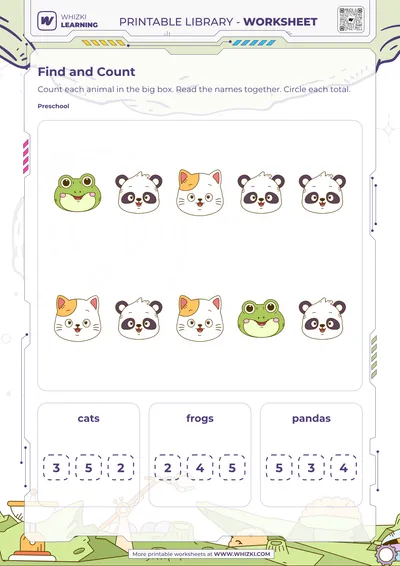
The best worksheet for a preschooler looks almost too simple to an adult. Montessori practice reminds teachers to isolate one skill, because a child cannot show real understanding when cutting, coloring, counting, reading directions, and pencil control are all tangled together. A strong page might ask the child to match three rhymes, trace one large letter, or count four bears with a finger.
A kindergarten teacher is usually looking for habits as much as answers: can the child listen to one direction, hold a crayon comfortably, track from left to right, and stop after a small task. NAEYC-aligned practice keeps those habits playful and brief instead of turning readiness into a long checklist. A worksheet should give the adult a window into a skill, not proof of worth or future school success.
A wiggly child may need a page that bends, moves, or gets cut apart before the child ever sits down. Occupational-therapy heuristics often use heavy work, floor work, and vertical surfaces to prepare the body, so a parent can tape a page to the wall or place picture cards on the floor. For a practical example, the guide to worksheets with a wiggly 3-year-old shows how a short page can become a movement game.
A simple age-by-age decision guide
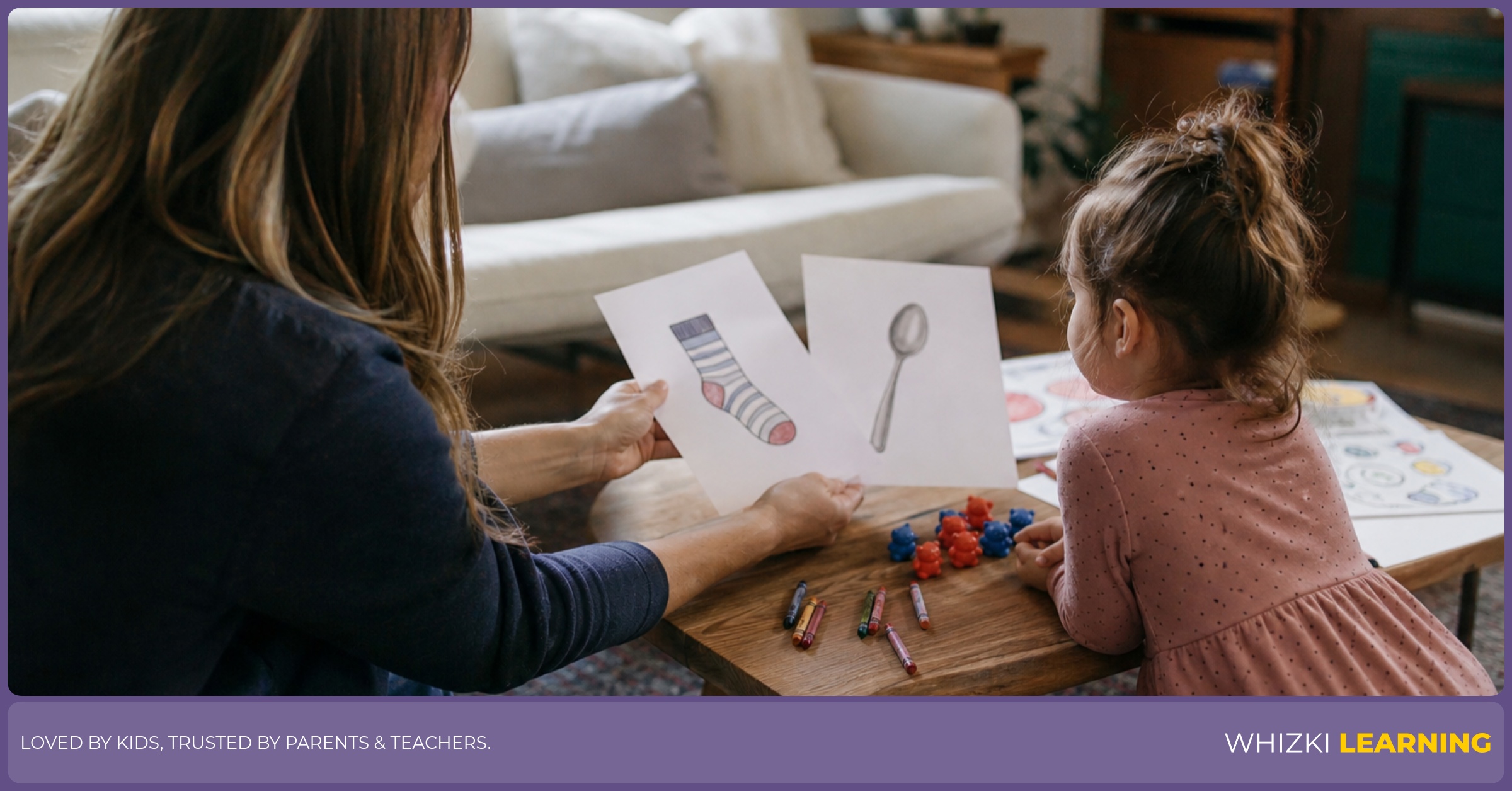
For a 3-year-old, the worksheet should be optional, brief, and connected to real play. Reggio observation asks the adult to watch what the child is already doing, so a page about circles might follow block wheels, cookie cutters, or a hunt for round objects. A good stopping point is often one mark, one sticker, or one happy minute.
For a 4- or 5-year-old, the worksheet can become a small practice tool after the child has handled objects and talked through the idea. A speech-language pathology habit I use often is naming the action out loud, such as “I hear /m/ at the start of moon,” before asking the child to mark a picture. The spoken language gives the paper task a reason and helps the adult hear the child’s thinking.
For a 6- or 7-year-old, a worksheet can support early reading, handwriting, and number practice when the page stays focused and the adult checks for strain. Orton-Gillingham lessons often include a short written piece after direct teaching, because the pencil helps connect sound, symbol, and memory. The page should still stay short enough for quality work rather than tired scribbling.
What to do when a child refuses the page
Worksheet refusal is information, not misbehavior by default. Occupational-therapy basics would have the adult check body comfort first: feet supported, crayon thick enough, page not visually crowded, and hands not tired from earlier play. A child who avoids every pencil task may need more clay, tongs, chalk, stickers, and big-arm drawing before more printed work.
The adult can offer a real choice without handing over the whole lesson. The child might choose the crayon color, the first box, the floor instead of the chair, or whether the adult writes while the child points. A choice protects the relationship and still keeps the learning goal clear.
The adult should also know when to skip the worksheet completely. Montessori and Reggio teachers both value careful observation, and observation may show that a child needs a story, a snack, outdoor play, or a reset more than practice. A calm page tomorrow is better than a forced page today.
The worksheet question gets easier when the adult stops asking, “Are worksheets good or bad?” and starts asking, “Does the page fit this child, on this day, for this purpose?” A preschooler who plays, talks, moves, builds, sings, draws, and occasionally marks paper is getting a healthy mix. If a weekly kitchen-table note would help, you are warmly invited to join the weekly learning newsletter.