
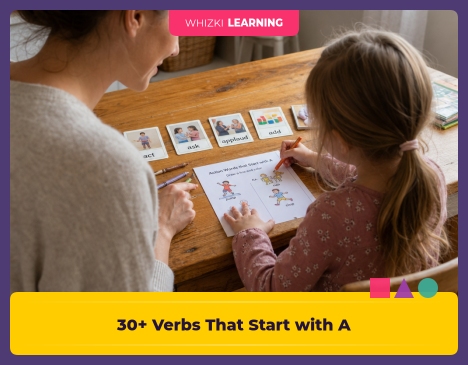
When your child wiggles away from letter practice or guesses every word, start with one action word your child can do right now. Action words make letter A practice feel like play instead of a quiz. If pronunciation or pencil grip feels messy, keep the routine short and celebrate the movement first.
Reviewed by Whizki Editorial Team, Early Childhood Education Editors.
Why A verbs help young readers
The letter A can feel slippery because your child hears /a/ in apple, /ā/ in acorn, and /ə/ in away. The Orton-Gillingham approach keeps sound, sight, speech, and movement together, so a child says the word, sees the first letter, and does the action.
The action word gives the child a reason to read. NAEYC guidance reminds early-childhood teachers to use playful, meaningful practice, so an A verb belongs in the kitchen, the rug area, and the homeschool table.
For sound review before the verb game, use our letter A learning page and say the /a/ sound with a slow mouth picture. The letter page can sit beside the verb list, so the child connects the first sound with a real movement.
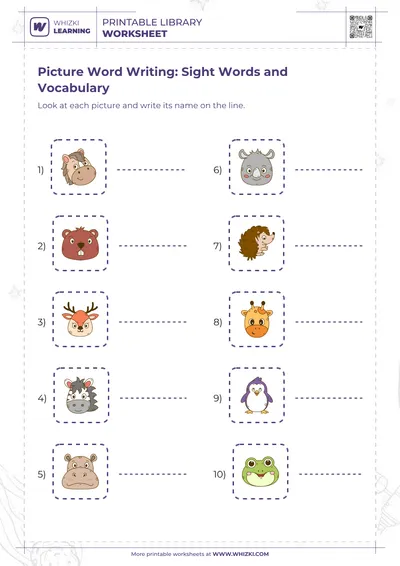
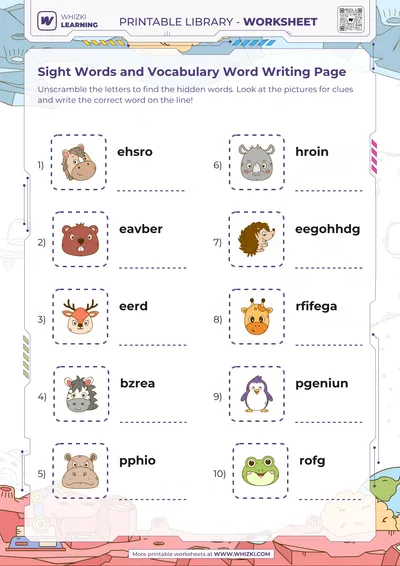
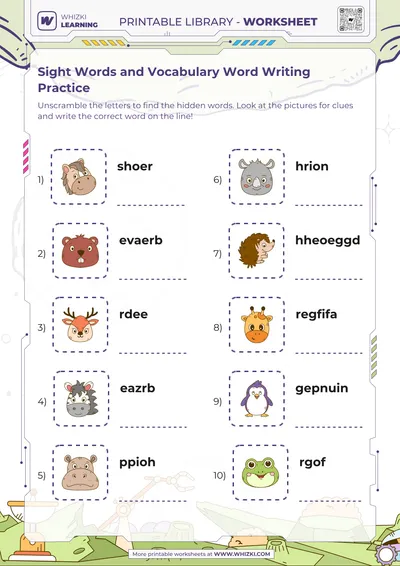
The matching printable works best in the middle of a routine, not as a big lesson. Print a page from our sight-words printables, circle three A action words, and tape the page to the wall where your child can act, trace, and check the word during cleanup.
Body action verbs starting with A
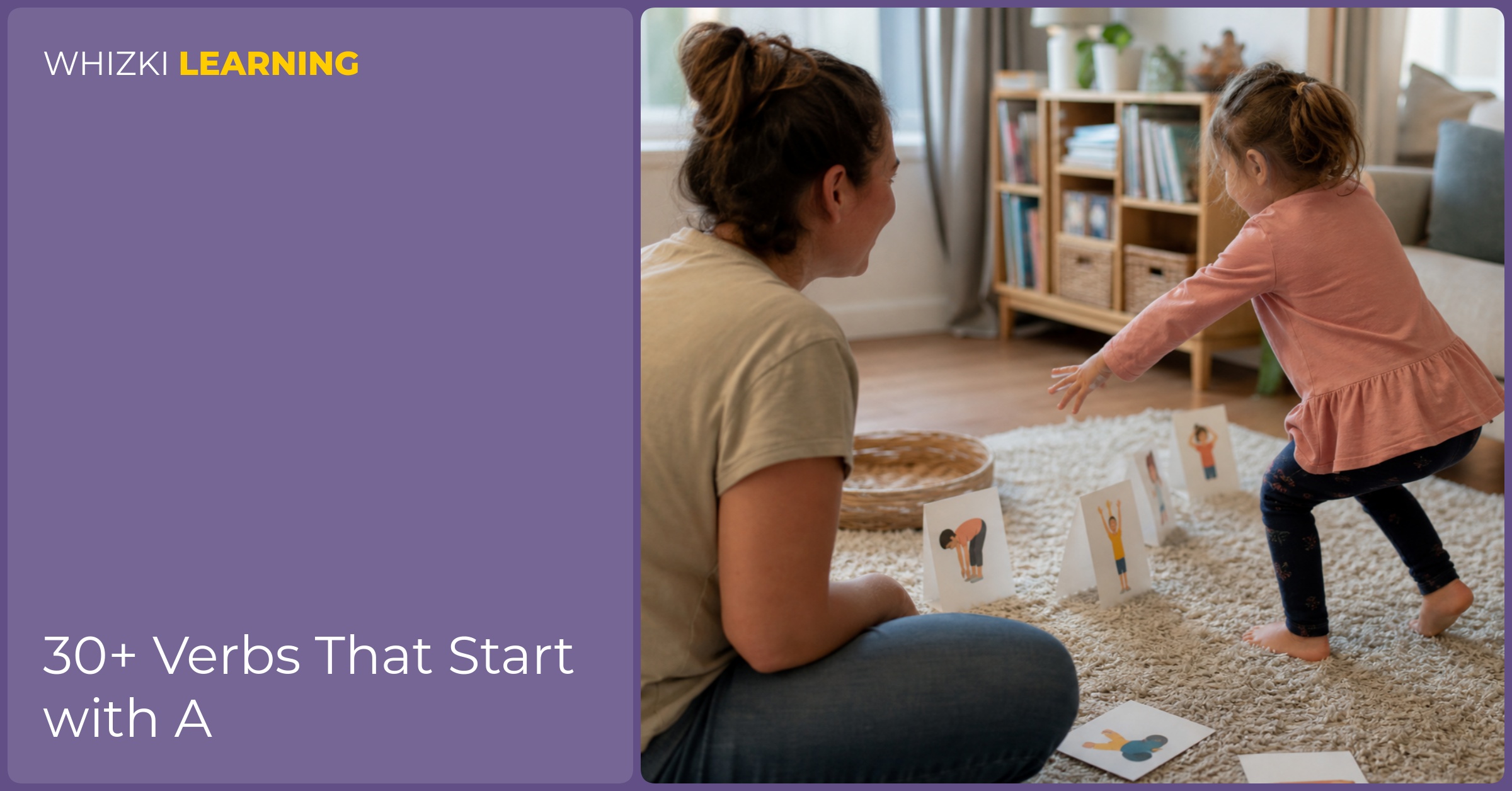
Body action verbs are the easiest place to begin because the child can feel the word. Occupational-therapy basics tell teachers to watch balance, pressure, and fatigue, so choose small motions before big motions when the child is still learning body control.
The body list works well on a rug, in a hallway, or beside a table. Read one word, model the tiny sentence, and let the child copy the action before asking for the first sound.
Body action words starting with A
- Act: Act like a puppy.
- Amble: Amble across the rug.
- Arch: Arch your back gently.
- Arise: Arise from your chair.
- Ascend: Ascend one low step.
- Applaud: Applaud for a friend.
- Approach: Approach the blue door.
- Avoid: Avoid the pretend puddle.
- Answer: Answer with your name.
- Ask: Ask for a turn.
- Awaken: Awaken with a stretch.
- Arrive: Arrive at the mat.
Household action verbs starting with A
Household action verbs give children a job that matters. Montessori practical-life work and Reggio observation both value real tools, real routines, and real responsibility, so a child can learn vocabulary while helping with snack, shoes, or art supplies.
The household list is useful during transitions because the adult does not need a fancy setup. Say the word slowly, point to the first letter, and let the child complete the job with adult support nearby.
Household action words starting with A
- Add: Add two apple slices.
- Arrange: Arrange three spoons neatly.
- Attach: Attach the paper clip.
- Air: Air out wet mittens.
- Assist: Assist with snack cups.
- Align: Align shoes by the mat.
- Adjust: Adjust your coat zipper.
- Apply: Apply soap to hands.
- Adorn: Adorn the card with stickers.
- Assemble: Assemble the small puzzle.
Play action verbs starting with A
Play action verbs are great for pretend play because children can use voice, props, and story. Speech-language pathology practice often pairs a new word with a gesture or object, so the word has meaning before the child is expected to read the word alone.
The play list can sit beside blocks, dolls, puppets, or a simple board game. The kindergarten teacher or parent can invite one child to choose a verb, act out the sentence, and ask the group to name the action.
Play action words starting with A
- Adopt: Adopt a teddy bear.
- Admire: Admire the tall tower.
- Agree: Agree on one rule.
- Aim: Aim at the basket.
- Announce: Announce the puppet show.
- Award: Award a shiny sticker.
- Anchor: Anchor the blanket fort.
- Angle: Angle the ramp downhill.
- Animate: Animate the sock puppet.
- Advance: Advance a game piece.
- Apologize: Apologize after a bump.
- Attend: Attend the teddy party.
- Alert: Alert the toy doctor.
- Amuse: Amuse the sleepy baby.
Act-it-out charades game
The charades game turns the word list into a five-minute routine. NAEYC play guidance supports short, child-led games because the child practices language, memory, and turn-taking without sitting through a long lesson.
The adult should keep the charades game light and predictable. A child who is shy can point to a card, act with a partner, or choose the next player instead of performing alone.
- Choose five A verb cards.
- Place the cards face down.
- Let one child pick.
- Whisper the word quietly.
- Watch the child act.
- Have friends guess once.
- Read the card together.
Trace-the-word tip
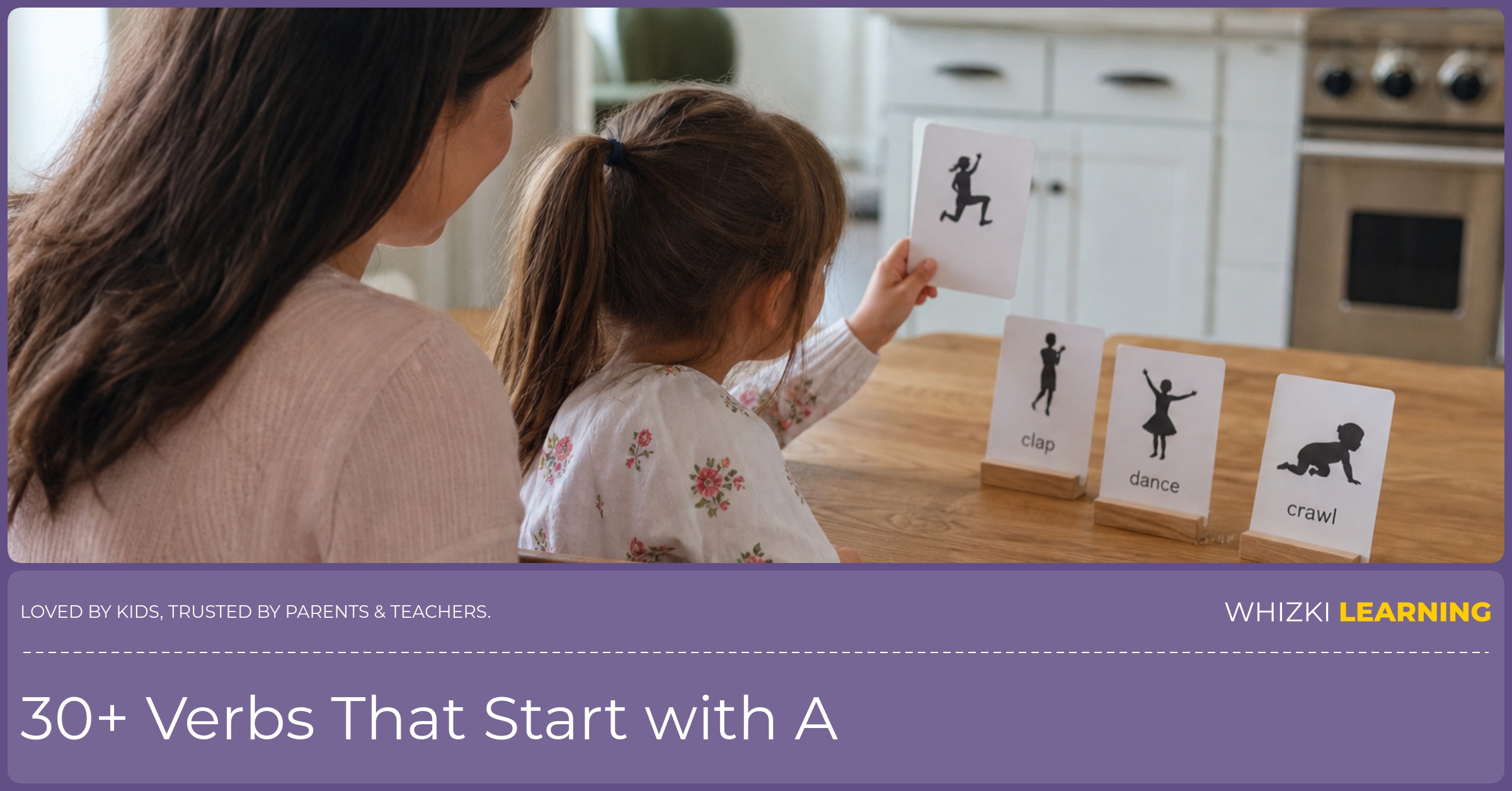
The trace-the-word tip is simple: the adult writes one A verb in thick marker, the child traces the word with a finger, says the word, and performs the action. The Orton-Gillingham routine of see, say, touch, and move helps the child connect print with sound and meaning.
The pencil version should stay gentle for ages 3 to 7. Occupational-therapy heuristics favor large letters, short lines, and relaxed hands, so finger tracing, crayon tracing, or tracing in a tray of salt can all count as real practice.
Keep A word categories clear
The verb list on this page stays with action words only. If the child needs objects and people words, use first words starting with A; if the child needs color, size, or feeling words, use describing words starting with A.
The category boundary matters because young children sort language by use before children sort language by grammar name. Reggio-inspired observation helps the adult notice whether the child is naming a thing, describing a thing, or doing an action.
A good A verb routine can be small: one word to read, one action to do, and one quick trace before breakfast or cleanup. The child does not need to master every word at once, because steady, playful contact with print builds the habit of looking at letters and expecting words to make sense.