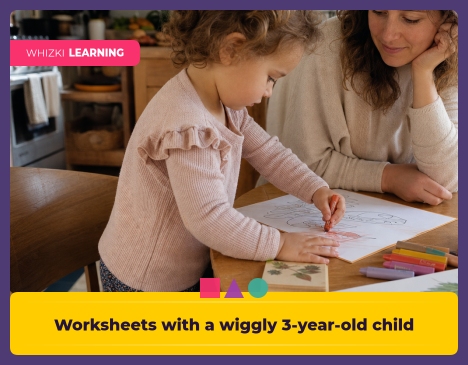
If your 3-year-old turns a worksheet into a chair-climbing, crayon-rolling, under-the-table adventure, pause the worksheet and set up one five-minute page at a standing spot instead. A 3-year-old is supposed to wiggle, and the wiggle usually means the task needs a smaller target. The next step is simple: choose one printable, offer a chunky crayon, and stop before the smile disappears.
Reviewed by Whizki Editorial Team, Early Childhood Education Editors.
Start with the right expectation
Worksheets for 3 year olds work best when the worksheet acts like a tiny invitation, not a seatwork assignment. NAEYC guidance on developmentally appropriate practice lines up with what I see at small tables every week: preschool children learn through movement, talk, touch, and choice. A page can support learning, but the page should not ask a young child to sit like a much older student.
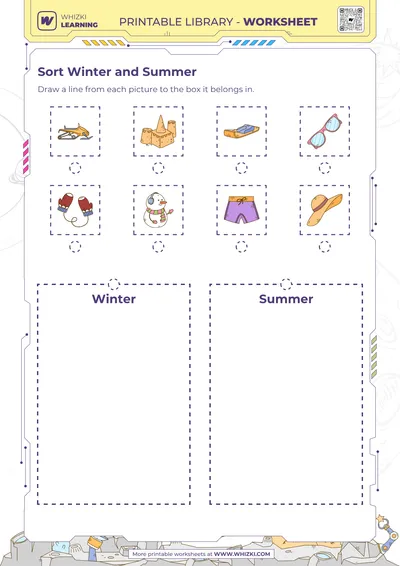
Printable match: choose a picture-matching page with only three or four big images. The picture-matching printable gives the child a clear start and a clear finish, while the adult can say, "Find the sock that goes with the shoe," and then celebrate the match. If the child adds scribbles around the pictures, the scribbles still count as fine-motor practice.
Use five-minute worksheet sessions
The five-minute worksheet session protects attention better than a long table time. The Orton-Gillingham approach gives early learners small, clear, repeated practice with more than one sense involved, and preschool worksheet time can borrow that rhythm without turning home into a lesson script. Set a kitchen timer for five minutes, name the task, and let the child stand or kneel if the body needs motion.
Printable match: use a dot-to-line tracing page with two short paths, such as a puppy going to a bowl. The dot-to-line printable lets the child do one path with a finger, one path with a crayon, and then hand the page back as finished. A finished page after five cheerful minutes teaches more than a half-completed page after twenty tired minutes.
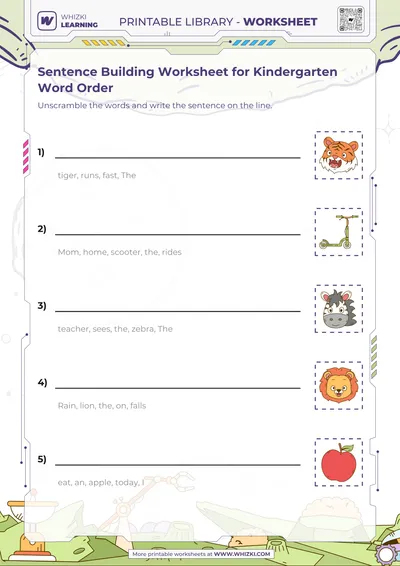
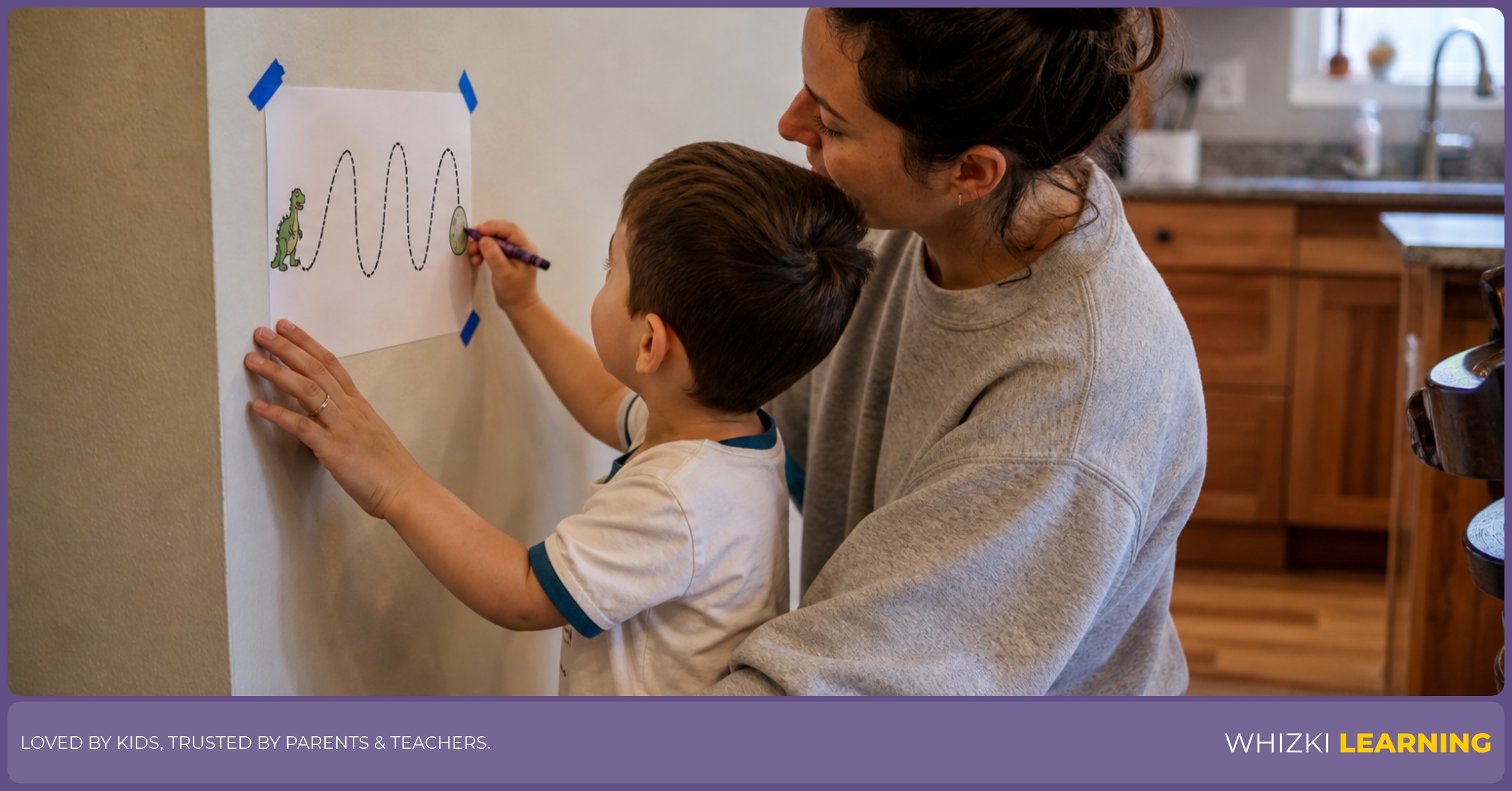
For a mid-routine win, print one dot-to-line page from our printable library and tape the page to the wall at your child's chest height. The wall setup turns a worksheet into a standing job, and the printable can come down as soon as the five-minute timer rings. Keep the extra pages tucked away so the child sees one choice, not a pile.
Move the paper to the wall
Stand-up easel work helps a wiggly 3-year-old use movement instead of fighting movement. Occupational therapy basics often point parents toward vertical surfaces because wall work wakes up the shoulder, steadies the wrist, and gives little fingers a better angle for marks. A fridge, taped cabinet door, or easel can turn the same worksheet into a body-friendly job.
Printable match: tape a large-line path page to the wall and let the child trace from left to right with a crayon. The large-line printable can be a road, river, or sidewalk, as long as the path is wide enough for relaxed marks. The adult can hold the bottom corner of the paper and say, "Drive the crayon slowly to the house," then stop after one or two turns.
Messy mark-making also belongs near worksheets, especially for children who press too hard or avoid crayons. The sensory play ideas in why messy play is smart play pair well with a wall page because finger paint, shaving cream, or a chalk tray can warm up hands before the printable. The warm-up should stay short, and the worksheet should stay optional when the child's hands are already working hard.
Choose crayons before pencils
Crayons belong before pencils for most 3-year-old worksheet sessions. Occupational therapy heuristics favor short, chunky tools because a small crayon piece nudges the fingers toward a more useful grasp without a lecture about grip. A pencil can wait until the hand has more strength, more control, and more patience.
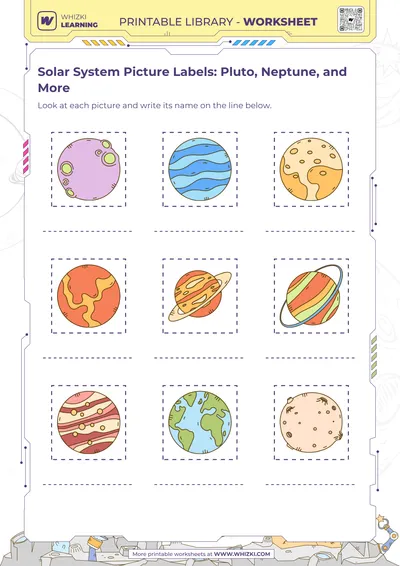
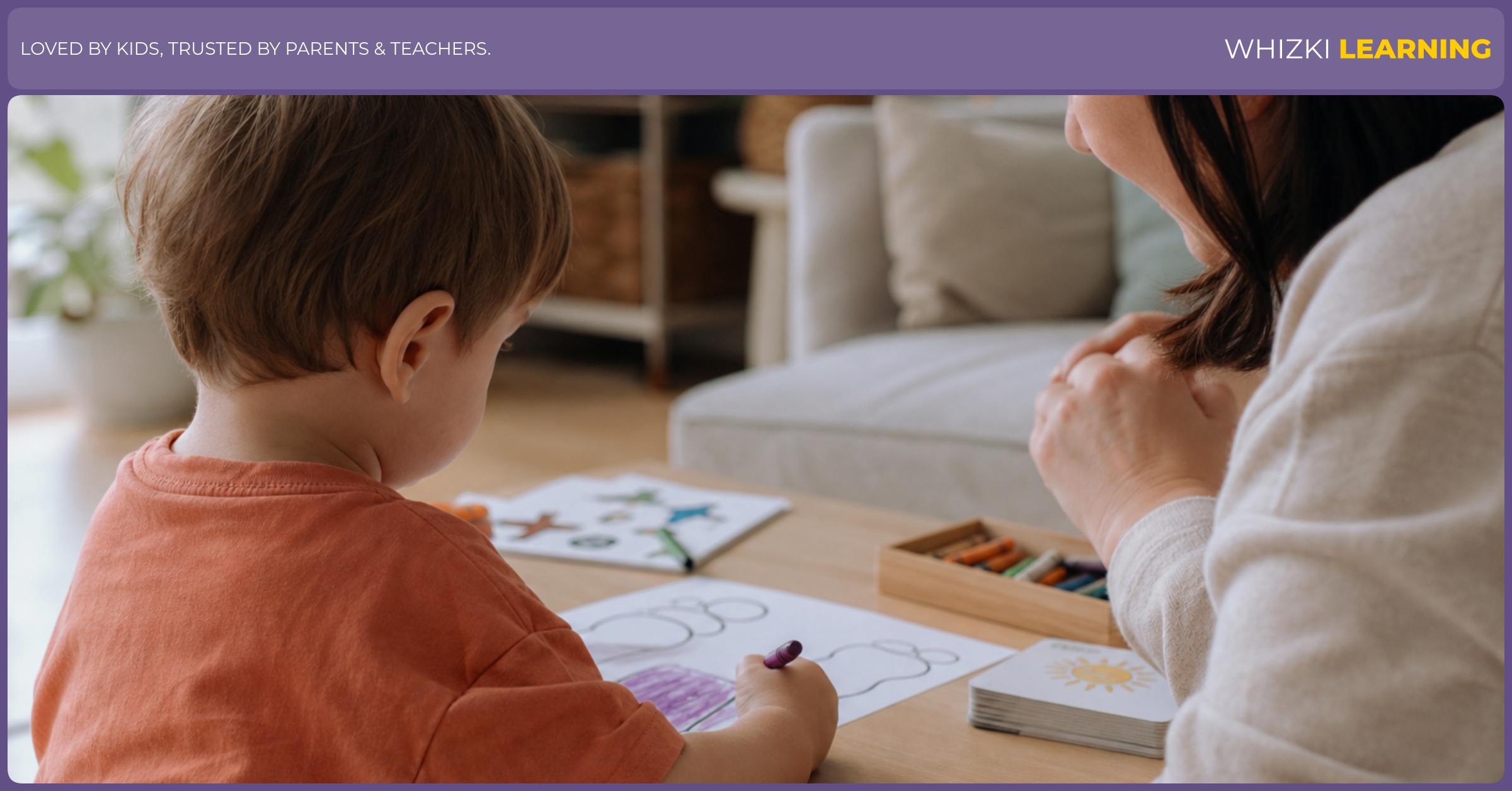
Printable match: offer a color-and-circle page with only two colors on the table. The color-and-circle printable asks the child to find every apple or every star, then circle or color each one with a crayon. A broken crayon is often perfect because the small size keeps the hand from wrapping around the tool like a fist.
Worksheet sets can help when the adult wants the same skill in several easy versions. Choose one page from our worksheet sets, put the rest away, and rotate another page later in the week. A small rotation keeps practice familiar without making the child stare at a stack.
Stop while the worksheet is still fun
Stopping while the worksheet is still fun is a teaching move, not giving up. Reggio-inspired observation asks adults to watch the child closely and follow the child's readiness, and the same habit works at the kitchen table. A child who leaves wanting one more turn is more likely to come back tomorrow.
Printable match: use a sticker finish page with three empty boxes, three circles, or three animals waiting for a mark. The sticker finish printable gives the child a visible ending, and the adult can say, "One more sticker, then the page is done." The clean ending helps the child feel successful before tired hands invite crumpling or running.
Kindergarten teachers often tell families that a happy two-minute practice beats a power struggle. The worksheet can go away when the child starts changing the rules, rubbing eyes, pushing the crayon away, or making the page into confetti. The adult can name the good work, save the page, and invite play dough, blocks, or outdoor movement next.
Worksheets for 3 year olds are useful when the worksheet fits the child in front of you. Five minutes, a wall surface, a crayon, and a cheerful stopping point can turn paper practice into a small screen-free win.
The parent goal is not a perfect page. The parent goal is a child who feels capable, uses hands with growing control, and comes back to early learning with trust.