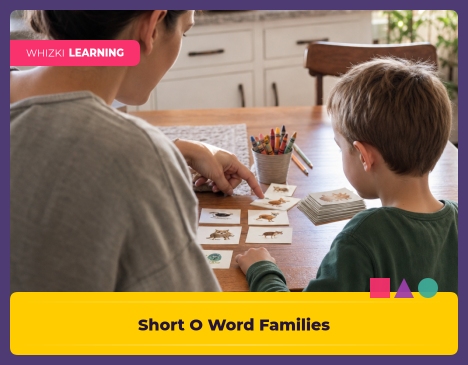
If your child is guessing at every little word while dinner is burning, pull out three short O cards and read only one family for five minutes. Short O word families give new readers a pattern to hold onto, so reading feels less like a wild guess. In my classroom, small piles beat big stacks because a calm child can hear the vowel, blend the sounds, and feel proud fast.
Reviewed by Sarah Mitchell, M.S., CCC-SLP, Speech-Language Pathologist.
What short O word families teach
Short O word families teach children to hear the middle sound in words like c-o-t and d-o-g. The Orton-Gillingham approach treats that vowel sound as a skill to practice with eyes, ears, voice, and hands. For a broader starting point, the full CVC words list can help you plan short, tidy practice sessions.
Short O practice works best when the adult keeps the task playful and brief. NAEYC guidance reminds teachers and families that preschool and kindergarten literacy should fit a child’s attention, movement, and language level. Speech-language pathology practice also favors clear models, so the adult can say the word slowly, let the child repeat the word, and then blend the sounds again.
Short O word family lists
Short O word lists are easier to use when each family stays in its own small pile. In a Reggio-inspired classroom, a teacher watches which pile draws the child in first, then builds the lesson from that interest. A child who loves animal cards may start with -og, while a child who likes drawing may start with -ot cards and dot markers.
Short O families sit nicely beside earlier vowel work. If your child has been reading short I word families, compare the mouth shape for i and o before reading the first card. The quick comparison helps many children hear that the vowel has changed even when the beginning and ending sounds feel familiar.
-ot word family
- cot: The tent has a small cot.
- dot: The red dot marks the start.
- hot: The soup felt hot after lunch.
- jot: Max will jot one word.
- lot: The car sat in the lot.
- pot: The pot held pretend soup.
- rot: The pear may rot in the bin.
- tot: The tiny tot clapped once.
- blot: Sam saw a blot on the page.
- spot: Ben found a spot by the rug.
-op word family
- cop: The cop waved at the bus.
- mop: The mop rests by the sink.
- pop: The balloon will pop soon.
- top: The top spun on the mat.
- chop: I can chop soft fruit with help.
- crop: The crop grew after rain.
- drop: The cup might drop on the rug.
- flop: The fish did flop in the tub.
- plop: The bean made a plop in the bowl.
- shop: The shop has a bell.
-og word family
- bog: The bog was wet after rain.
- cog: The cog fit in the toy gear.
- dog: The dog sat near Grandma.
- fog: The fog hid the hill.
- hog: The hog slept in the pen.
- jog: Dad likes to jog before breakfast.
- log: The log rolled near the path.
- frog: The frog jumped into the pond.
- clog: The sink has a clog.
- smog: The smog made the sky gray.
-ob word family
- Bob: Bob put a cap on.
- cob: The corn cob felt bumpy.
- fob: The key fob stayed on the hook.
- gob: A gob of glue dried fast.
- job: The job was to sort cards.
- lob: Mia can lob a beanbag.
- mob: A mob of ants moved as one.
- Rob: Rob fed the cat.
- sob: A child may sob when tired.
- blob: The paint made a blob.
The -ob family can feel less familiar than -ot, -op, and -og, so the adult can choose only five -ob cards at first. Montessori practice often starts with concrete objects, so a corn cob, a key fob, and a glue gob can make the sound pattern feel real. Keep the hard words for later if the child is still building confidence.
How to teach short O with printables
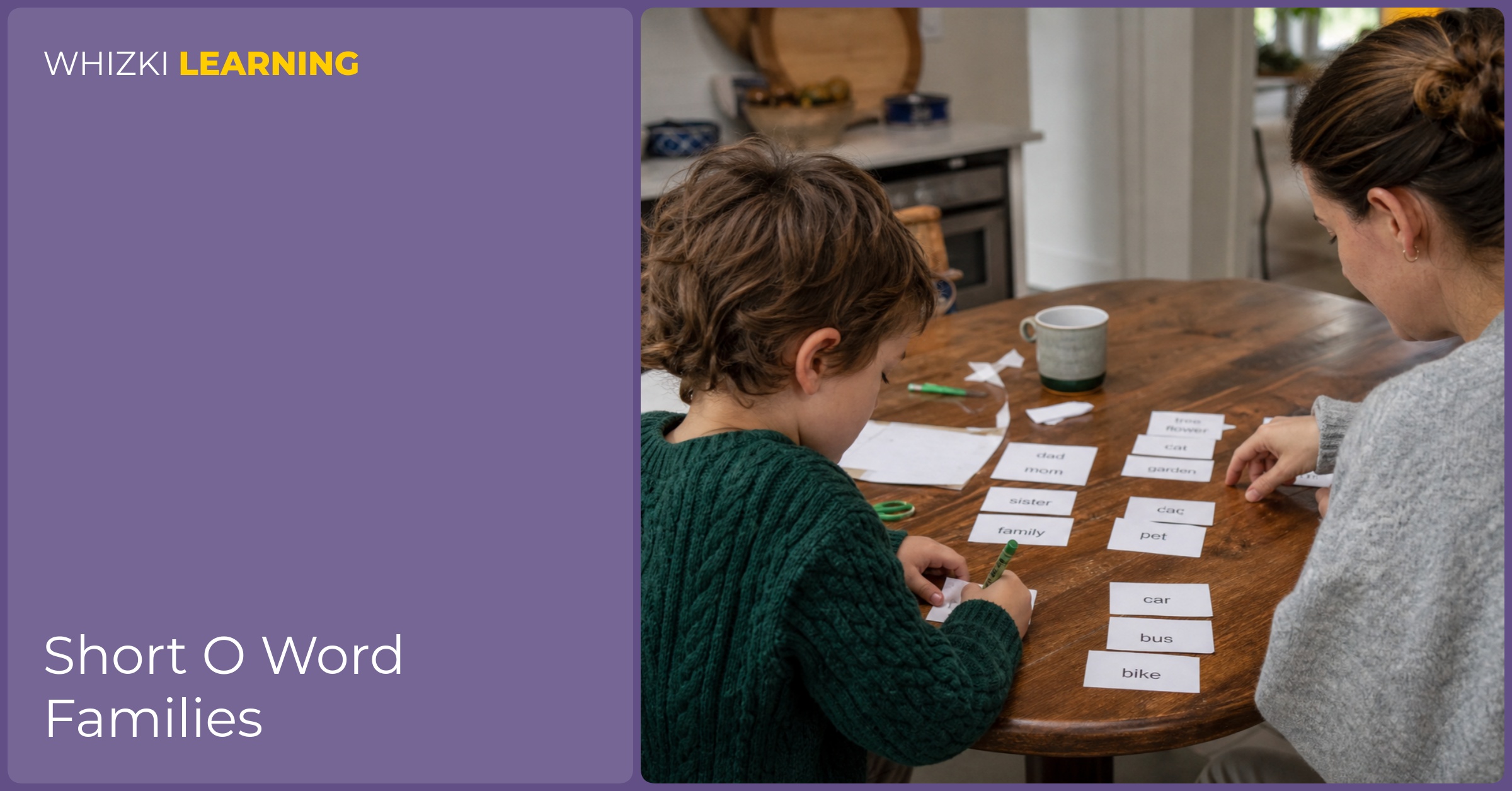
Short O printables work best when the adult uses the same routine each time. In an Orton-Gillingham lesson, the child taps each sound, blends the word, reads the word, and then writes the word. The repeated routine saves energy because the child learns what to do before the adult adds harder cards.
Short O practice can sit beside high-frequency word work without turning the table into a worksheet pile. A preschool teacher might read five short O cards, then use our sight-words printables for two familiar words from a favorite book. If letter formation still needs support, alphabet printables give the child slower pencil practice before the next reading round.
Short O worksheets should leave room for cutting, pointing, circling, and saying the sounds out loud. Occupational-therapy basics remind adults that little hands tire quickly, so a child may need chunky crayons, a slanted clipboard, or a quick hand break. When the lesson needs more sound mapping, phonics printables can keep the task hands-on.
Hop-on-the-word floor game
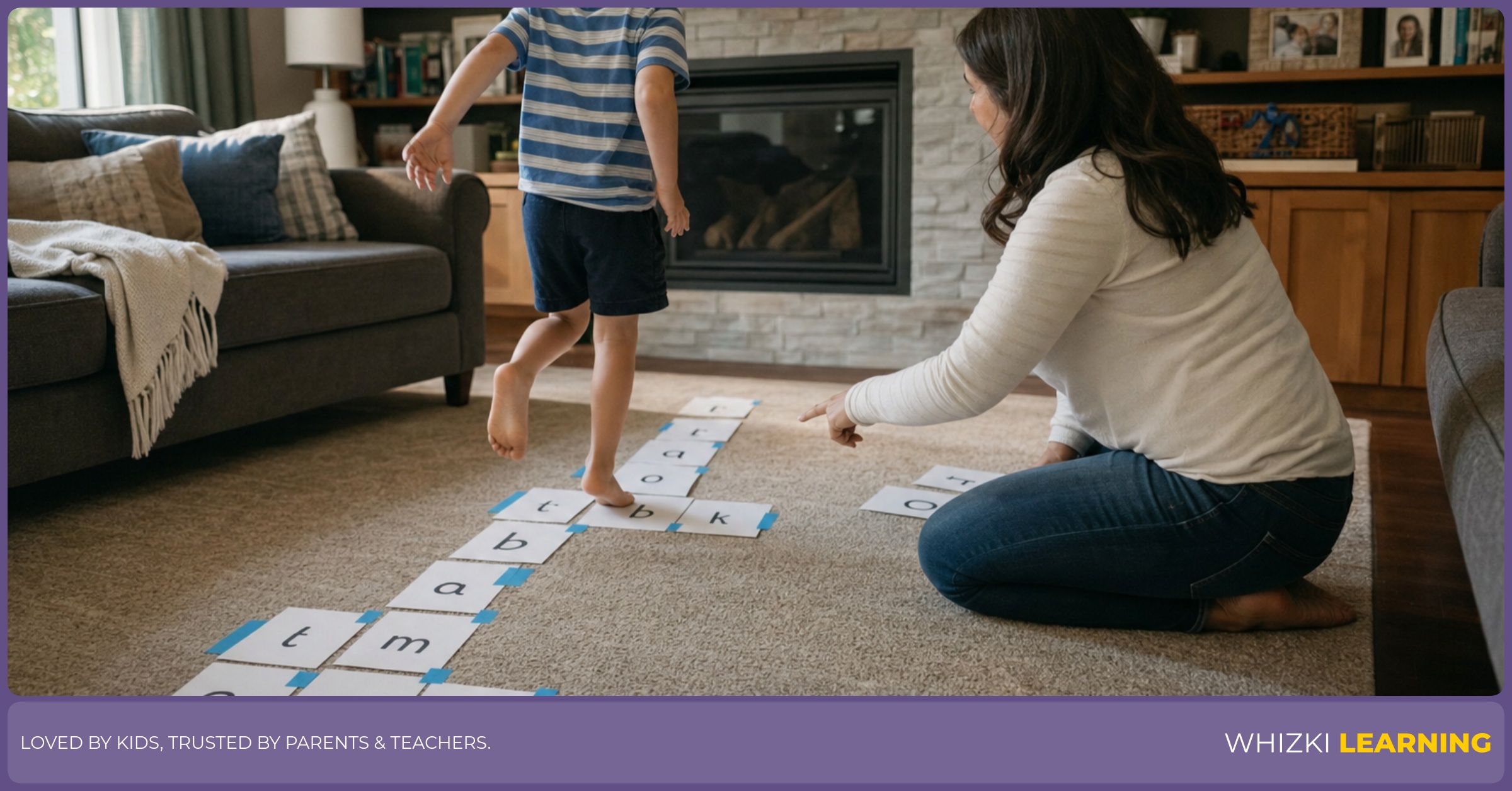
The hop-on-the-word floor game turns short O reading into movement without making the room wild. Occupational-therapy practice often uses big-body movement before fine pencil work because children ages 3 to 7 need chances to move, cross the midline, and reset attention. The adult still keeps the reading goal clear by asking for one sound, one blend, and one hop at a time.
The floor game needs ten cards, painter’s tape, and a safe path across the room. Place the cards in a loose trail, say one word aloud, and ask the child to jump to the matching card. If the child lands on a nearby card, model the sounds again and let the child try without teasing or a long correction.
- Choose one short O family and write one word on each card.
- Tape the cards to the floor with enough space for safe feet.
- Say a word slowly, then say the word at a normal speaking pace.
- Invite the child to move to the matching card and read the word back.
- Trade roles so the child says a word and the adult moves to a card.
The floor game should end while the child still has energy. NAEYC-aligned play keeps success visible, so three correct cards may be enough for a preschooler. A kindergarten reader may handle a longer trail, but the adult can stop before guessing takes over.
What to do when a child gets stuck
A child who gets stuck on short O may need fewer cards, clearer sound modeling, or more picture support. Speech-language pathology practice pays close attention to whether the child hears the vowel, says the vowel, or loses the vowel during blending. The adult can say, “My turn, c-o-t, cot,” and then invite the child to copy the same slow blend.
Short O confusion is common when a child mixes short A, short U, and short O. Orton-Gillingham teaching handles that mix-up by returning to sound cards and mouth cues before asking for fast reading. NAEYC guidance also supports pausing the lesson when frustration rises, because playful practice teaches more than pushing through a tired moment.
If your reader is ready for more paper practice, the Short O Word Families Worksheet Set pairs picture sorting, tracing, and cut-and-glue word building in one calm sequence. The complete pack lives in Whizki Plus, and the related early literacy worksheet packs sit with other printable options.
Short O word families do not need a long lesson or a perfect craft setup. A few cards, a clear adult voice, and a short movement game can give a new reader enough practice to hear the pattern and read with more care.
Keep the word pile small, celebrate the clean blend, and stop before the child is done for the day. Tomorrow’s short O practice can begin with the easiest card from today, because familiar success is a strong starting place for young readers.