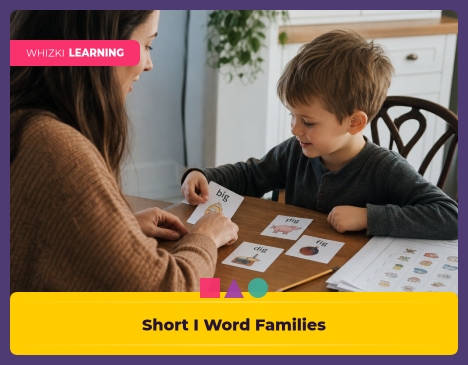
If your child knows letter names but guesses every small word on the page, start with three short I word families today and build words with paper squares, one sound at a time. Short I can feel slippery because the mouth barely opens, so a slow, hands-on routine beats another long worksheet battle. In my preschool and kindergarten groups, children usually settle when the adult says less, points clearly, and gives a quick win.
Reviewed by Sarah Mitchell, M.S., CCC-SLP, Speech-Language Pathologist.
How short I word families help early readers
The short I sound is the /ĭ/ sound in the middle of many CVC words, and the Orton-Gillingham approach treats that vowel sound as something children hear, say, tap, build, and read. A child who can blend /s/ /ĭ/ /t/ is practicing a repeatable pattern, not memorizing a random word. For a wider set of decodable patterns, keep the full CVC words list nearby and pull only a few words at a time.
The best short I practice stays short because NAEYC guidance reminds teachers and families to match instruction to a young child's attention, energy, and development. A three-minute word-building round can teach more than a tired twenty-minute drill. A parent can stop while the child still feels successful, then return after snack or outside play.
The concrete next step is simple: write one ending, such as -it, on a card and slide different beginning letters in front. The child says each sound, pushes the cards together, and reads the whole word. The adult can model once, then let the child move the cards because finger movement often helps the sound sequence stick.
Short I word family lists with sentences
The short I lists below keep the vowel sound steady while the beginning sound changes. Speech-language pathology practice often uses clear mouth modeling and short, repeated sound contrasts, so say the middle sound with a relaxed mouth and avoid adding an extra sound after the consonant. For example, say /m/, not “muh,” before the child blends the word.
The word family sentences give new readers a reason to read the word in context without turning the page into a guessing game. The Orton-Gillingham sequence often moves from sound to word to sentence, and that order keeps the load manageable. If your child is also working on short E, compare only a few words from short E word families after short I feels steady.
The reading routine should be predictable: adult reads the sentence once, child points under the short I word, and child reads the sentence with support. A kindergarten teacher might circle back to the same family for several days because young readers need repetition before speed appears. A homeschool parent can use the same idea with a notebook, index cards, or a dry-erase board.
-it family
- A bunny takes a bit of carrot.
- The red cap can fit Sam.
- My hand can hit the drum.
- A cub carries a kit to camp.
- One lamp is lit after lunch.
- The dog jumps over a pit.
- Maya can sit near Dad.
- A fox shows wit in the tale.
- The team will quit at noon.
- Ben can split a soft bun.
-in family
- A blue box holds a bin of socks.
- The fish has a tiny fin.
- Nora puts a pin on the map.
- Luca can win the race.
- A tin cup rests by the sink.
- My kin come for soup.
- A thin line marks the path.
- We grin at the puppet.
- Rosa can spin in place.
- Peach skin feels fuzzy.
-ig family
- The big cat naps.
- Dad will dig near the tree.
- A fig tastes sweet.
- The band has a gig.
- We jig to music.
- A pig sniffs mud.
- The rig rolls past.
- I wear a wig for play.
- A twig snaps underfoot.
- A sprig of mint smells fresh.
-ip family
- Rae will dip bread in soup.
- My hip bends when I dance.
- A lip can smile or pout.
- The crab gives a nip.
- Please rip the old scrap.
- Jon can sip warm cocoa.
- A tip helps the pencil write.
- Mom can zip the bag.
- A chip falls from the cracker.
- The ship rocks on water.
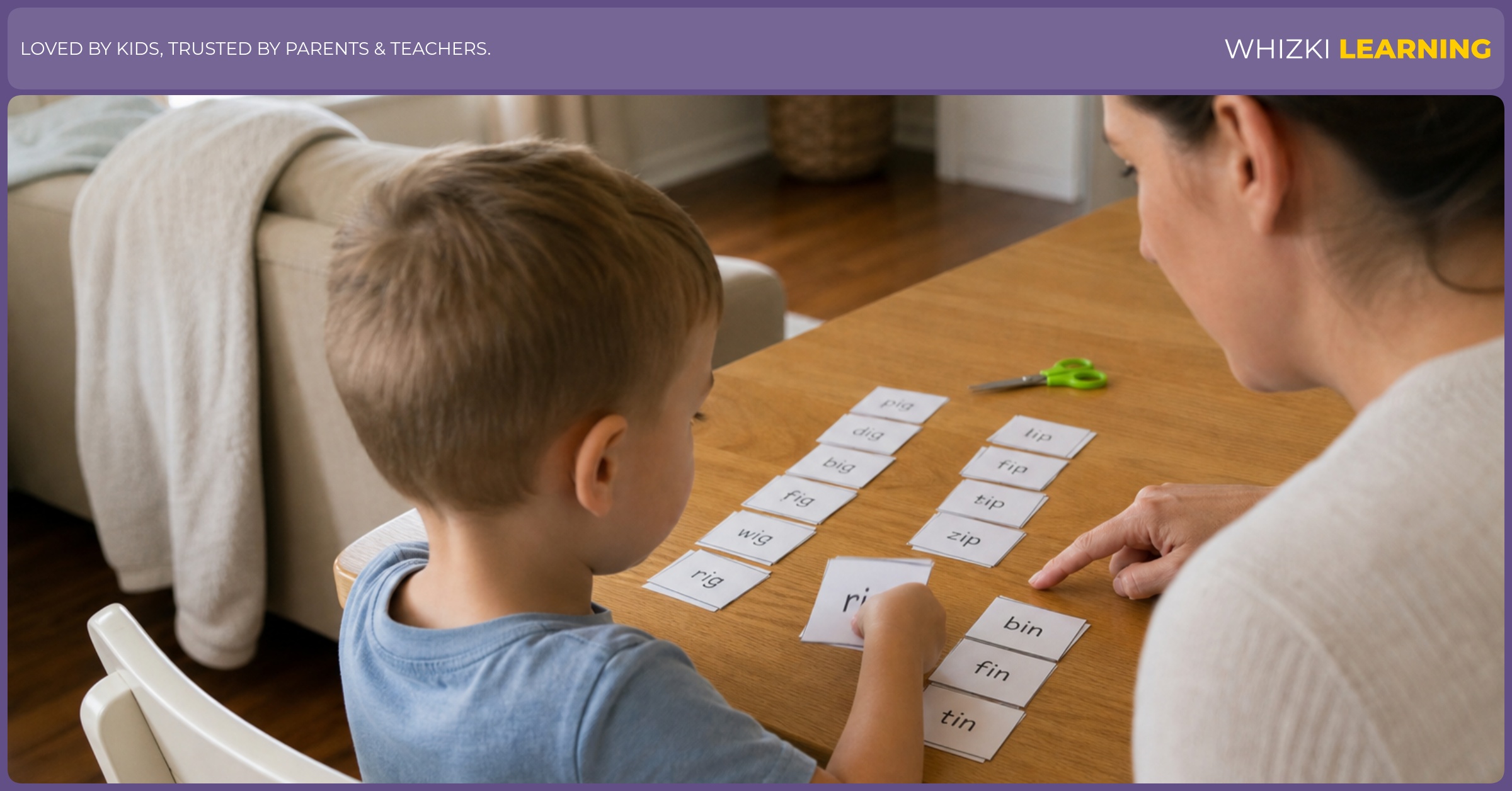
Printable practice that keeps hands busy
A printable routine works best when the page feels like a small work tray, not a test. Reggio and Montessori observation both remind adults to watch what the child's hands are telling us, because fidgeting can mean the task needs cutting, sorting, tracing, or movement. A child can read a word, clip a matching picture, and trace the vowel with a crayon before reading again.
The sight-word connection matters because many early books mix decodable words with high-frequency words. Pair a short I family card with one or two familiar words from our sight-words printables, then read a tiny phrase together. A phrase such as “can read” plus a short I card gives the child useful practice without a crowded page.
The letter I practice page can help when the vowel sound keeps getting lost. Use the letter I learning page for tracing, sound talk, and picture sorting before returning to whole words. Occupational-therapy basics favor short pencil work, clear posture, and relaxed grip, so stop tracing before the hand gets tight.
The premium Short I CVC Word Families worksheet set adds cut-and-read pages, sound boxes, picture matching, and sentence strips for preschool, kindergarten, and homeschool use. The complete pack lives in Whizki Plus. Print only the pages that match the word family you are teaching today.
A silly-sentence game for short I words
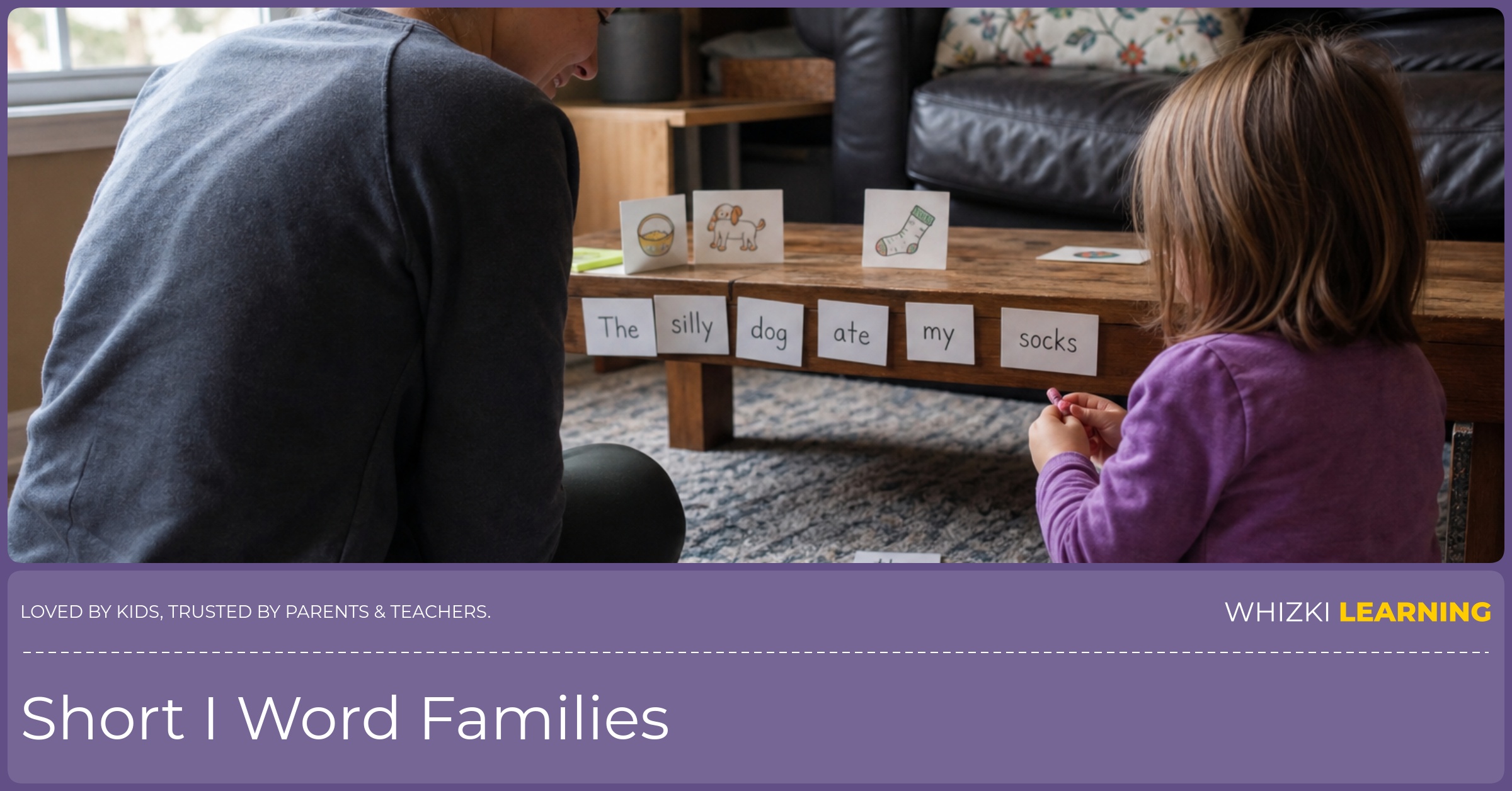
The silly-sentence game gives children a playful reason to reread the same sound pattern. NAEYC's play-based guidance fits here because the adult is still teaching, but the child gets choice, surprise, and laughter. A funny sentence lowers the pressure without turning reading time into random guessing.
The setup needs three small piles: short I word cards, animal or person picture cards, and place cards. The child draws one card from each pile and the adult helps arrange a sentence that makes sense or sounds wonderfully goofy. The child reads the short I word first, then the adult reads the rest if the sentence is too long.
The coaching script should stay light: “Touch each sound, slide the sounds, read the word.” A speech-language pathologist often listens for clear sound order, so the adult can praise the exact part that worked, such as “You kept the middle sound short.” If the child starts guessing from the picture, cover the picture for one read and uncover the picture for the laugh.
When to move on from short I
A child is ready for the next vowel pattern when short I words sound accurate across several quick sessions. The Orton-Gillingham approach usually values accuracy before speed, so do not rush just because one list went well. Ask for reading, building, and writing because each task shows the vowel pattern in a different way.
The next step can be a contrast lesson with one new vowel and one familiar short I family. A teacher might place two word cards side by side and ask the child to listen for the middle sound before reading. A parent can keep the contrast gentle by using two or three examples, then ending with a word the child can read with confidence.
The warning sign is not one rough day, because tired children guess, wiggle, and forget. The warning sign is steady confusion over many short, calm practices, especially when the child cannot hear or produce the vowel difference after modeling. In that case, a kindergarten teacher, reading specialist, or speech-language pathologist can help decide what support would fit.
Short I word families give early readers a tidy place to practice blending without asking a young child to handle every vowel at once. Start with one family, keep the cards moving, and stop after a real success. Tomorrow's practice can be the same family again, because repetition is how many new readers finally trust the print.