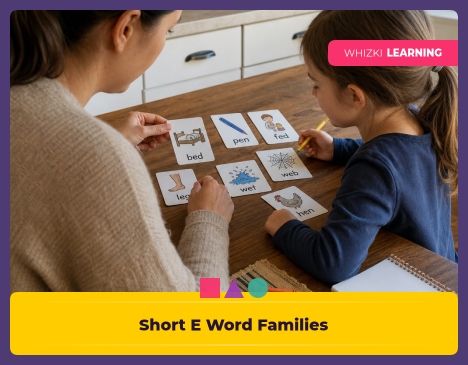
When a child keeps reading pet as pat, pause the stack, put one -et card beside one -at card, and have the child listen for the middle sound before reading again. Short E takes extra ear time for many new readers because the mouth barely opens compared with short A. A calm two-card contrast usually works better than another long worksheet page.
Reviewed by Sarah Mitchell, M.S., CCC-SLP, Speech-Language Pathologist.
What short E word families are
Short E word families group words with the same rime, such as -et, -en, -ed, and -eg. The Orton-Gillingham approach uses sound-first, pattern-based practice because children need to hear, say, tap, and read a pattern before the pattern feels automatic.
Short E belongs in the CVC pillar with short A, short I, short O, and short U. For a wider planning list, the full CVC words list can help a parent or teacher choose words that match the child’s current decoding step.
NAEYC guidance reminds early-childhood teachers to keep literacy meaningful, playful, and developmentally right for the child in front of the table. A short E lesson can be five minutes of card reading, toy matching, or sentence building before attention starts to fade.
-et and -en word lists
The -et family gives new readers a clear final /t/ sound, so the mouth can feel the word end. Orton-Gillingham lessons often move from one stable pattern to a second stable pattern, which makes -et and -en a friendly pair for the first short E sort.
Children can clap once for the beginning sound and once for the rime before reading the full word. The clapping routine keeps the child from guessing from the first letter alone, which is a common kitchen-table frustration.
-et word family examples
- I bet the blue car reaches the rug first.
- We get a cup for the picnic snack.
- The jet zooms over the sandbox.
- Please let Sam hold the green crayon.
- We met Ana by the classroom door.
- The net caught three foam fish.
- Our pet rabbit hops under the chair.
- I set the pencil beside the page.
- The vet checks the puppy’s paw.
- The wet sock drips by the sink.
The -en family can include common names because names are meaningful to young children. A Reggio-inspired teacher might add child names from the classroom, as long as the teacher says the target sound clearly and avoids turning the sort into a spelling test.
-en word family examples
- Ben carries a lunch box to the rug.
- The den has two pillows and a lamp.
- Glen draws a map with chalk.
- The hen pecks near the fence.
- Jen claps after the song.
- Ken rolls a soft ball across the room.
- Three men fix the tiny toy train.
- The pen makes a purple line.
- Ten buttons sit in the bowl.
- The wren lands on the low branch.
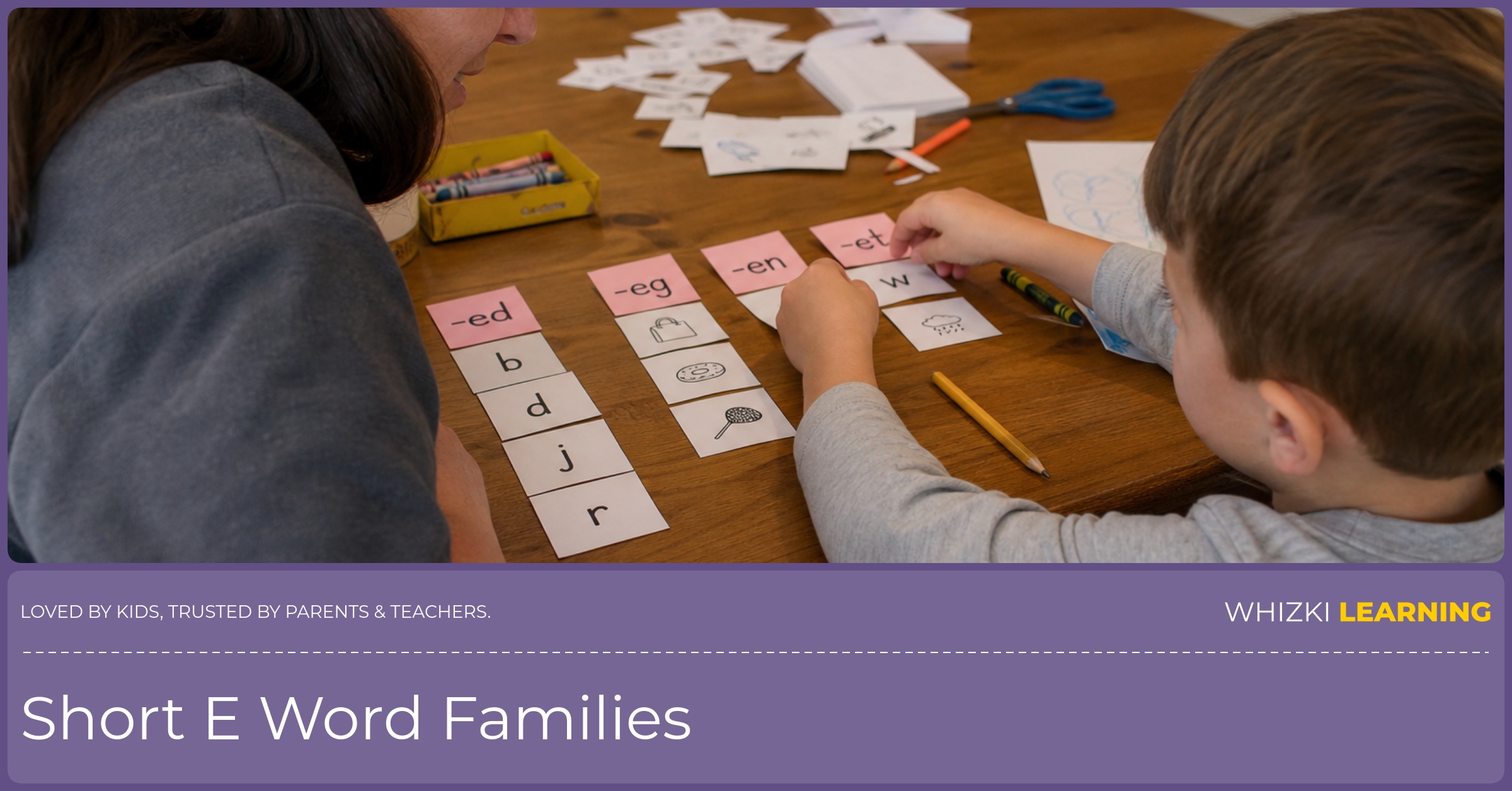
-ed and -eg word lists
The -ed family is useful because many words are decodable and easy to act out with toys. Speech-language pathology practice often starts with listening discrimination, so a teacher can say bed, bad, bed and ask the child to point when the short E word comes back.
The -eg family has fewer child-friendly real words, so the reference list includes names and a few kitchen words. Montessori and Reggio observation both give permission to follow the child’s interest, which means a child who notices egg at breakfast may be ready to compare egg, leg, and peg.
-ed word family examples
- The bed has a yellow blanket.
- Mia fed the fish before breakfast.
- Dad led the line to the garden.
- Ned picks up a fallen block.
- The red cup sits near the sink.
- The shed holds a small rake.
- The sled slides down the snowy hill.
- Ted paints a star with watercolors.
- Kim and Val wed in a family photo.
- Fred waves from the porch step.
The -ed pattern on the page is not the same as the past-tense ending in jumped or played. A young reader can learn bed and fed as short E words now, while grammar lessons about suffix sounds can wait for a later reading stage.
-eg word family examples
- I beg for one more bedtime story.
- A dreg of juice stays in the cup.
- The egg rests in a little bowl.
- Greg builds a tower with square blocks.
- The keg sits on the farm porch.
- My leg bends when I sit crisscross.
- Meg finds a leaf under the table.
- The peg holds a blue apron.
- Reg counts shells on the mat.
- We chop veg for soup with a grown-up.
Swap-the-vowel game for short E and short A
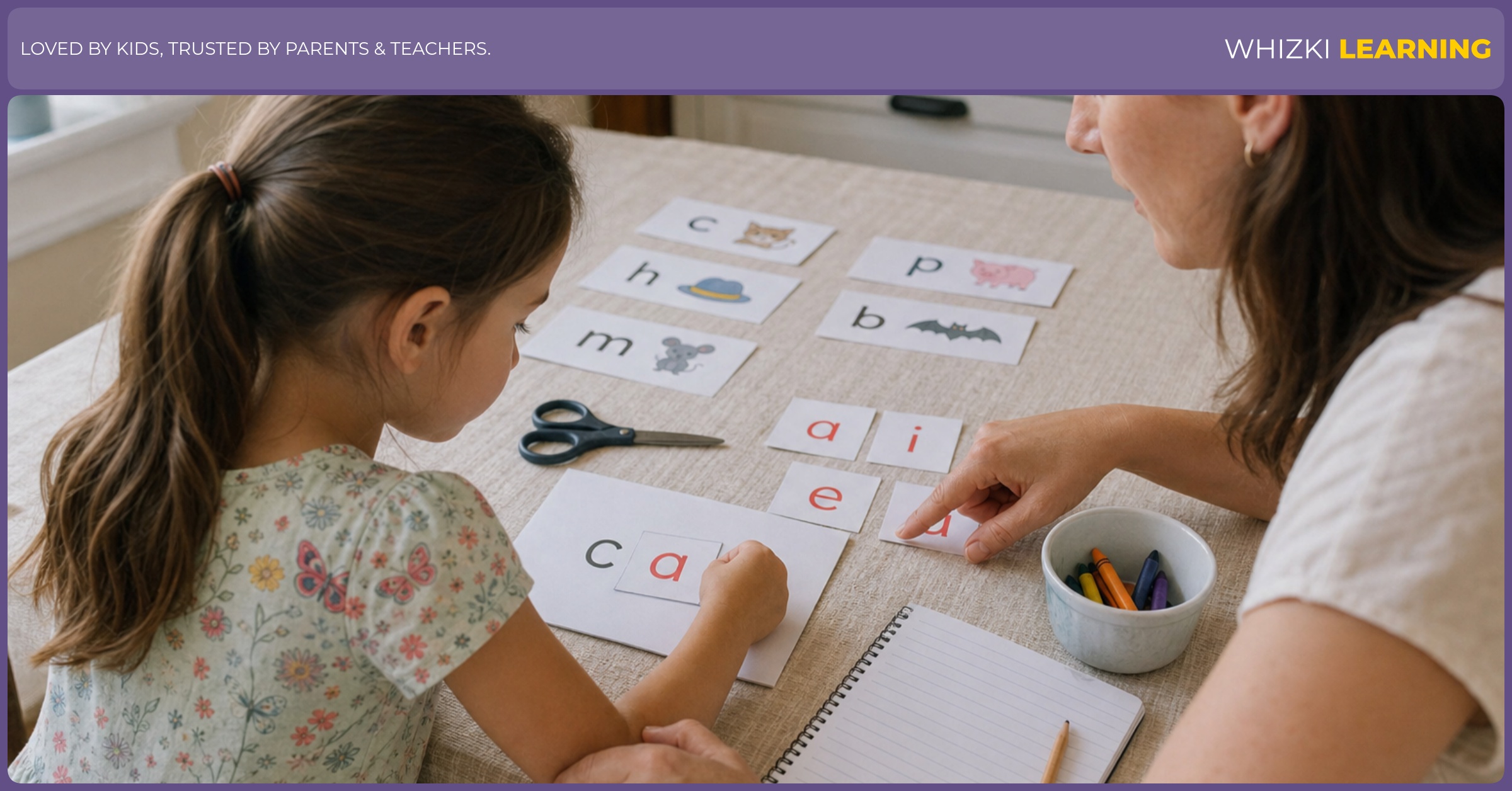
Short A and short E are close neighbors for many children, so vowel swapping gives the ear a clean contrast. A parent who wants the matching short A set can keep short A word families nearby and use only one pair at a time.
An occupational-therapy heuristic for early writing is big movement before small pencil work. The vowel-swap game uses hand motions, card pushing, and mouth awareness before the child writes the word, which can reduce pencil fatigue during a reading lesson.
- Place a card that says mat beside a card that says met, with the vowel in a different color.
- Say both words slowly while the child watches the adult’s mouth open wider for short A and relax for short E.
- Cover the vowel, swap the middle letter, and ask the child to read the new word.
- Build a tiny sentence with a toy, such as The cat sat or We met a cat.
- Stop after three to five pairs, and save the rest for another day.
The swap-the-vowel game works best when the adult treats mistakes as information. A child who keeps choosing short A may need more listening pairs, fewer printed cards, or a quick movement break before reading again.
Printable practice plan for home or class
Printable practice works best when the page has one job, such as read, match, sort, or trace. NAEYC-aligned early literacy practice favors short, repeated chances to use print in a playful way rather than a thick packet in one sitting.
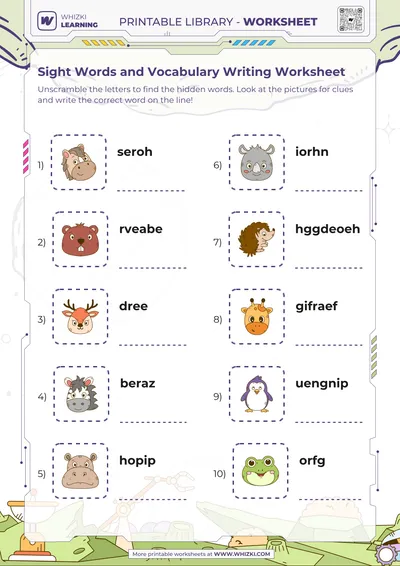
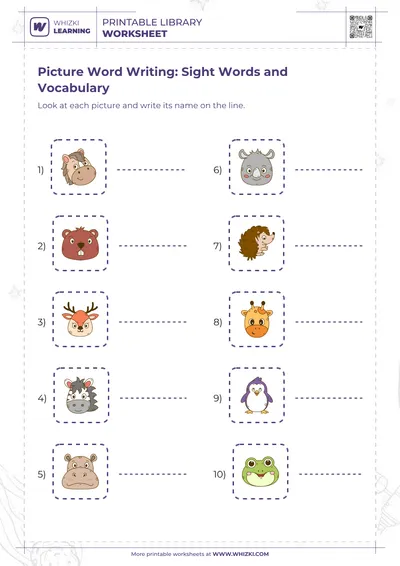
The library page with our sight-words printables pairs well with short E work because children can read a decodable word inside a simple sentence. A teacher can underline the short E word, read the rest aloud, and let the child decode the target pattern.
For ready-to-print practice, the Short E CVC Word Family Worksheets in the store add cut-and-read pages, picture matching, and sentence tracing. The complete pack lives in Whizki Plus.
Reggio-inspired teaching asks adults to watch what the child actually does with materials. A child who sorts quickly can write one sentence, while a child who hesitates can return to oral blending with counters, blocks, or fingers on the table.
Short E word families do not need a perfect lesson plan to help a child read. A few clear words, a calm adult voice, and one small contrast with short A can make the vowel sound easier to hear.
Keep the practice brief enough for the child to leave the table feeling capable. Tomorrow’s lesson can start with one known word, one new word, and one sentence the child can proudly read aloud.