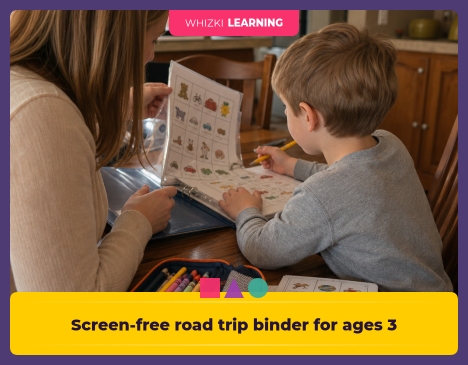
If the back seat starts asking "Are we there yet?" before the coffee cools, build one road trip binder tonight: a one-inch binder, a clipboard, crayons, and ten printable pages matched to your child’s hand strength and attention span. Road trip activities for preschoolers work best when the choices are simple, visible, and easy to swap at a gas stop. A binder gives a 3-, 4-, 5-, 6-, or 7-year-old a small job instead of an open-ended demand to "be good."
Reviewed by Whizki Editorial Team, Early Childhood Education Editors.
Start with the binder shell
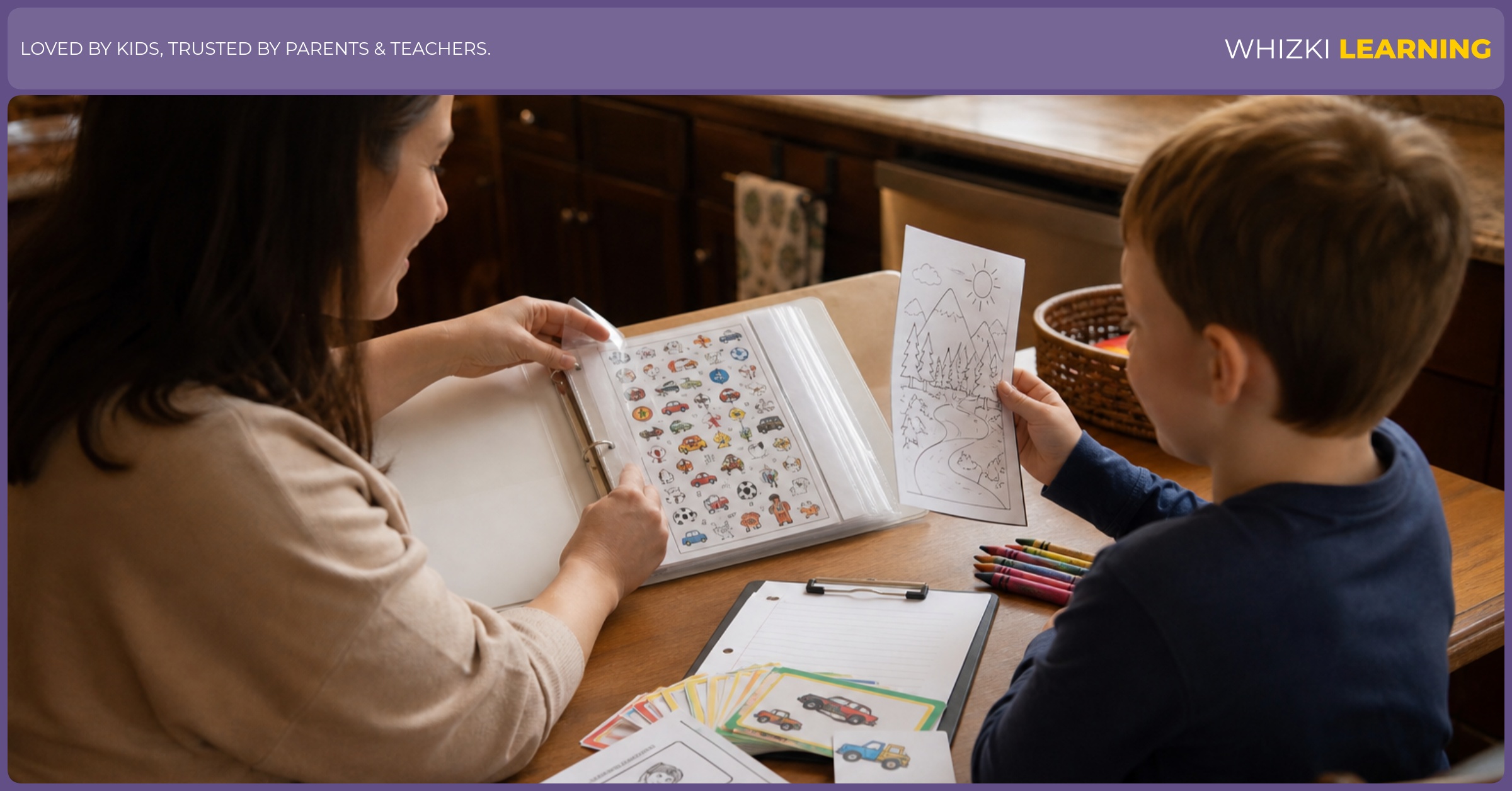
The binder shell matters because a preschooler in a car seat cannot manage loose pages for long. In NAEYC-aligned preschool rooms, useful materials sit within reach, show clear choices, and invite a child to return without adult repair every two minutes. A road binder can follow the same idea with a soft pencil pouch, page protectors, and a few open pockets.
The best binder setup is a one-inch binder with a clear cover, six page protectors, and two binder clips. Place the easiest page first, because an easy first win lowers the complaining and gives the child a quick rhythm. For a longer travel plan with songs, snack timing, and rest-stop games, keep the full road trip activity guide nearby and use the binder as the hands-on piece.
A Reggio-inspired road binder treats the child as a capable maker, not a passenger who needs constant entertainment. Add a front pocket for finished pages and call that pocket the child’s travel portfolio. The portfolio language feels small, but classroom practice has taught me that children take better care of work when the work has a real place to land.
What to print for ages 3 to 7
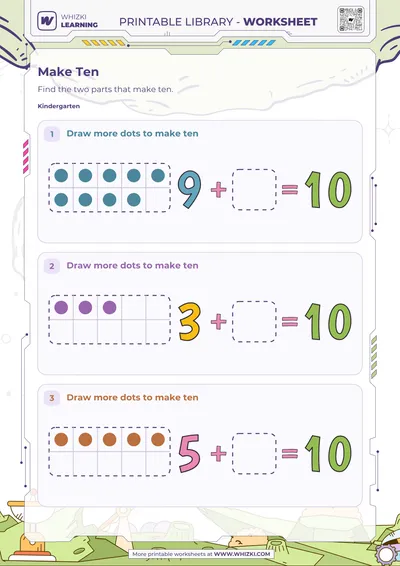
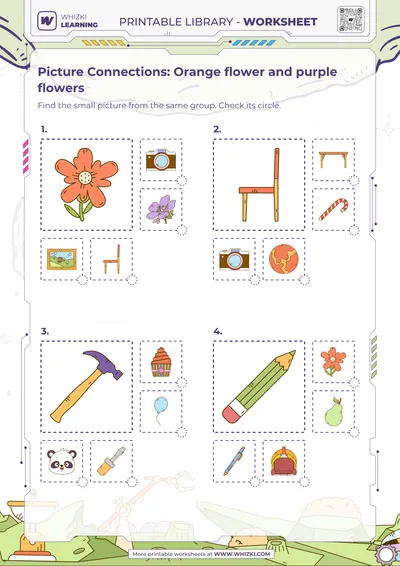
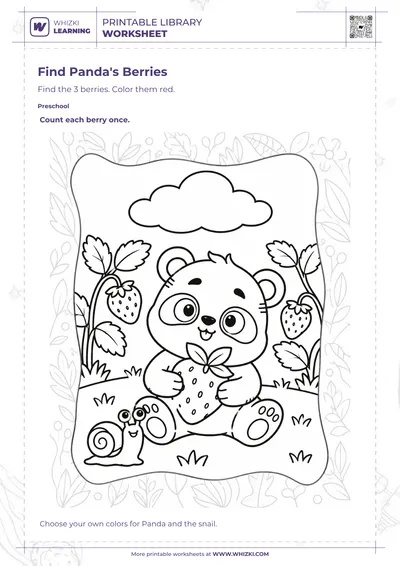
Road trip activities for preschoolers should mix looking, marking, and storytelling. Print I-spy picture hunts, tracing paths, dot-to-dot shapes, and blank comic boxes from our printable library, then choose only three pages per driving stretch. Too many choices can turn the binder into a paper spill instead of a calm activity.
An I-spy page is ideal for 3- and 4-year-olds because the page connects print to the real road without asking for long sitting. A speech-language pathologist would call the adult talk the most important part: name the object, add one describing word, and wait for the child to point or repeat. The page becomes a conversation cue rather than a quiz.
Tracing and dot-to-dot pages are better for children who enjoy pencil control or need short fine-motor practice. The Orton-Gillingham approach reminds teachers to keep letter and line work multisensory, so a child can trace with a finger first, then use a crayon, then say the sound or shape name aloud. Blank comics are a good choice for 5-, 6-, and 7-year-olds because the boxes support sequencing without a long writing demand.
If printer ink is low before a trip, add one small handwriting or travel activity book from our printed workbooks and tuck the book behind the binder. The complete pack lives in Whizki Plus.
The clipboard trick for real car seats
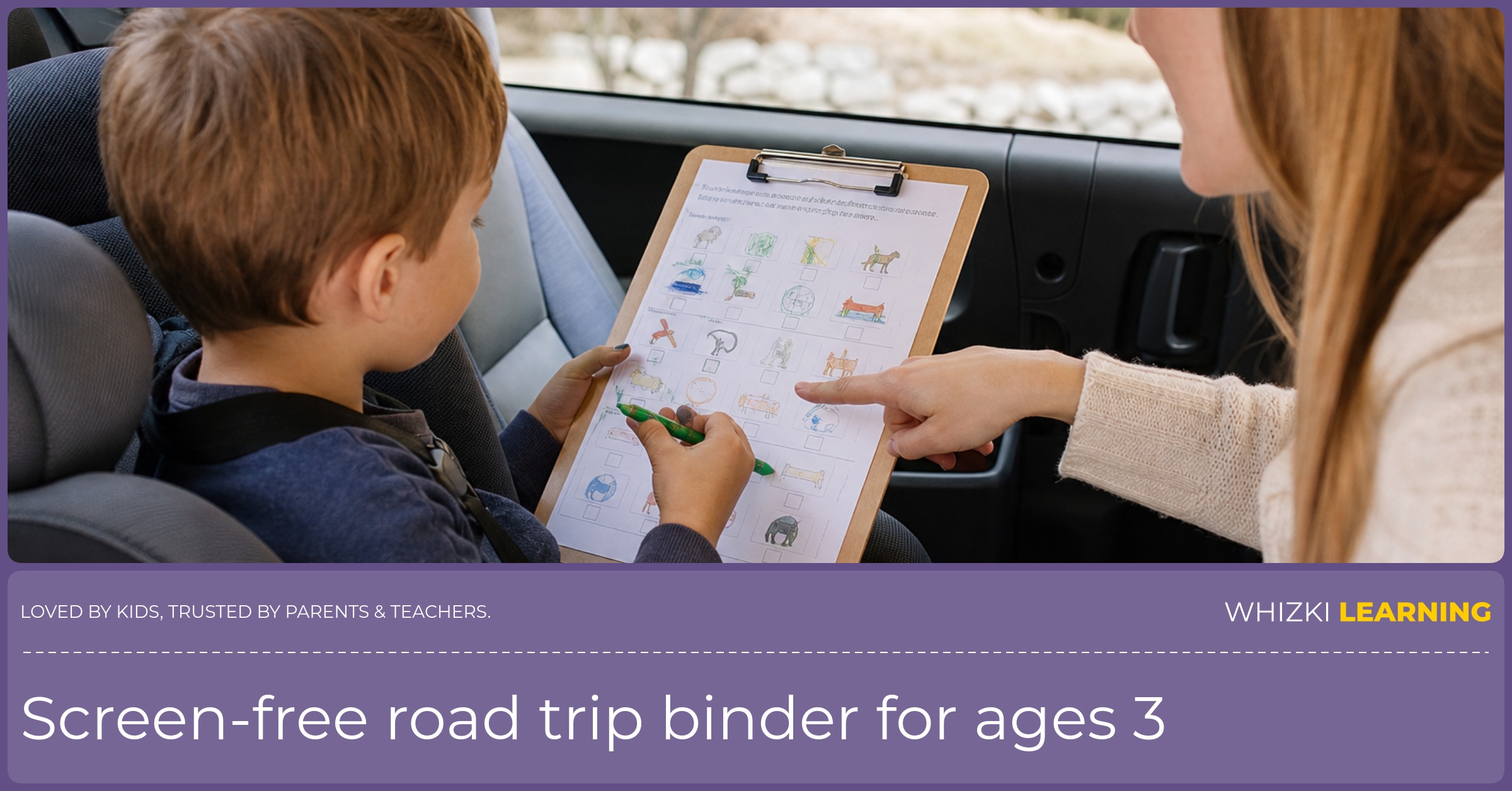
The clipboard trick is the difference between a cute plan and a plan a child can actually use while buckled. Clip one page to a lightweight clipboard, slide the rest of the binder into the seat pocket, and keep only two crayons in the pencil pouch. Occupational-therapy basics favor stable surfaces, short tools, and fewer materials when a child is working in a wiggly position.
A clipboard also helps the adult rotate pages without unbuckling or digging through the whole binder. At the next stop, trade the finished page for a fresh page and place the finished page in the front pocket. The rotation feels like a classroom work cycle, and the child can see progress without needing a screen countdown.
Keep the clipboard plain and skip bulky clips, magnets, or tiny erasers that fall into the seat crack. For left-handed children, clip the page at the top and check that the crayon pouch does not block the drawing arm. For right-handed children, the same top clip usually keeps the wrist and elbow freer than a side clip.
A 2026 packing list for road days
The 2026 packing list for a road trip binder should stay small enough to refill fast. Pack a one-inch binder, six page protectors, one clipboard, washable crayons, triangle pencils, a pencil sharpener with a lid, sticky notes, a zipper pouch, two binder clips, and a gallon bag for finished pages. Add painter’s tape for hotel-room display, because painter’s tape usually removes cleanly from walls and doors.
The premium Road Trip Fine Motor Worksheet Set is the worksheet set I would choose for children who need more tracing, matching, and pencil-control practice across several days. Browse our worksheet sets if the trip needs a themed packet rather than a loose mix of pages. Keep one set in reserve for the last hour of the longest drive, because novelty helps most when everyone is tired.
A Montessori lens keeps the packing list practical: each tool needs a purpose, a place, and a clear way to put the tool away. A kindergarten teacher can use the same binder for bus rides, waiting rooms, or family conferences by changing the front pocket pages. A homeschool parent can date each finished page and save the road binder as a travel record with real writing, drawing, and observation samples.
A screen-free road trip binder will not make every mile quiet, and no honest parent coach should promise silence from a three-year-old in traffic. A good binder gives the child something concrete to do, gives the adult fewer objects to manage, and turns travel time into small bursts of looking, drawing, talking, and finishing. Start with ten pages, one clipboard, and a rest-stop swap, then adjust the binder after the first drive.