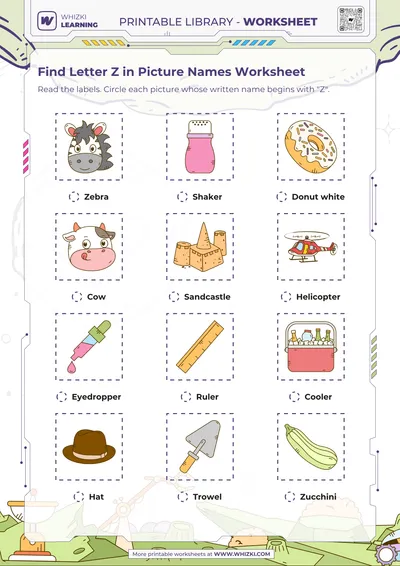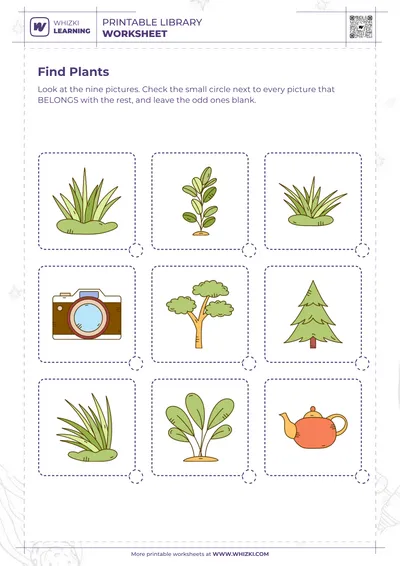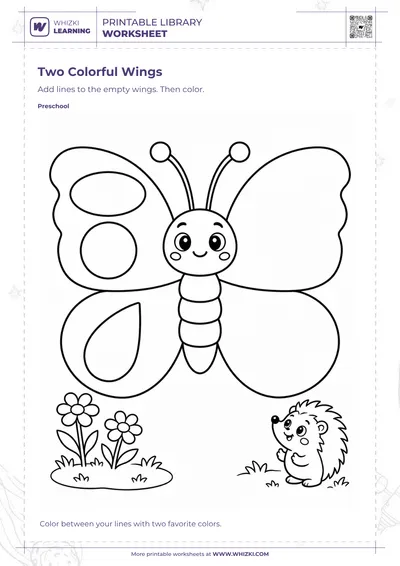

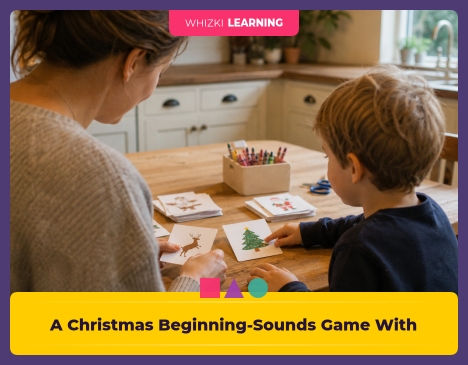
If the Christmas bin is open, dinner is late, and one more learning activity sounds like a lot, pull six familiar picture cards and play only the first sound for ten minutes. The beginning-sounds game works because the child is touching real cards, hearing one clear word, and stopping before the activity turns into a power struggle. The useful action for today is simple: choose six pictures with one obvious name each, then sort the pictures by the sound heard at the start of the word.
Reviewed by Sarah Mitchell, M.S., CCC-SLP, Speech-Language Pathologist.
Why six cards are enough
The Christmas beginning-sounds game is small on purpose because young children learn better when the task has a clear edge. A six-card set gives enough variety for sorting without turning the table into a scavenger hunt. In Orton-Gillingham practice, the adult keeps the sound target clean before asking the child to connect the sound to a printed letter.
The first-sound skill is phonemic awareness, which means the child is listening inside a spoken word. The alphabet can wait until the ear has had a fair turn, especially for 3- and 4-year-olds. If the child is ready for letter names after the sound sort, the alphabet learning hub can give the grown-up a calm place to check letter formation and sound ideas.
The six-card limit also respects the NAEYC reminder that early learning should fit the child, the family, and the moment. A holiday table, a preschool rug, or a homeschool basket can all handle ten focused minutes. A child who wants to stop after one round has still practiced listening, naming, and sorting.
Materials and picture check
The picture cards need plain images, not cute scenes with several possible answers. Use a single bell for /b/, one candle for /k/, one cookie for /k/, one wrapped gift for /g/, one star for /s/, and one wreath for /r/. The expected words are bell, candle, cookie, gift, star, and wreath, so the adult should say each word aloud before the game begins.
The picture check is the teacher move that prevents frustration. A bell picture should not also show ribbon, a candle picture should not sit beside a holder shaped like a tree, and a cookie picture should show one clear cookie rather than a full tray. Speech-language pathology practice often starts with a clean model word because the child cannot sort a sound when the picture could honestly be named two ways.
The materials can be printed cards, index-card sketches, magazine cutouts, or tiny household objects placed on paper squares. An occupational-therapy rule of thumb helps here: make the cards large enough for small hands to pick up without pinching hard, and keep the workspace uncluttered. For scissor practice, an adult can pre-cut the cards for a 3-year-old and invite a 6- or 7-year-old to trim just one straight edge.
If ready-made seasonal pages would save prep time, Whizki Learning keeps holiday and culture printables in one place for low-pressure practice. A printable can support the game, but the adult voice and the child handling the cards are the real teaching parts.
How to play the card game
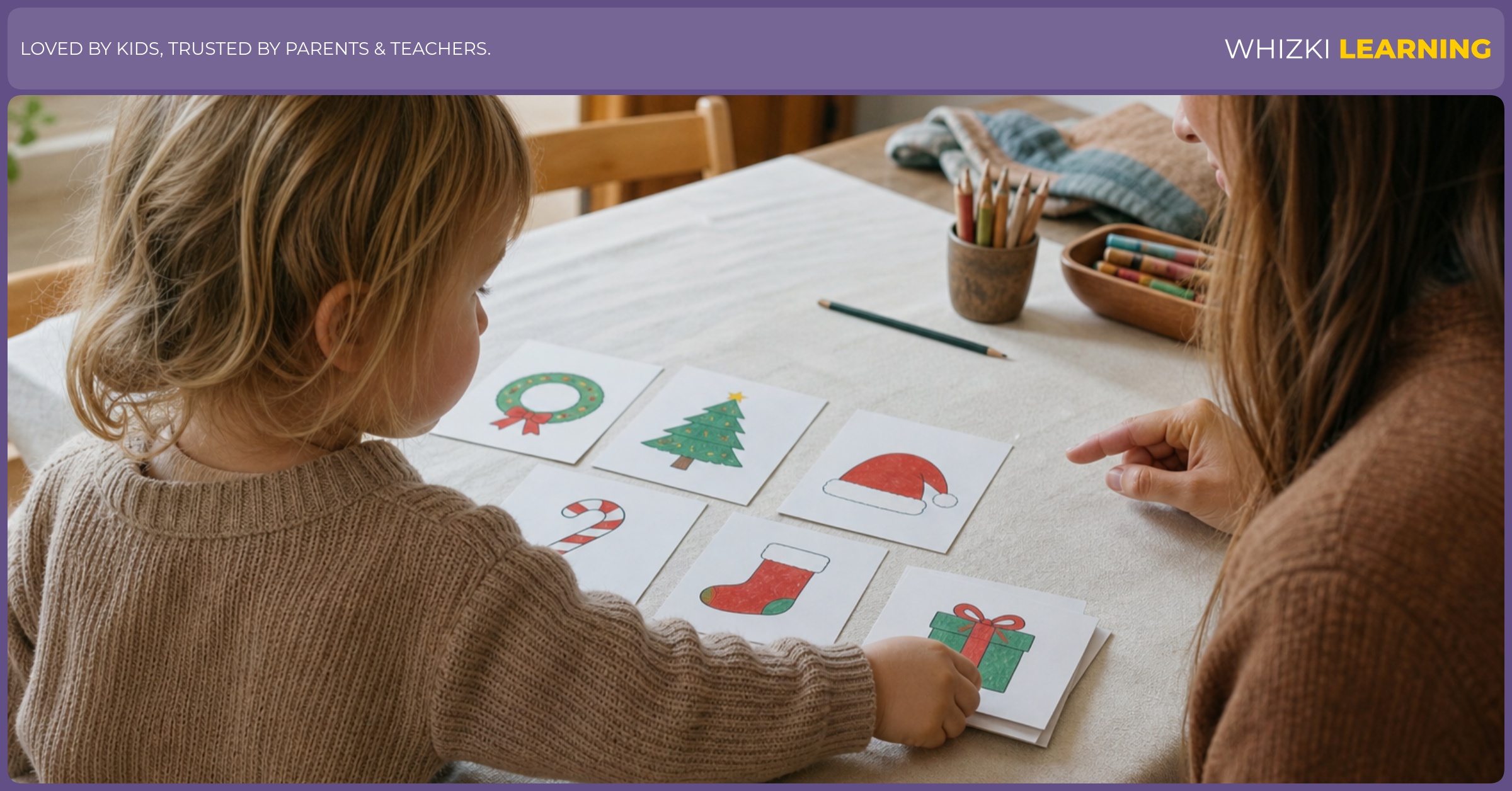
The card game starts with all six pictures face up and two grown-up jobs: name the picture and stretch only the first sound. The adult says, cookie, /k/, then the child repeats the word or points to the picture. Orton-Gillingham lessons often use hear, say, touch, and move because the sound becomes easier to notice when the child has a small body action.
The sorting step can be as simple as making a small pile for same starting sound and a small pile for different starting sound. The candle card and cookie card can land together because both begin with /k/, while the other cards start their own piles. For 5- to 7-year-olds, the adult may add small letter cards after the sound sort, but the sound should stay in charge. For 3- and 4-year-olds, pointing to the card is a complete answer.
The adult tone matters more than a perfect script. Reggio-inspired teaching asks the adult to observe what the child notices, so a child who says star is shiny is giving useful information before the sound work begins. The game should end at 10 to 15 minutes, and no gift reward is needed for finishing a Christmas literacy activity.
Spoken-only version for busy moments
The spoken-only version works in the car, at the sink, or while waiting for a sibling to find shoes. The adult says one word from the card set, taps the table once, and asks for the first sound. The child can answer with the sound, the word, a mouth movement, or a thumbs-up when two words start the same way.
The spoken-only version should keep sounds short and clean. Speech-language pathology practice reminds adults to say /b/ without adding a heavy uh sound, because buh can confuse the child who is trying to hear the first tiny part of a word. The adult can exaggerate the mouth shape gently, then return to a normal voice.
The spoken-only version is also the easiest way to respect families who celebrate Christmas differently or not at all. A family can use the same listening routine with winter, kitchen, or favorite toy words, and the literacy goal stays the same. The child does not need a holiday lesson to practice hearing the beginning of a spoken word.
Age adjustments and limits
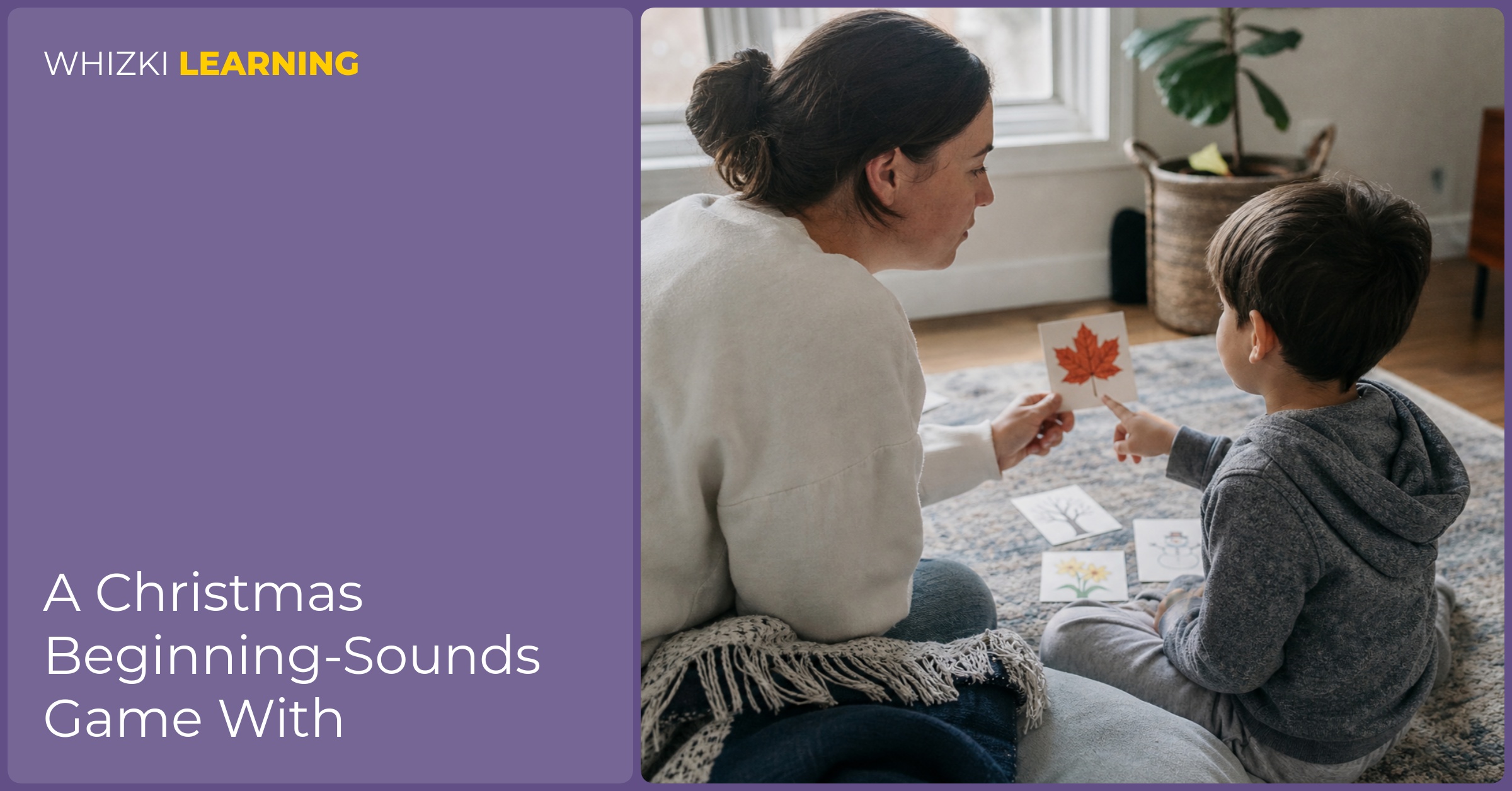
The 3- to 4-year-old version should use three cards, no printed letters, and lots of adult modeling. Montessori teaching often isolates one skill at a time, and the skill here is listening for the first sound. A preschool child who repeats the whole word instead of the first sound is still moving toward the target.
The 5- to 6-year-old version can add letter cards after the child sorts by sound. The adult can say that candle and cookie start with the /k/ sound even though English uses the letter c for both words. Orton-Gillingham teaching treats that moment as a sound-spelling conversation, not a gotcha.
The 7-year-old version can include a small challenge after the main sort. The child can look around the room for another word that starts like gift or star, then bring the object to the table. Occupational-therapy basics still apply, so the child should not be asked to copy a long list when the goal is sound listening.
The honest limit is that a picture-card game is practice, not a full reading plan or a diagnosis tool. A kindergarten teacher or speech-language pathologist can help if the child rarely hears beginning sounds after many playful tries, cannot understand the task in everyday words, or becomes upset by sound games often. An occupational therapist can be a good partner when holding cards, sitting at the table, or using scissors is the hard part rather than the sound work.
The Christmas beginning-sounds game works best when the adult keeps the activity light, short, and easy to quit. Six clear pictures, one spoken word at a time, and a gentle sort can give a child real phonemic-awareness practice without turning December into a worksheet marathon. The best sign of success is a child who wants one more round later, not a child who pushes through a long lesson today.